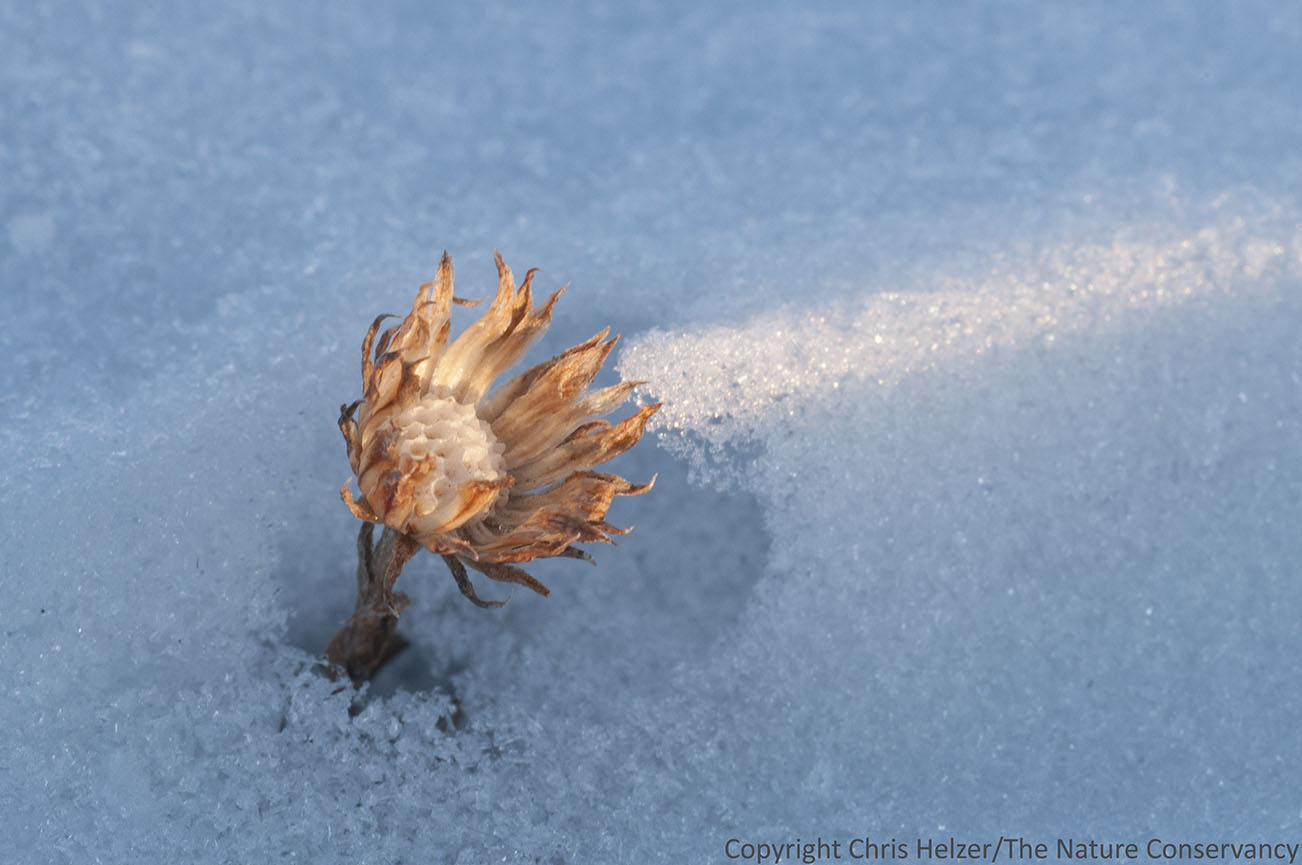
Recently, we’ve been seeing some very pretty sunrises and sunsets (and moon rises, for that matter) because of a thin veil of smoke in the sky from the western U.S. wildfires. That diffused light makes pretty good opportunities for photos, and I’ve been trying to take advantage of those when I can.
Last Saturday, I drove to a nearby town to do some shopping, but took my camera along. I ended up stopping briefly at a restored prairie on both the way there and back because the light was so nice – even at around noon – and the wind was barely blowing. Here is a selection of photos from the day.
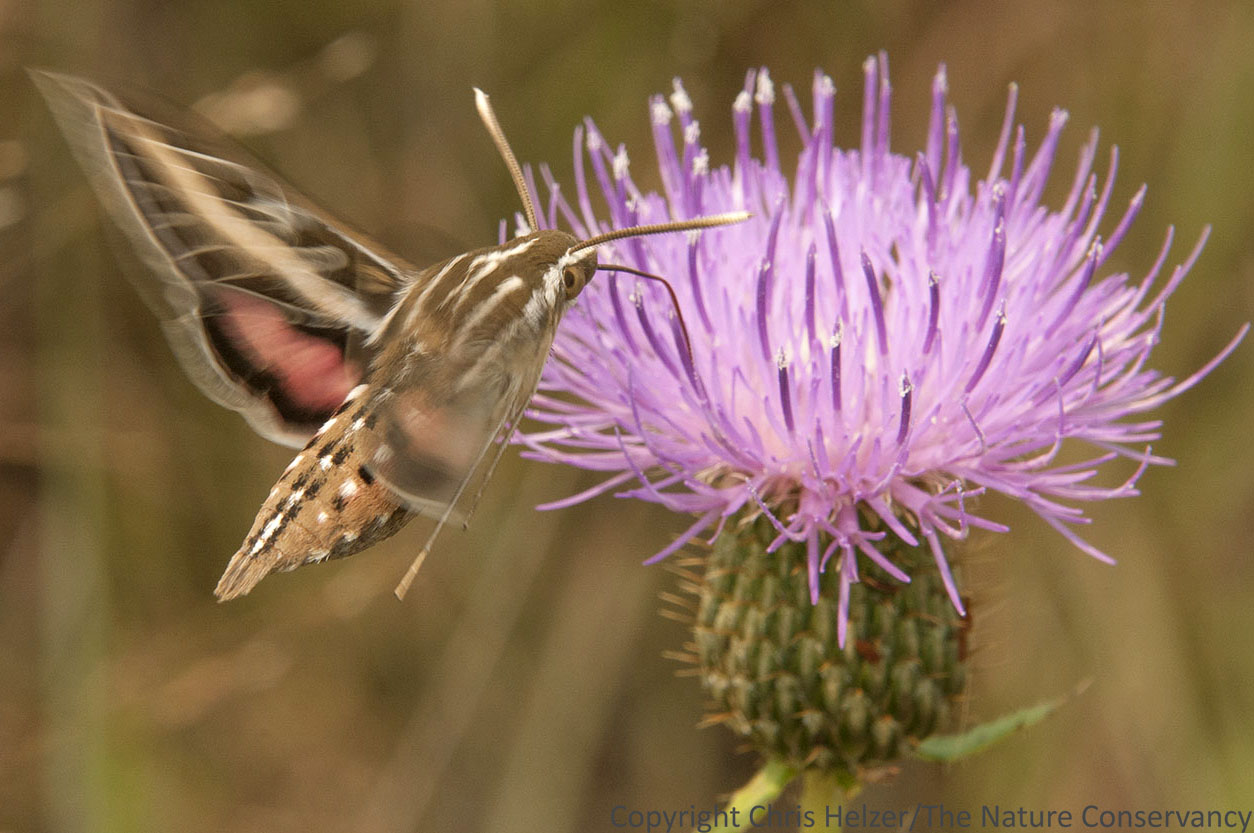
A sphinx moth feeds on nectar from a tall thistle (Cirsium altissimum). Thistles were abundant in this prairie, as were bumblebees, other bees, butterflies, moths, and many other insects feeding on pollen and nectar from them. Deep Well Wildlife Management Area, near Phillips, Nebraska.
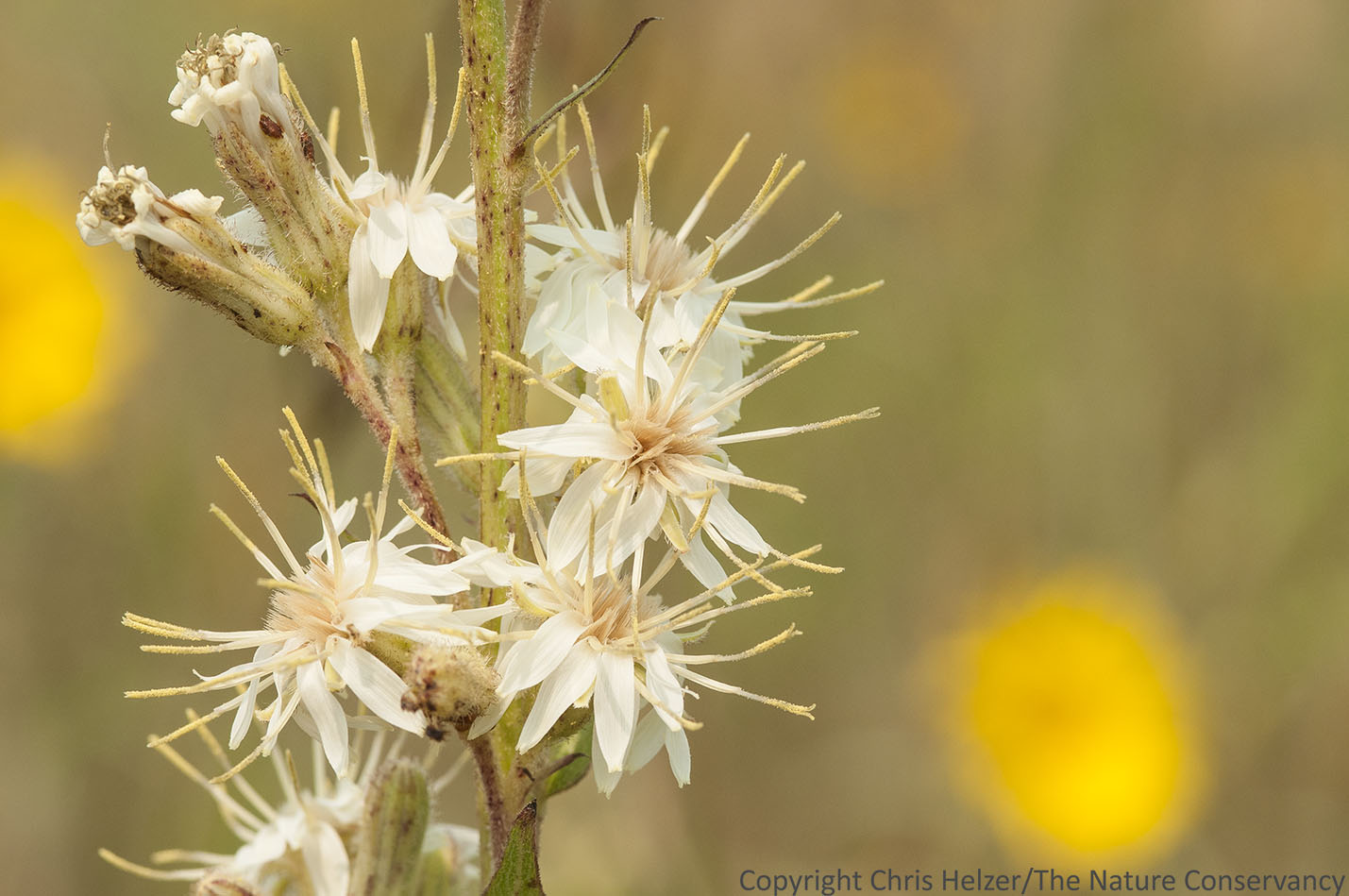
Rough white lettuce (Prenanthes aspera). This is not a common species in this area, so it was nice to see a healthy population growing in a cropfield-converted-to-prairie. The site was restored by Prairie Plains Resource Institute and owned/managed by Nebraska Game and Parks Commission.
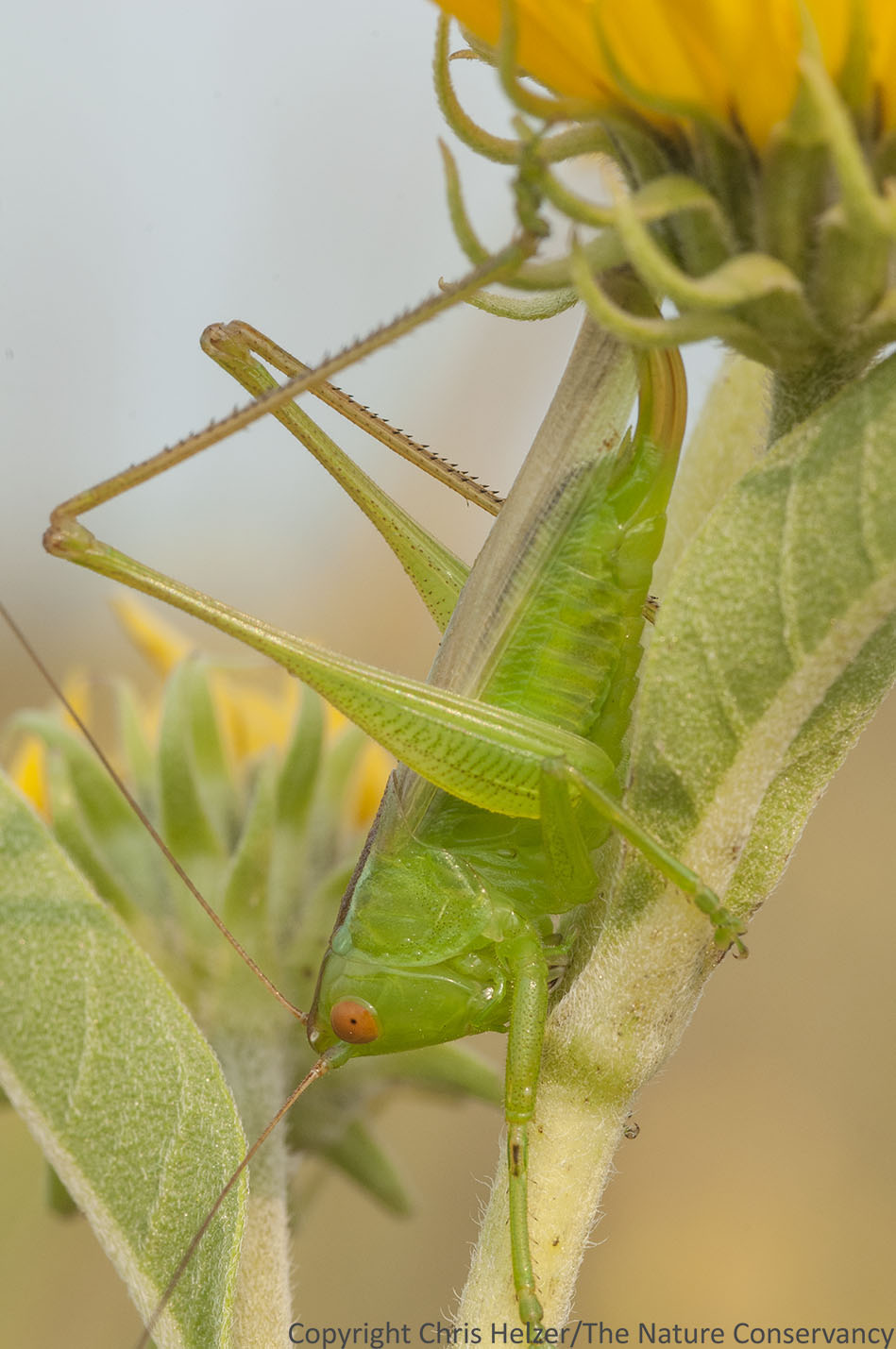
This is a very attractive little katydid (a female because of the ovipositor – the egg-laying tube coming out the back). However, I couldn’t ever manage to photograph an even more attractive katydid that was colored both bright green and purple. Gorgeous, but skittish.
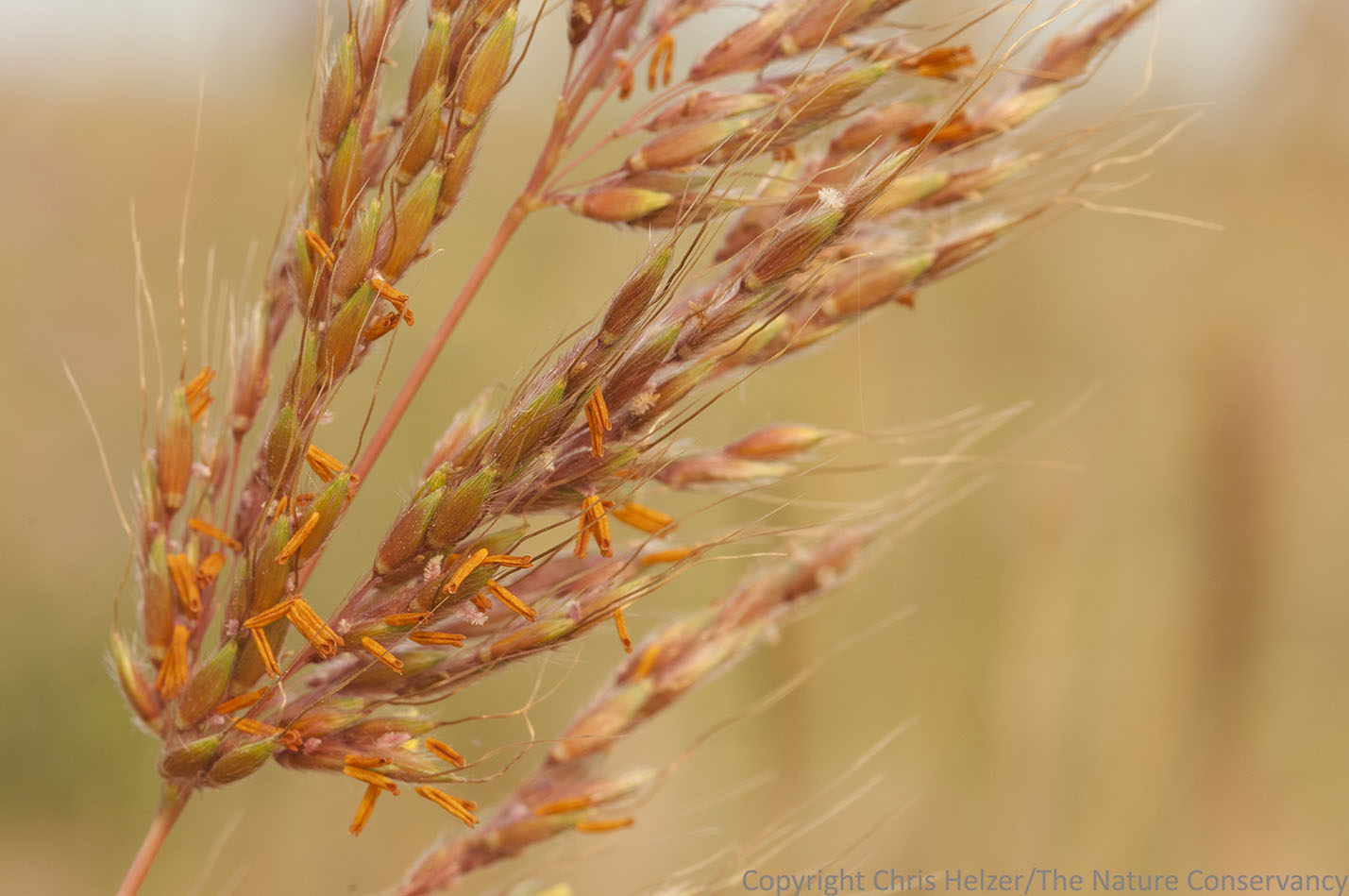
Indiangrass (Sorghastrum nutans) was reaching the tail end of its blooming period. These anthers have lost their bright yellow color and will probably fall soon.
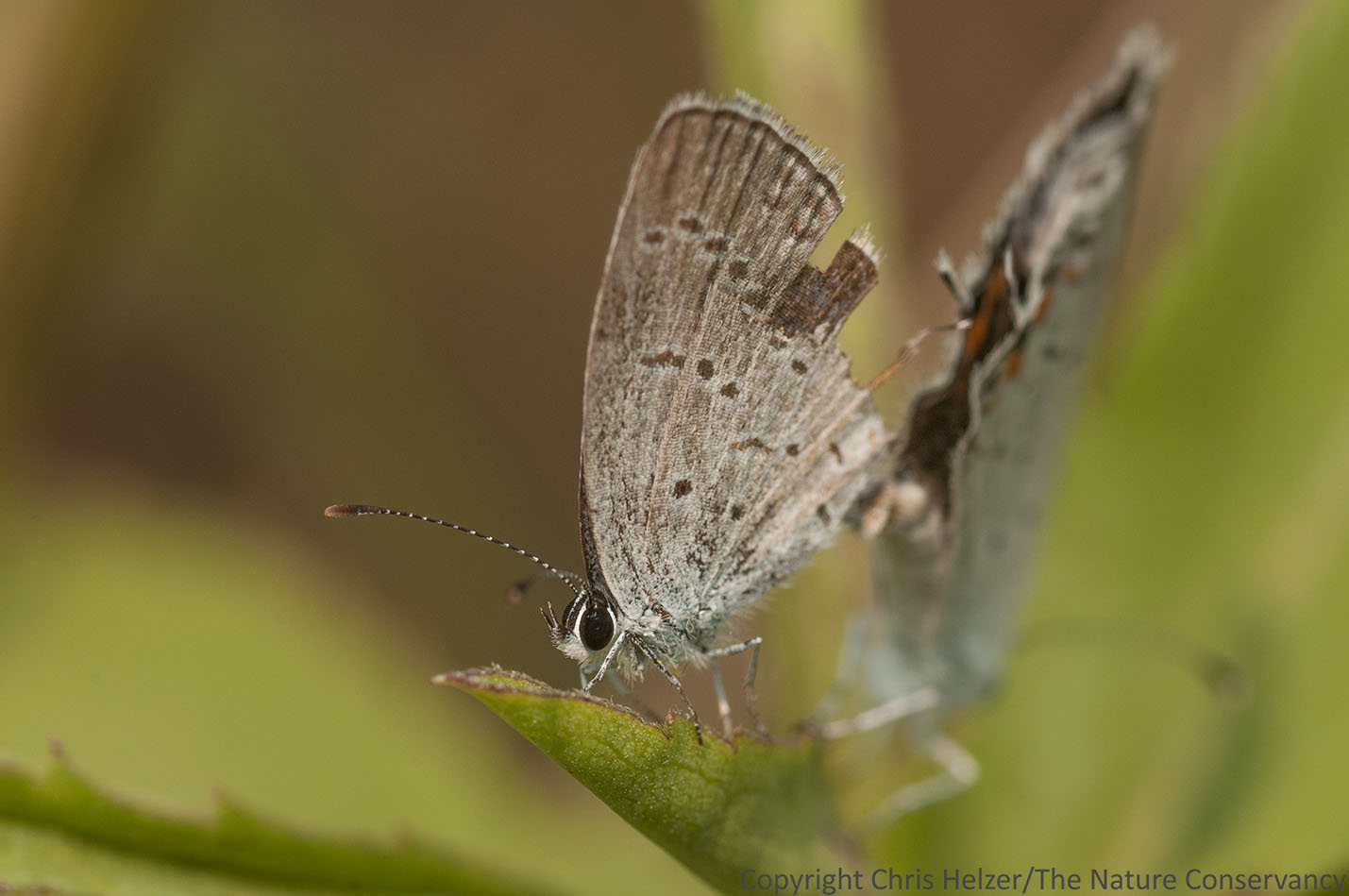
These eastern-tailed blue butterflies let me get close enough for a photo before flying off (still attached) to a more private location.
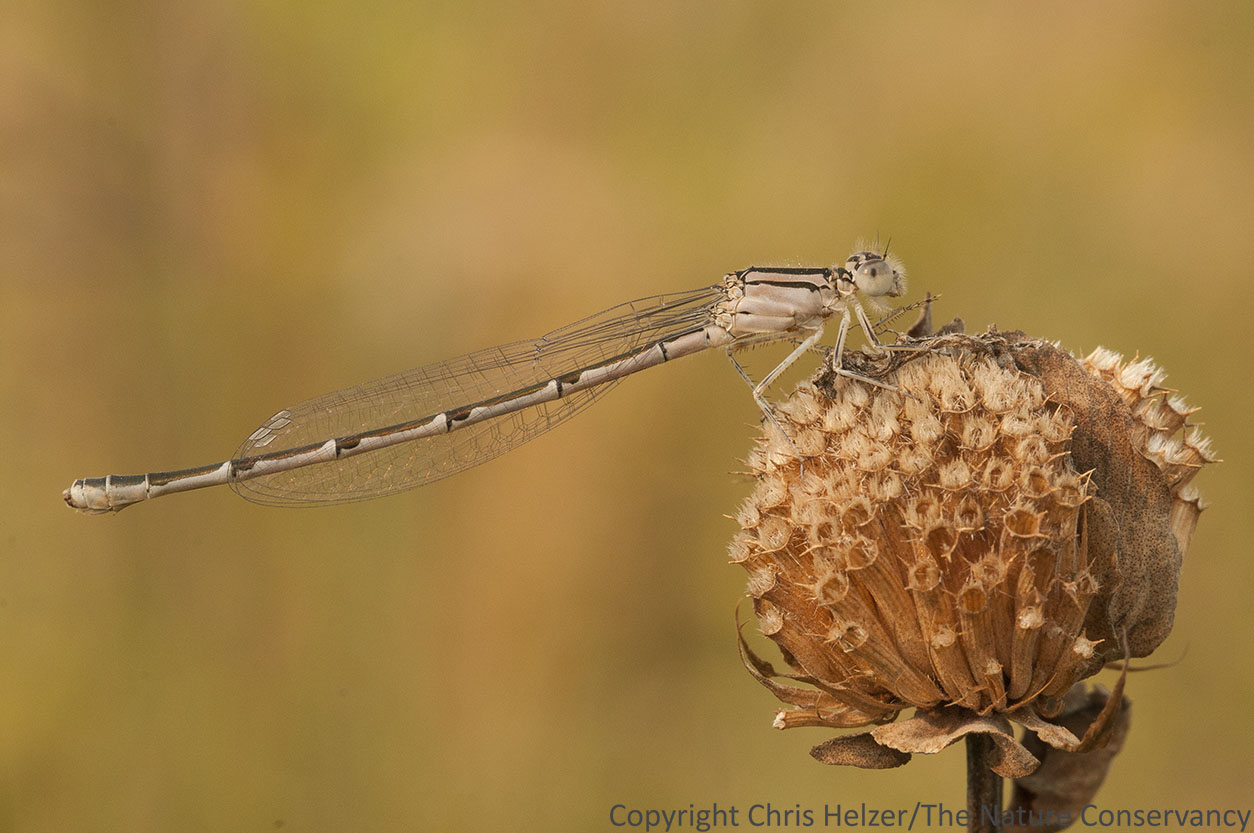
I had fun watching this damselfly but am still not sure what it was doing. It was flying up to plants and bumping its “nose” against them repeatedly while moving up and down the stems. I wonder if it was looking for insects to eat but I’ve never noticed this kind of behavior before. It would bump plants for 15 or 20 seconds and then find a perch to sit on for a while before starting out again.
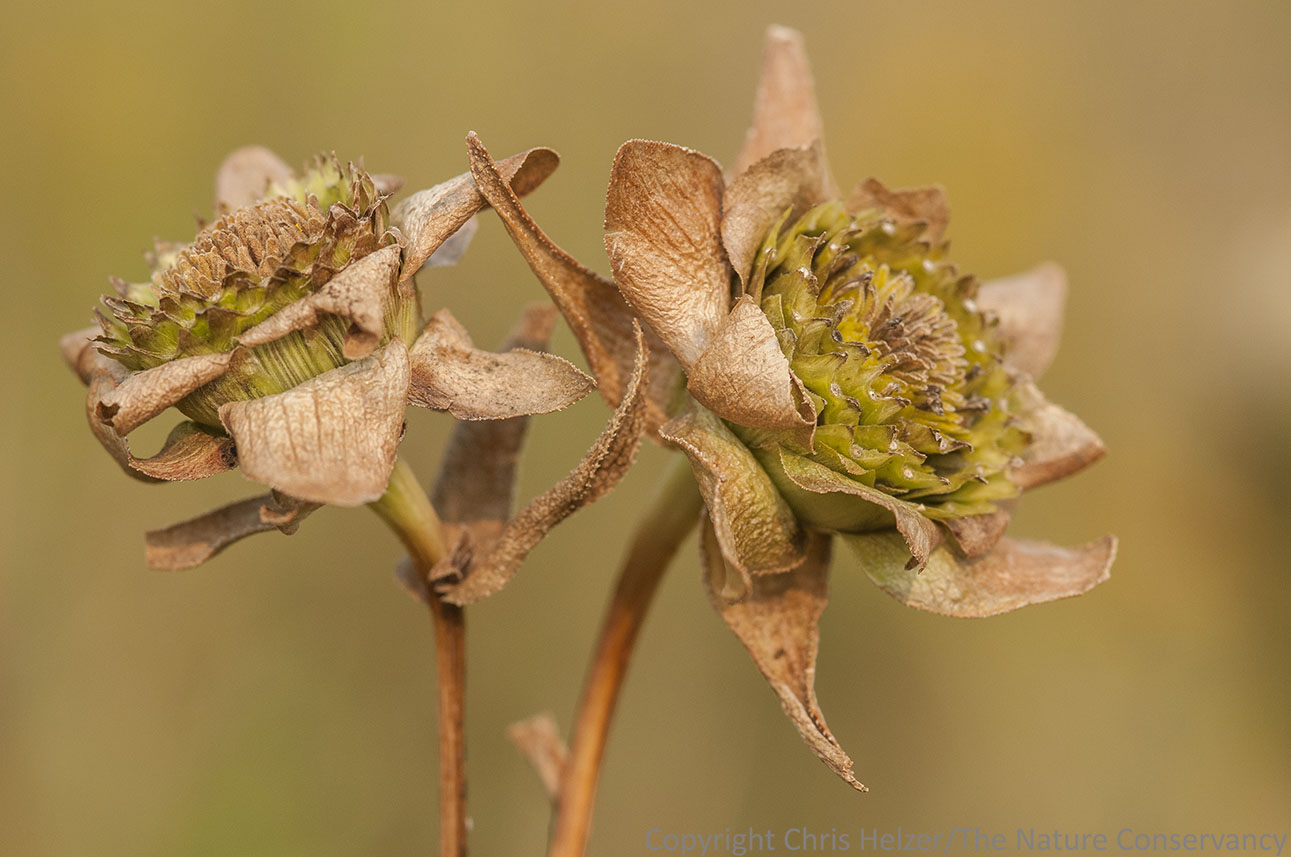
Entire-leaf rosinweed (Silphium integrifolium) was done blooming and well into its senescence last weekend. Summer must be nearly over… That was quick.