
You may remember a previous post in which I described a project to evaluate the impact of our prairie restoration work on small mammals. Mike Schrad, a Nebraska Master Naturalist, is helping us collect some pilot data to see whether small mammal species in our remnant prairies are also using the adjacent restored prairies. Mike is now in his second season of that project, and last week he had a great start to this collecting season. Among other species, he caught a number of grasshopper mice and plains pocket mice in some upland sandy areas of our Platte River Prairies.
There will be more to come on those mouse species and the significance of finding them (especially the plains pocket mouse, which is a Tier 1 species (high conservation priority) in the Nebraska Natural Legacy Plan). Today, though, I wanted to share some distinctive photographs of the two species. I hope it will be immediately clear that I’m experimenting with an exciting new style of wildlife photography – one that represents a more realistic view of how people generally see wildlife.
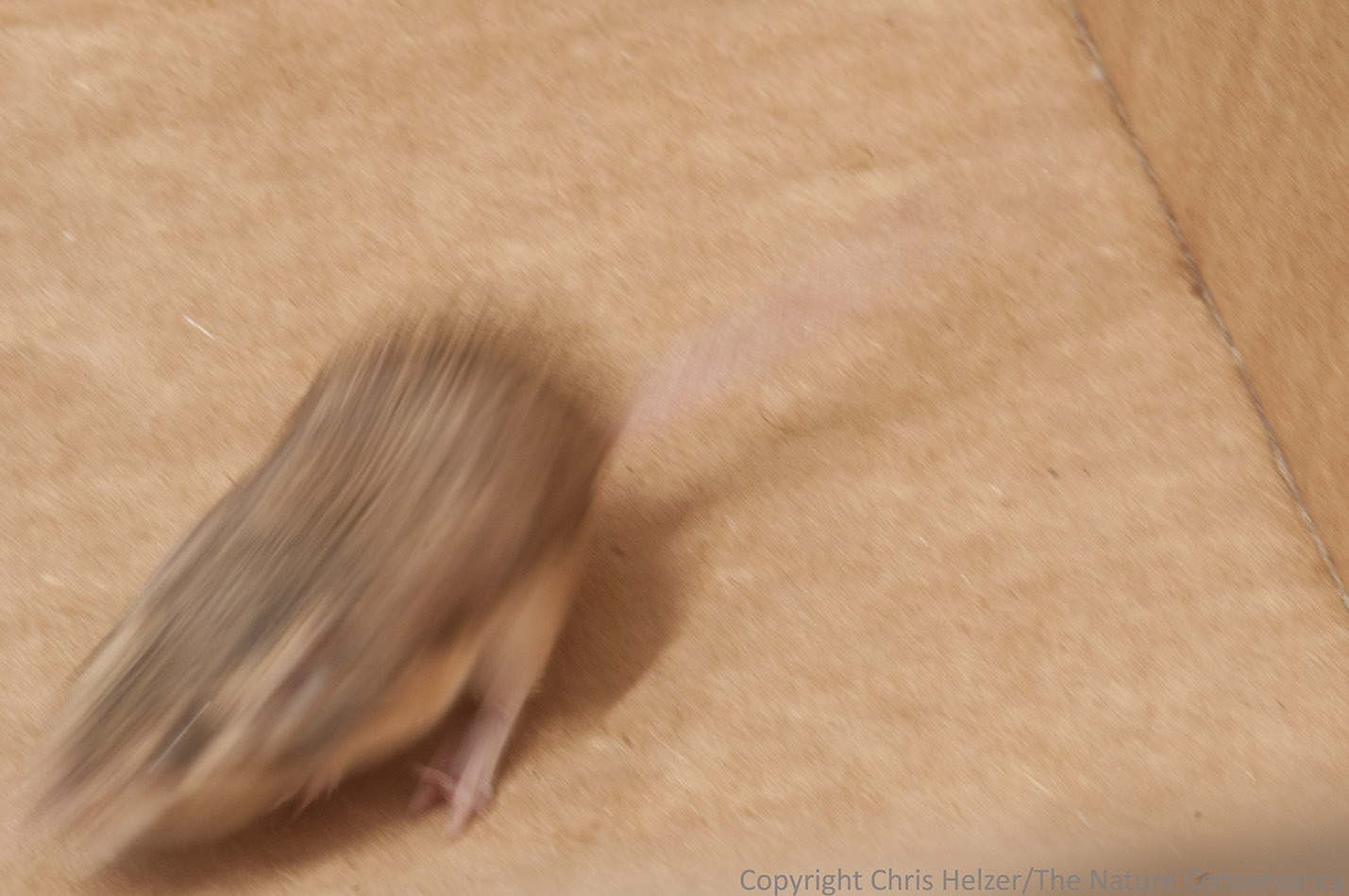
This might be my favorite photograph of the batch. Note how easily you can see the smudge of light-colored fur beneath the blurry ear, and the indistinct yellowish streak along the body. Along with size, those are the characters that best separate pocket mice from other species.
After getting a couple of dry and boring documentary photos of a plains pocket mouse in Mike’s hand, we put one into a cardboard box in order to get something a little different. It worked so well, we repeated the process with a grasshopper mouse. I’m sure you’ll agree that these photographs portray these little creatures as we typically see them in the wild, unlike many of the photos you see in so-called “wildlife magazines” and “nature websites”. Those tack-sharp photographs of animals sitting perfectly still and displaying their most charismatic features and poses in beautiful light are completely unrealistic. Who wants to look at them? Exactly. What’s much more useful are photographs that show these creatures just as you might see them while hiking – a quick blur of fur zipping from one bit of cover to the next.
Here’s a great shot of the long blurry tail pocket mice are known for. Note how pink it is as it streaks past…
Here’s an even better shot of the tail, without any of the distractions of the mouse’s body itself. This is how I often see mice in the field (except for the cardboard box, of course).
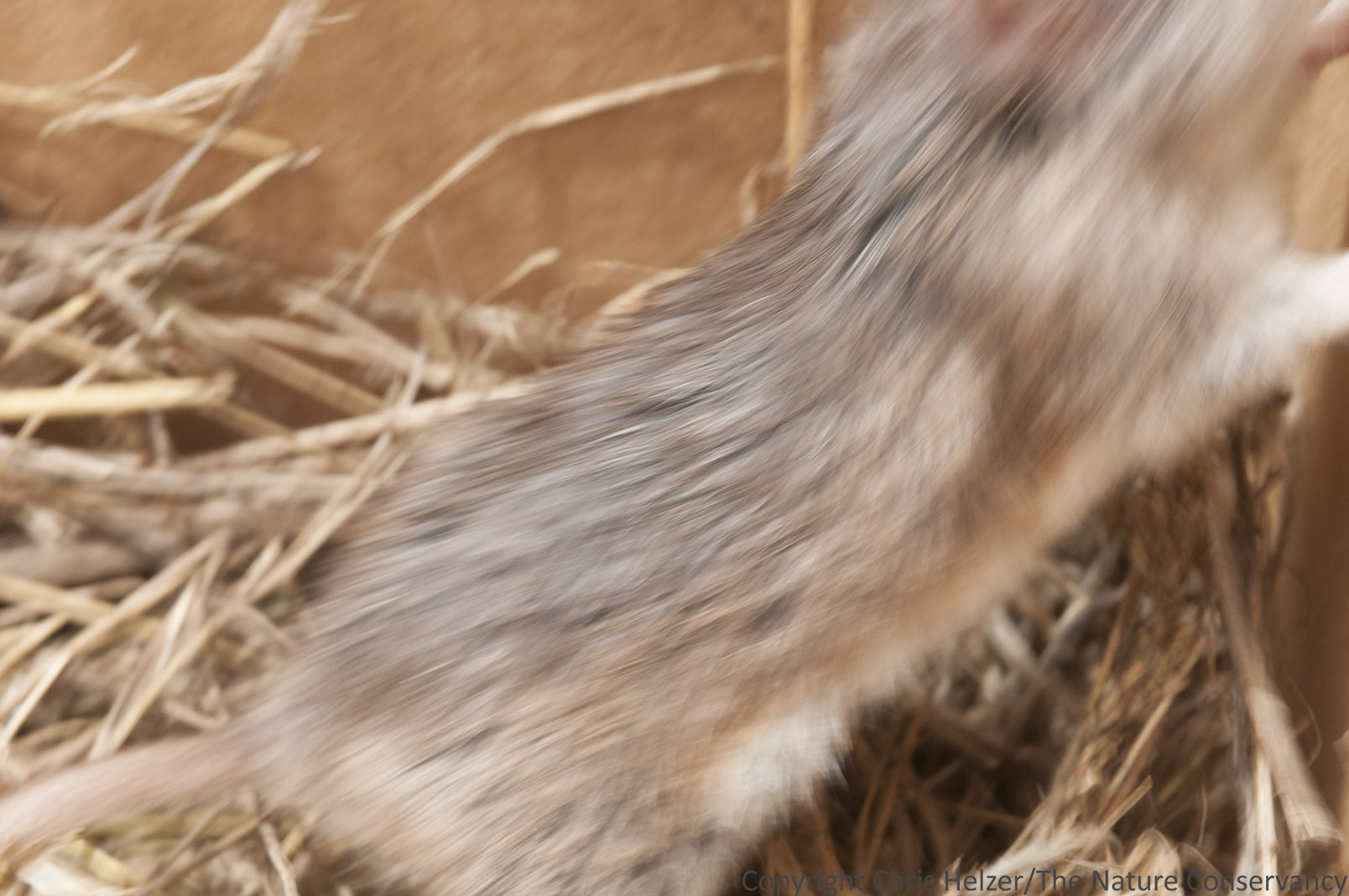
When we put the grasshopper mouse in the box, I experimented with providing a more natural background of dried grasses. I’m not sure yet if I like the effect. It almost seems like it distracts from the subject…
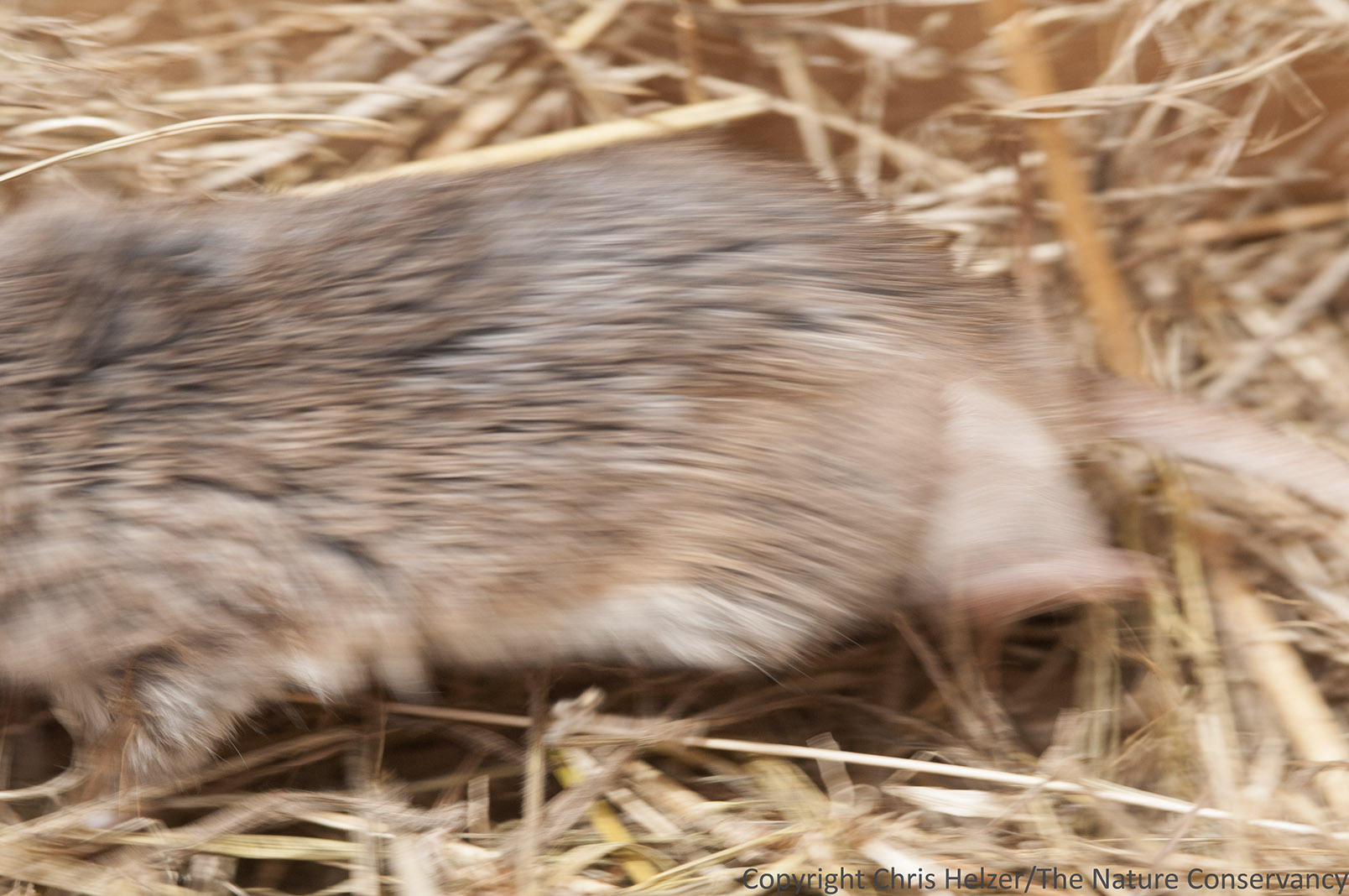
Note the larger size, fuzzier (and shorter) tail, and grayer fur of this grasshopper mouse as it zips past.
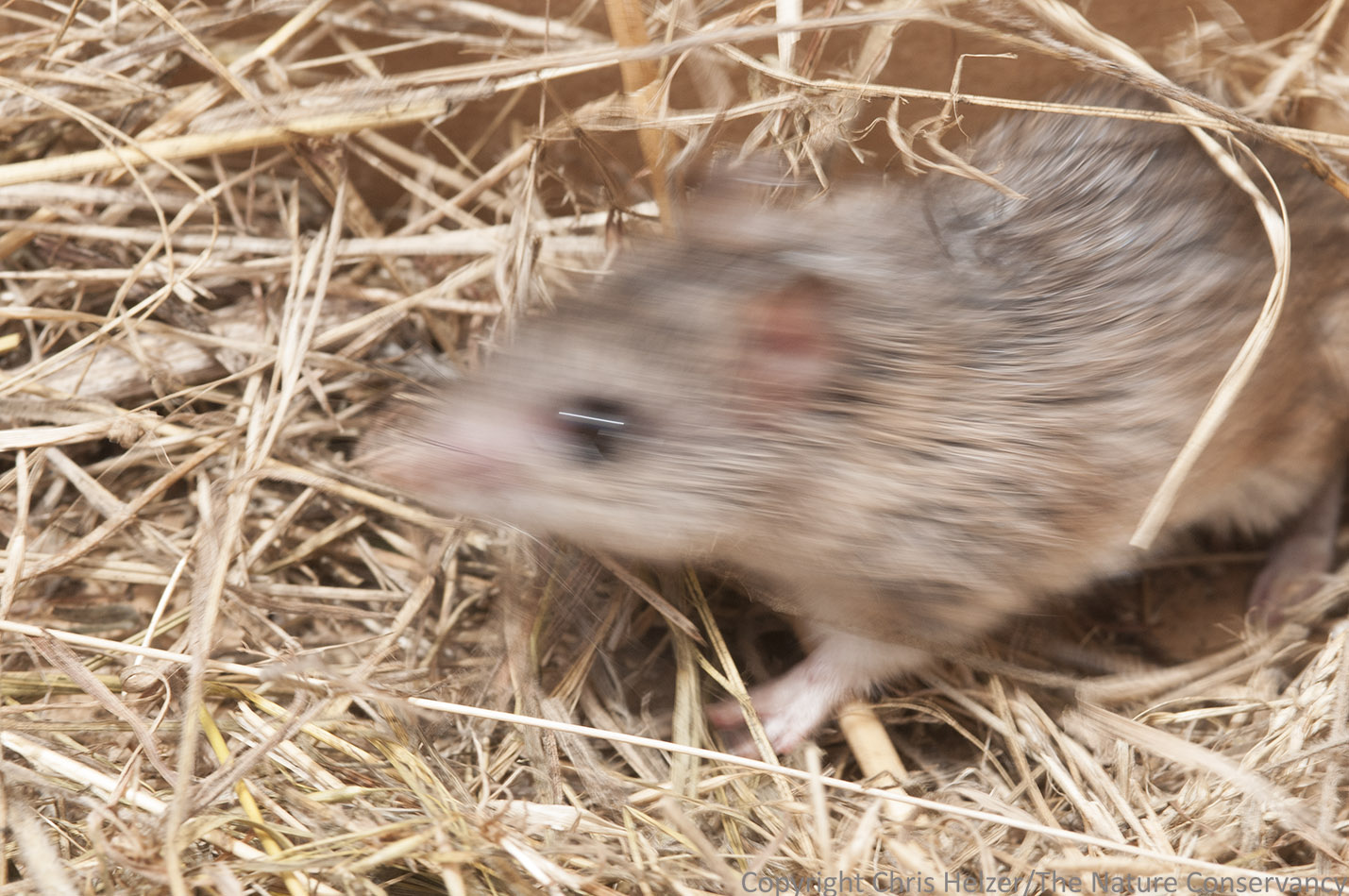
This image highlights the pointy nose that helps distinguish the grasshopper mice from other species.
Some people will probably see these photos and think I’m just concocting wild justifications to cover my inability to take good sharp photographs of these little mice. Those people obviously have no imagination or appreciation for the field of realistic motion photography, which I am currently developing and describing. They will probably also not be among those who flock to buy my forthcoming field guide to wildflowers, entitled “Roadside Wildflowers at 60 Miles Per Hour”, in which each wildflower species is represented by a blurry streak of color that shows how it actually looks as you drive by on the highway. I feel sorry for those people.
On the other hand, to you readers who appreciate my pioneering work, thank you for your support, and I hope that you’ve enjoyed my first attempt in this new medium. Be assured that I’ll take many more similar photographs in the future, and will probably share some of the blurriest – and thus most useful – with you.

 The Prairie Ecologist