A Prairie Ecologist Vacation

Our family went on vacation last week (sorry for the delayed responses to your comments while I was gone…)  We rented a cabin in the Rocky Mountains west of Denver, Colorado.  It was a really nice week, especially considering that the temperatures ranged from 40-80 degrees F – with low humidities – in the mountains while temperatures at home were in the high 90’s!

While I enjoy short trips to the mountains very much, I think I’d have a hard time living there year-round.  For one thing, I’m too used to seeing big skies.  In the prairies, you can watch thunderstorms from many miles away, and gauge whether or not they’re heading for you or not.  In the mountains, storms sneak up and pounce over the nearest ridge before you have time to react.  And, of course, there are the winters.  I enjoy snow as much as the next person, but winter driving in flat land is enough adventure for me…

Regardless of my fondness for plains and prairies, I did find plenty to photograph in the mountains as well.  Its easy to see why mountains and water dominate so many nature calenders and posters.  Appreciation of prairie landscapes tends to be an acquired taste – one that grows as a person becomes more familiar with the intricacies of prarie life.  In contrast, anyone can appreciate the dramatic landscapes of the mountains without even working at it!  (…and where’s the fun in that?)

This wasn’t a photo trip, it was a family vacation, so I really didn’t spend much time taking photos.  Most were snapped during brief breaks on family hikes, or while my family patiently (?) waited in the car while I jumped out to take yet another photo of the same mountain…  However, I got a few, and thought you might enjoy seeing mountains throught the eyes of a prairie ecologist and photographer.

Mount Evans is a great place to see dramatic mountain landscapes. This was one of many photos I took on quick "I'll be right back" jump-out-of-the-car trips. Not a lot of time for careful compositions, but not a lot of need either - I felt like I could have pointed the camera randomly and gotten great photos! You can click on this (and other) photos to see larger views of them.
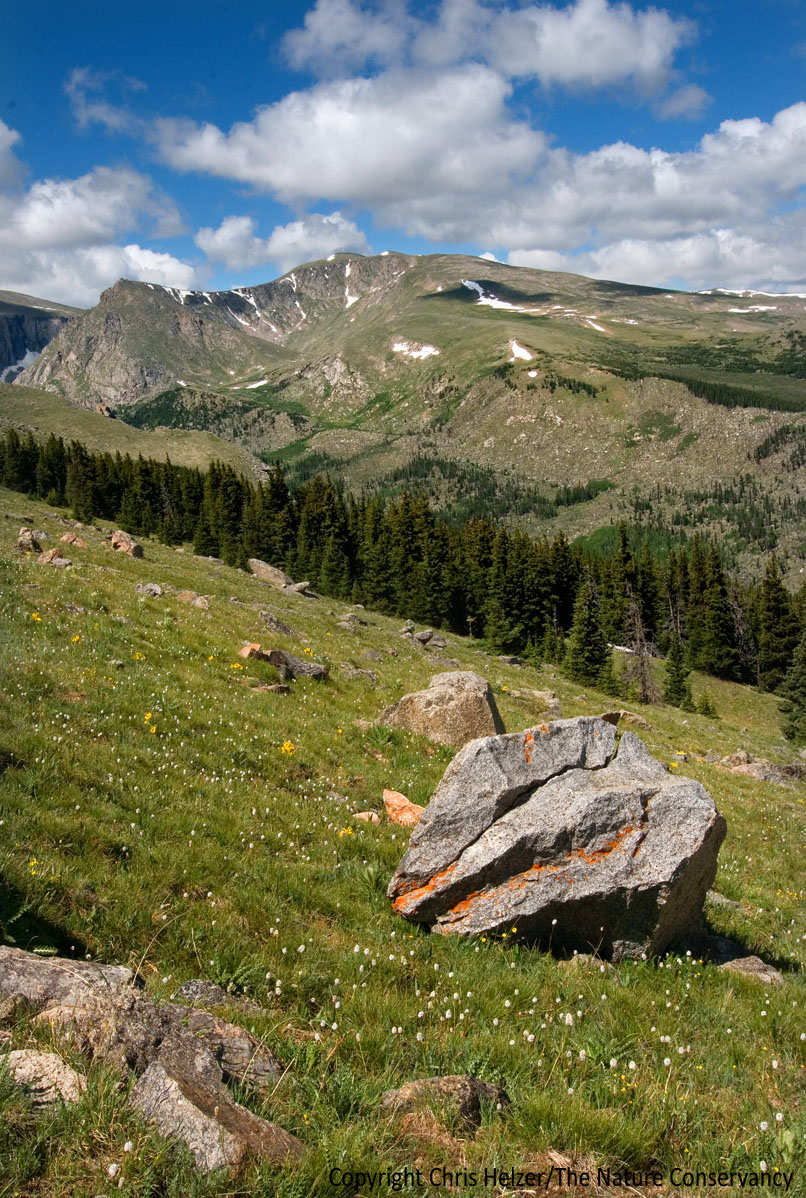
I've only spent a short time in alpine meadows, but I really like them. On this trip, the cold blustery weather on top of Mount Evans caused me to be out-voted, and we headed down to warmer temperatures before I got to explore very much. Maybe next time!

There was a group of mountain goats at the top of Mount Evans that seemed perfectly willing to have their photos taken. Very accomodating!
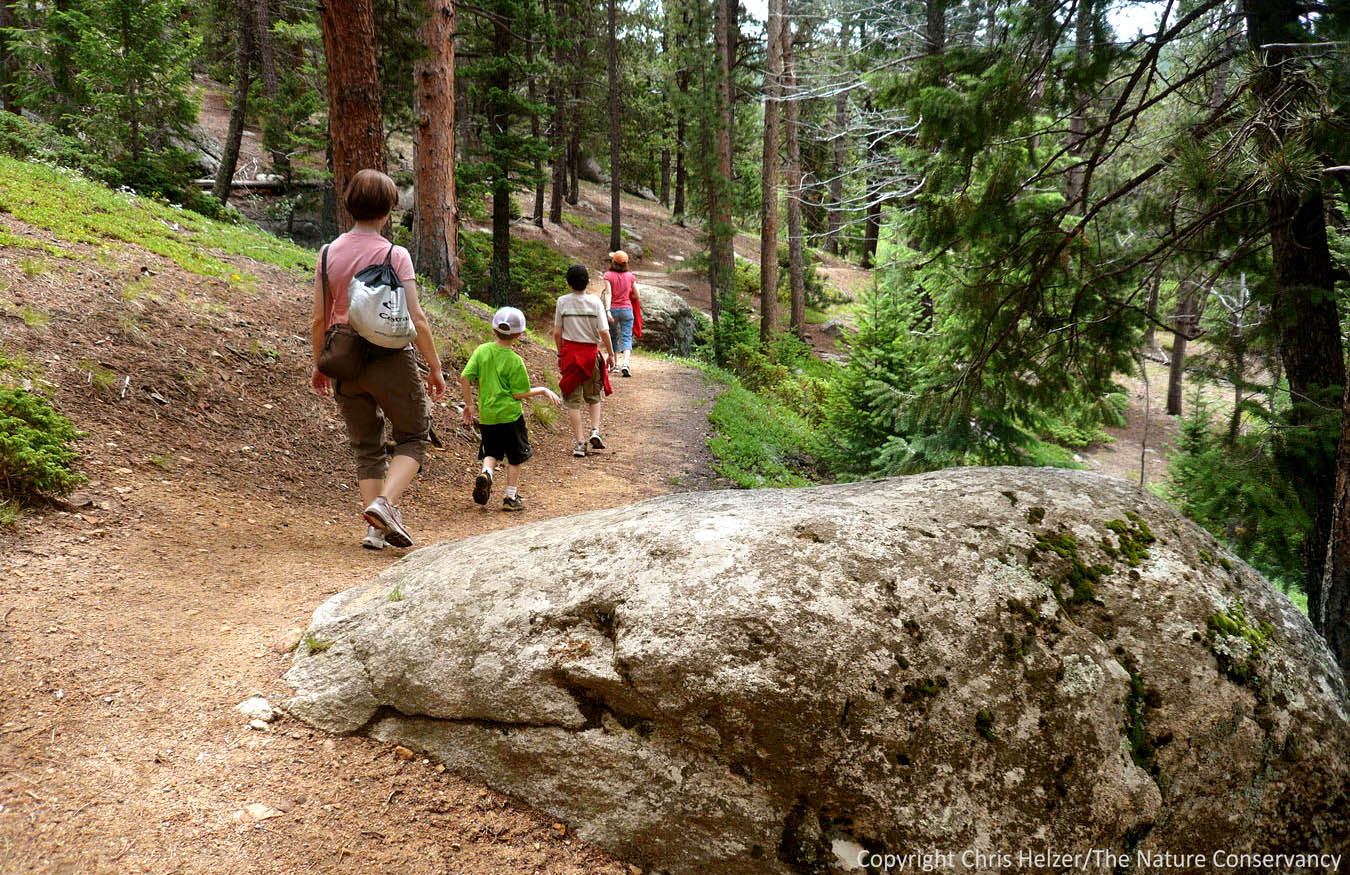
Our cabin was near Golden Gate Canyon State Park, and we found it to be a great site for family hiking.
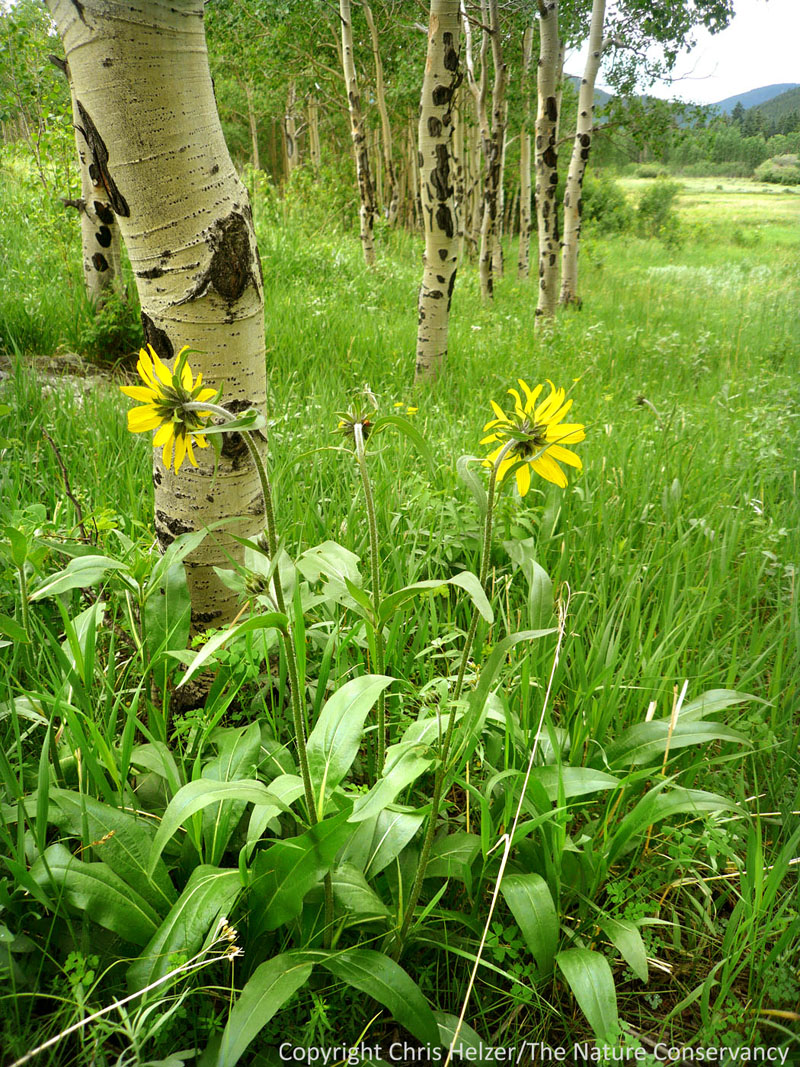
I recognized many of the plants (at least to Genus) in the meadows at Golden Gate Canyon State Park. Some very pretty places there, and it was a great year for wildflowers.

I always feel a little closed in when hiking in woodlands, but many parts of the trails in Golden Gate Canyon State Park were very pretty.

This mule deer fawn popped out of the grass as we rounded a trail corner near the Red Rocks Amphitheater south of Denver.

Our cabin was located in a steep valley (can a valley be steep?). If you look carefully, the green roof of our cabin can just barely be seen in the bottom right portion of this photo. I climbed the slope across the road from the cabin a couple times in the evenings and took a few photos. Most of the time it was either too cloudy or too sunny, but I managed to find a few opportunities in-between.
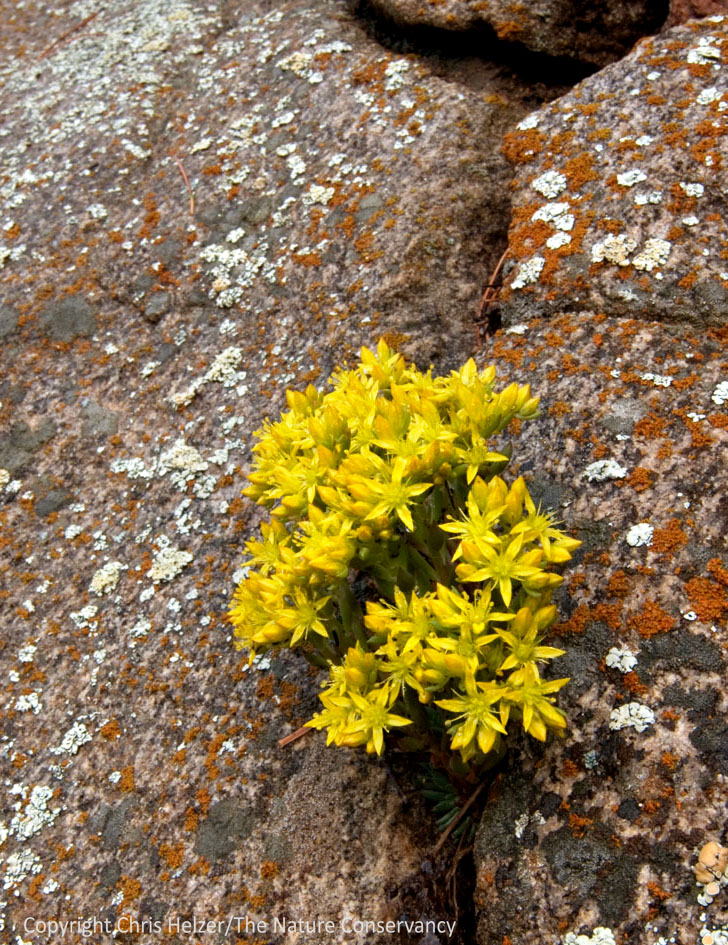
I haven't had time to look up this flower yet, but it was abundant - even in some hard-to-grow-in places!

One of our most promising hikes ended early when we found this big stream running across the trail. Our family was less adventuresome than a few other hikers who managed to make it across (not without getting wet). THIS is why the Platte and Missouri Rivers are running so high this year! LOTS of snow melt in the mountains!

One of my problems with hiking in mountains is that I'm programmed to look down as I hike, so I sometimes miss the great landscape vistas. Instead, I see things like this!

I kept seeing this blanket flower along trails and finally got a photo of it by having my daughter Anna hold a diffuser (homemade with thin cloth on a flexible plastic ring) between it and the bright sun. When she saw the photo later she said, "You didn't even get the whole flower in the picture!"

Coneflower Surprise

Last Friday, I was at my in-laws’ farm in eastern Nebraska (Sarpy County).  Toward evening, the hot, sunny, windy day transformed into a cloudy evening with light winds.  I stepped outside to look over the little patch of restored (reconstructed) prairie in their front yard.  The sun was going down behind the clouds, but there was a small gap of clear sky between the clouds and the horizon.  Foreseeing a small window of time with some good photography light, I went back to the house and grabbed my camera and tripod.

As I came back out of the house, the sun was just coming out from beneath the cloud bank.  There were only a few places in the little prairie that were being hit by the low-angled light, and the best color in the prairie seemed to be the gray-headed coneflowers that were just starting to bloom.

Gray-headed coneflower (Ratibida pinnata). Reconstructed prairie in Sarpy County, Nebraska.

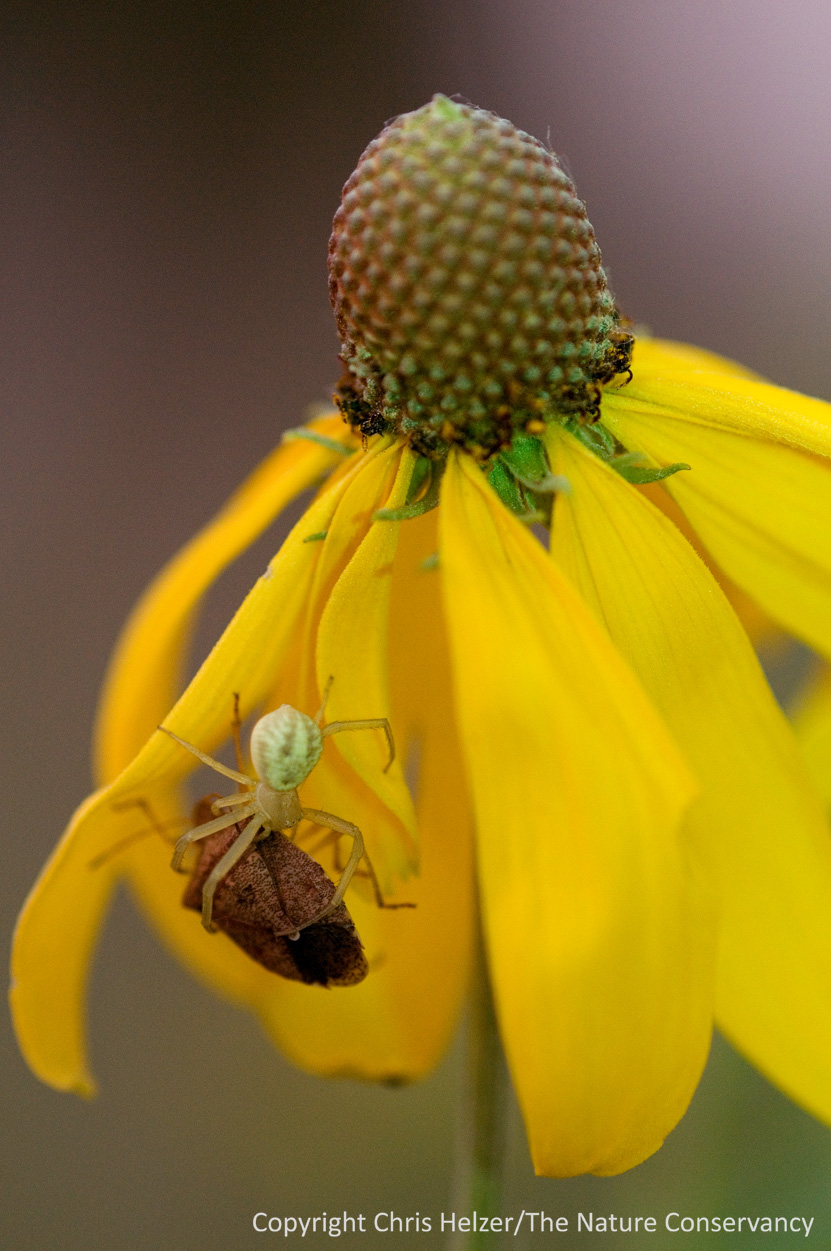
I chose a flower and set up the tripod to photograph it.  After only a couple of shots, a stink bug flew in and landed on the flower.  Just as I began focusing on the stink bug to see if he’d pose for me, a crab spider suddenly squirted out from inside the canopy of coneflower petals and grabbed the startled stinkbug.

A fuzzy first attempt to photograph the stink bug immediately after it landed.

Initially, it looked like the spider was having a hard time finding a place to bite the stink bug through its tough carapace, and for a minute or so, the bug was pulling the spider around the flower and it looked like an even chance that it would escape.  However, the spider eventually latched onto the bug near its rear end and hung on tight.  The stink bug continued to crawl around the flower, hauling its spider cargo with it, but over the next few minutes, the pauses between movements became longer and longer.

The stink bug pulled the tenacious spider around the flower, but the spider hung on tight.

In this photos, you can better see where the spider sunk its fangs into the bug (soft underbelly?) Eventually, the stink bug stopped moving altogether, and it was game over.

As the sun went completely below the horizon, the stink bug finally stopped moving altogether.  After a few more minutes, the crab spider let go and rotated the bug into a new position within its grasp – apparently to feed?  I’ve watched crab spiders attack and feed quite a few times before, but don’t remember seeing one changes positions to feed – they usually seem to just feed through the same initial fang holes they make to kill their prey.

A few minutes after the stink bug gave up the ghost, the spider flipped it around in its grasp. This photo was taken several minutes after the sun had gone down.

Right after the above photo was taken, the wind kicked up, and it felt like a storm was coming, so I left the spider to its meal and went inside – feeling grateful for the opportunity I’d just been given.  Who needs TV??

Photography Notes

For those of you who are photographers, you might be interested in a couple things about this photo series.  As I said earlier, the sun was low in the sky.  It was a nice red color, providing great warm light on the flowers and bugs.  However, the light intensity was low, and there was a slight breeze that was moving all the plants back and forth a little.  I set my camera’s ISO on 500 to allow me to take the photos at between 1/25 and 1/50 of a second, which was sufficient to stop the motion.  The trickiest part was timing the shot between wind gusts so that the eyes of the stink bug were in focus (or, a few times, the eyes of the spider).  I shot about 50 photos over 10 minutes or so, and about 15 turned out sharp.

The last photo above was the trickiest because the sun had been down for a few minutes, and there was no direct light at all.  It was too dark to stop the wind-driven motion of the flower, so my only chance at getting the last shot – which was too good to miss – was to use flash.  Unfortunately, I don’t own a flash other than the pop-up flash on my Nikon 300s camera.  So, I popped up the flash and set the camera on Program.  Having tried to use the flash for macrophotography before, I knew that the flash alone was too bright for close-up shots, so I improvised.  I pulled my arm out of one sleeve of my t-shirt and wrapped the shirt sleeve over the flash and then took the shot.  The shirt acted to diffuse the flash’s light but still allowed enough light for the photo to work.  It took a couple tries to get the focus right (the stupid flower kept moving!) but it eventually worked.  I’d never tried this little trick before, but now I might have to throw an old t-shirt into my camera bag for similar future emergencies!  (or maybe just the sleeve…)