Photo of the Week – March 9, 2017

I hope I’ve made it clear through the years that I am really grateful to have my job.  During each March, one of the major perks is access to viewing blinds that allow a front row seat to watch migratory sandhill cranes on their overnight roost.  This morning, I took my wife, two of our kids, and my in-laws out to the Platte River to watch the cranes wake up.

Atticus braved a cold morning breeze in his face to watch cranes dance and loaf around before lifting off to go feed in fields and meadows for the day.
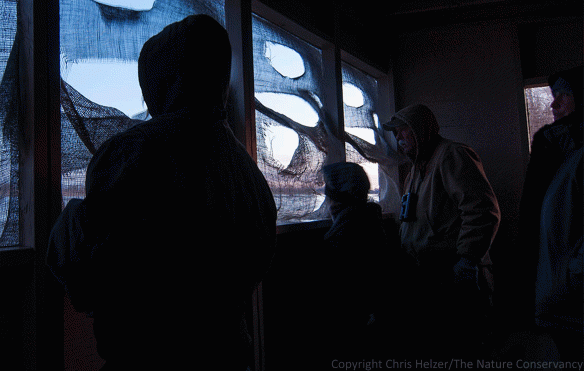
Our viewing blinds aren’t fancy, but they put you right at the edge of the river to watch one of the greatest wildlife spectacles on earth.

Most crane viewing tours I lead each year are for our current or prospective members and donors, and I really enjoy helping people experience one of the best migratory bird phenomena in the world – especially when our guests are seeing it for the first time.  On the other hand, it’s pretty hard to beat sharing that same experience with my family.  Did I mention how fortunate I am?

This morning provided good crane viewing (we had around 1000 cranes in front of the blind and maybe another 10,000 or more within view), but it was far from the most spectacular visit I’ve had.  The cranes weren’t close enough to our blind for me to get fantastic photos, but I played around a little with my camera anyway.  Today wasn’t about photography though, it was about family time in nature, and in that regard, it was pretty near perfect.

You can read more about the crane migration through Nebraska’s Platte River, and see many more photos, in a couple of previous posts here and here.
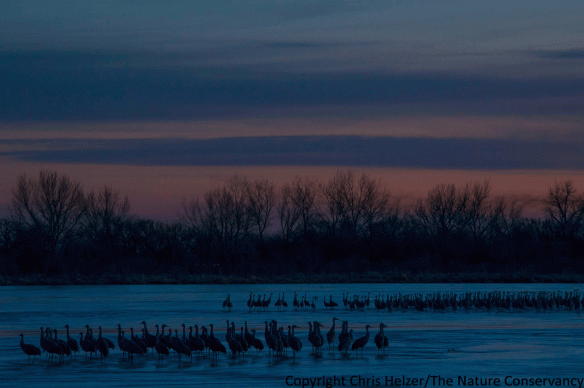
A couple small groups of sandhill cranes roosting in the river prior to sun-up.

Early morning silhouettes.


PLANT GAME RESULTS

It’s not that I’m competitive, but I’ve decided that I’ll consider it a win when more of you guess a wrong answer than the right one in our Plant Game.  Using that criteria, I won twice this week.  In the first question, Earthsmoke got the most guesses as a fake plant (35%), but it’s actually a real plant (Fumaria officinalis), introduced from Europe, and present (though uncommon) in Nebraska.  The actual fake plant was Lady-of-the-Lake, which I totally made up.  To your credit, that got the second-most votes (32%).

For the second question, the fake plant was Mountain Oats, which sounds real enough that only 32% of you guessed it was fake.  Almost half of you (47%) guessed Raccoon Grape was the fake plant, though, and it’s actually a native vine that grows in eastern Nebraska (Ampelopsis cordata).  Don’t worry, you’ll get plenty of chances to redeem yourselves in the future – but congratulations to those of you who guessed right!
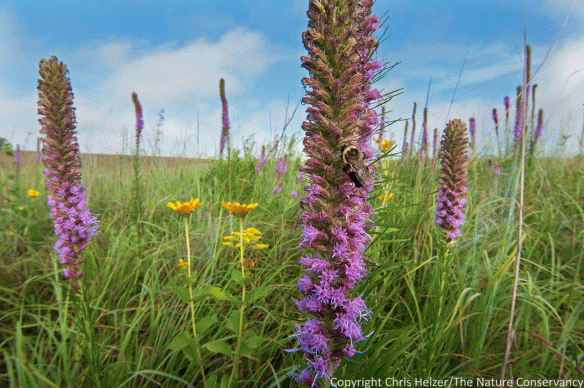
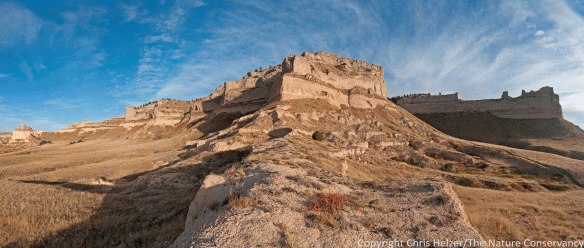
Photo of the Week – March 2, 2017

This week marks the 150th anniversary of Nebraska becoming a state.  Nebraska will be celebrating all year, but there were a number of events this past Wednesday, including one at which the U.S. Postal Service introduced a new postage stamp.  The stamp features a photo of sandhill cranes by my friend Mike Forsberg, a native Nebraskan and fantastic conservation photographer.

In honor of Nebraska’s Sesquicentennial (fancy word for 150th anniversary) celebration this week/year, I’ve put together a few of my favorite Nebraska photos from the last several years.  We live in a state of great ecological diversity, ranging from oak woodland and tallgrass prairie in the east to dry sparsely-vegetated rocky bluffs in the west.  It’s an honor to work on the conservation of those natural systems, along with many other conservation professionals, ranchers, farmers, educators, and nature enthusiasts.  I’ve tried to represent some of the ecological diversity of Nebraska in these photographs.

A bumblebee rests on a lanceleaf blazing star (Liatris lancifolia) in restored tallgrass prairie at Spring Creek Prairie near Lincoln.

A bumblebee rests on a lanceleaf blazing star (Liatris lancifolia) in restored tallgrass prairie at Spring Creek Prairie near Lincoln.

A panoramic look at the rocky landscape around Scotts Bluff National Monument in the Nebraska panhandle.

A panoramic look at the rocky landscape around Scotts Bluff National Monument in the Nebraska panhandle.

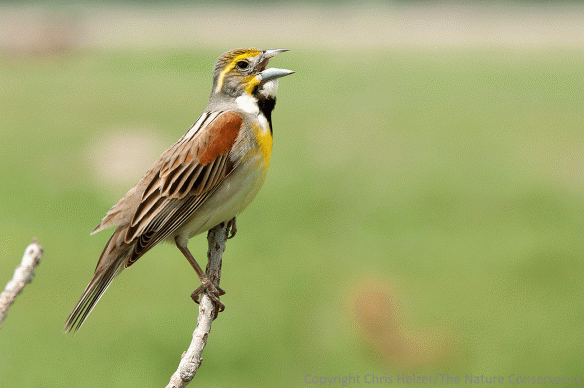
A male dickcissel sings its territorial song at The Nature Conservancy's Platte River Prairies.

A male dickcissel sings its territorial song at The Nature Conservancy’s Platte River Prairies.

Morning dew on spiderwort (Tradescantia occidentalis) in the Nebraska Sandhills.

Morning dew on spiderwort (Tradescantia occidentalis) in the Nebraska Sandhills.

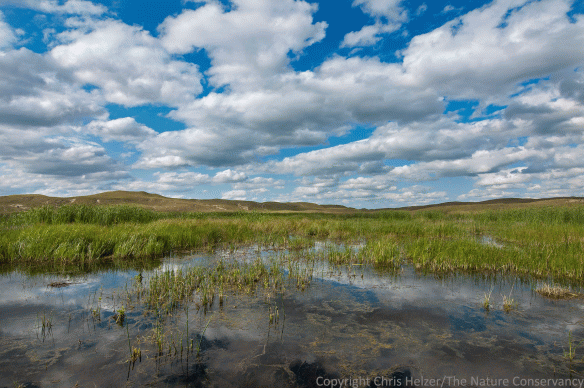
Reflections of sky in a Sandhills wetland and meadow.

Reflections of sky in a Sandhills wetland and meadow.

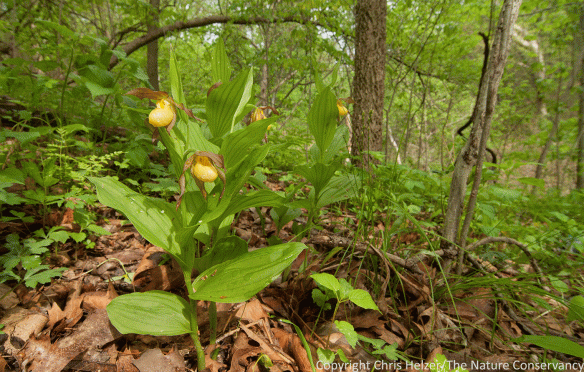
Yellow lady's slipper (Cypripedium parviflorum) in oak woodland at the Rulo Bluffs Preserve in southeastern Nebraska.

Yellow lady’s slipper (Cypripedium parviflorum) in oak woodland at the Rulo Bluffs Preserve in southeastern Nebraska.

Bison bulls in recently-burned prairie at The Nature Conservancy's Niobrara Valley Preserve.

Bison bulls in recently-burned prairie at The Nature Conservancy’s Niobrara Valley Preserve.

A bush katydid feeds on purple prairie clover (Dalea purpurea) in the Platte River Prairies.

A bush katydid feeds on purple prairie clover (Dalea purpurea) in the Platte River Prairies.

Fog and the Niobrara River at the Niobrara Valley Preserve.

Fog and the Niobrara River at the Niobrara Valley Preserve.

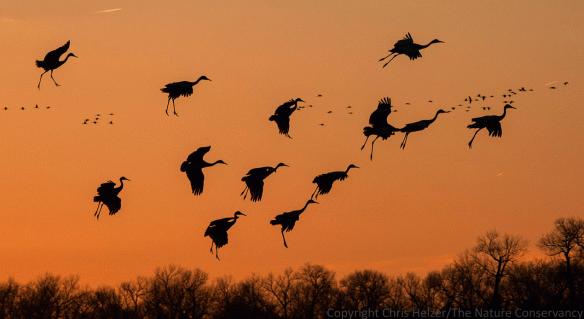
Sandhill cranes float gently to their overnight roost on the Platte River.

Migratory sandhill cranes float gently to their overnight roost on the Platte River.

A migratory dragonfly and morning dew at its overnight roost in a small prairie outside Aurora.

A migratory dragonfly and morning dew at its overnight roost in a small prairie outside Aurora.

Stiff sunflower (Helianthus pauciflorus) in mixed-grass prairie in Central Nebraska.

Stiff sunflower (Helianthus pauciflorus) in mixed-grass prairie in Central Nebraska.

Hay bales and windmill in the Nebraska Sandhills.

Hay bales and windmill in the Nebraska Sandhills.


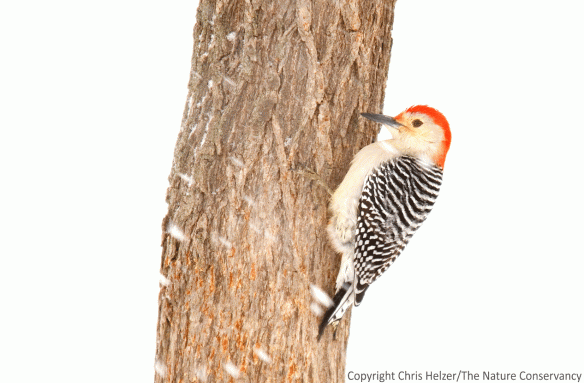
A red-bellied woodpecker in a snowstorm in eastern Nebraska.

A red-bellied woodpecker in a snowstorm in eastern Nebraska.

A saltmarsh caterpillar in early morning light.

A saltmarsh caterpillar in early morning light.

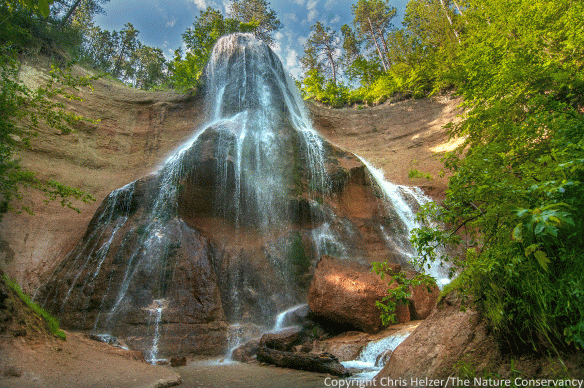
Smith Falls, a well-known landmark and tourist stop along the Niobrara River.

Smith Falls, a well-known landmark and tourist stop along the Niobrara River.

Sunflowers and sunrise in the Platte River Prairies.

Sunflowers and sunrise in the Platte River Prairies.