
Photo of the Week – August 11, 2016

I made a quick trip up to the Niobrara Valley Preserve this week.  As always, there was a treasure trove of unexpected finds.  Here are some of them.
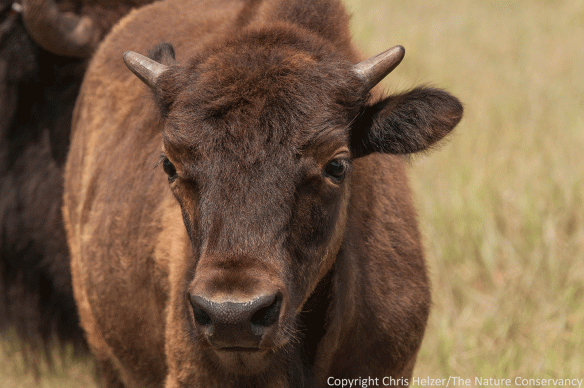
Bison calves are growing fast. Their coats have darkened to match the adults, and their horns are starting to look like more than just little bumps.
Bison calves are growing fast. Their coats have darkened to match the adults, and their horns are starting to look like more than just little bumps.

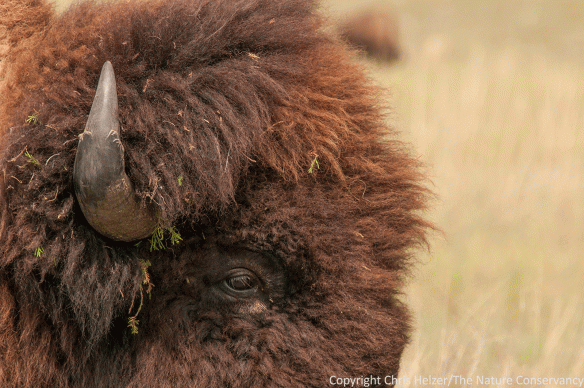
Bison tend not to hang around wooded areas for shade, but they also like to rub on trees aggressively enough to keep them stunted or even kill them. This bull was one of several bison that had evidence of recent rubbing on eastern red cedar trees.

Bison tend not to hang around wooded areas for shade, but they also like to rub on trees aggressively enough to keep them stunted or even kill them. This bull was one of several bison I saw this week that had apparently been recently rubbing on eastern red cedar trees.  Good for them.

Robber flies are amazing predators and always fun to photograph, but this might be my favorite of all time. This gorgeous robber fly landed in a sand blowout and was consuming a leaf hopper.
Robber flies are amazing predators and always fun to photograph, but this might be my favorite of all time. This gorgeous robber fly landed in a sand blowout and was consuming a leaf hopper.

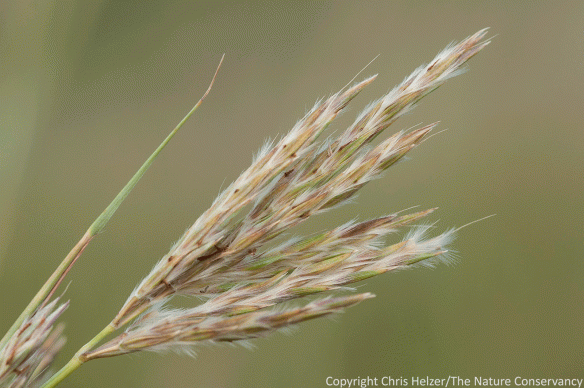
Sand bluestem (Andropogon hallii) is sometimes lumped with big bluestem (Andropogon gerardii) and sometimes considered a separate species. I'm not entering that argument. However, sand bluestem (shown here) does tend to have much hairier flowers.

Sand bluestem (Andropogon hallii) is sometimes lumped with big bluestem (Andropogon gerardii) and sometimes considered a separate species. I’m not entering that argument. However, sand bluestem (shown here) does tend to have much hairier flowers.

How many of you noticed the small larva in the above photo?  I didn’t, until I was going through the photos on the computer the day after taking them.  Look below for a more close-up view of the larva.  You can see it at its original scale just to the left of the bottom left of the inset image.

Fly larva? Whatever it is, it sure is small. Wouldn't you love to know what it's doing there?

Fly larva? Whatever it is, it sure is small. Wouldn’t you love to know what it’s doing there?

This tumbleweed (Russian thistle, aka Salsola iberica) was lodged up against a fence in a big sand blowout.

This tumbleweed (Russian thistle, aka Salsola iberica) was lodged up against a fence in a big sand blowout.

This tiny pale bee (Perdita perpallida) is a specialist in prairie clovers (Dalea species) but I've only seen it on one species - Silky prairie clover (Dalea villosa)

This tiny pale bee (Perdita perpallida) is a specialist in prairie clovers but I’ve only seen it on one species – Silky prairie clover (Dalea villosa).  Its pale color helps it blend in very well. Thanks to Mike Arduser for ID and information.
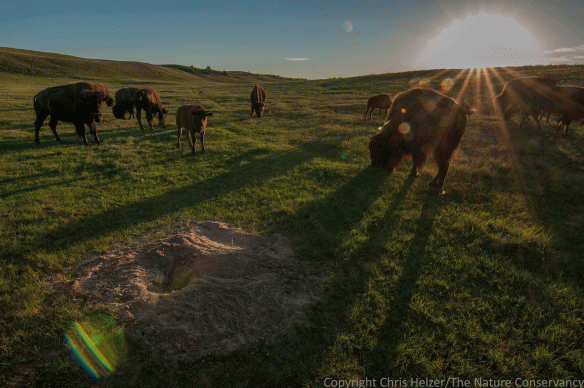
What is more evocative of the Great Plains than bison grazing in a prairie dog town as the sun goes down over an expansive grassy landscape?
What is more evocative of the Great Plains than bison grazing in a prairie dog town as the sun goes down over an expansive grassy landscape? 

Register Now – 2016 Grassland Restoration Network Workshop

It is time to register for the Grassland Restoration Network’s 2016 workshop.  The Grassland Restoration Network has helped people working on prairie restoration share techniques and conservation strategies since 2003.  You can read my blog post from last year’s workshop in Minnesota here and from the 2014 workshop at The Nature Conservancy’s Nachusa Grasslands in Illinois here.

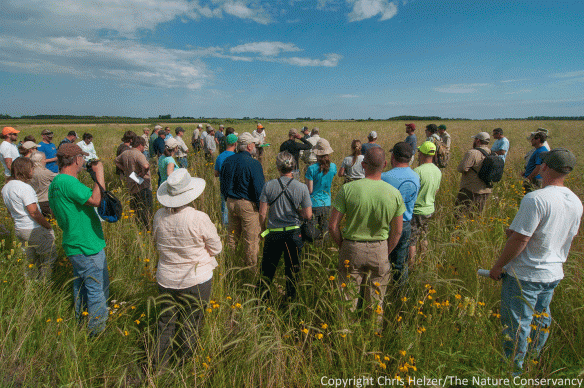
One of the best ways to learn from each other is to visit each others' projects and evaluate them together. 2015 Grassland Restoration Network workshop - Minnesota.

One of the best ways to learn from each other is to visit each others’ projects and evaluate them together. 2015 Grassland Restoration Network workshop – Minnesota.

The 2016 workshop will be September 13-14 right here in Nebraska.  It is co-hosted by The Nature Conservancy’s Platte River Prairies and Prairie Plains Resource Institute.  You can see the agenda and other information for the workshop here.

Registration for the workshop is open now through August 19.  There is no registration fee for the first 75 people to register, but you’ll be responsible for your own transportation and lodging, and some meals.  To register, send an email to Mardell Jasnowski at mjasnowski(at)tnc.org.  Include answers to the following questions:

Name

Organization/Affiliation

Address

Phone Number

Email Address

Will you take part in the optional Tuesday morning tour in Aurora?

Will you be eating Tuesday evening supper?

Will you be eating Wednesday lunch?

Do you have any dietary restrictions?  If so, list them here:

Thank you to Pheasants Forever and the Nebraska Environmental Trust for helping to cover the costs of registration for this conference.