
Oh man, there are so many choices for titles when writing a blog post about dung beetles…
While my wife and I were hiking around the Niobrara Valley Preserve a few weeks ago, Kim spotted a couple dung beetles rolling a ball of bison dung through the Sandhills. It was really fun to watch them and it was my first good opportunity to photograph dung beetles in action. The light was nice and the beetles seemed fine with me watching them. As it happened, once I started following the first pair with my camera, I ended up seeing two other pairs of beetles within a few yards of the first. I wish I’d had the time to follow them longer and see where they went with their booty.

Dung beetles with bison dung at the Niobrara Valley Preserve, Nebraska.
Dung beetles don’t often get a lot of attention, but when they do, it’s the “rollers” that usually get it. In fact, there are three general categories of dung beetles: rollers, dwellers and tunnelers. Dwellers just live inside manure piles (ick). Tunnelers burrow beneath manure piles and bury some of it for their larvae to feed on (boring). But ROLLERS!! Rollers make a neat round ball out of manure and roll that ball across the ground for our enjoyment. (Oh, and also so they can find just the right place to bury it and lay eggs with it.)
Essentially, rollers, dwellers, and tunnelers are all doing the same job: they feed on manure and help break it down and return it to the soil. Clearly, however, dung beetles that roll poop balls across the ground do that job in the most entertaining way!
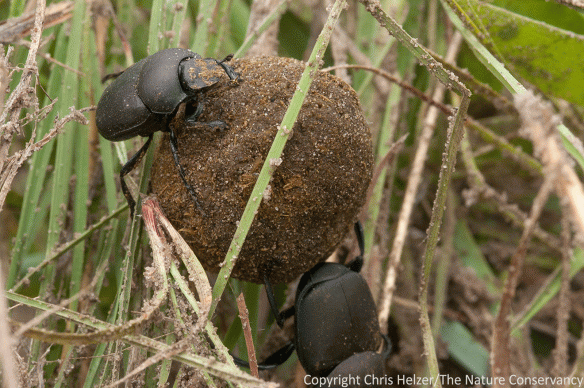
The strength and agility of these beetles was pretty amazing to watch. They moved their ball over and through grass litter and other obstacles without too much trouble. It was particularly impressive since the ball had to weigh many times more than the beetles and only one beetle seemed to be doing the work while the other just rode along on the ball. I couldn’t tell if the beetle on the ball was providing counterbalance to help get over obstacles or if it was just along for the ride.
To be serious for a moment, there are apparently 50 or so species of dung beetles here in Nebraska, and they really do play a really important role in converting manure into productive soil. Strong populations of dung beetles can also break down manure piles before parasites on cattle and bison can lay their eggs in them – helping to control those parasite populations. Ironically, chemical treatments used to reduce parasite loads in livestock can be hard on dung beetle populations because the pesticides remain in the manure. Even more ironically, some people are now advocating the introduction of dung beetles from other continents to bolster declining populations of beetles in U.S. pastures. Humans sure are silly sometimes.
On the other hand, we don’t roll big balls of poop around…


 The Prairie Ecologist