
Photo of the Week – January 29, 2015

Ok, I admit it – I’m a sucker for crab spiders.

A crab spider on Flodman's thistle (Cirsium flodmanii) at the Helzer family prairie.

A crab spider on Flodman’s thistle (Cirsium flodmanii) at the Helzer family prairie.  July 2014.

As much as I enjoy looking at prairie flowers, I enjoy them even more when there’s a crab spider lying in wait among their petals.  I must have more than a hundred photos of crab spiders on flowers, but when the lighting is good and I see those long hairy legs and cute little face… I just can’t help myself!

Do you suppose I need some kind of intervention?

“Hi, my name is Chris Helzer and I really like crab spiders.”  (Hi Chris…)

“It’s been three weeks since I last photographed a crab spider…”  (Applause)
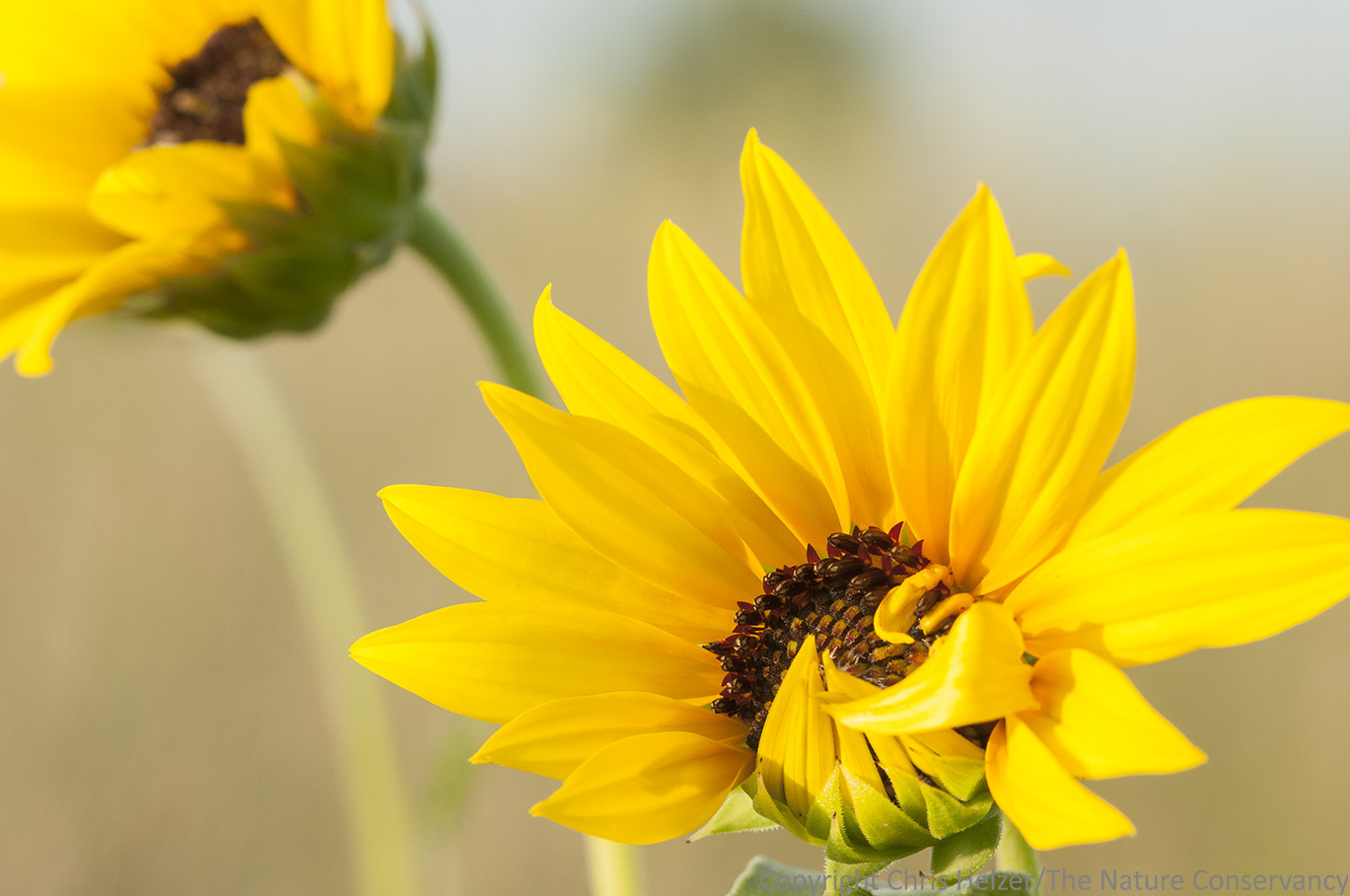
Photo of the Week – January 23, 2015

There are a few subjects I can’t seem to keep from photographing.  Milkweed seeds, for example.  Patterns of ice on frozen wetlands.  Dew-covered insects.  And sunflowers.

What flower is more distinctive?  Their bright yellow color and big round flowers stand out, even in the most showy of flowery prairies.  Insects seem to find stiff sunflower attractive too, based on the number of insects I’ve found and photographed on them.

Plains sunflower (Helianthus petiolaris) in restored sand prairie.  The Nature Conservancy's Platte River Prairies, Nebraska.

Plains sunflower (Helianthus petiolaris) in restored sand prairie. The Nature Conservancy’s Platte River Prairies, Nebraska.

We’re fortunate to have seven different species of sunflower in our Platte River Prairies, five of which are perennials.  The above photo is of one of the two annuals, plains sunflower, which inhabits the drier sandy uplands of our sites and is very abundant in the Nebraska Sandhills to our north.

I have plenty of sunflower photos I like, but this is one of my favorites from last year.  I like the overall composition, but I also like that the sunflower in the foreground is atypical.  Something has prevented the petals (ray florets, for you botanists) from developing completely.  It’s interesting (and not unattractive), and also stimulates questions about what happened, and why.

I like mysteries…