
This post was written by Olivia Schouten, one of our Hubbard Fellows this year. Olivia is an excellent scientist, with strong expertise in plants and plant communities, as you’ll be able to see from this post.
As a biologist with broad interests, I can usually find something to love in all living things, but I’ll admit that plants have a special place in my heart. This is probably a good thing, since I’ve spent the majority of my education and professional life cultivating my knowledge of plants. I’ve found that they are often underappreciated and often overlooked, which is a shame, because plants are some of the most amazing organisms out there (in my humble opinion).
Plants, in most places, not only form the basis of the food chain, but also provide the structure of habitat. A forest with towering trees is very different than an open grassland or a sparsely vegetated desert, and the animals that live there respond accordingly. Plants are eaten, trampled underfoot, exposed to the whims of the weather, and just generally beaten down by the world around them, all on top of competing with each other for resources and space. But while plants have it rough, they are also really good at persisting.
Trees are an excellent example of just how persistent plants can be. I was reminded of this earlier in the summer when I came across a grove of cottonwoods in one of our Platte Prairies while searching for musk thistles. At first glance I thought one of the cottonwoods had recently fallen and the leaves hadn’t died back yet. On closer inspection, however, I realized that the tree had probably fallen years ago, and instead of dying, the parts of the trunk that now contacted the earth had sprouted roots and continued on living. Branches had grown up from the trunk,and now looked essentially like three trees, all connected by the same fallen trunk.
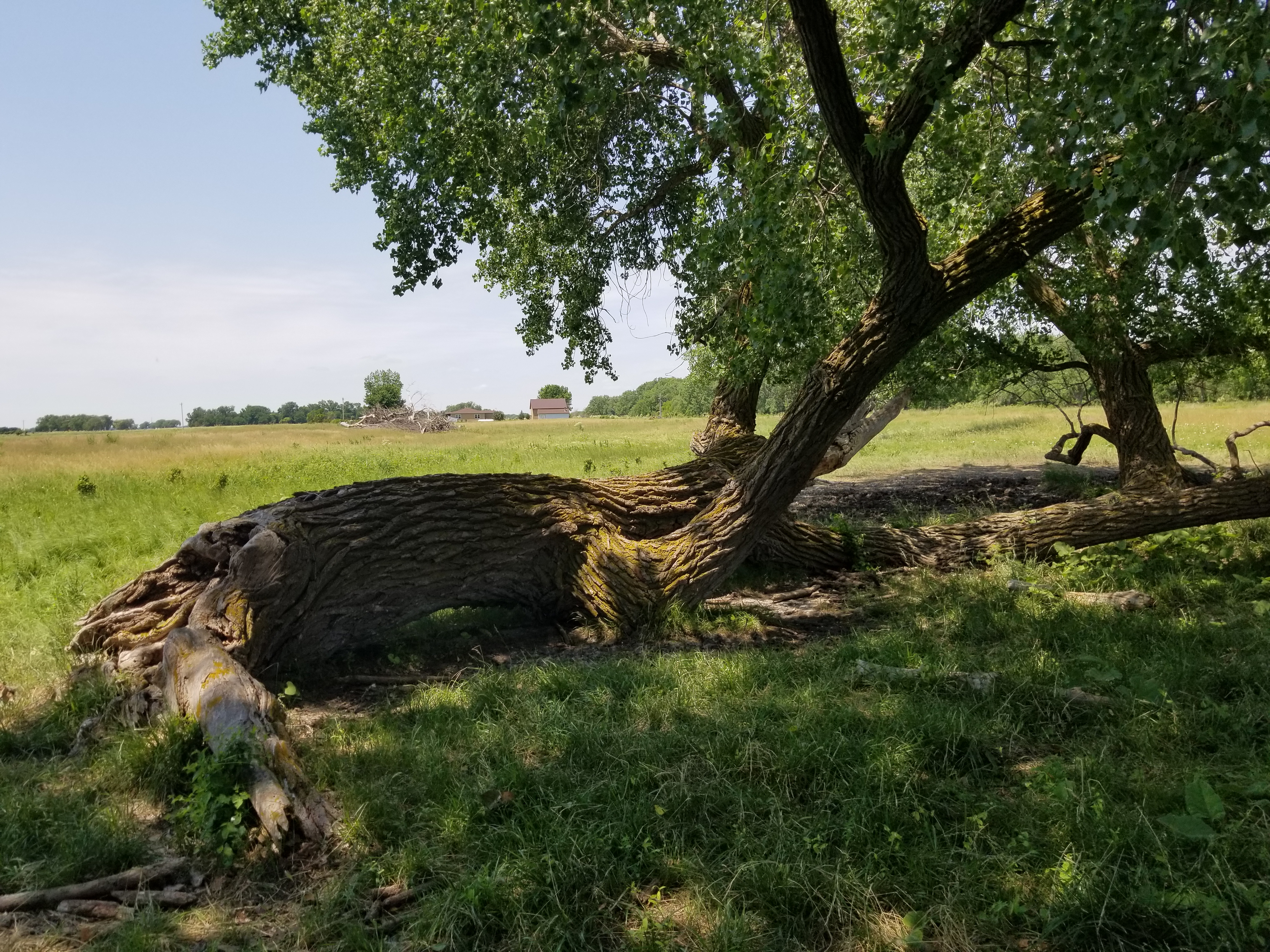
Trees are clearly hard to kill, as anyone who’s tried to cut down a deciduous tree in your yard knows. Once the tree is cut you have to treat the stump with herbicide, otherwise the still-living roots will simply sprout again. Nearly every tree we cut here on the Platte to keep our prairies open needs to be treated with an herbicide. While it would be nice to not have to use chemicals in our stewardship work like this, that resilience of trees can also be a blessing. After the wildfire at our Niobrara Valley Preserve a few years ago, much of the forest along the river was killed. However, the oaks along the slopes are re-sprouting from their roots, as only the tops of the trees had been killed in the blaze. Because of this, these forests have a jump start on regenerating after the devastation of the fire.
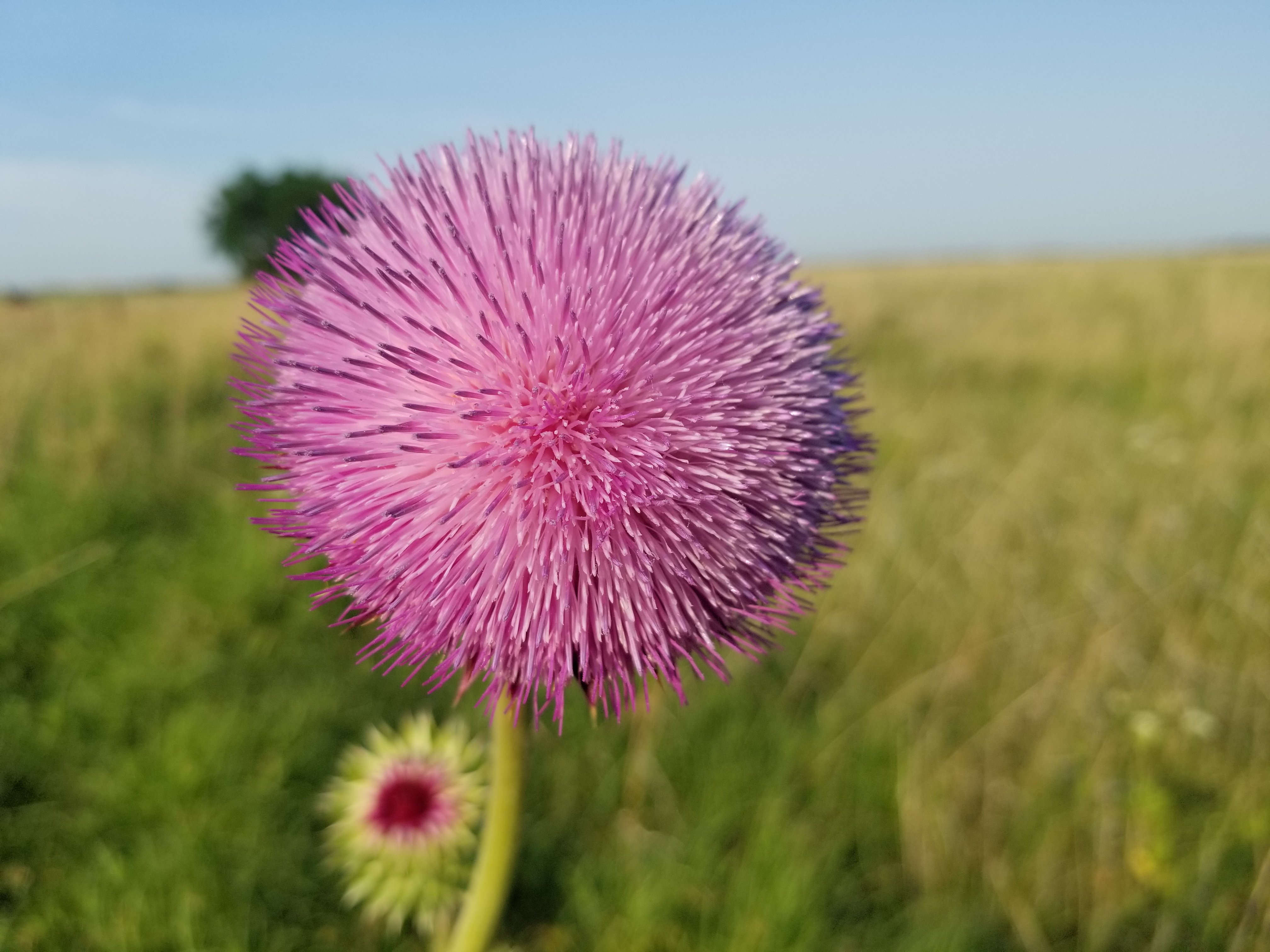
Since I found that cottonwood looking for musk thistles, it’s probably worth talking about them and their own resilient strategies. As a biennial, these plants only have one chance to flower and produce seeds, so they produce thousands of them at a time. And they can fly. That’s not great for us, considering they are considered noxious weeds here in Nebraska, but as a strategy for this plant it certainly pays off.
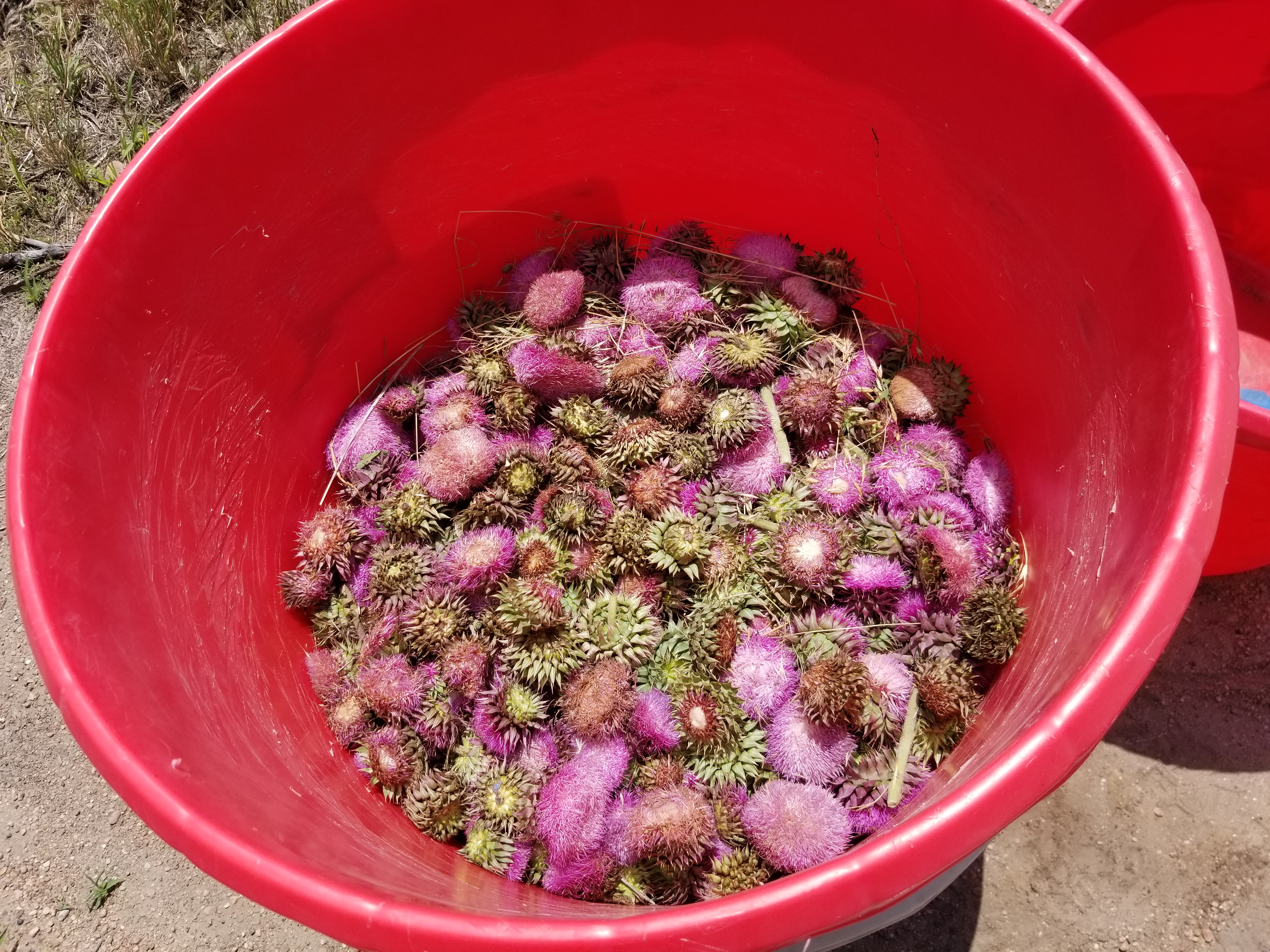
But wait, there’s more! Even when uprooted or sprayed with herbicide, if the flowers on a musk thistle plant have been pollinated, they will still produce seeds! So when we control this plant, we not only cut off the root just under the ground and pull it out, we have to collect any flowers, or else nothing will actually have been controlled. This persistent ability of musk thistles makes things more difficult and time consuming for us to control, but you have to admit that it’s a cool adaptation, and in its native habitat, likely very useful.
So far these examples relate back to land management, and how the difficulty in killing plants affects our ability to effectively manage invasive plants in prairies. But we rely on these same tenacious qualities in our native prairies species as well. Chris talks a lot about the resilience of prairies on this blog, and a lot of that depends on the persistent nature of individual plants.
Consider big bluestem, a favorite of both cattle and bison. It can be cropped down again and again to within an inch of the ground over a growing season, but while such trauma might kill another plant, big bluestem holds on until the herd moves on and it gets a break, coming back taller and stronger the next year, until it’s back to full strength within a few years. In addition, even in those years that it’s hammered by grazing, big bluestem will find a way to flower, since all that short and weak vegetation around them makes for a good place to put out seeds.
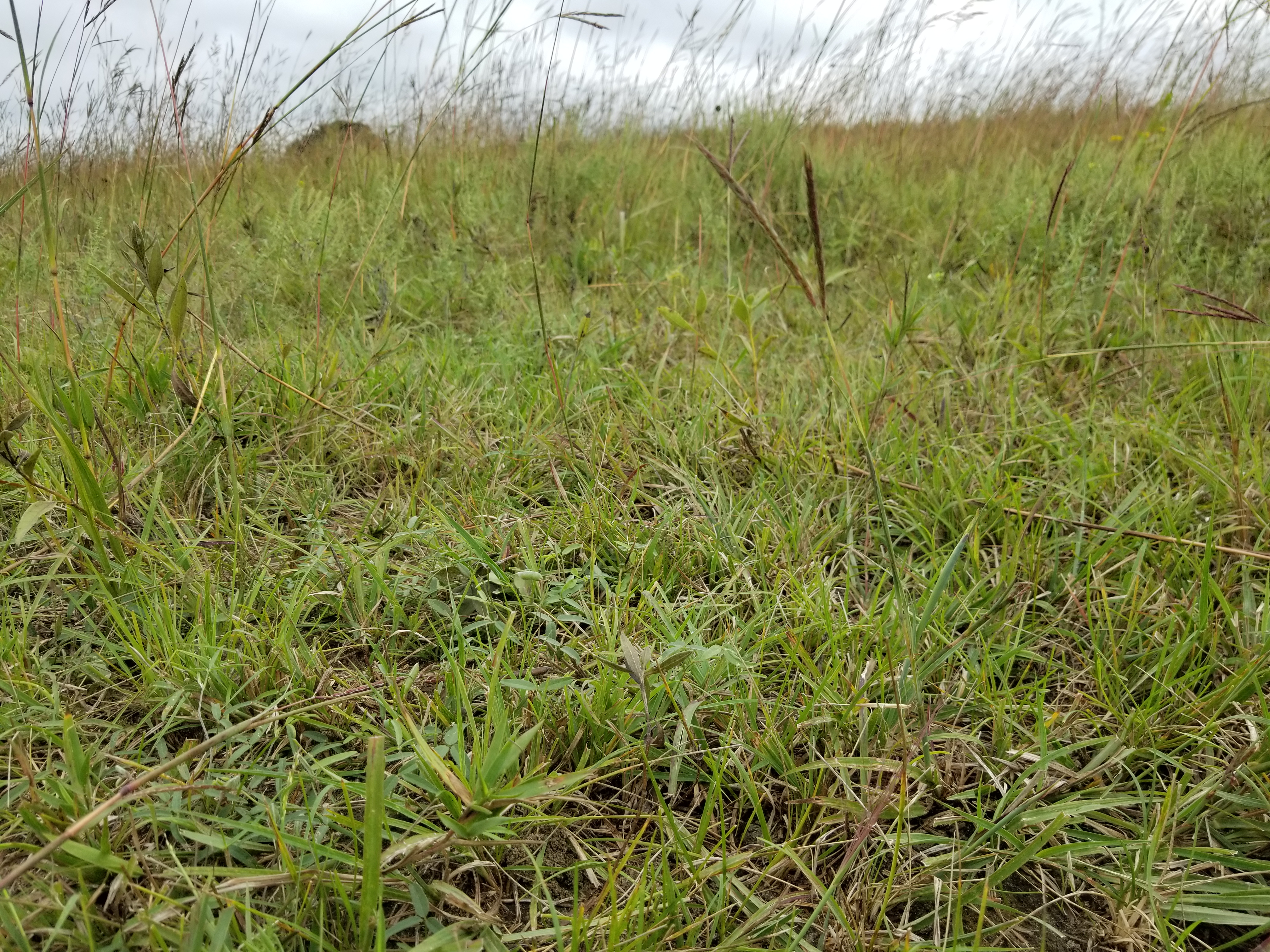
Other plants may just find that conditions in a certain year aren’t for them. Maybe it’s too dry, or too cold, or the grasses around them are just too tall. Perennial prairie plants don’t let that stop them, as many will simply take a break, growing very little above ground for a year, relying more on stores of energy in their roots than anything else. To some, it may seem like those plants have died and disappeared from a field. But just wait, when conditions become favorable, most of those plants will show up again, just as strong, and benefiting from that strategy of waiting it out through the hard times.
Now, just because plants are tough doesn’t mean they’re invincible. If put under too much stress even the most stubborn plant will eventually die. Knowing how plants are able to persist can help us more effectively target those plants we don’t want, but also help ensure that our desirable plants always have a chance to let their persistent nature shine!





 The Prairie Ecologist