
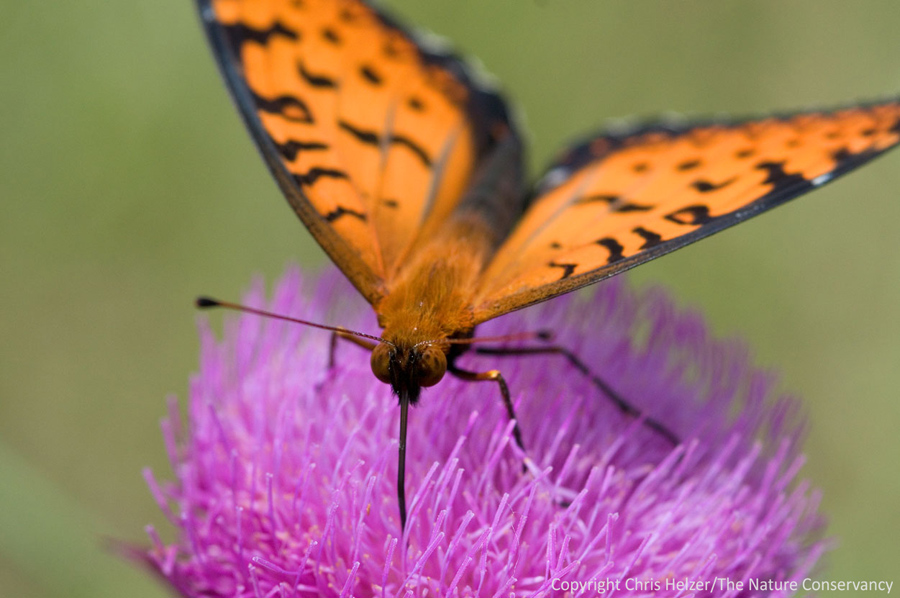
As I mentioned in my last post, regal fritillaries are out in high numbers in our Platte River Prairies. We’re watching – among other things – what plant species they’re using for nectaring, and are interested to see if that use is similar to what we saw last year. Right now, the most attractive plant to fritillaries is one that might surprise you – musk thistles.
On the other hand, if you’ve spent much time watching butterflies, you’ll not be too surprised at the attractiveness of this noxious weed to butterflies and other pollinators. Native thistles are recognized as important nectar sources, but non-native thistles, especially those we’re legally obligated to eradicate, don’t always get the same positive attention. This week our technicians were out looking for both musk thistles and regal fritillaries (for different reasons) and they were finding both simultaneously! We ended up killing a lot of thistles out from under butterflies.
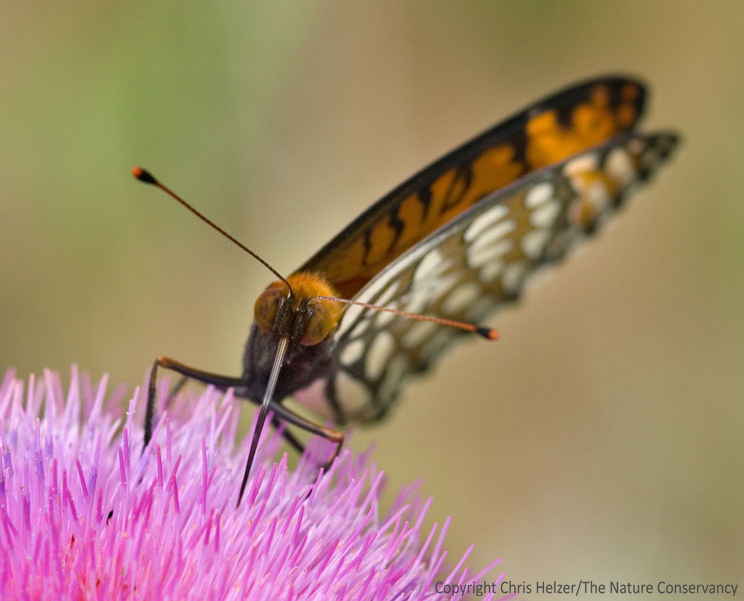
Here is a selection of photos from last Friday, showing fritillaries getting what they can out of these noxious weeds before we kill them off (the thistles, not the butterflies…)


It seemed like every musk thistle had a regal fritillary on it...
.
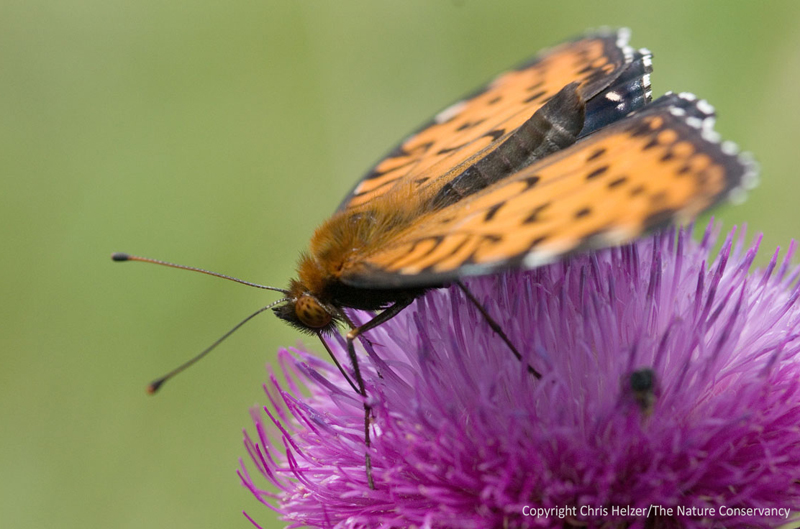
This fritillary flattened itself against a strong wind gust.
 The Prairie Ecologist