Photo of the Week – July 9, 2015

Upright yellow coneflower (Ratibida columnifera), aka Mexican hat, is blooming all over the Platte River Prairies right now.  As with most showy flowers, the coneflowers are crawling with insects of many kinds.  I spent a fun half hour (31 minutes, to be exact) last week, trying to photograph as many of those insects as I could before I had to pop into our field headquarters for a meeting.
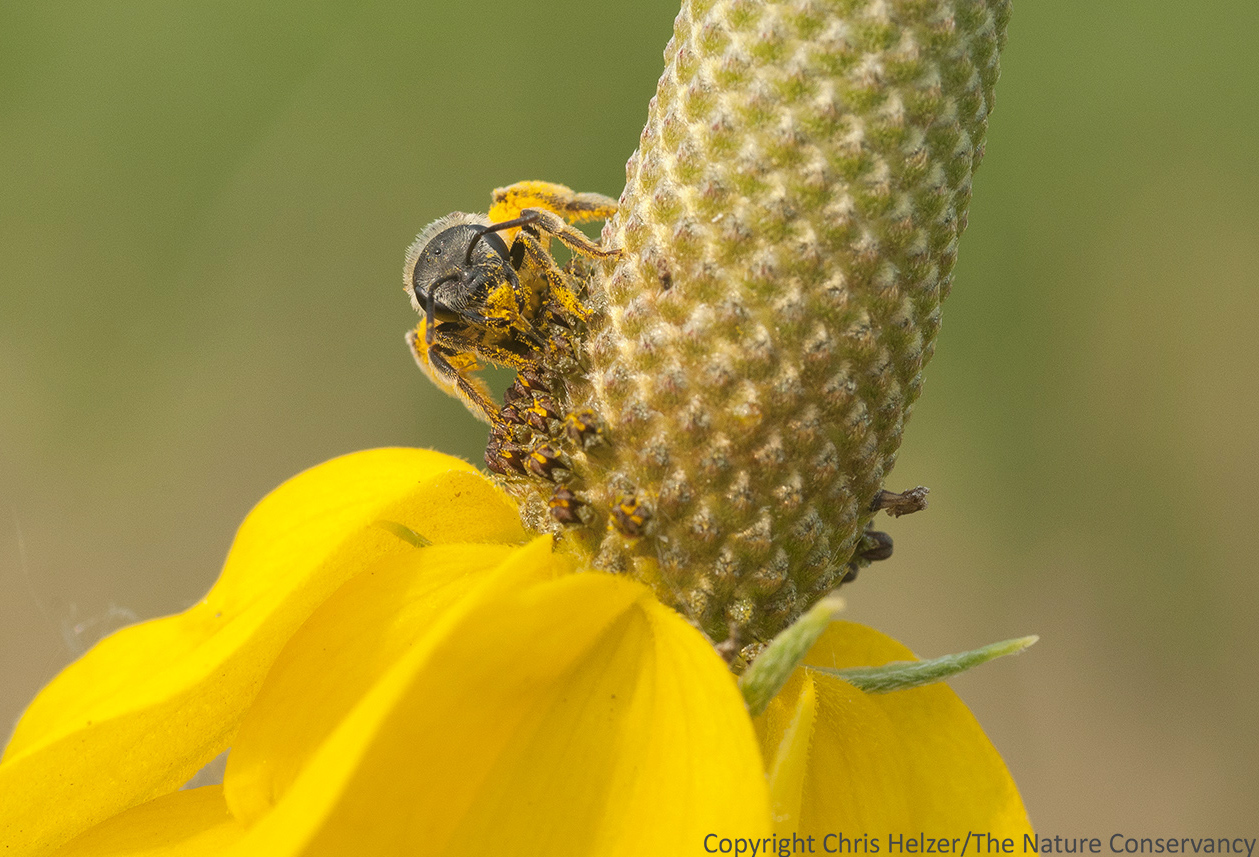
Bee on upright prairie coneflower.  The Nature Conservancy's Platte River Prairies, Nebraska.

Sweat bee (Halictus ligatus, I think) on upright prairie coneflower. The Nature Conservancy’s Platte River Prairies, Nebraska.

Bee and beetle on upright prairie coneflower.  The Nature Conservancy's Platte River Prairies, Nebraska.

The same sweat bee species on a different flower, this time joined by a small brown beetle.
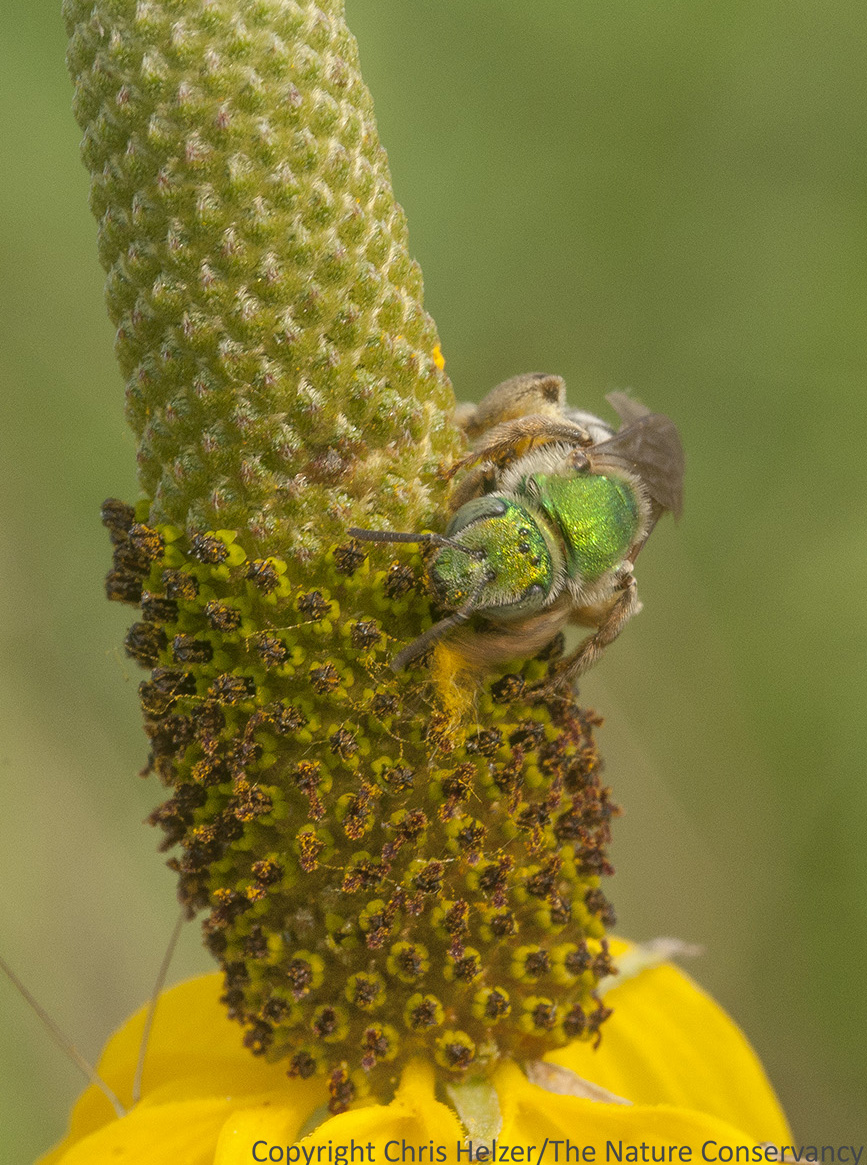
Bee on upright prairie coneflower.  The Nature Conservancy's Platte River Prairies, Nebraska.

A different bee with the antennae of another insect beneath it.

Hover fly (Syrphid) on upright prairie coneflower.  The Nature Conservancy's Platte River Prairies, Nebraska.

It took me a while to finally capture an image of one of these syrphid flies (hover flies).  They were a lot more skittish than the bees.
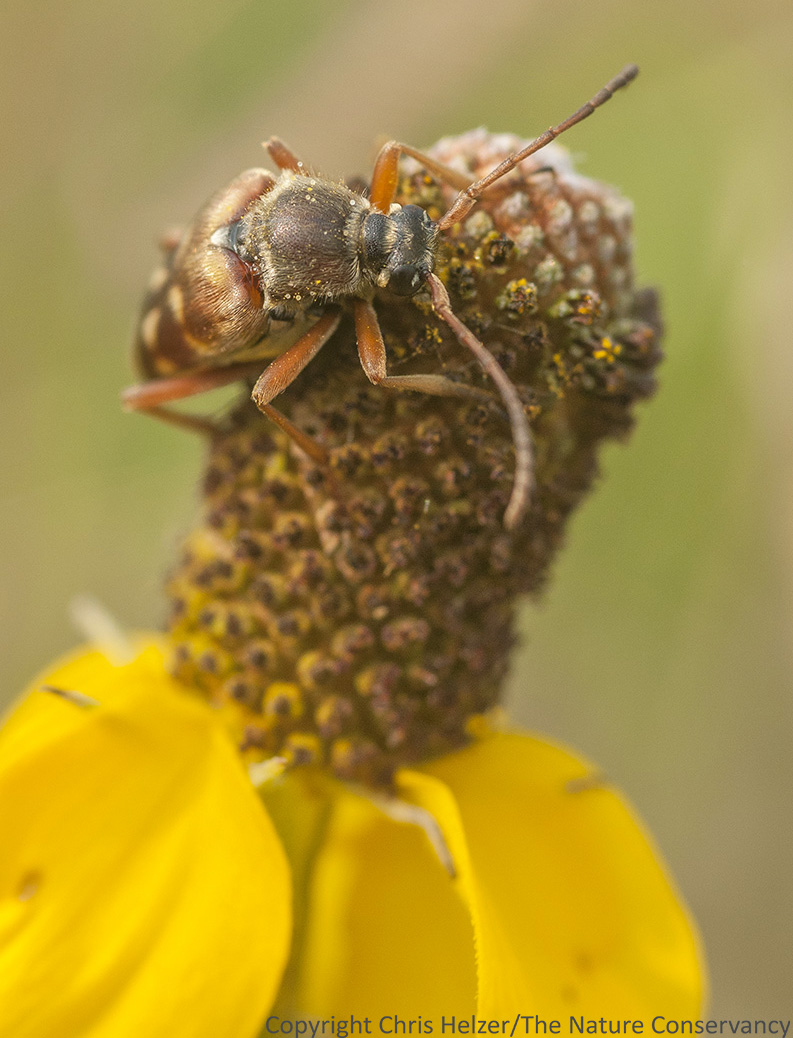
Long-horned beetle on upright prairie coneflower (Ratibida columnifera).  The Nature Conservancy's Platte River Prairies, Nebraska.

Long-horned beetle feeding on pollen.

I wrote about long-horned beetles last summer after photographing them on the same flower species.  I think this one is Typocerus confluens, but I’m just guessing based on photos from last year.  You might remember from last year that adult long-horned beetles feed on flowers, but larvae are wood borers or subterranean root feeders.
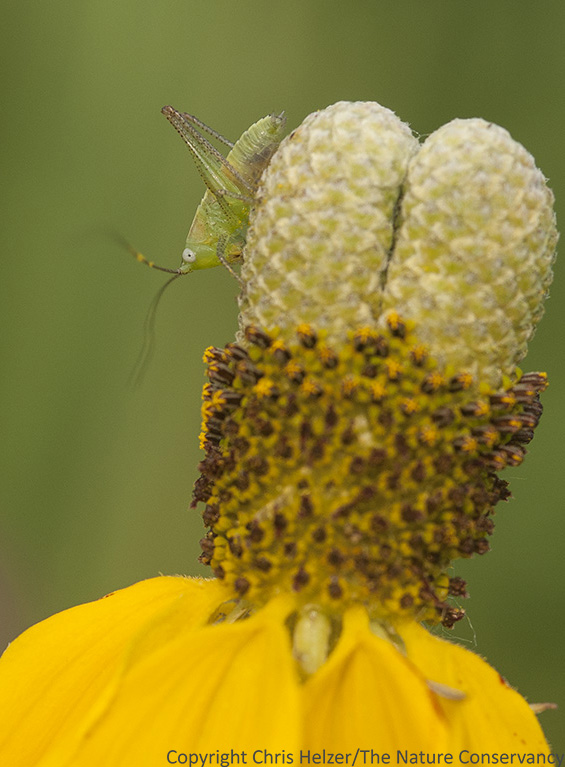
Katydid nymph on upright prairie coneflower.  The Nature Conservancy's Platte River Prairies, Nebraska.

A tiny katydid nymph.

Tree cricket nymph on upright prairie coneflower.  The Nature Conservancy's Platte River Prairies, Nebraska.

A tree cricket nymph.

As is always the case in prairies (and nature in general), the closer you look, the more you see.  The number of insect species feeding on this one flower (and, in some cases, pollinating it) is a great example of the complexity of life found in prairies.  Complexity leads to resilience because there are multiple species that can play fill similar roles.  If one species has a bad year, others will fill in for it.  That redundancy helps keep all systems functioning all the time.

Hurray for complexity!
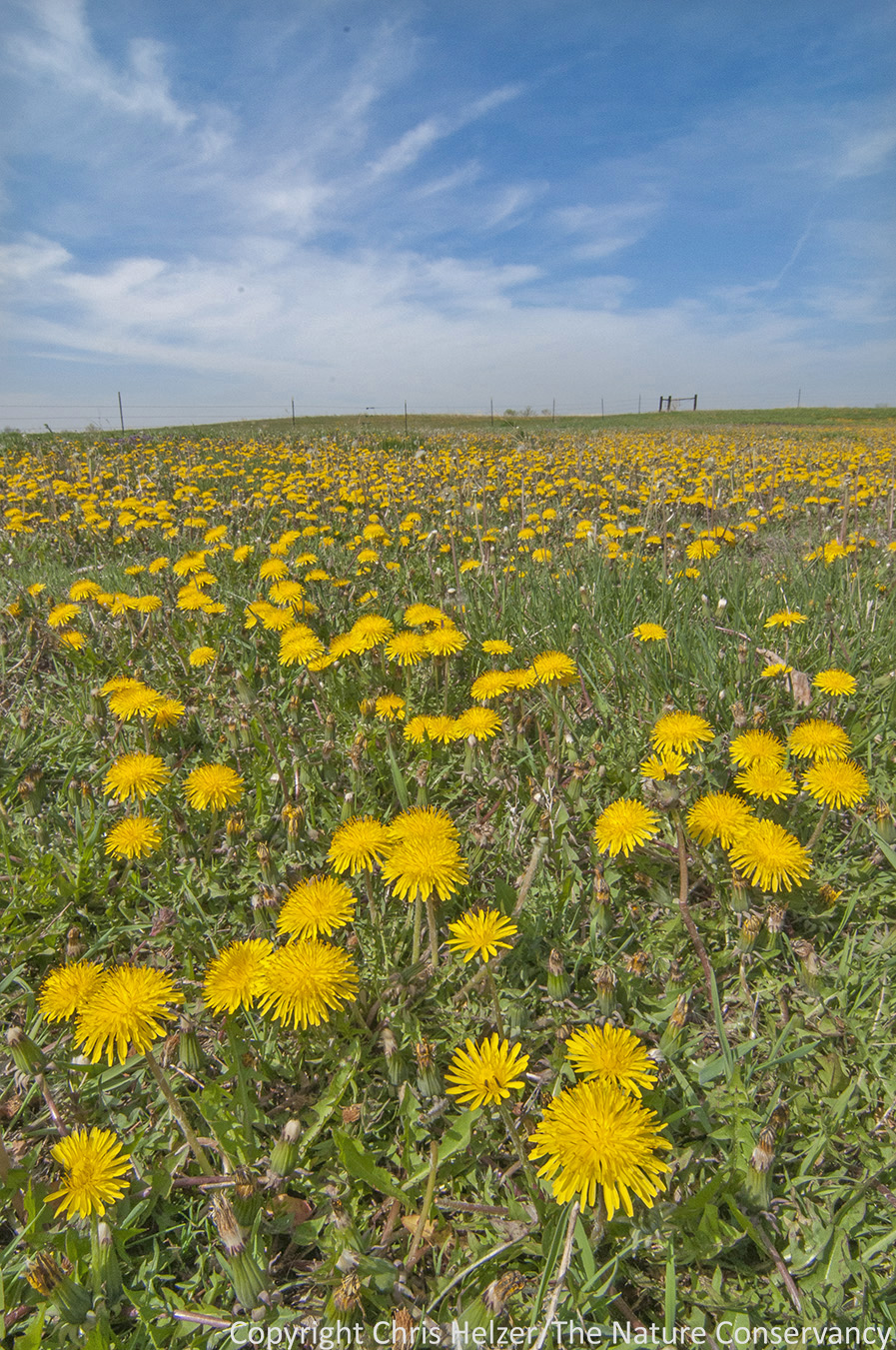
Photo of the Week – May 8, 2014

In my last post, I mentioned that I didn’t mind having dandelions in my prairies.  Here is a further celebration of this beautiful, tough little plant.

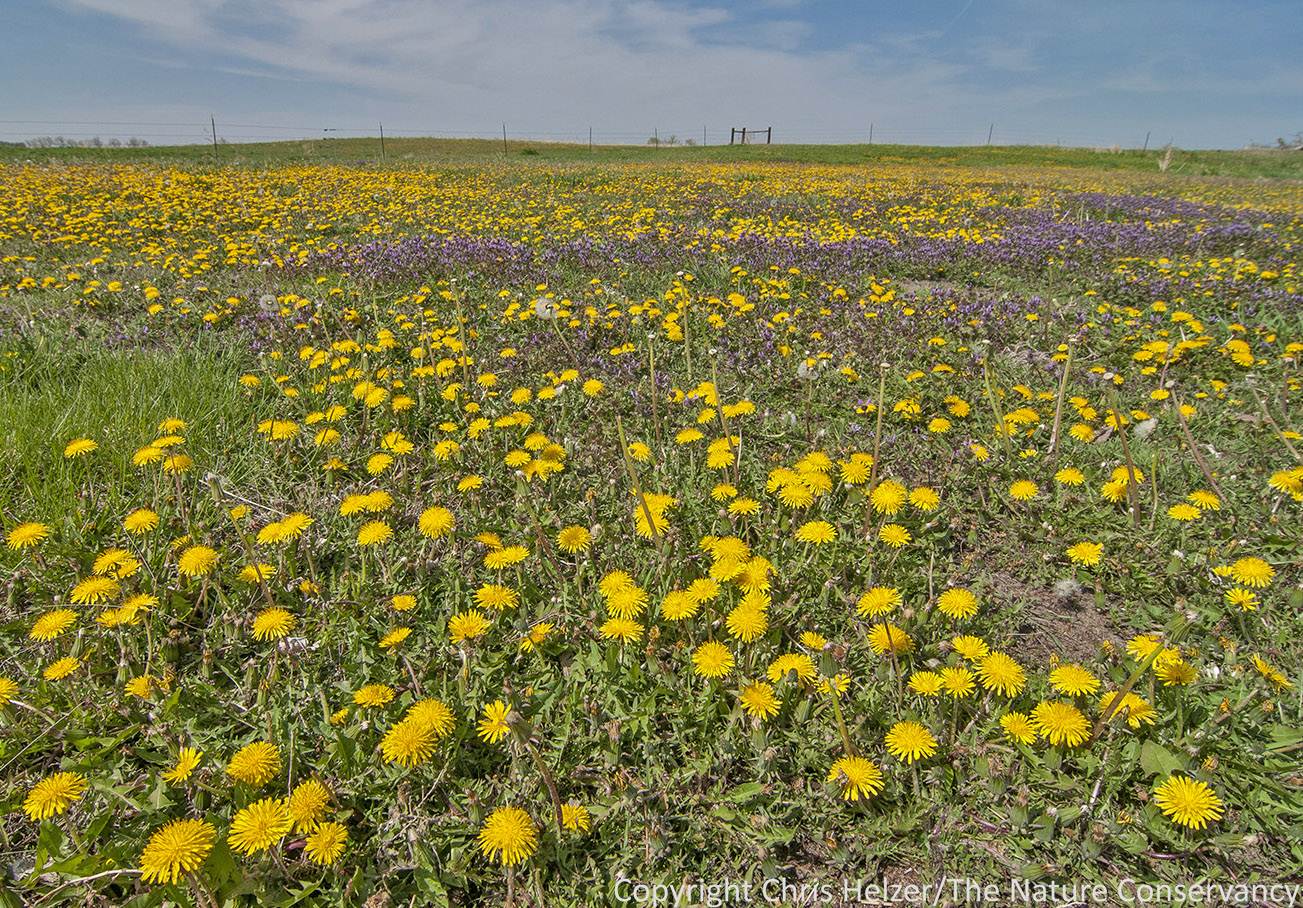
Dandelions - pollinator heaven.

These dandelions were blooming near our shop building earlier this week.

While dandelions (Taraxacum officinale) are kind of weedy, they are not invasive – at least not in our prairies.  They essentially fill spaces left when perennial plants are either absent or weakened.  Typically, they come and go from the plant community pretty quickly, except in places (like around our shop) where frequent mowing and/or poor soil conditions prevent more competitive plants from establishing.

The dandelion’s status as a non-native plant doesn’t bother me in the least.  It is an attractive species and is great for pollinators – especially in the early part of the season when few other plants are blooming in our prairies.  Until relatively recent history, dandelions were seen as a useful and attractive garden plant around the world.  We’ve made the social decision to call it a weed, but that doesn’t change it’s ecological value.  You can read more about the history and uses of dandelions here.

Dandelions and henbit

Dandelions and henbit (another pretty and innocuous non-native flower) offer a nice counterpoint to each other, don’t they?

If you can get past the social aesthetic of dandelions as weeds and look at them as just a flower, they’re really very pretty.  Kids, who haven’t yet been pressured to label dandelions as a nuisance, can see that beauty – why can’t we?

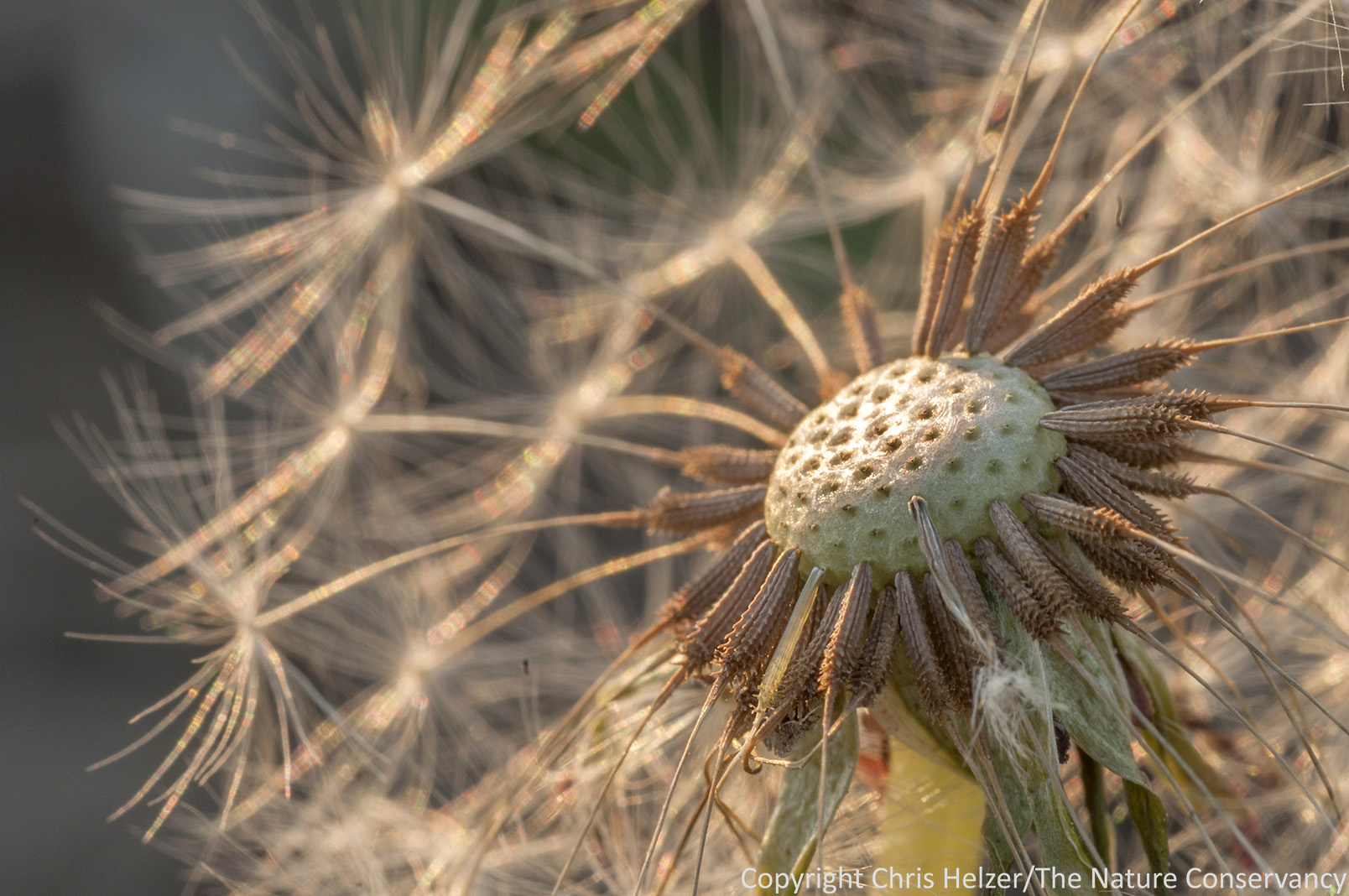
Dandelion seeds

Dandelion seeds at the Helzer Prairie last week.