Over the last five years or so, I’ve been learning a lot more about pollinators, and that has changed the way I look at prairies. As I walk around our prairies, I often think about how I would see the site if I was a bee trying to find enough nectar and pollen to both survive and provision my eggs. Often, our prairies are full of flowers, but April and May can be pretty tough months. The flowers that are blooming tend to be small and scattered, and I can walk a lot of steps without finding anything.

Prairie ragwort (Packera plattensis) was a welcome sight for this orange sulphur butterfly after its northward migration this spring.
The lack of available flowers in the spring is not necessarily a new thing. Spring weather is unpredictable, and investing resources in blooming early means risking a late freeze or (in some cases) flooding rains that can scuttle the whole process. However, many prairies today have fewer spring flowers than they used to, and restored prairies (crop fields converted back to prairie vegetation) are often low on spring flowers because finding seed for those species is difficult. Flowering shrubs can help make up for a scarcity of spring wildflowers, but they are also less common these days than they used to be.
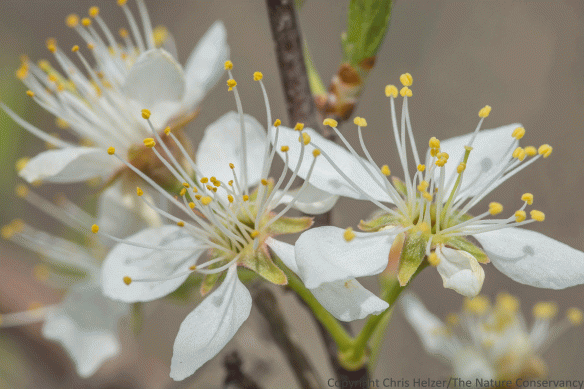
Shrubs like this wild plum (Prunus americana) can provide critically important pollinator resources when few wildflowers are blooming. This photo was taken back in mid-April.
Prairie managers and gardeners can both play important roles in helping to provide spring flowers for pollinators. In prairies, allowing shrubs to grow in some areas of the landscape can benefit pollinators in the spring, but also help out increasingly rare shrub-nesting birds during the summer. Thinking about spring flower availability might also help inform prairie management plans, and enhancing restored, or even remnant prairies, to add missing spring wildflowers might be beneficial as well. For gardeners, adding native spring wildflowers can be both aesthetically pleasing and extremely important for the bees and other pollinators in your neighborhood.

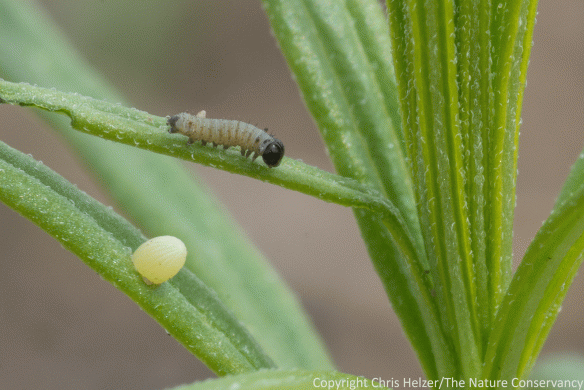
By the time this monarch emerges as an adult in a few weeks, there should be plenty of wildflowers available for it. Hopefully, it will be competing for nectar against a number of bees and other pollinators that made it through a tough spring season.