
Japanese beetles (Popillia japonica) first appeared in the U.S. back in 1916 (in New Jersey) and have been spreading west since then. They’ve only started to be abundant in our part of Nebraska during the last several years. As a result, I’m not really sure what to expect in terms of potential impacts to our prairies. I’m largely writing this post to hear what my friends to the east have been seeing, since the little buggers have been around there longer.

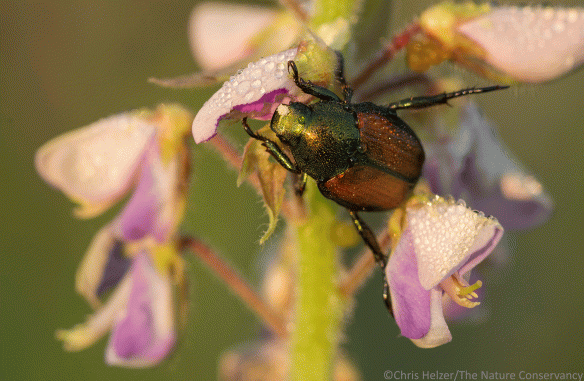
Japanese beetles are known pests of gardens and crops, but what are their impacts in prairies? This one was eating the flowers from leadplant (Amorpha canescens)
While I’m not sure what to expect in prairies, our family has had plenty of experience with their ability to damage our garden crops. Japanese beetles wiped out our raspberry crop last year and were trying really hard to kill our little apple tree this year. I’m not a fan.
For those of you not familiar with Japanese beetles, they are about 1/2 inch long beetles that are metallic green with brown wing covers. The series of white spots around the edge of their abdomen are actually little patches of white hairs, and those help distinguish them from lots of other metallic green beetles. The larvae feed mostly on the roots of grasses, and they are a big pest in lawns and other turfgrass situations. As adults they’re known to attack over 300 different plant species, with corn, soybeans, maples, elms, plums, roses, raspberries and grapes among their favorites. Hence, they are pretty unpopular with gardeners and farmers alike.
Adults emerge in the early summer and seem to spend the vast majority of their time eating and mating – often at the same time. Females take breaks from feeding/mating to burrow a few inches into the soil in grassy areas and deposit a few eggs. Then they come back out and join the crowd again for a while. They can repeat their burrowing/egg laying up to 16 times a season. Most adults live for about a month or month-and-a-half, but some can live up to 100 days or more. They are skeletonizers of plants, meaning that they feed on the portions of leaves between the veins, leaving behind only the skeletons of those leaves.

Japanese beetles skeletonizing leaves of Illinois tickclover (Desmodium illinoense)
I’ve been trying to pay attention to Japanese beetles in prairies, but I don’t feel like I’m learning very much yet. The biggest infestations I’ve seen have been in the small prairies here in Aurora (Lincoln Creek Prairie). In bigger prairies outside of town, I don’t see nearly as many. At Lincoln Creek, the beetles feed on a lot of different plants, but seem to have special attraction to tick clovers (Desmodium) and the flowers of roundheaded bushclover (Lespedeza capitata). However, while I’ve seen many plants nearly covered with beetles, many others manage to successfully bloom and make seed, so I don’t yet see the beetles having any major impacts.

Japanese beetles feeding and mating on roundheaded bushclover (Lespedeza capitata)
Despite a heavy presence on Illinois tickclover flowers and leaves, many plants still produced seed this season, at least at Lincoln Creek Prairie in Aurora, Nebraska
Help? What are those of you in the Midwest and further east seeing in prairies that have had decades or more of Japanese beetle infestations? Any evidence that they might wipe out particular plant species? Should we be concerned about them in our Nebraska prairies or just focus on protecting our gardens and crop fields?
Any advice is welcome – thank you.


 The Prairie Ecologist