
I’ve delayed writing a post about soil carbon and soil health in prairies for years because I haven’t been able to figure out how to do it. It’s a difficult subject to write about because we (scientists) know disappointingly little about the subject. In fact, I thought seriously about making this blog post nothing but a title and a single hyphenated word of text. Something like this:
<<< >>>
What do we know about prairie management and soil health?
Diddly-squat.
<<< >>>
The idea made me chuckle, but based on my experience telling jokes at home, I probably would have been the only one laughing. Most of you would have felt disappointed because you were hoping for some helpful information. Well, join the club. I’m fortunate to know quite a few brilliant people who are well-educated on the subject of soils, soil carbon, soil health (whatever that is – definitions vary wildly), and related topics. However, my numerous queries to them about how we should manage prairies to improve or sustain soil health have pretty much yielded me diddly-squat.
That’s not completely true, of course, but it’s also not much of an exaggeration. We know much more about how farming practices affect soils in crop land than we do about how fire, grazing, or other management affects soils in prairies. There are actual useful tips farmers can use to improve their soil productivity and health – e.g., “don’t till your field more than necessary.” People can use that information to do good. Wouldn’t it be great to have something similar for prairie management?
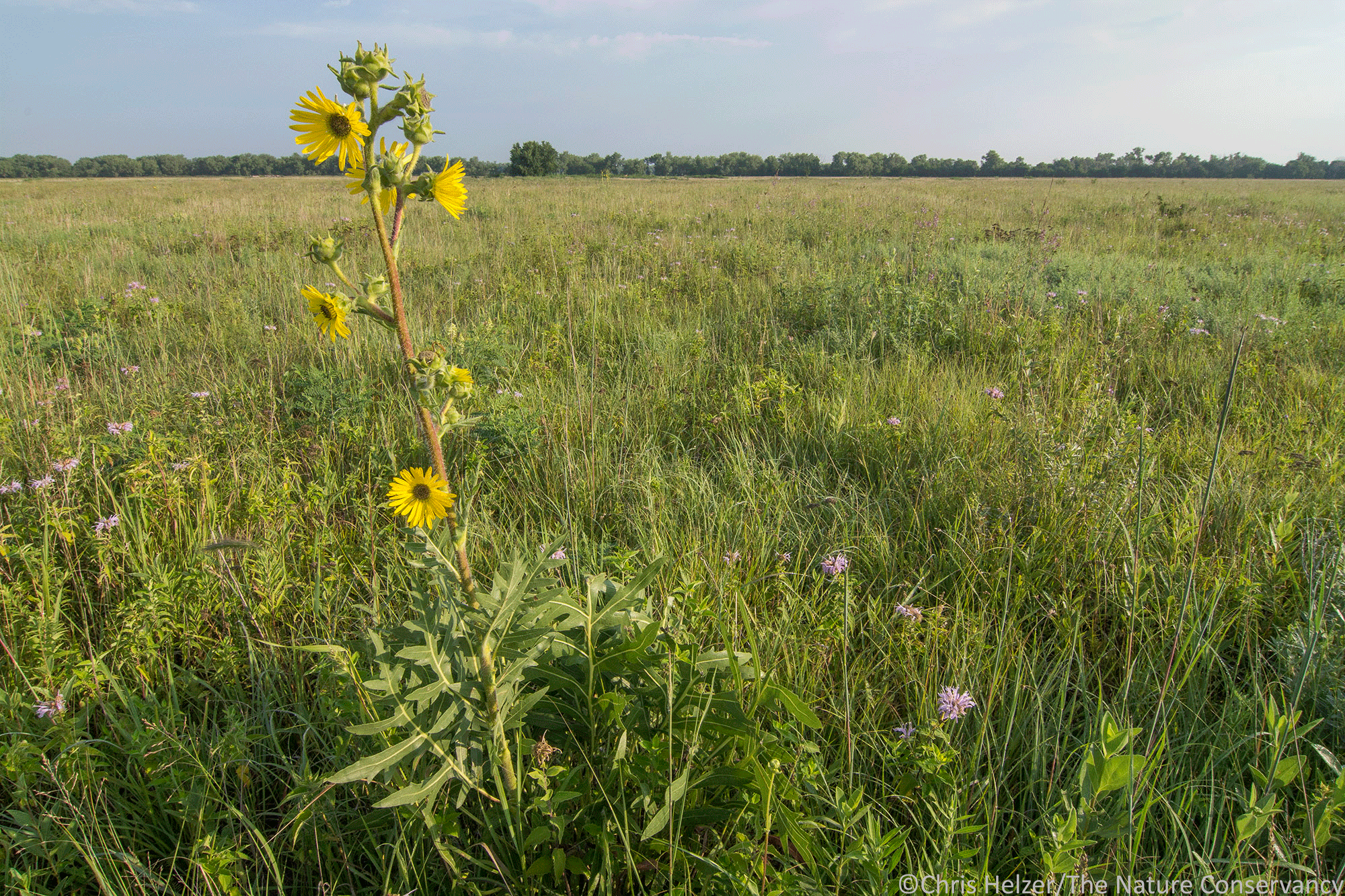
In just a minute, I’m going to give you some useful information about soil carbon in prairies, but trust me, it’s not going to be very satisfying. You might ask yourself why I would even write a blog post if there isn’t much information on my chosen topic. Good question. There are two reasons. First, a lot of people ask me about it. Second, there is a whole lot of mythology and just bad information out there about soil health and grasslands, and I’m getting increasingly frustrated by that.
If you hear someone talk about how some kind of grassland management strategy (fire, grazing, etc.) affects soil health or soil carbon sequestration, be skeptical. Remember that loud confident voices aren’t necessarily right, and anecdotal results or even data from a single prairie, farm, or ranch operation can be biased, wrong, or at least minimally extrapolatable. I’m not saying someone who loudly advocates for a particular approach is being dishonest. I’m just saying that it would be smart to do some searching for peer-reviewed research that backs up any claim before you invest in a new strategy.
Ok, I’ve written nearly 500 words without giving you any useful information. Here are the few statements about soil carbon and soil organic matter in prairies that seem to be generally agreed upon by most soil experts I’ve talked to, including several I reached out to while working on this post:
Soil organic matter is added to grassland soil primarily through roots, their exudates (substances secreted into the soil by roots), and root turnover.
Experts are quick to point out that this can be less true in other ecosystems, including forests, and that even in grasslands, there are other important sources of soil carbon, including charcoal (aka biochar) from fires. Regardless, it’s really important to understand the important contributions of plant roots when you think about soil organic matter in prairies. Inputs from grass litter aboveground (vegetative matter from previous growing seasons) can also add to soil organic matter. However, there is general skepticism among soil scientists that the trampling of grass litter by livestock (for example, in mob grazing or similar intensive rotational grazing systems) has much influence on overall levels of soil organic matter.
The amount of total soil carbon changes very slowly in prairies.
Never-cultivated prairies tend to have high levels of organic matter because production has exceeded decomposition for a very long time. In these prairies, increases in soil carbon are hard to detect because of how much carbon is already present. Picture how little the waterline in a nearly-full bathtub changes when you dump in a cup of water. Prairies that have been re-planted in former crop land start with lower carbon levels (much less water in the bathtub) and so often show more marked changes in soil carbon over time. However, those rates of change can be highly variable between sites.
In addition, the amount of soil carbon in soils is not uniformly distributed within the soil profile (the vertical section of soil from the surface down to underlying rock). For example, there tends to be more carbon nearer the surface where grass roots are most concentrated. Also, the rate at which soil carbon levels change can vary quite a bit by depth, which can make it hard to get good measurements of the overall trends.
To make things more complicated, not all organic matter is equally decomposable. Some soil organic matter is labile; it is decomposed by soil microbes and plants can take up the released nutrients. Other forms of carbon are harder to decompose (e.g., charcoal) or inaccessible to microbes (organic matter bound onto soil minerals or within aggregations of soil particles). These recalcitrant forms can be stored in soils for longer time periods (centuries!) and are much less a part of the active carbon cycle. As a result, changes in total soil carbon may not directly reflect how soil functions or processes are changing.
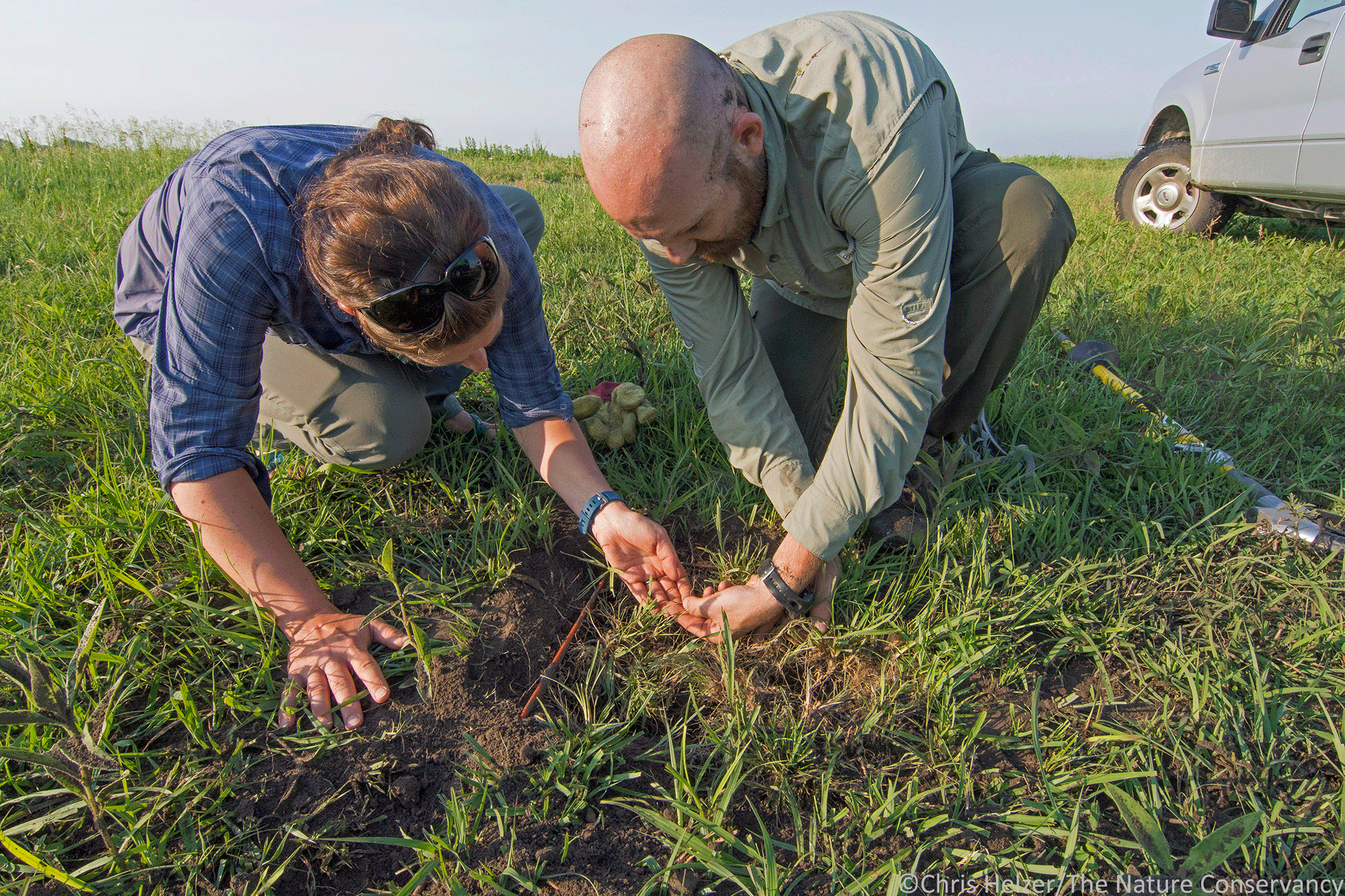
Soil health is a term that isn’t well defined or, perhaps, even useful in grasslands. The term works better in crop land, where it can be an indicator of soil fertility (though it is still often defined and applied quite variably within that context).
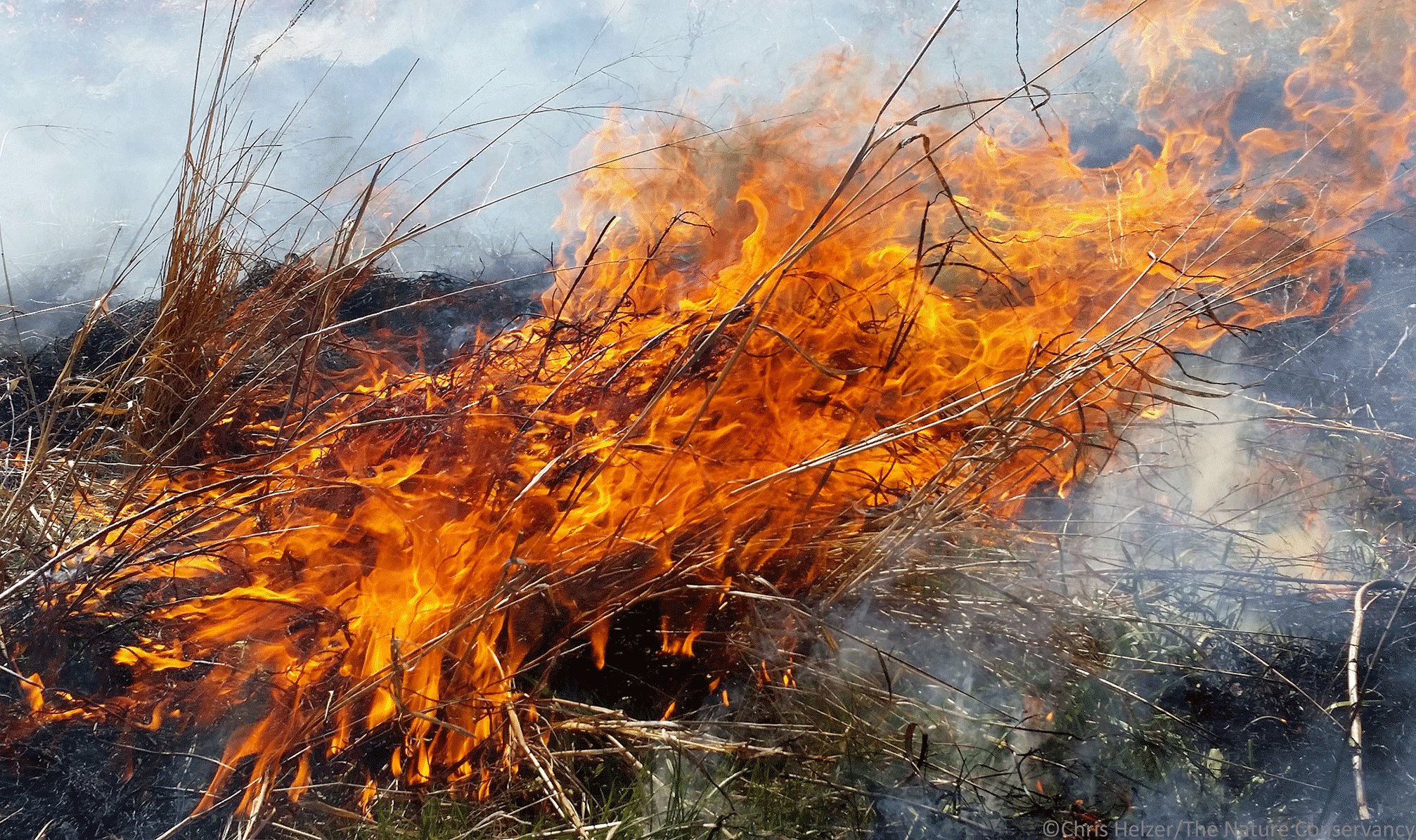
This is also where I reiterate the disappointing news about how little is known about how various prairie management strategies affect specific soil traits or qualities. There’s a lot of research ongoing, and eventually we’ll learn a lot more than we know now. Impacts of prescribed fire on soils has been studied a lot, but the impacts vary with geography, soil productivity and depth, frequency of burning, and other factors. In some cases, fire can increase root production and turnover enough to make up for the carbon that goes up in smoke, but that also depends upon how often fires occur and other factors.
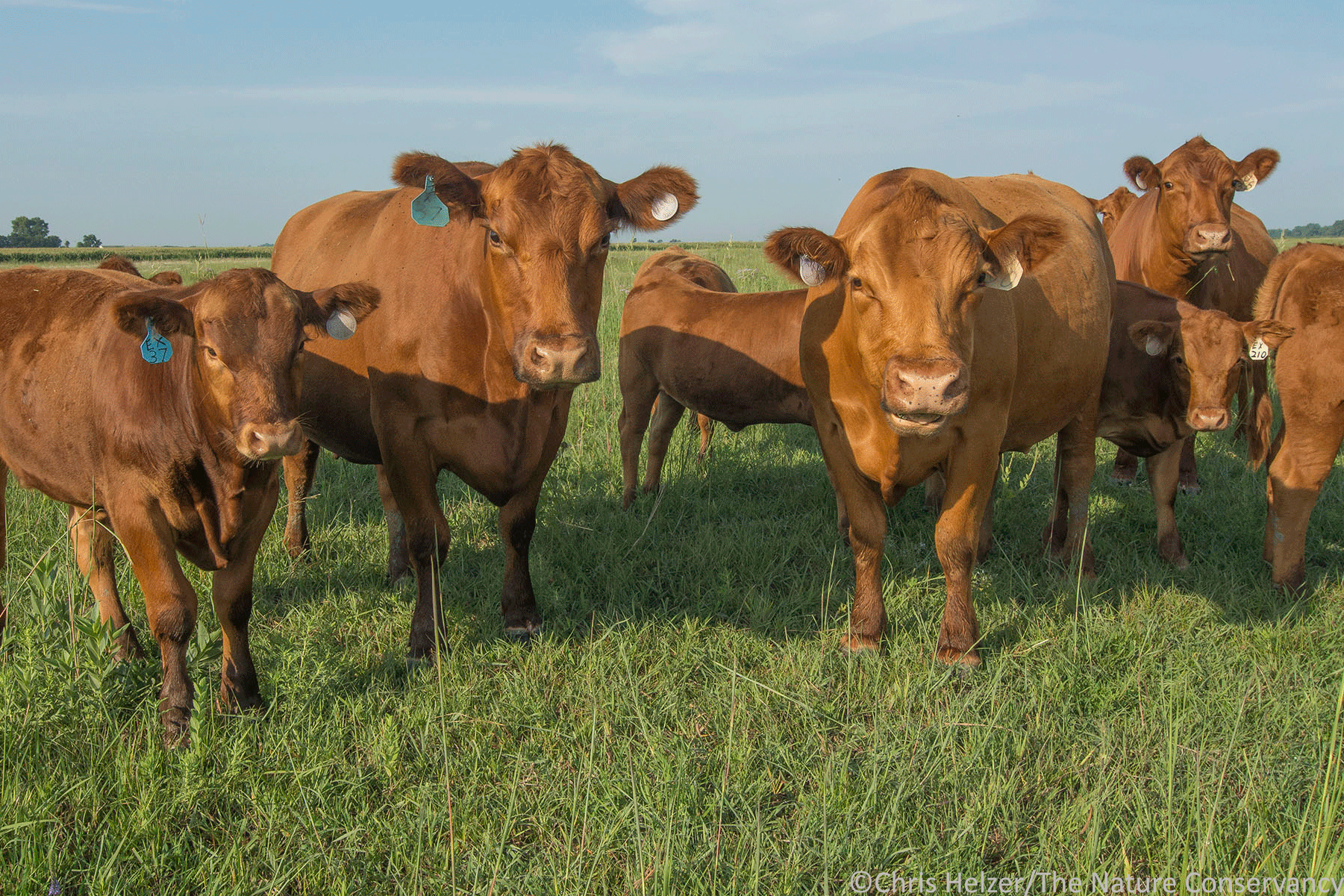
When grazing is added to that mix, it becomes even more difficult to predict impacts on soils. Consistent overgrazing is probably bad for soil organic matter and most belowground functions, but we don’t know much beyond that. There is some evidence that moderate grazing might create more soil carbon than no grazing, but again, that seems to vary a lot by geography and soil type. I know of at least one study currently looking at how different grazing systems might affect soil carbon, but it’s going to take many years of research at many locations to get us much useful information about how something like patch-burn grazing might vary from a deferred rotation or traditional continuous grazing system in terms of impacts on soil organic matter.
At this point, it appears that high levels of soil carbon are linked to high plant species diversity, along with productivity. It seems fair to assume, then, that managing for plant species diversity should be good for soil carbon – as long as that management doesn’t reduce overall productivity. Probably. Hopefully. With lots of caveats and assumptions in need of testing. You get the idea.
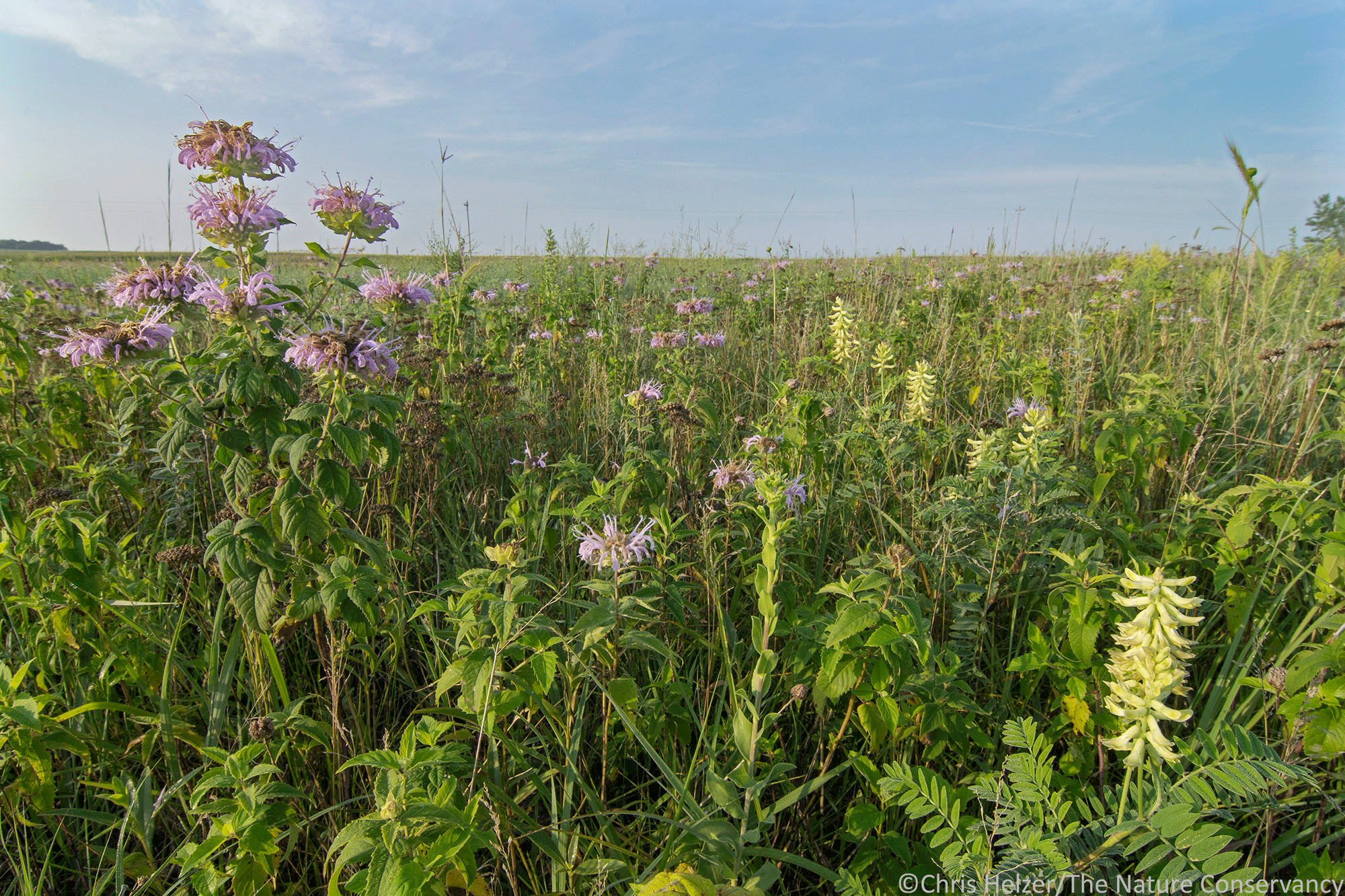
Plowing up prairies is bad for soils.
This is the one statement that seems to garner easy consensus among soil experts! We might not know as much as we’d like about how various fire and grazing treatments affect prairies soils, but there is no question that soil carbon decreases immediately and precipitously when grasslands are tilled up. Furthermore, the recovery of that carbon if/when grassland vegetation is reestablished can take many decades or centuries. Protect prairies, folks.
Thank you to Clare Kazanski, John Blair, Hannah Birge, Sara Baer and Stephen Wood for their patient and generous guidance, review, and instruction on this topic and post. They gave me excellent (if sometimes conflicting) input, based on their own research and that of others. Any errors in this post are definitely mine, not theirs.

 The Prairie Ecologist