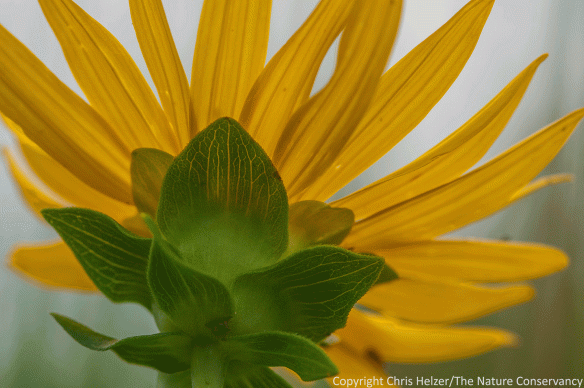
There is an unmistakable look to late summer prairies, and that look is YELLOW. Sunflowers, goldenrods, and Silphiums (compass plant, cup plant, rosinweed) are all front and center this time of year. The visual dominance of yellow flowers is obvious as I look back through some of my favorite prairie photos from this week.
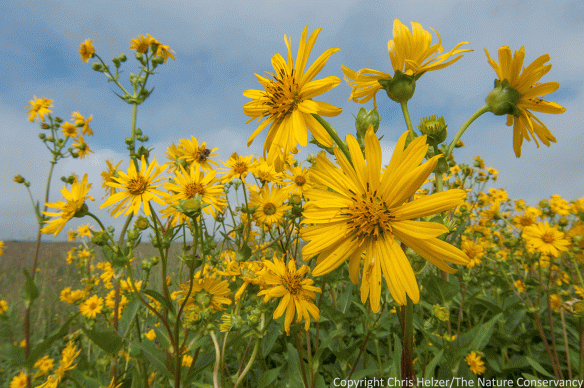
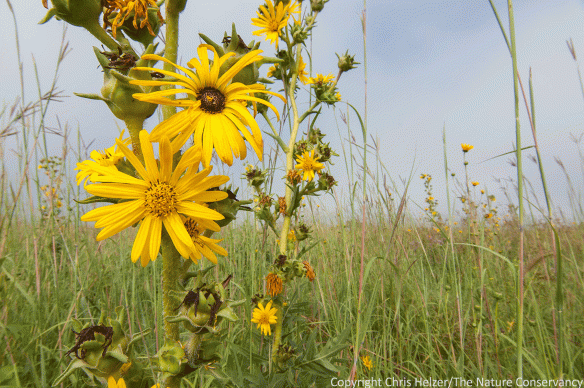
Cup plant (Silphium perfoliatum) in restored tallgrass prairie at Deep Well Wildlife Management Area west of Aurora, Nebraska.
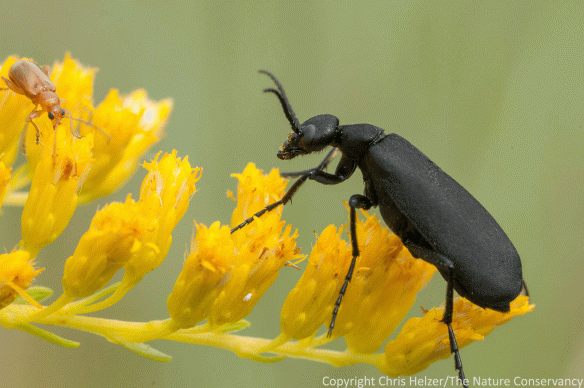
A black blister beetle and another small beetle feed on the same Missouri goldenrod flower head.
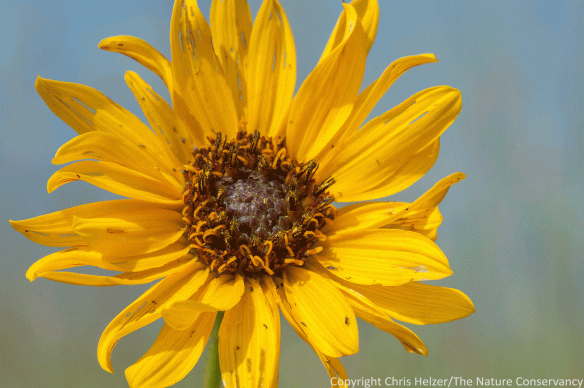
Stiff sunflower (Helianthus pauciflorus).
Compass plant (Silphium laciniatum).
Rosinweed (Silphium integrifolium).
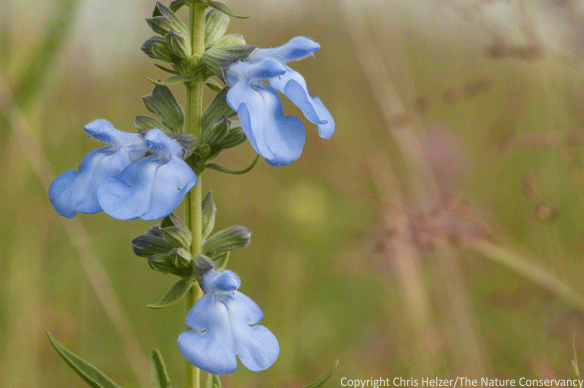
During yellow season, anything that’s not yellow really stands out – especially when it’s tall and BLUE. Pitcher sage (Salvia azurea).
I wonder if anyone has gone through all the prairie flower species to see which color is most common (I’ll be someone has). It has to be yellow, doesn’t it? Purple, pink, and white are in the running, but I bet yellow wins pretty easily.
I was introduced to sand wasps (Bembix sp) by Mike Arduser when he came to visit the Platte River Prairies back in 2012. As we stood together in a sand prairie, a bee-like creature was zipping around us with incredible speed. Mike explained that it was a sand wasp, and that it wasn’t interested in us, but rather was looking for flies that might be hanging around us. Since that day, I’ve paid much more attention to sand wasps and have seen them all over the place in sandy places.
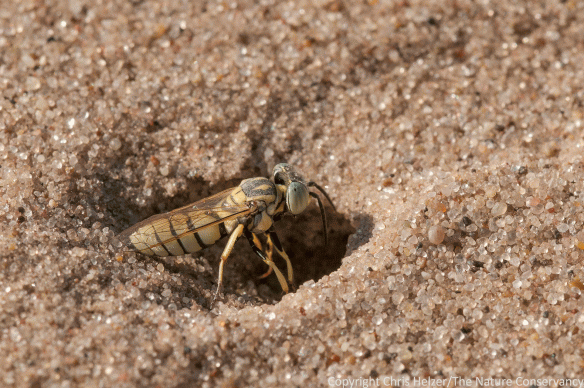
Sand wasp (Bembix americana spinolae) burrowing in sand in a blowout. The Nature Conservancy’s Niobrara Valley Preserve. This wasp was about 1/2 inch long.
While we were exploring a big sand blowout last week at the Niobrara Valley Preserve, there were lots of sand wasps buzzing around, and we found some of their nest burrows. I took a little time to sit near a couple nests and photograph the females as they worked to excavate them. The wind appeared to be blowing just as much sand back into the holes as the bees were digging out…
Here’s the same wasp as above as it digs sand out of its burrow.
The video below shows both the blowing sand and the valiant effort of the wasp to excavate its burrow despite the wind. If the video doesn’t appear correctly, try clicking on the title of this post to view it through an internet browser.
Mike tells me these sand wasps and their relatives catch and paralyze flies for their young. They lay eggs in their burrows and provide the flies as food for the larvae. Females, of course, do all the work to create the burrows, catch the flies and lay the eggs. The males are just around for mating purposes. While the wasp larvae eat flies, both the adult males and females feed on nectar and pollen.
Here are a few more images of the sand wasps we saw last week, along with the blowout they were living in.
A big blowout where wind keeps sand moving and open.
The sand wasp shown earlier takes off and twists its body to zip away.
This was a smaller wasp from a different Bembix species that was nesting in the same blowout as the first wasp.
…and that wasp was also digging its burrow.
As often happens with invertebrates, once I’ve been introduced to a creature, I start seeing it everywhere. Even better, I’ve yet to meet an invertebrate that doesn’t have a fascinating background story. It’s an awesome world we live in, and we share it with some pretty great neighbors.
Thanks, as always, to Mike Arduser for his help with identification and ecology.




 The Prairie Ecologist