Photo of the Week – March 24, 2016

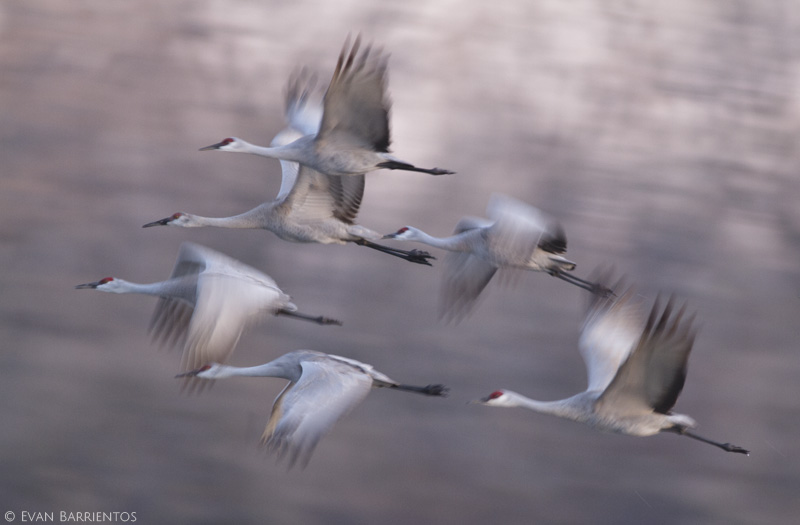
Early spring on the Platte River is crane season.  Every one of the half million or so birds in the mid-continent population of sandhill cranes spends a few weeks along Central Platte River each spring.  They roost overnight on the river and spend their days feeding in nearby cornfields, grasslands, and wetlands.  As we go about our outdoor work, there is a constant soundtrack of crane song in the background.  It could be worse.

Those who know me best understand that while I occasionally photograph wildlife, I’m really more about photographing little things like bugs and flowers.  I have quite a few photographs of sandhill cranes, but I get as much or more enjoyment out of photographing the small signs those cranes leave behind.  Plenty of great photographers, starting and ending with Mike Forsberg, spend lots of time each spring making great images of the birds themselves.  I don’t really feel compelled to compete with them.  Today, I present a photo essay on sandhill cranes that features exactly zero photographs of sandhill cranes.

Sandhill cranes spend significant time feeding and loafing in prairie wetlands like this one we restored from cropfield back in 1999. The cranes feed on invertebrates, and whatever else they can catch, but also spend a lot of time preening and socializing in these areas.

Sandhill cranes spend significant time feeding and loafing in prairie wetlands like this one we restored from cropfield back in 1999. The cranes feed on invertebrates, and whatever other small creatures they can catch, but also spend a lot of time preening and socializing in these areas.

Last week, as I walked along a low ridge between two wetland sloughs, nearly every sharp edge of the plants held a down feather, plucked - I assume - during some aggressive personal hygiene activity (preening).

Last week, as I walked along a low ridge between two wetland sloughs, nearly every sharp edge of the plants held a down feather, plucked – I assume – during some aggressive personal hygiene activity (preening).
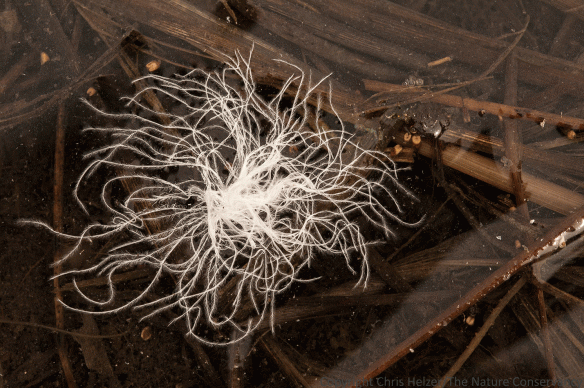
Not all the down feathers ended up caught on plants. Some ended up splayed gracefully on the water's surface.

Not all the down feathers ended up caught on plants. Some ended up splayed gracefully on the water’s surface.
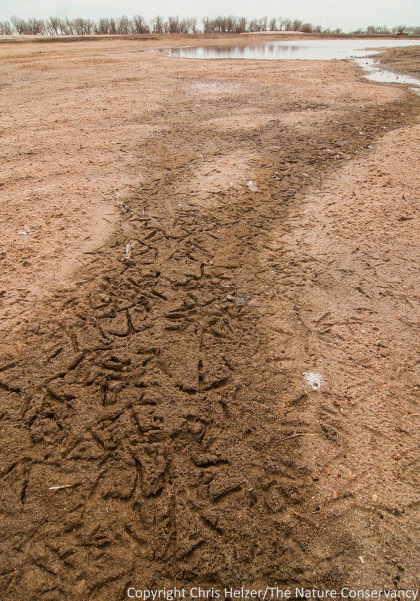
Among the most heavily-used wetlands on our properties this spring were some sloughs we excavated last last season on former crop land.

Among the most heavily-used wetlands on our properties this spring were some sloughs we excavated last last season on former crop land.

Sandhill crane tracks feature wide-splayed toes and lack the rear-pointing toe that perching birds have (cranes have a toe there, but it's so short it doesn't reach the ground).

Sandhill crane tracks feature wide-splayed toes and lack the rear-pointing toe prints seen in tracks of perching birds (cranes have a toe there, but it’s so short it doesn’t reach the ground).

Iron deposits in our soils rust where groundwater is high at times but low at others. We use that rusty red color to help us decide how deep to excavate. Cranes, in turn, mine that rusty soil and use it to stain their gray feathers for improved camouflage.

Iron deposits in our sandy soils rust at elevations where groundwater is high at times but low at others. We use that rusty red color to help us decide how deep to excavate our wetlands. Cranes, in turn, mine that rusty soil and use it to stain their gray feathers for improved camouflage – which is particularly important when they get to their nesting sites up north.

A close-up look at a crane feather forms a fascinatingly abstract image.

A close-up look at a crane feather forms a fascinatingly abstract image.

The beauty of cranes extends to the tip of every feather.

Feathers are simultaneously fragile and strong.  When the barbs separate, a bird can easily “repair” the situation by simply running its beak along the feather to reconnect the tiny hooked barbules that hold everything together.
Hubbard Fellowship Blog- Emerging Life

This post was written by Evan Barrientos, one of our Hubbard Fellows.  Evan is a talented writer and photographer and I encourage you to check out his personal blog. If you would like to see more of his photographs, you can follow him on Facebook.

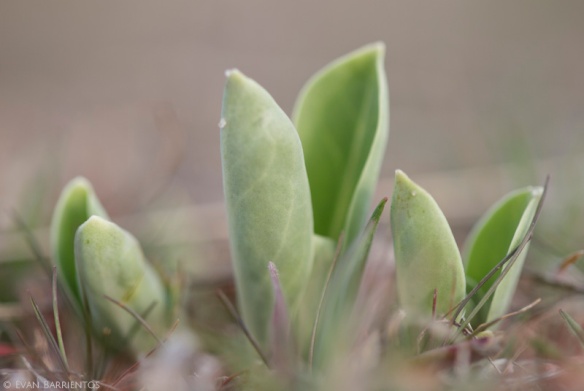
Last week started with beautifully warm weather. Plants, such as this Penstemon grandiflorus, were rapidly sending up tender leaves, eager to rebuild their energy reserves with the sun’s rays.

20160313_nebraska_5315

On a 60 degree Sunday, I was shocked to stumble upon an ant colony hectically rebuilding their nest.

20160313_nebraska_5296

I was repairing a bridge in a muddy part of the prairie on Monday when I noticed a couple puddles no bigger than iPhones. To my amazement, they were brimming with all sorts of life. I lay on my stomach and watched them for several minutes, but I probably could’ve spent an hour staring into them. It amazes me how much life a tiny scrape in the ground can contain, and how quickly that life materializes with a little bit of sun and water. How did so many minute creatures endure a freezing winter and explode so quickly with abundance? My guess is that they spent the winter as eggs in the soil and quickly hatched when the puddle filled with water. But with the very imminent threats of freezing or drying out, these critters must reproduce very quickly. Maybe that’s why they seemed so frantic. (I checked on the puddle yesterday and it was dry. I hope they got done what they needed to!)

While the warm weather ushered in many new species, it also encouraged the cranes to start leaving, sadly. As I watched the puddle critters, flocks of cranes circled on thermals high into the sky before catching southern winds and continuing on their journey north.

20160314_nebraska_5483

Of course, spring is fickle in nature. By Monday, a cold front produced a spectacular lightning storm that rolled over the prairie.

20160314_nebraska_9809-2

In the days following the storm, the temperature plunged. Cold mornings frosted the tender leaves of plants that had sprouted under more encouraging conditions just days before. I don’t know how plants and animals survive such unpredictable weather at such a vulnerable stage in their lives, yet somehow they do it year after year.

20160316_nebraska_9933