Photo of the Week – June 17, 2016

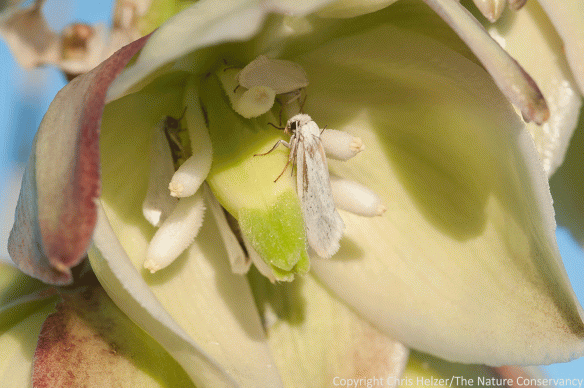
I’m just back from a great week in the Nebraska Sandhills.  I saw an amazing array of wildlife, invertebrates, plants and landscapes.  Of the many wildflowers in bloom this week, none punctuated the hills more beautifully than yucca (aka soapweed).  As always, nearly every yucca stem with actively blooming flowers hosted an abundance of yucca moths, the only pollinator of yucca plants.  If you aren’t familiar with the incredible relationship between yucca moths and yucca plants, you can read about it in a previous post.

Yucca moths in the early morning. Nebraska Sandhills - Cherry County.

Yucca moths in the early morning. Nebraska Sandhills – Cherry County.

I’ll post some more Sandhills photos next week…

A Week in the Sandhills

I’m in the Nebraska Sandhills all this week, doing field work.  Being in the middle of 12 million acres of intact native prairie has its advantages, but there’s not much time or internet connectivity for blog posting. I’m hoping I can get a few photos posted here pretty quickly before I lose my connection again.

Yucca is common throughout much of the Sandhills. Many of the plants are in full bloom right now, accompanied by the yucca moths that pollinate them.
Yucca is common throughout much of the Sandhills. Many of the plants are in full bloom right now, accompanied by the yucca moths that pollinate them.

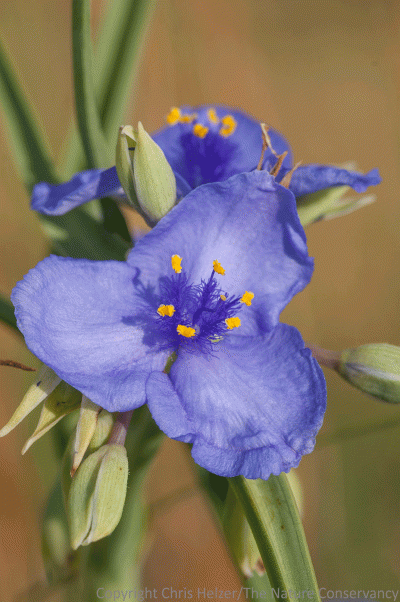
Spiderwort (Tradescantia occidentalis) is also in full bloom right now.

Spiderwort (Tradescantia occidentalis) is also in full bloom right now.  It is one of my favorite flowers.
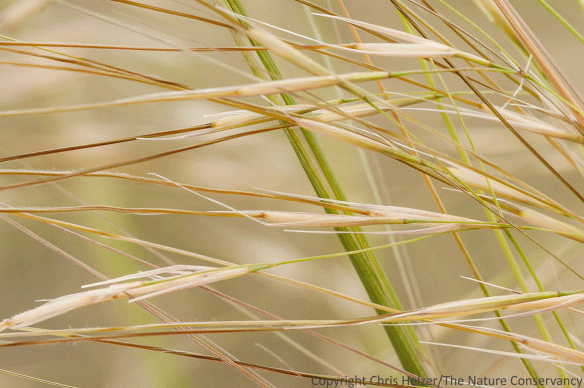
Needle-and-thread grass (Hesperostipa comata) is producing seeds, which look very much - and can act very much - like sharp spears.  Trying to figure out why this grass is blooming abundantly in some pastures and not others has been a fun mind puzzle for me this week.

Needle-and-thread grass (Hesperostipa comata) is producing seeds, which look very much – and can act very much – like sharp spears. Trying to figure out why this grass is blooming abundantly in some pastures and not others has been a fun mind puzzle for me this week.

Wetlands are all over many parts of the Sandhills.  Groundwater levels are high and often exposed between the vegetated sand dunes.  The wetlands are loaded with everything from frogs and salamanders to trumpeter swans and grebes.

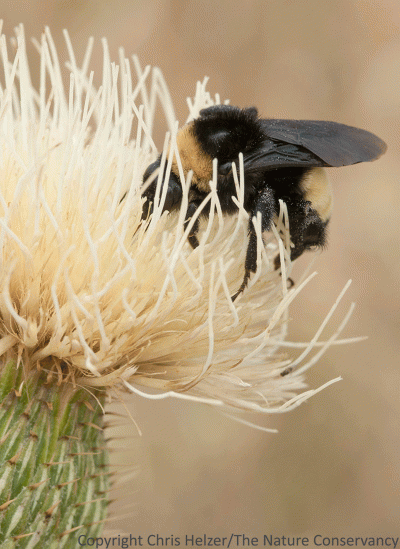
Platte thistle (Cirsium canescens) is a great native thistle with a cream-colored flower.  It is loaded with pollinators right now.
bum

This bumblebee was one of many bees I’ve seen enjoying Platte thistle.

Wetlands are all over many parts of the Sandhills. Groundwater levels are high and often exposed between the vegetated sand dunes. The wetlands are loaded with everything from frogs and salamanders to trumpeter swans and grebes.

Wetlands are all over many parts of the Sandhills. Groundwater levels are high and often exposed between the vegetated sand dunes. The wetlands are loaded with everything from frogs and salamanders to trumpeter swans and grebes.

Lizards are common, especially in areas of bare sand.  They scurry to cover as we approach, but this prairie lizard (Sceloporus sp.) posed long enough for a photo.

Lizards are common, especially in areas of bare sand. They scurry to cover as we approach, but this prairie lizard (Sceloporus sp.) posed long enough for a photo.