
Hubbard Fellowship Blog – Mystery Tracks in the Snow

This is a guest blog by Eliza Perry, one of our Hubbard Fellows.  All photos are by Eliza.

Last week I needed to check the fences around one of our properties. I only needed to walk a quarter of it to see that we had a lot of work to do.

During my travels, I found two mysterious tracks that I hope you all can help me identify. I stumped even Chris! (YES)

DSCN0753

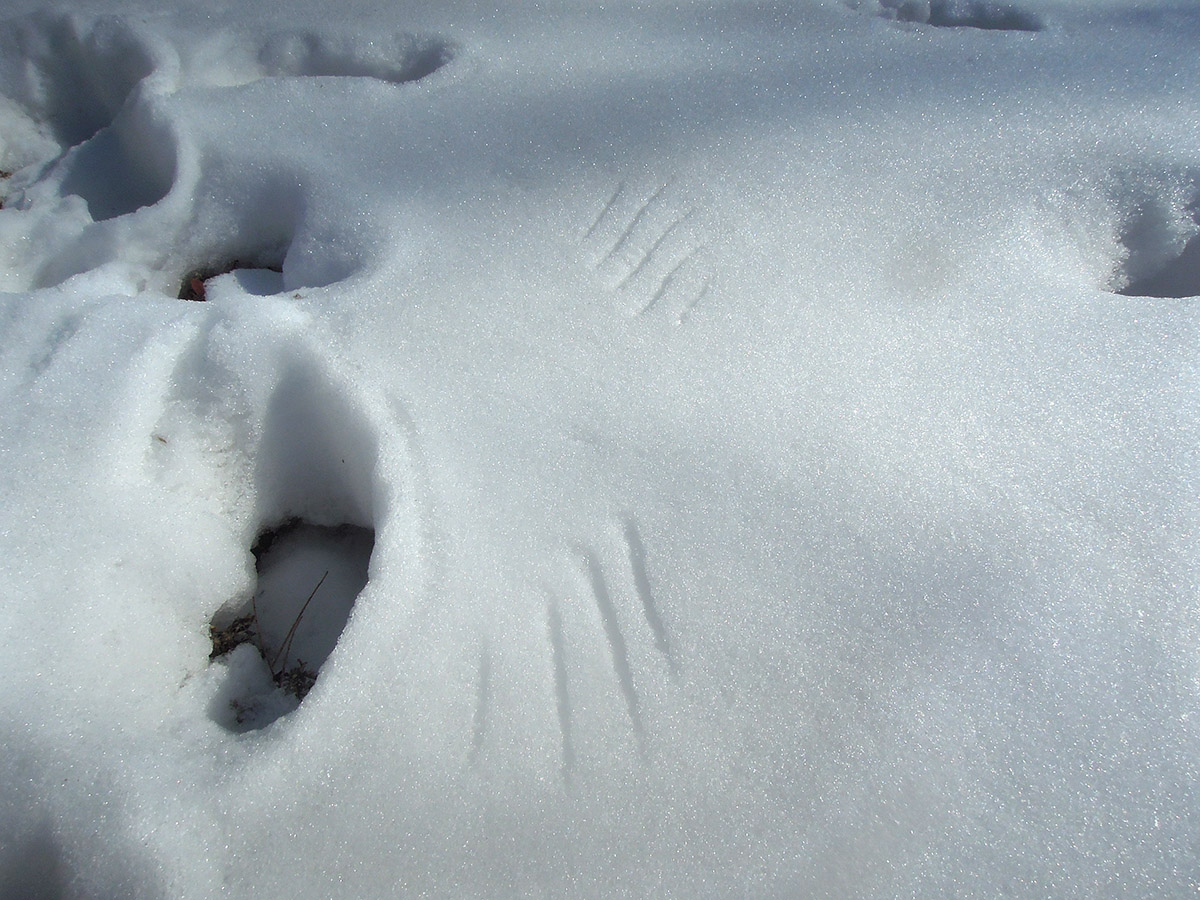
See those weird claw-like marks? There were only these three sets of them, and they
were next to a bunch of small, amorphous tracks.  The tracks were bigger than cat tracks and smaller than dog tracks.
DSCN0754

Here’s a closer shot.

DSCN0732

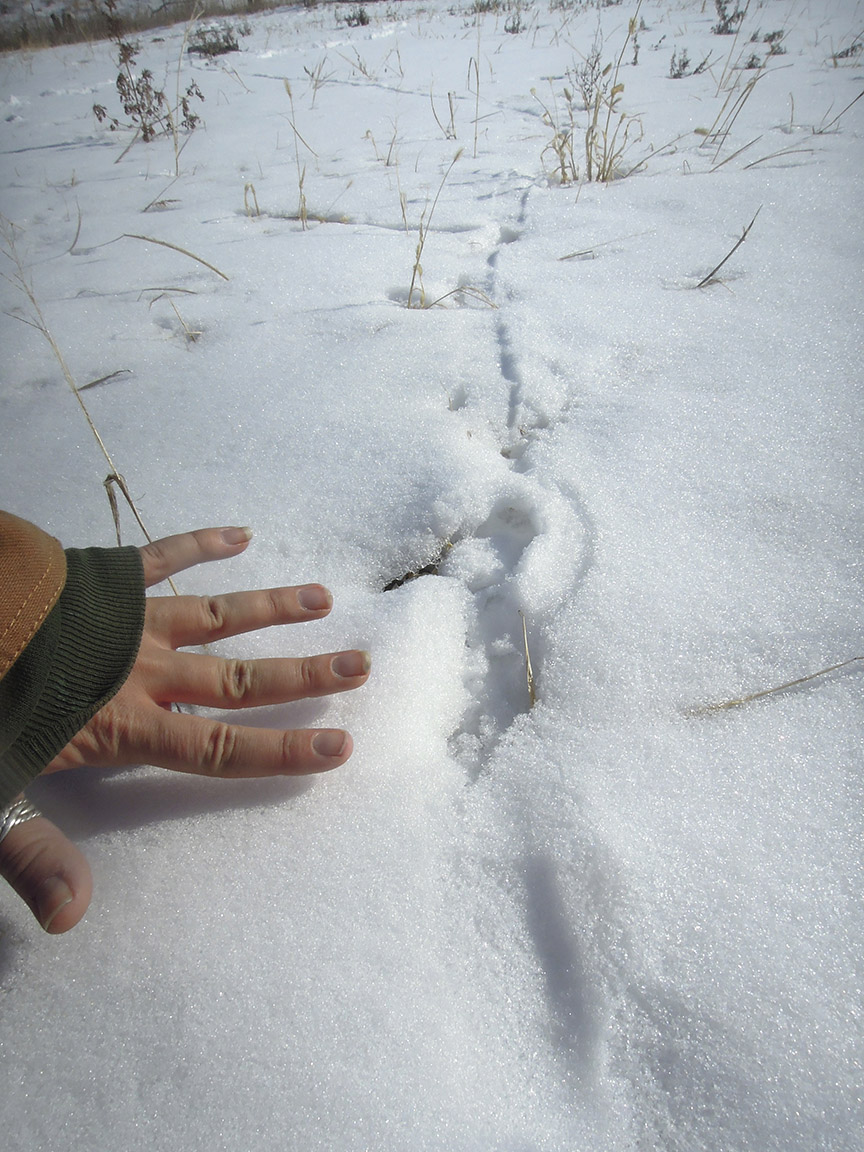
The next mystery was this long trail. Chris suggested it was a collapsed vole tunnel,
but it is linear and vole tunnels seem to fork into many different smaller
tunnels. To me, it looked like something was dragging its belly, like a snake.
DSCN0735

Here’s it is a little closer, at a point that does look like a collapsed tunnel. But the rest of it was just an indentation on the snow.

Do you have any ideas?
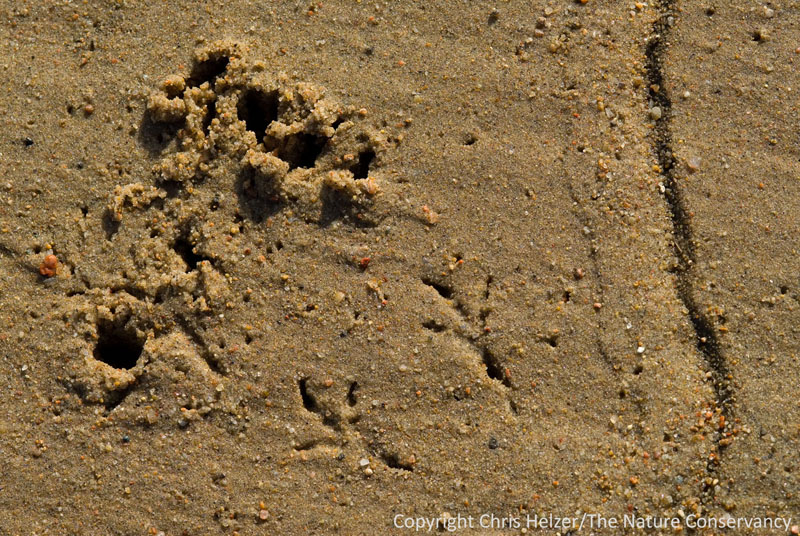
Photo of the Week – April 5, 2013

A few shorebirds are starting to show up along the Platte River.  The first to come each spring are usually the ubiquitous and noisy killdeer, followed by the taller and more reserved yellowlegs.

Tracks and holes in the sand where a shorebird was probing for invertebrates along the Central Platte River in Nebraska.

Tracks and holes in the sand where a shorebird was probing for invertebrates along the Central Platte River in Nebraska.

As the season progresses, we’ll see a great diversity of sandpipers, dowitchers, snipe, ibis, and many other long-legged wading birds along the sandy banks and sandbars of the river.  A few even venture into our wetlands and wet meadows, though we’ll see fewer in those areas this spring if we don’t get some significant rains soon.

One of the most fascinating things about shorebirds is that many (most?) species have flexible bills that allow them to open just the tips.  This comes in handy when they stick their long bills deep into the sand or mud to probe for invertebrates.  When they find something tasty (how do they know they’ve found one??) they can open the tip of their bill to grab it and extract it.  Opening their entire bill when it’s stuck down a deep narrow hole is not an option (if you’ve ever hand-dug a fence post hole, you know that experience), so a flexible bill tip is a pretty convenient feature to have.