
It had been way too long since I’d taken my camera for a walk, so I made some time early this week to spend a few hours at a nearby wetland. I got there just as the sun was breaking through some clouds on the horizon. As I walked into the prairie along the edge the wetland, a short-eared owl popped up out of the grass. It was already a good day.
Here are a few photos from that morning walk.

Morning light on frozen wetland rushes at the Deep Well Wildlife Management Area in central Nebraska.
I spent a lot of time lying with my belly on the ice trying to find the right angle to capture the light and the wetland. Fortunately for my pride, the gravel road that goes past the wetland is not well traveled…

Reflections and shadows.
As is typical, my favorite photo from the trip is a close-up shot that says nothing about where I was. In this case, I started admiring the patterns of bubbles frozen in the ice and found this appealing little scene. (This is why I am a poor family vacation photographer – you’d never know where we went by looking at my photos of flowers, acorns, and spiders.)
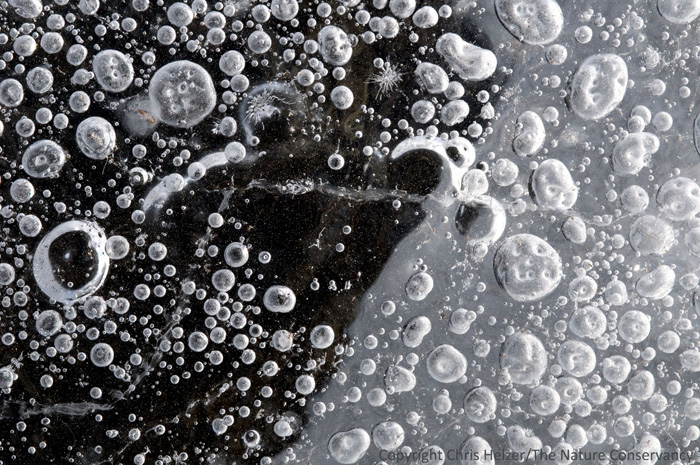
Frozen bubbles in the ice. Deep Well Wildlife Management Area - Central Nebraska.
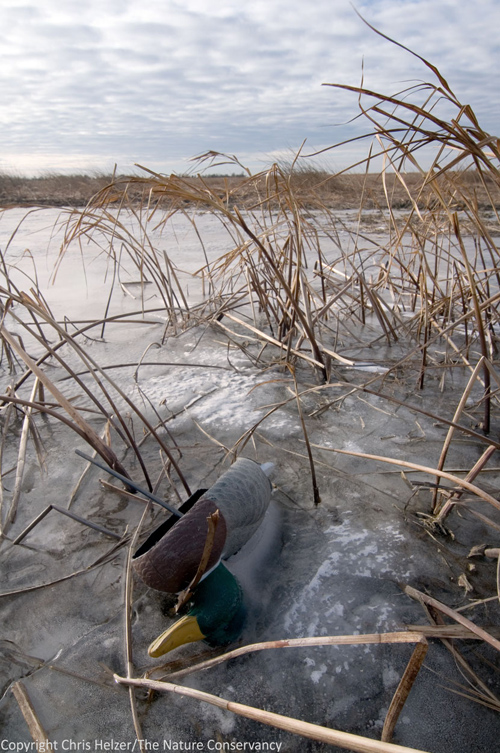
The forecast had predicted overcast skies for the day, but I’d gotten an hour or two of sunshine before the clouds finally settled in. Just as the light was disappearing behind the clouds, I found an old duck decoy that had been left behind and had partially frozen into the ice.

 The Prairie Ecologist