
Photo of the Week – October 30, 2014

I’ve always had a difficult time taking pleasing landscape photos in heavy fog.  I love the way prairies and wetlands look on foggy days, but I rarely come away with a scenic photo I’m happy with.  Fortunately, I can (and usually do) fall back on close-up photos…

Water droplets, gerardia and spider silk on a very foggy morning at a Platte River Prairies wetland last week.

Water droplets, false foxglove and spider silk on a very foggy morning.

One foggy morning last week, I waded into the shallow water of a wetland at our Platte River Prairies.  Everything was dripping wet because of the dense fog.  There was a light breeze, but not quite enough to blow the droplets off the plants or spider silk strands.
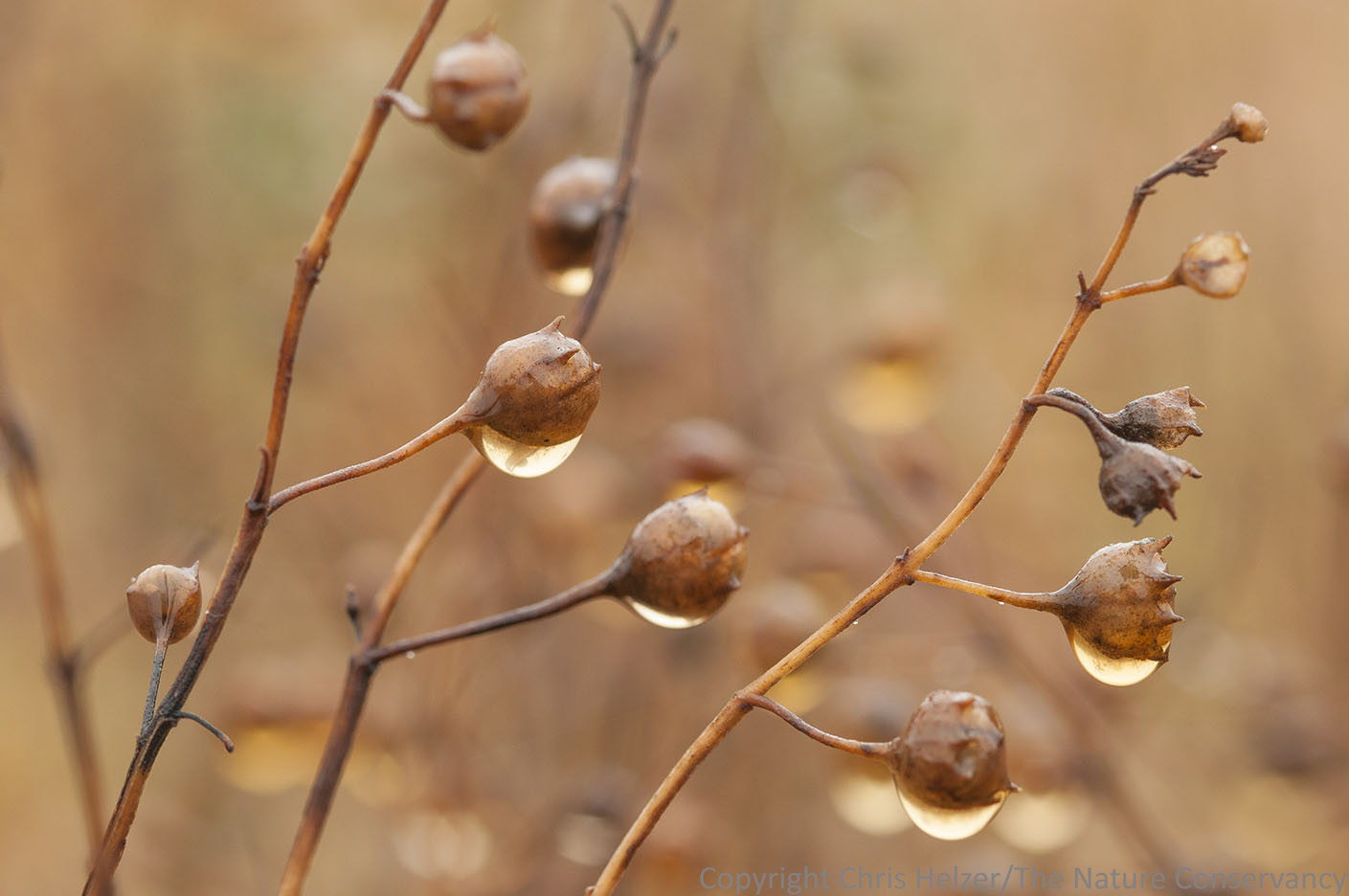
More gerardia in the fog.

More false foxglove in the fog.

Fog creates a “flat” light.  Flat light can be used for scenic photos, but it’s difficult to portray depth and texture because of the lack of any shadows.  However, that same light can work pretty well for close-ups, especially as the fog thins a little and the ambient light becomes a little brighter.
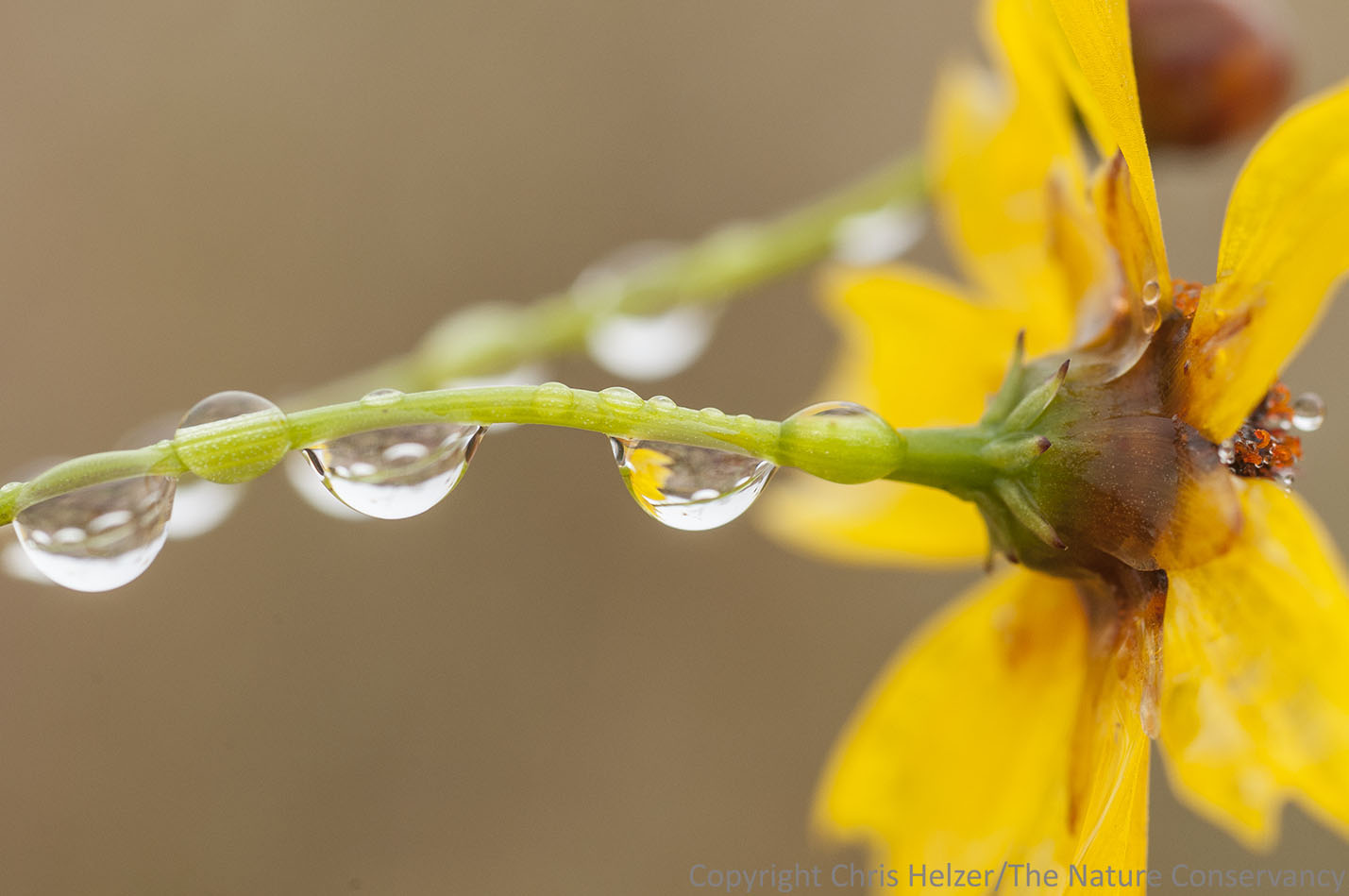
Droplets on a late-blooming plains coreopsis.

Droplets on a late-blooming plains coreopsis.

There were several patches of sand lovegrass along the sandy edge of the wetland last week.  The plants were bent almost to the ground under the weight of water drops.  Hidden among the sparkles was a cold wet grasshopper…

A grasshopper on a water-bejeweled sand lovegrass flower.

A grasshopper on a water-bejeweled sand lovegrass flower.

.
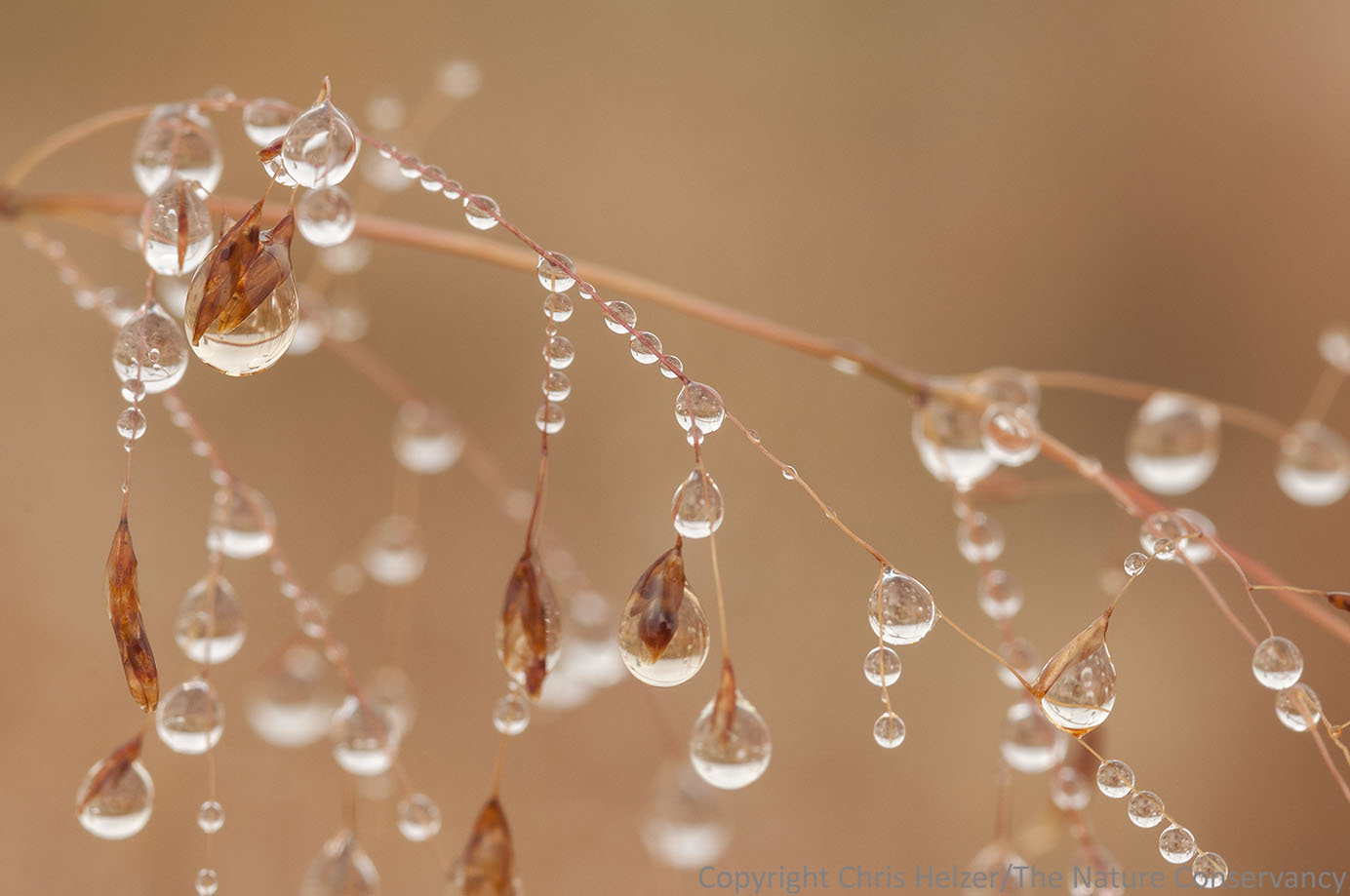
Sand lovegrass close-up.

Sand lovegrass close-up.

.

Sand lovegrass closer up.

Sand lovegrass closer up.

As the fog started to dissipate, the sun popped out periodically, providing a few opportunities for some landscape photos, but by then I was too intent on the little drops of water to pay much attention to the bigger picture.  I did take a few photos of the wetland, but quickly put the wide angle lens back away in favor of my macro lens.
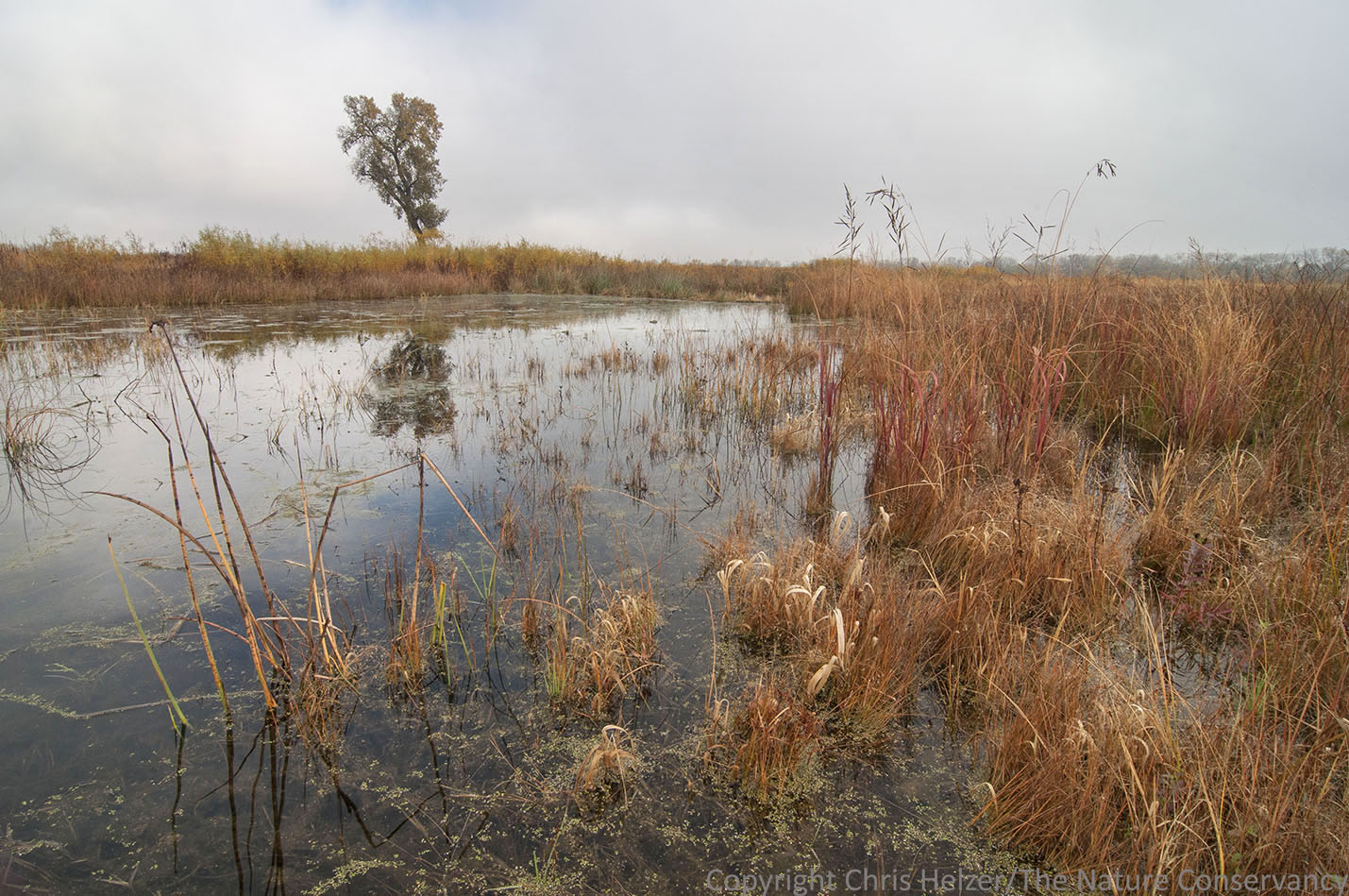
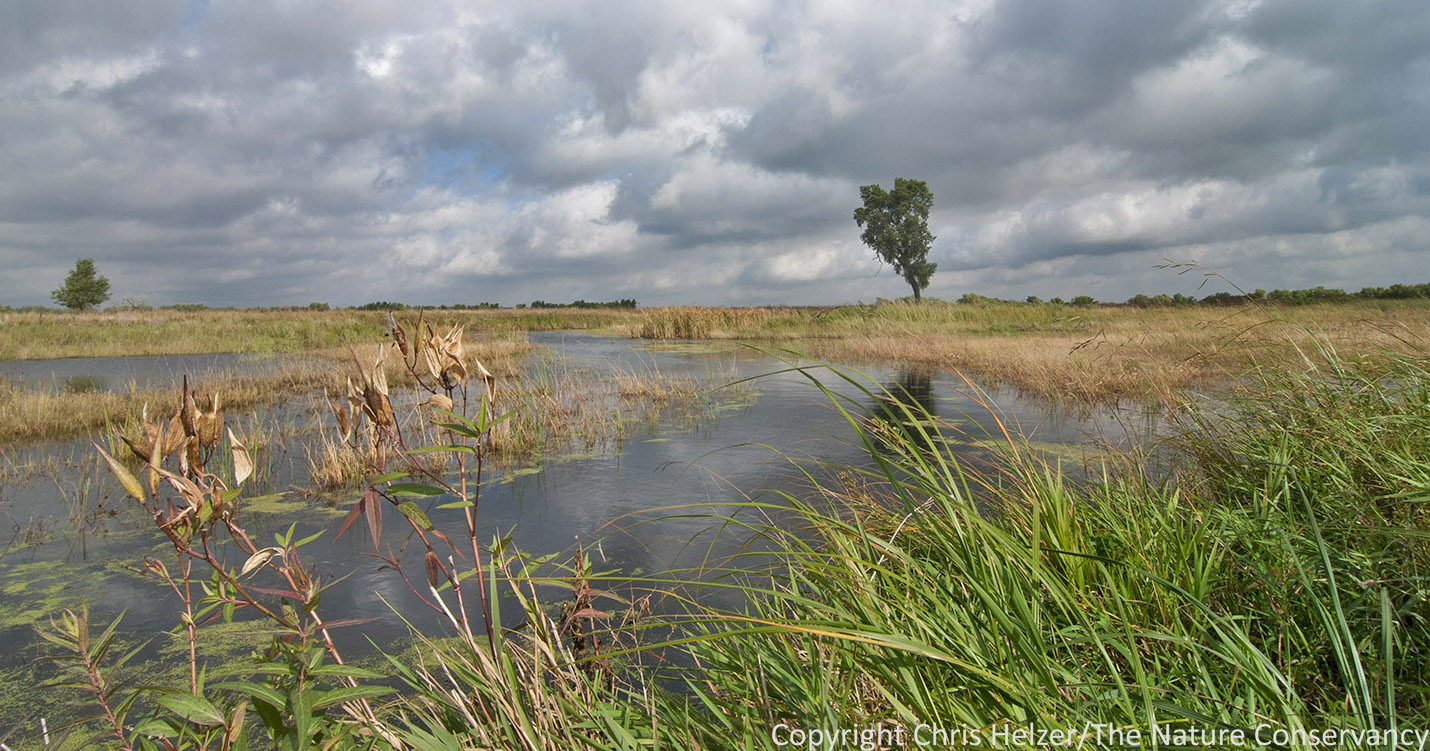
Here's what the wetland looked like as the fog started to lift.

Here’s what the wetland looked like as the fog started to lift…

.

Water droplets on spider silk.

…but it was the close-ups that continued to catch my eye.  Water droplets on the tip of a grass leaf and spider silk.
 

Karen’s Wetland Videos

One of my favorite places within our Platte River Prairies is a restored wetland we usually call “the sandpit wetland” because it is a former sand and gravel mining pit.  We restored the site over about 10 years, a little at a time, and it now features a meandering stream and various side channel, backwater, and off-channel pockets.  You might remember the site from previous posts, including this one about sludge and this one (or this one) about timelapse imagery.

The Derr Sandpit wetland (2013 photo).  The Nature Conservancy's Platte River Prairies, Nebraska.

The Derr Sandpit wetland (2013 photo). The Nature Conservancy’s Platte River Prairies, Nebraska.

I always enjoy walking around the wetland – even if I’m fighting off invasive species – because there’s so much to see.  I have a pretty good feel for the plant community at the site because it’s easy to find the plants and watch their slow movements around the wetland over time.  There are more invertebrate species than I’ll ever be able to count, of course, let alone see, but I can usually find quite a few of them if I look.  However, it’s harder to see and keep track of the larger animals – the birds, reptiles, amphibians and mammals.  For some reason, they don’t usually show themselves when I’m there…  (Especially the otters…. don’t get me started.)

Our timelapse imagery over the last couple years has helped us keep track of some of the wildlife use at the site, but since those cameras only take photos at regular hourly intervals, catching animals in front of the camera is just a happy accident.  Now, however, one of our longest tenured volunteers, Karen Hamburger, has taken it upon herself to find out what’s really out there.  During the last year or so, she’s been setting a trail camera (actually more than one, since at least one was inundated in a flood) in various places around the wetland and capturing views of many wildlife species.

I finally had a chance to go through some of her favorite video clips the other day, and I made a short 3 minute video montage with some of them.  It includes several bird species, beavers, deer, raccoons, and even (sigh) otters.  We knew from tracks and other sign that most of these animals were around, but it’s one thing to see footprints and another to watch the critters themselves!  This video gives us a wonderful and unique perspective on what happens at our wetland when we noisy blundering people aren’t around.

I hope you enjoy it.


THANK YOU to Karen for all the work to capture these moments for us, along with all the other work she’s done over the years!

If the video doesn’t display correctly above, you can try clicking HERE instead.