Photo of the Week – September 6, 2013

Here are three photos from the last couple weeks that didn’t fit into any particular story or theme.  Each is from a different prairie, and each was the result of a quick opportunistic stop in the midst of doing something else.  The pitcher sage photo (immediately below) came after I walked past a patch of the flowers and then backed up to capture the image that stuck in my head when I first walked past.  I noticed the soldier beetle (second photo) as I was walking back to take more photos of the praying mantis eating the sphinx moth.  Finally, I spotted the bee sitting on a dew-covered gayfeather flower (third photo) as I got out of my truck to work on a fence project at our farm.

Pitcher sage (Salvia azurea) in our plant diversity research plots.  Platte River Prairies, Nebraska.

Pitcher sage (Salvia azurea) in our plant diversity research plots. Platte River Prairies, Nebraska.

.

A soldier beetle on a grass leaf.  Lincoln Creek Prairie - Aurora, Nebraska.

A soldier beetle on a grass leaf. Lincoln Creek Prairie – Aurora, Nebraska.

.

A male long-horned bee (Melissodes sp) on dotted gayfeather (Liatris punctata).  Helzer family prairie - south of Aurora, Nebraska.

A male long-horned bee (Melissodes sp) on dotted gayfeather (Liatris punctata). Helzer family prairie – south of Aurora, Nebraska.

Photo of the Week – August 8, 2013

A little more than a week ago, I took a walk through one of the restored wetlands here in the Platte River Prairies, enjoying the abundance of wildflowers and other life.  Here are a few photos from that walk.  You can click on any of the photos to see a sharper version of it.

.

Prairie gentian (Eustoma grandflorum) was blooming in pockets of the wetland.  It's always one of the more striking flowers in wetlands and wet prairies, but it is an annual, so its abundance changes drastically from year to year.

Prairie gentian (Eustoma grandflorum) was blooming in pockets of the wetland. It’s always one of the more striking flowers in wetlands and wet prairies, but it is an annual, so its abundance changes drastically from year to year.

.

A paper wasp was feeding on nectar from swamp milkweed.  I'll share some more images and a story about this wasp in an upcoming post.

A paper wasp was feeding on nectar from swamp milkweed. I’ll share some more images and a story about this wasp in an upcoming post.

.

Winged lythrum (Lythrum alatum) is a native wildflower that is closely related to purple loosestrife (Lythrum salicaria) - an invasive plant.  Both are great plants for pollinators, but only one can take over the plant community in a wetland...

Winged lythrum (Lythrum alatum) is a native wildflower that is closely related to purple loosestrife (Lythrum salicaria) – an invasive plant. Both are great plants for pollinators, but only one can take over the plant community in a wetland…

.

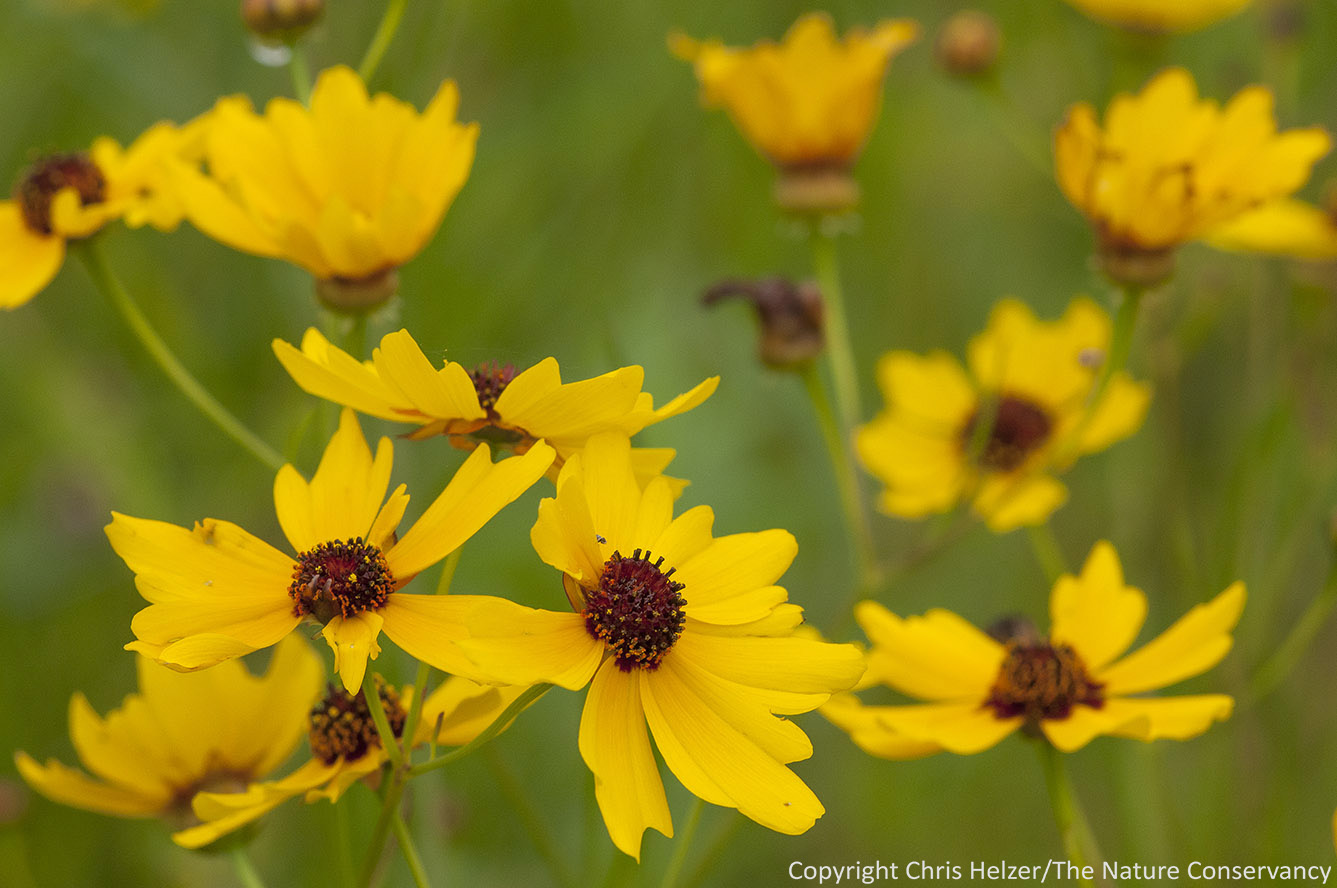
Plains coreopsis (Coreopsis tinctoria) is an abundant annual wildflower in many wetlands in central Nebraska.

Plains coreopsis (Coreopsis tinctoria) is an abundant annual wildflower in many wetlands in central Nebraska.

.

This snail's shell looked like polished wood as it moved across a piece of driftwood, washed up along the bank of a side channel of the stream.

This snail’s shell looked like polished wood as it moved across a piece of driftwood, washed up along the bank of a side channel of the stream.

.

A tachynid fly on a coreopsis flower.

A tachynid fly on a coreopsis flower.

.

Swamp milkweed is having a great year in our prairies.  While it's a perennial plant, we don't always see it blooming in abundance.  It's always nice when it does.

Swamp milkweed is having a great year in our prairies. While it’s a perennial plant, we don’t always see it blooming in abundance. It’s always nice when it does.

.