
Rocky Mountain bee plant (Cleome serrulata) is very pretty, for a weed. It’s an annual plant that grows in disturbed areas like road edges and around livestock watering tanks. In that sense, many people would call it a weed. However, it’s also a beautiful native wildflower that can grow more than four feet tall and is a favorite among pollinator insects.
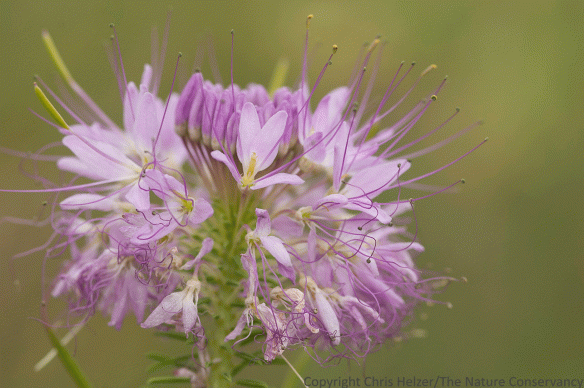
Rocky mountain bee plant in the Nebraska Sandhills.
Around Nebraska, I see Rocky Mountain bee plant mostly in the western 2/3 of the state on sandy or loess soils. It can colonize bare soil pretty quickly in young prairie restorations or after dirtwork projects, and also likes places where perennial vegetation is continually stomped down by cattle or otherwise severely weakened. It doesn’t seem to withstand much competition, however, and usually disappears pretty quickly once other plants start to enter the scene. In our Platte River Prairies, we see it often in the first year after we plant a restored prairie, but rarely after that.

Rocky Mountain bee plant with seed pods.
While it is not in the mustard family, Rocky Mountain bee plant’s long skinny seed pods that dangle beneath the flowers are certainly reminiscent of mustard plants. (It is in the same order – Brassicales – as mustard plants.) Interestingly, while the plant has an unpleasant smell and isn’t often eaten by herbivorous animals, there are many traditional uses by humans that include dyes, medicine and food. It is also an extremely attractive plant to bees and other pollinators, and the seeds are readily eaten by birds.

This paper wasp was feeding on nectar.
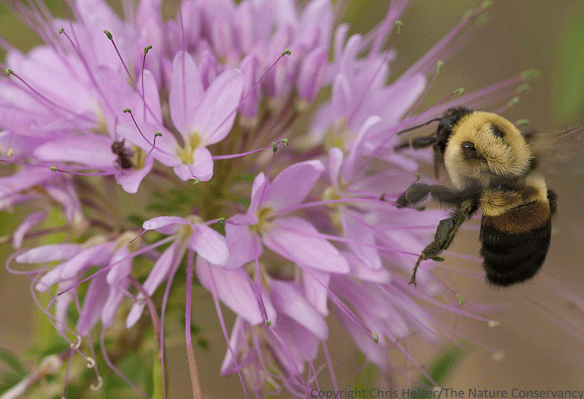
Bees like this bumblebee (Bombus griseocollis) are particularly attracted to Rocky Mountain bee plant, as the name would suggest.
There are many plant species that colonize areas where other plants have been removed, weakened, or haven’t yet established. It’s a really important role in nature, but one that is often underappreciated, and even denigrated – thus the label of “weed”. Many colonizing plants lack pretty flowers, are spiny, or otherwise make themselves easy to dislike. A few, though, are so attractive that even the staunchest weed haters might hesitate at labeling them as something bad.


