Photo of the Week – December 29, 2016

Kim and I have made it an annual tradition to spend part of our holiday break at the Niobrara Valley Preserve.  Our kids were with other relatives for part of this year’s break, so we had a few days to rest, relax, and explore by ourselves.  The weather was variable during our time there, including fog, rain, snow, hail, strong wind, and warm sunshine.  Perfect.  We watched bald eagles soar effortlessly over the river and bluffs, flushed cottontail rabbits out of the brush, saw white-tailed deer, mule deer, bison, turkeys, and the tracks of many other animals. We enjoyed the diversity of plants we saw as well, even though most of them were brown and dormant.  It was a great trip, although we both wished we’d been serenaded by coyotes at least one evening.  Maybe next year.  Here are some photos from the visit.

enpo161225_d004

Our first day started out foggy, wet, and cold, and we finished our five mile hike just as a thunderstorm rolled in, bringing icy rain and hail. Visibility was limited, but it was still beautiful.

enpo161226_d005

I caught Monday’s sunrise on the bluffs north of the river where the 2012 wildfire left abundant pine and cedar skeletons behind.
enpo161226_d015

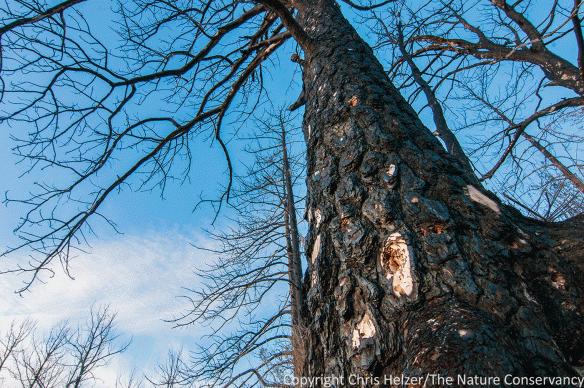
Looking up at a burned ponderosa pine.

enpo161226_d020

The Niobrara River was partially frozen over, but still had channels of open water.

enpo161226_d026

I wandered around on the ice for a while, looking for interesting patterns.

enpo161226_d027

This sunflower head was poking out of the ice on a small island in the river.
enpo161227_d013

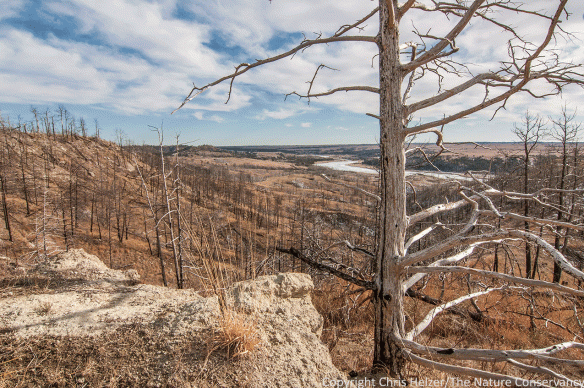
We climbed up a ridge we hadn’t explored before and enjoyed the view downstream.
enpo161227_d016

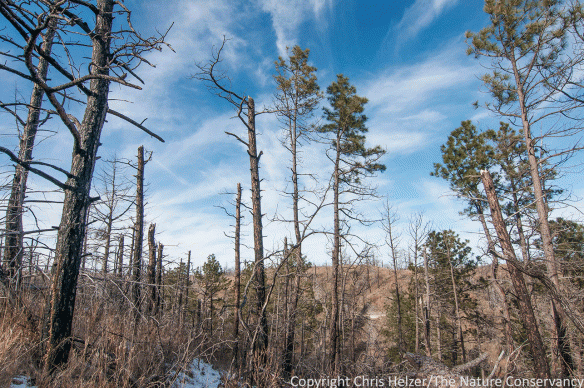
While the vast majority of pines were killed in the wildfire, there is one steep draw on the very corner of our property where a decent percentage of pines somehow survived. Kim and I christened it “The Canyon of the Living Pines”.

enpo161227_d023

It was gratifying to see green needles on trees after hiking for hours through burned out skeletons.

enpo161227_p005

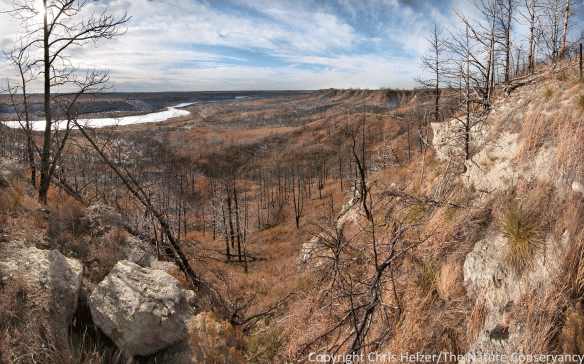
A panoramic view of the Niobrara Valley Preserve.
enpo161227_p006

This photo includes five photos stitched together to help show the scale of the property.

Trips like this help me realize how fortunate I am.  I’m lucky to have a wife who enjoys winter hiking and remote vacations away from people and noise.  I’m lucky to have a job that allows me access to places like the Niobrara Valley Preserve and the time to explore them.  And I’m lucky to have this platform for sharing photos and stories with people who appreciate them and share their perspectives back with me.  Thank you.  Happy New Year!

Photo of the Week – February 25, 2016

After a long week in Texas, it was nice to spend a restful afternoon at our family prairie last Saturday.  The weather was gorgeous and we spent a great day playing with the dogs, cooking hot dogs on a campfire, cutting small cedars, hiking, and (of course) doing a little photography.

Kim spent much of her afternoon thumbing through seed catalogs and planning this year's garden.  The dogs played a lot of frisbee...

Kim spent much of her afternoon thumbing through seed catalogs and planning this year’s garden. The dogs played a lot of frisbee…

When diffuse clouds covered the midday sun for a little while, I grabbed my camera and set out to add some photos to a little project I’ve been working on – finding color in winter prairies.  The subjects that caught my eye on Saturday were prairie plant rosettes.  Most biennial plants (and some short-lived perennials) in our prairies spend their first year as a tightly arranged cluster of leaves close to the ground – a rosette.  Those leaves photosynthesize enough to get the plant’s root system started, giving it a head start on its second year growth.  Often, rosettes are found in areas of prairie that are recently grazed or mowed because competing plants are both short and weak, opening up space for new plants to establish.  Rosettes often stay green much of the winter, but the leaves can also turn other colors like red or yellow.

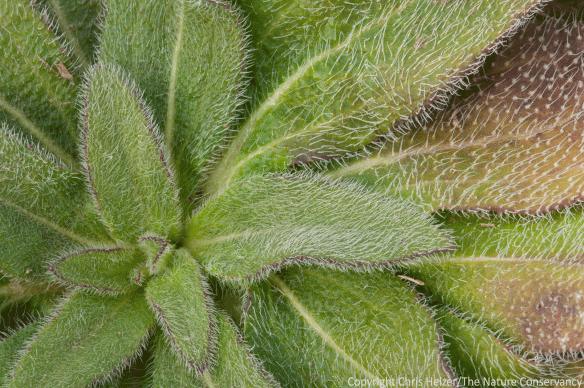
The green fuzzy leaves of black-eyed Susan.

The green fuzzy leaves of black-eyed Susan (Rudbeckia hirta).

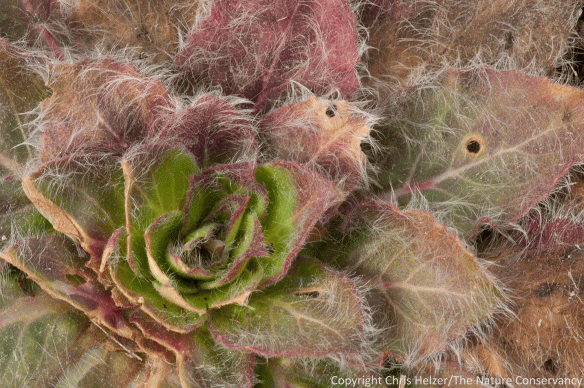
Another rosette.  Maybe common mullein (Verbascum thapsus)?  I don't remember seeing mullein before at our prairie, but that was the best guess of my friend Grace Kostel when I sent her this odd-colored cropped photo...

Another rosette. Maybe common mullein (Verbascum thapsus)? I don’t remember seeing mullein before at our prairie, but that was the best guess of my friend Grace Kostel when I sent her this odd-colored cropped photo…

As I write this, I realize that I don’t actually know for sure how rosette leaves work.  I’ve always assumed that the leaves on a rosette lose their green color for a while during the coldest parts of winter and then green up again in the spring.  That is different from what most prairie forbs (wildflowers) do, of course, because their leaves drop off in the fall and they grow new ones in the spring.  Does anyone know if leaves in a rosette really can turn red/yellow and then green again?