
We had a terrific field day last week – thanks to the more than 100 people who came out to explore our Platte River Prairies with us.
There were two neat wildlife discoveries during the day. The first came when Master Naturalist Mike Schrad caught a grasshopper mouse in a live trap while preparing for his session on small mammals. Later, Chris Aubushon was looking for insects under old manure piles and instead found a western hognose snake! I figured we probably had both hognose snakes and grasshopper mice on our property, but had never actually found either one, so it was nice to get both on the same day!
I didn’t get a photograph of the grasshopper mouse, but I did (with the help of Mike Schrad) get a few good ones of the western hognose. Here’s one:
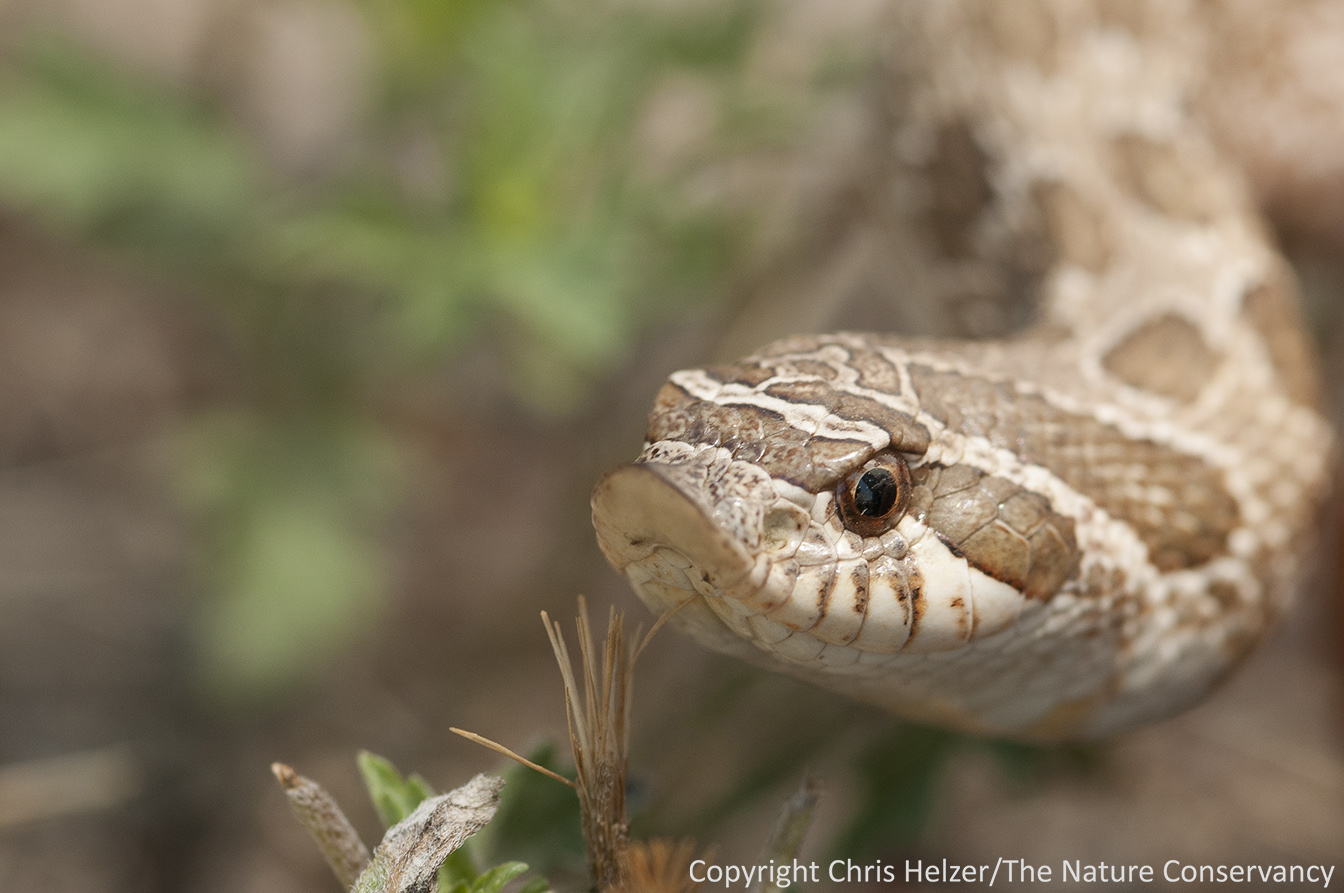
A western hognose snake caught at the Platte River Prairies.
.
If you missed the field day this year, we hope to see you next summer!
 The Prairie Ecologist
Hognose snakes are one of my all time favorite snakes…docile and CUTE!
Nice photo Chris.
Very cool photo! I really like how light the coloration is.
I’ve never seen the Western Hognose. But used to see the Eastern Hognose, which were quite dark, all the time while tracking the Eastern Massassauga in northern Michigan.
Great photo of the hognose, MJ
Oh, my! Beautiful creature, beautiful photo! Thank you!
Hi Chris, I greatly enjoy your blog and would love to join your field trip next summer. I found out about this year’s too late to make plans. Do you have an approximate date for next year? Thanks, Jennifer
Jennifer Pospichal outdoor recreation products 402-289-0400 800-747-5437 1055 North 205 Street Elkhorn, NE 68022 jenniferp@outdoorrec.net check out our website! http://www.outdoorrecreationproducts.com
Hi Jennifer – no date yet. Some are arguing for a little earlier in the summer to avoid the heat. We’ll see.