I’ve been working on the layout of the book version of the Square Meter Photography Project from last year. I’m really excited to share it with you when it’s published. As I was looking through images for the book, I kept finding a lot of nice shots from the same day – August 21, 2018. Much of the power of the photo project came from the diversity of species and images I found within a tiny area of prairie. These August 21 photos have particular power because of the diversity they display within the same day!
Here is just a selection (less than half) from the best quality photos I took about a year ago within my little square meter plot at Lincoln Creek Prairie. All the photographs were taken within about a 50 minute period during the morning and an additional 40 minutes in the afternoon. Don’t let anyone tell you there’s nothing going on in prairies…
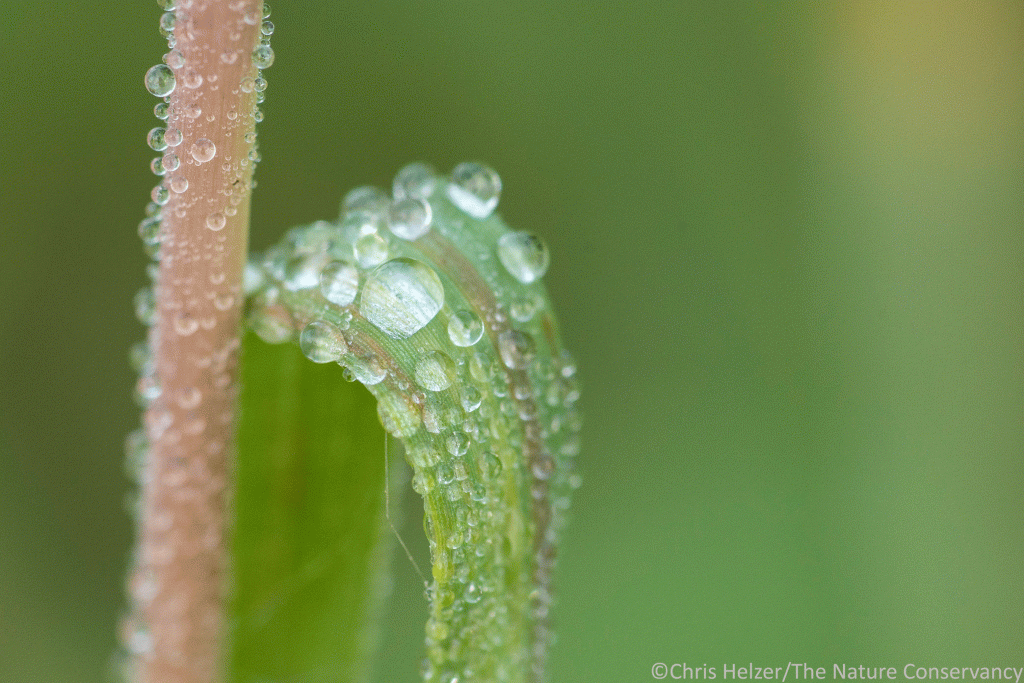
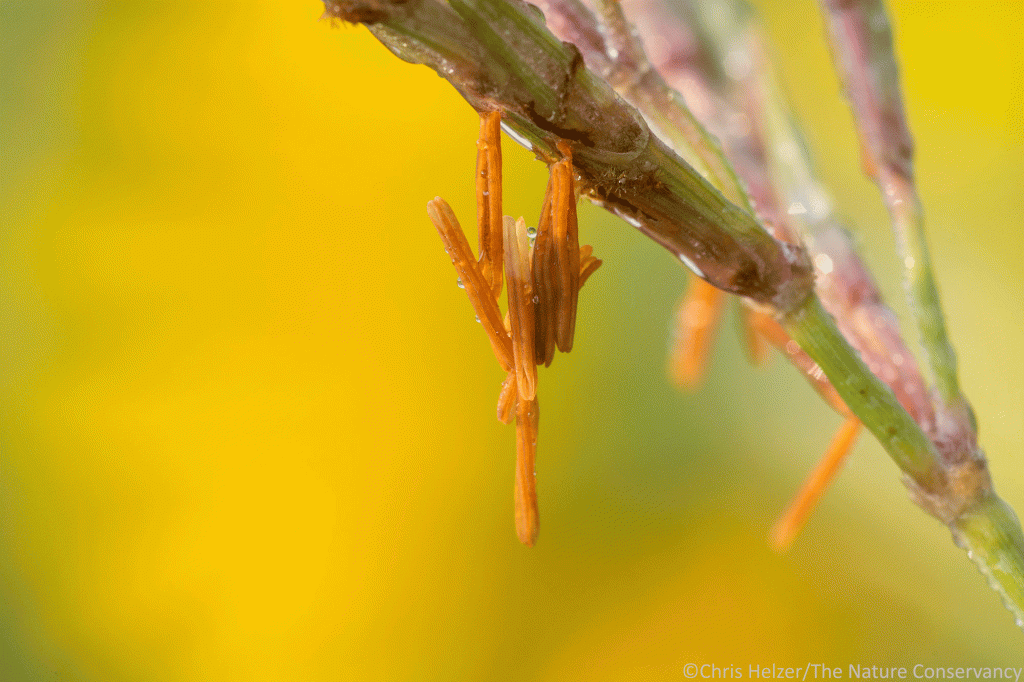
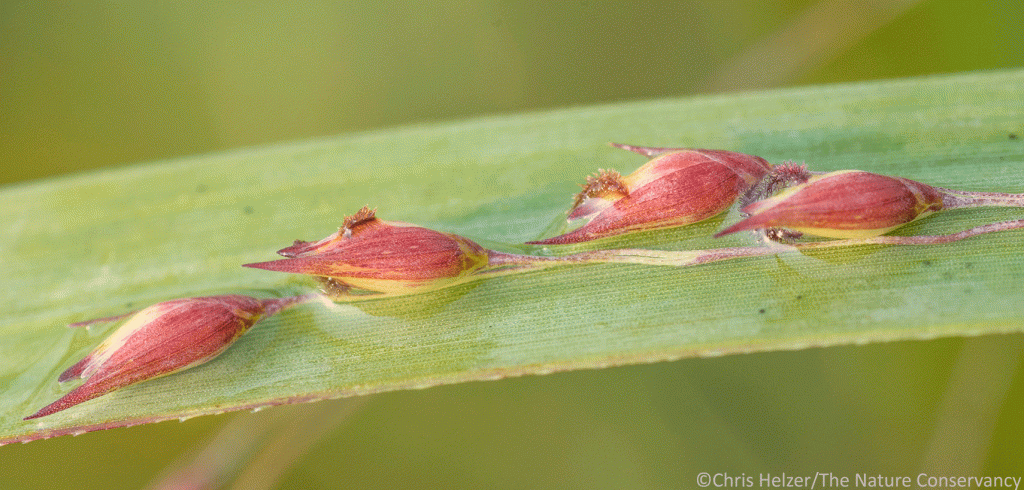
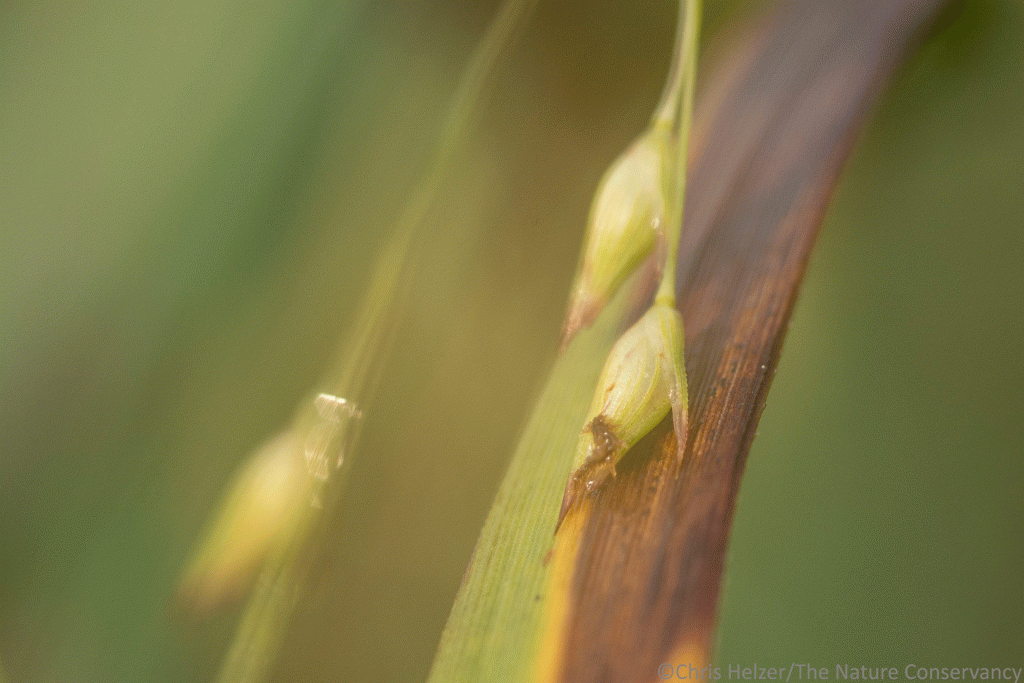
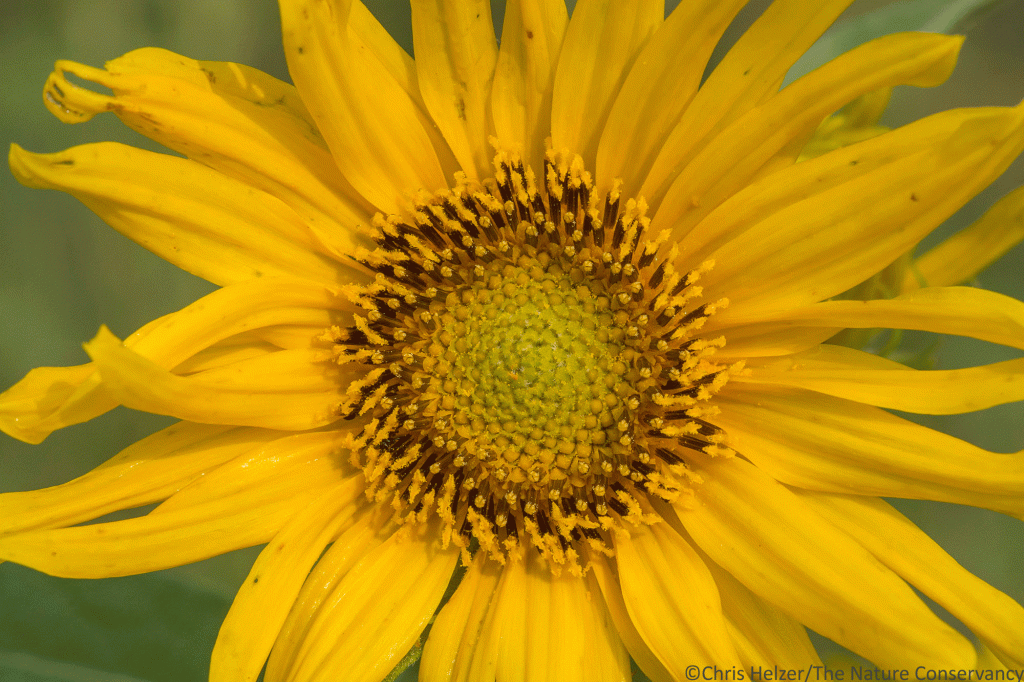
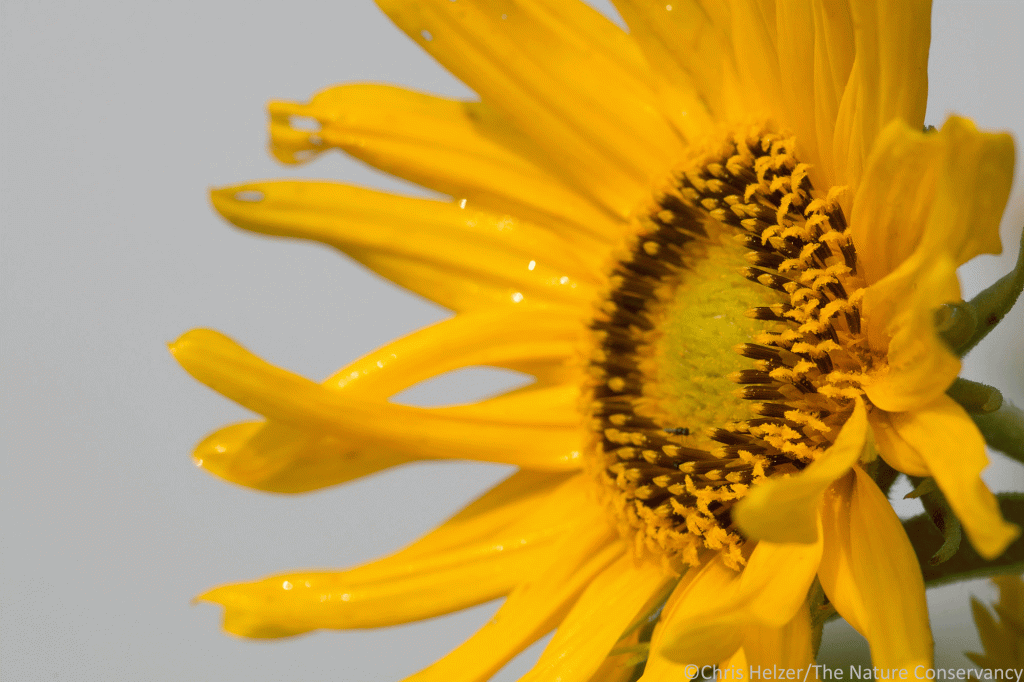
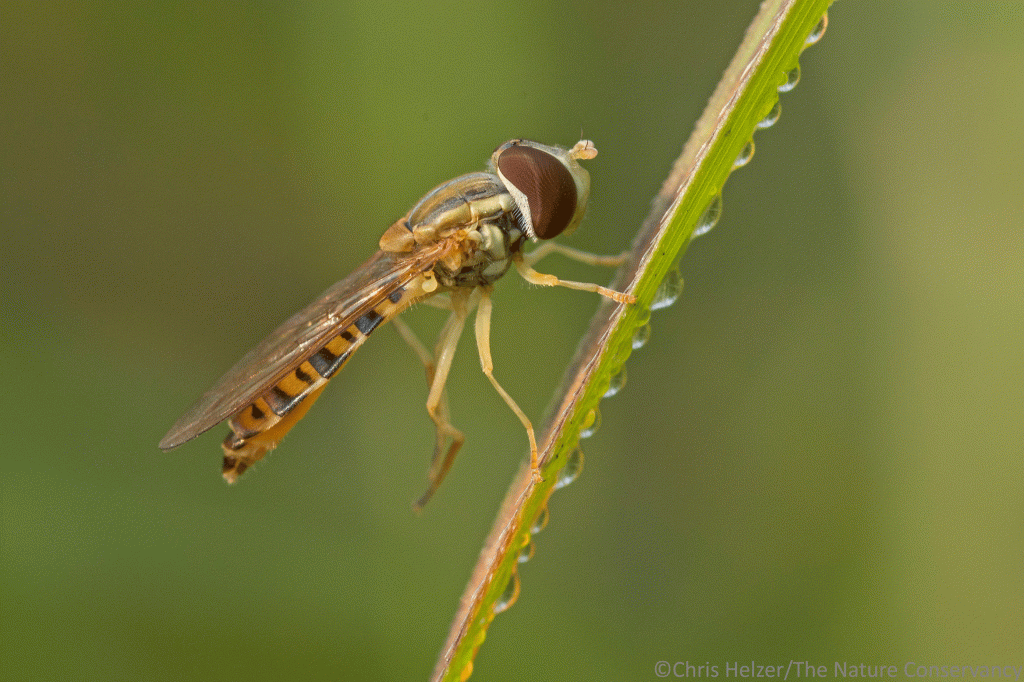
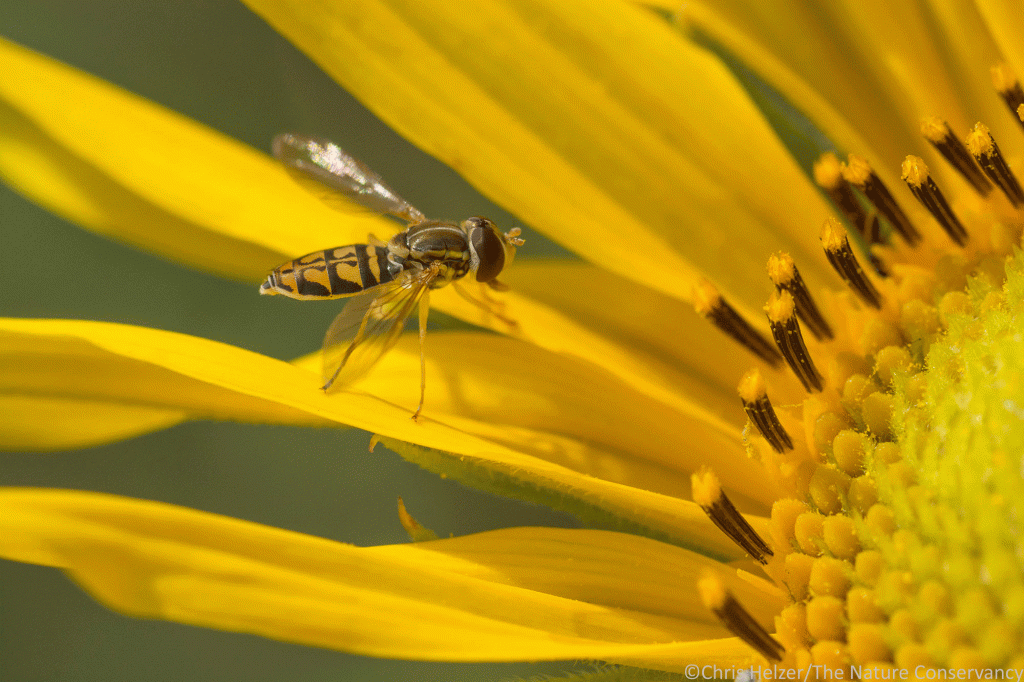
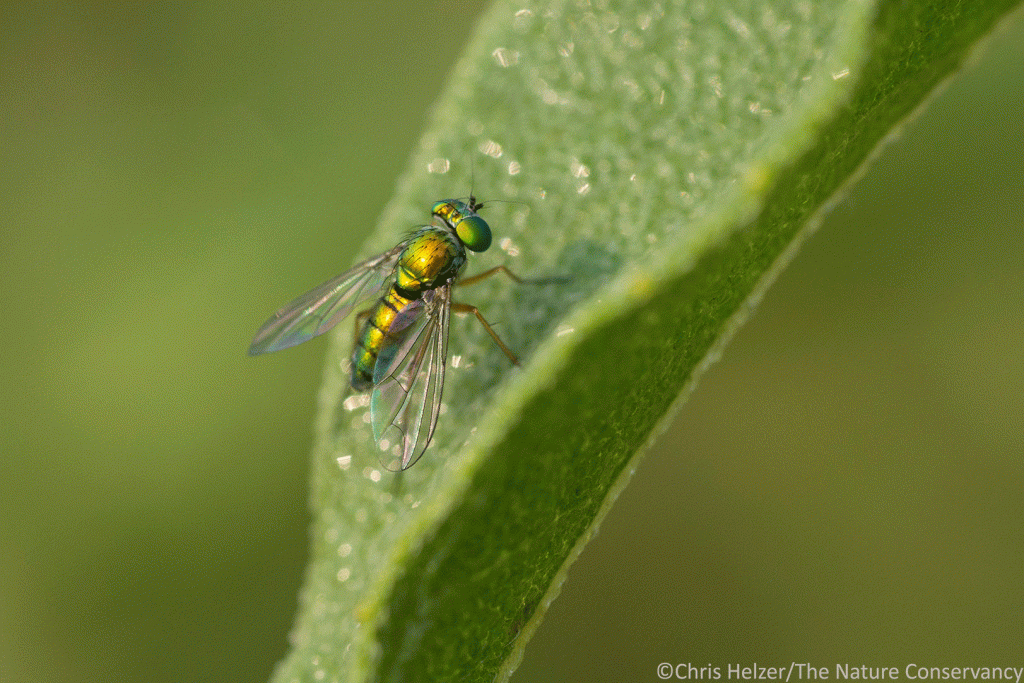
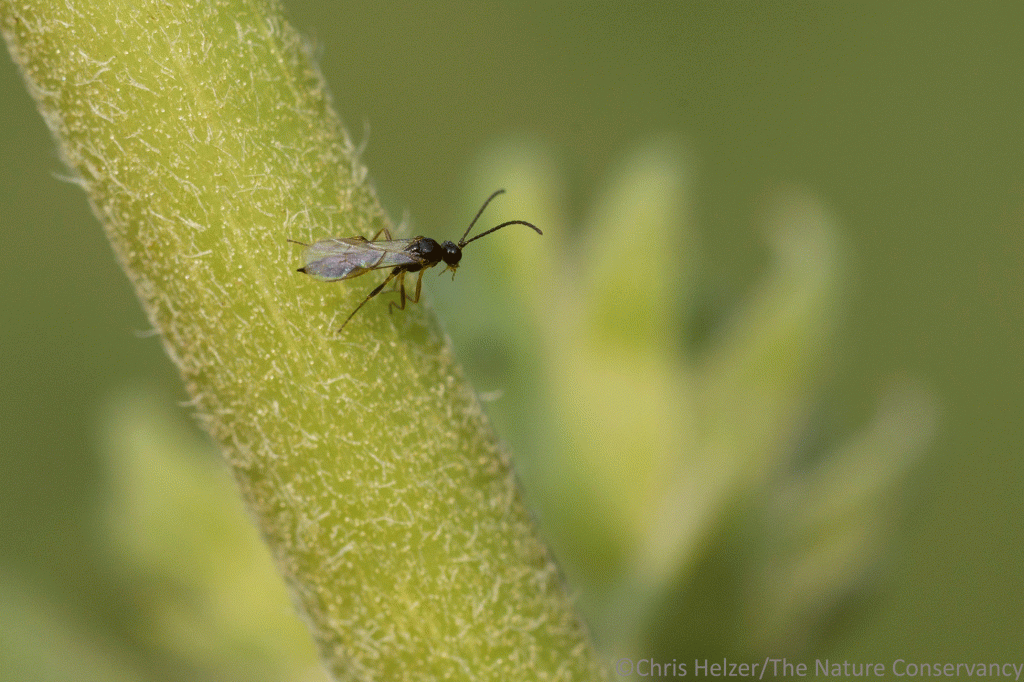
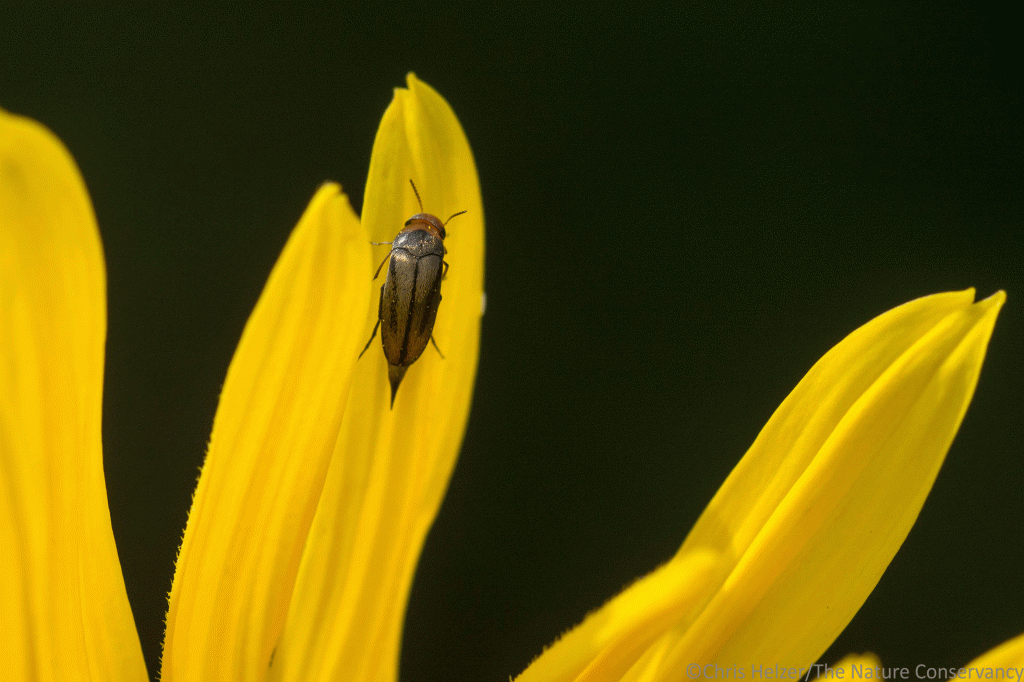
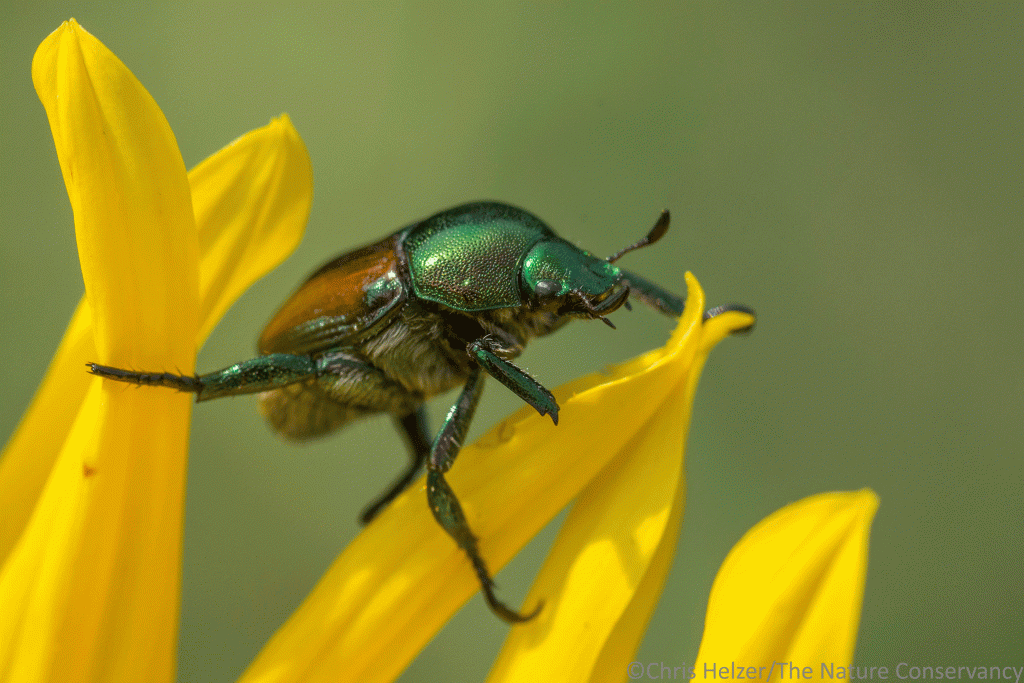
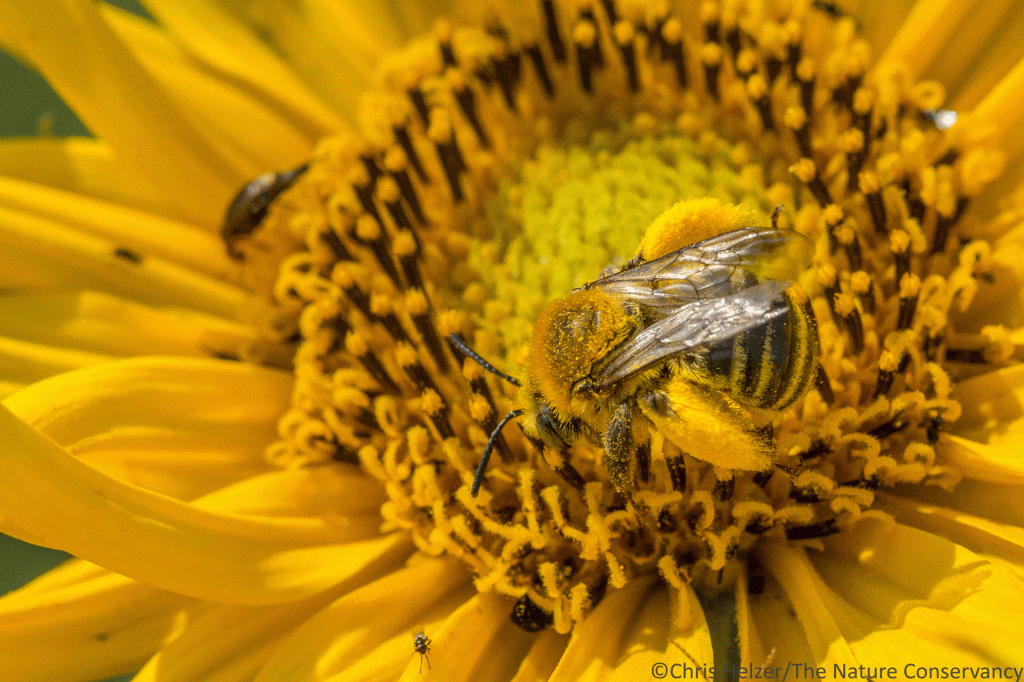
Stiff sunflower decapitated by the Silphium weevil, which lays its eggs in the flower head after girdling the stem.Dew drops on big bluestem.Big bluestem flower.Switchgrass flowers on a dew-covered grass leaf shelf.More switchgrass flowers.Ethereal-looking switchgrass flowers.Maximilian sunflower (Helianthus maximiliani) was the start of the show on August 21, with prolific flowers that attracted a wide diversity of insects.Maximilian sunflower.A hover fly rubbing is rear legs together.Another hover fly.Another hover fly…A different and even more tiny fly.A long-legged fly (Dolichopodidae), a tiny predator, hunting for ants (I presume) on Maximilian sunflower leaves.Who’s’ living in there? A stem-boring moth (maybe?) in a Maximilian sunflower stem.A tiny wasp on a Maximilian sunflower stem.A tumbling flower beetle.An invasive Japanese beetle.A small foraging bee (Halictus ligatus)A Melissodes bee on Maximilian sunflower.A fully-loaded bee (Melissodes trinodis) with a tumbling flower beetle in the background.Bumblebee (Bombus impatiens) on Maximilian sunflower.
The University of Wisconsin-Madison Arboretum was this year’s host of the annual Grassland Restoration Network workshop. The Fellows and I spent much of last week in Madison, along with about 120 other people from around the central part of the U.S. The crowd consisted mainly of people who are actively restoring prairies and/or evaluating the results. As a result, most of the discussions were very applicable to the work we are all doing at our home sites.
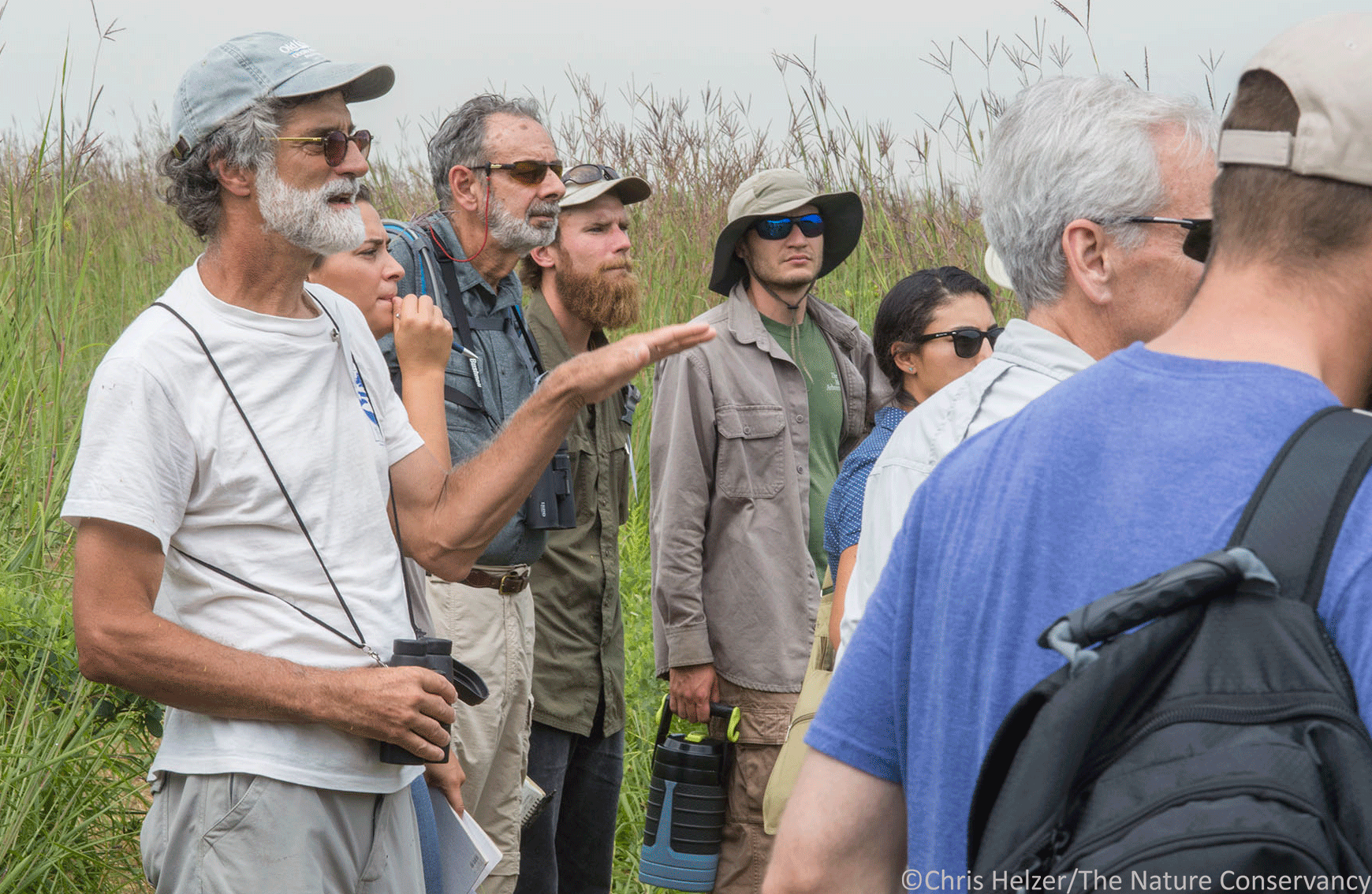
Roger Packard, a volunteer with Madison Audubon Society, leads a tour of Faville Grove Sanctuary during the 2019 Grassland Restoration Network workshop.
I came away from the meeting with a renewed sense of hope about prairie conservation and restoration. That is despite the fact that many of the presentations were sharing news of prairie degradation and population declines. After I share some of the messages we heard and my sunny interpretation of them, you can decide whether I’m optimistic or delusional.
Brad Herrick of the Madison Arboretum shared the story of Faville Prairie, a wet prairie remnant that was severely flooded in 2008. During June of that year, the site remained under high water for several weeks. In 2010 and 2011, scientists re-sampled some old permanently-marked vegetation plots to see how the plant community had changed. The plots were originally set up and sampled by Max Partch in the 1940’s and then sampled again in 1978-79. Of course, it’s impossible to know how much the prairie had already changed prior to the 2008 flood, but it seems reasonable to expect that the unprecedented high water was a big factor in the results the botanists found in their 2010-11 sampling.
After the water receded, the site looked sad and dead, but plants came back quickly and re-filled the barren landscape. Some species, however, were less abundant than before. The average number of plant species found within the 4m square plots decreased from 24.2 to 20.5 and a few species, including prairie blazing star (Liatris pycnostachya) and shooting star (Dodacatheon meadii) were not found at all, despite having been common before. Other species, including prairie dock (Silphium terebinthinaceum) and prairie dropseed (Sporobolus heterolepis) also declined significantly in abundance. In contrast, the invasive reed canarygrass (Phalaris arundinacea) expanded the size of its kingdom in the portion of the prairie nearest the river.
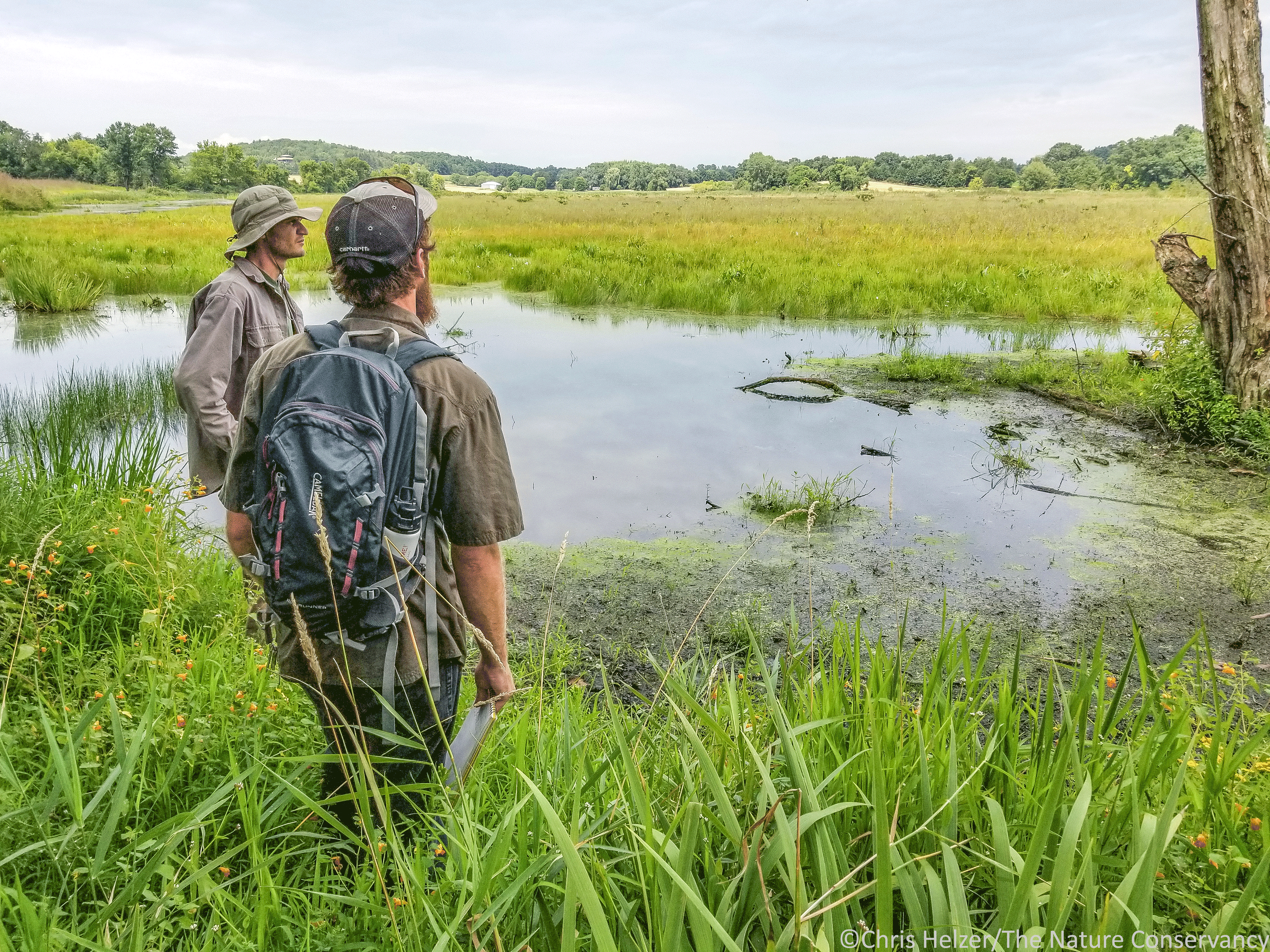
Faville Marsh, not far from the Faville Prairie that was flooded. We only did a quick drive by of the Faville Prairie itself, so I don’t have photos of it.Arrowhead (Sagittaria sp) at Faville marsh.
On the second day of the workshop, Amy Alstad, with the Driftless Area Land Conservancy, presented results from her PhD project, in which she also used “legacy data” to examine changes in prairie communities over time. In her case, she surveyed 47 prairies that had first been studied in 1950 by John Curtis and then re-surveyed again in 1987. Amy went out in 2012 and inventoried the plant species in those same sites (and then went out to some of them again in 2015 to be sure the 2012 drought wasn’t a factor in her results).
The plant communities in those 47 sites had changed quite a bit between 1950 and 1987, but Amy found that they had changed even more dramatically between 1987 and 2012. Some species were added to the sites (including invasive species) but others disappeared, especially those that are rarely found outside of high-quality remnant prairies. The average number of plant species found at each site wasn’t significantly different between the three sampling periods, but the trajectory of change at many of the sites isn’t good.
Prairie dock stands tall in restored prairie at Faville Grove Sanctuary.
In addition to those plant community presentations, we also heard from Karen Oberhauser and Susan Carpenter about monarch butterflies and bees, respectively, as well as the conservation needs for those insects. Monarchs, of course, are much less abundant than they used to be, and many bee species have experienced big population declines. The massive loss of habitat, especially prairies with high plant diversity, are driving those population declines, with fewer milkweed plants (including in cropland) playing an additional role in the crash of monarch numbers.
Cheery news, right?
You’re probably wondering how I came away from these presentations and
the overall workshop feeling anything but depressed. I agree that much of the news wasn’t great,
but let me give you a little more context.
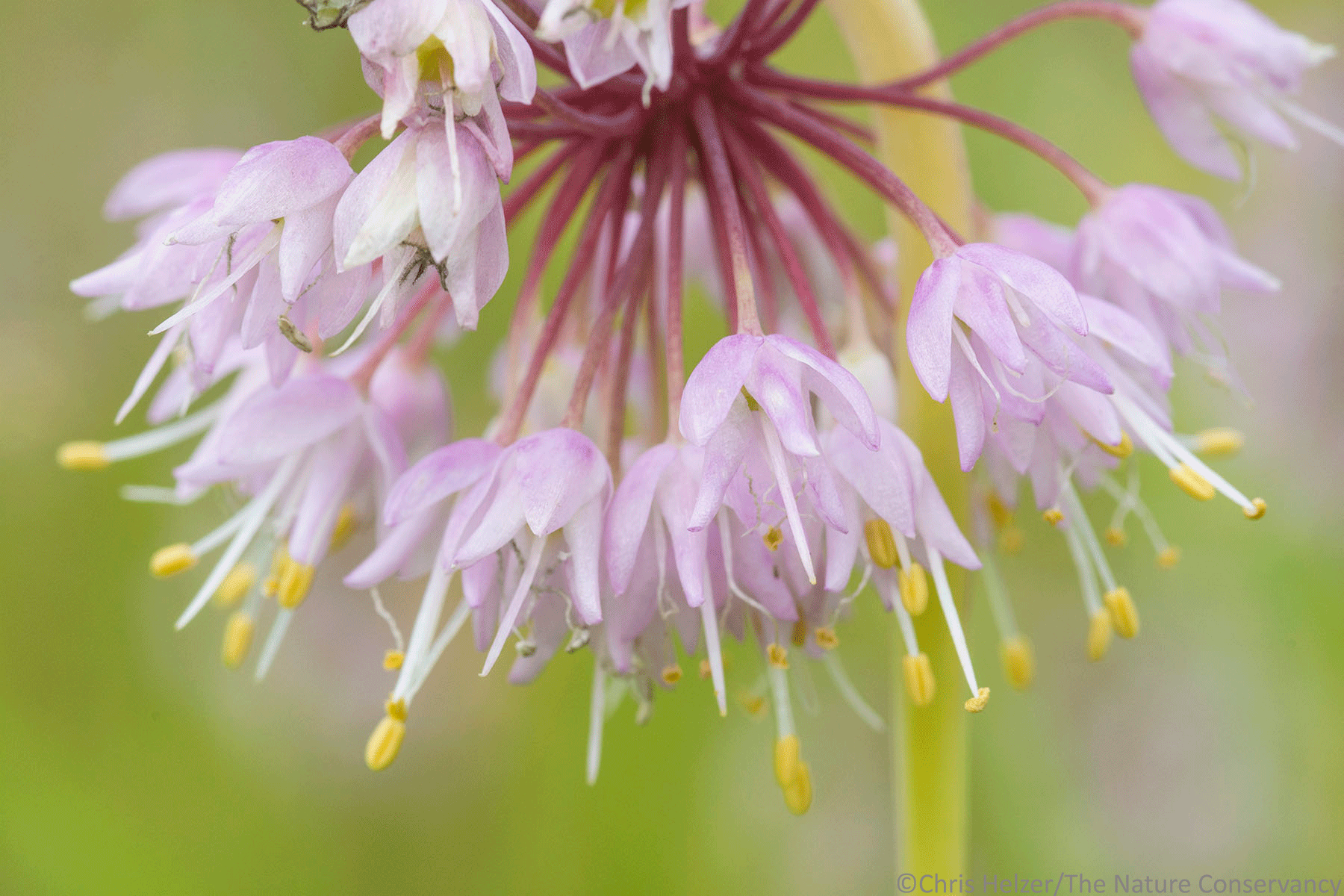
Nodding wild onion (Allium cernua) – I think? – at Faville Grove Sanctuary.I saw quite a few gray tree frogs in prairies around Madison. This one was at the Holy Wisdom Monastery, in a recently restored prairie. There is a small beetle on its jaw – just hanging out, I think.
First, in Brad’s talk about the flooded prairie, I found it inspiring
that after weeks of complete inundation, the Faville Prairie plant community rebounded
quickly. Despite big changes (of course)
in the composition of the plant community, it was still a prairie, and still
had the majority of its plant species.
That’s pretty amazing! Yes, reed
canarygrass is a major threat, but it’s a major threat in most wet prairies
everywhere. Its increased footprint was
probably a foregone conclusion.
The vast majority of plant species survived the flood, and there’s a good chance that the species that didn’t (or were greatly reduced in abundance) will be able to recolonize over time. That chance is increased significantly by the fact that the Faville Prairie is at a site where Madison Audubon and others are working hard to restore surrounding cropland back to diverse prairie vegetation. They already own 670 acres of land nearby, including several parcels directly adjacent to Faville Prairie. We toured several of their restoration projects, and they look wonderful. Increasing the overall size of the prairie footprint in that area will increase the population size and viability of prairie plant and animal species and might allow species eradicated by the flood to recolonize Faville Prairie.
Cream gentian (Gentiana alba) is a conservative plant species that was doing well in several restored prairies we toured.I could have spent many hours photographing the intimate details of prairie dock leaves. I’m restricting myself to sharing just two photos here.Even when they are dried and brown, prairie dock leaves are fantastic.
Amy’s results were disheartening, of course, and even more
so because only 47 prairies could still be re-surveyed out more than 200 that
Curtis has looked at back in 1950 (most no longer exist). However, despite the small and isolated
nature of the prairies in her study, many of the prairies she looked at are
still in pretty good shape – including some that were identified in 1950 as the
best remaining examples of Wisconsin prairie.
In addition, Amy identified two factors that were tied to the sites that
had best retained their plant diversity and conservative species. The first was regular application of prescribed
fire, and the second was the size of the prairies and surrounding prairie
habitat (including restored prairie). In
other words, prairie management and increasing prairie size through adjacent
restoration work makes a big difference in the survival of small prairies. That isn’t a message of despair, it’s a call
to action. We’ve got a good chance of
saving the remaining prairies if we do what we already know how to do – manage them
carefully and rebuild their size and connectivity.
Along those lines, Mike Hansen of the UW Arboretum showed us some photos of recent successful restoration projects at the arboretum itself. In particular, they have working on sites where prairies and savannas have been severely encroached upon by trees and brush. After removing the invading woody vegetation, Mike said they were seeing amazing recovery by prairie plants that hadn’t been seen for years. In some cases, they added seeds of missing species and were seeing positive results from that work as well. Again, management leads to successful conservation results, and the resilience of prairies is aiding our conservation efforts.
Restoration projects like Faville Grove Sanctuary and others in Wisconsin provide a lot of hope for the future of prairie conservation.
Pollinators, including thousands of bee species, along with
many others like monarch butterflies, are certainly struggling today. On the other hand, the fact that many of
those species have managed to hang on as long as they have is pretty
incredible. Wisconsin’s prairie
footprint has decreased from 2.1 million acres to less than 10,000. Illinois also has less than 10,000 acres of
remnant prairie left, and in both states, the majority of the remaining fragments
are tiny. (For comparison, each of the
two bison pastures at our Niobrara Valley Preserve is about 10,000 acres, and
they are set within 12 million acres of intact Sandhills prairie. Unfortunately,
while Sandhills prairie has some of the same species found further east, its
survival doesn’t make up for the loss of tallgrass prairie.)
Thoughtful management of remaining tallgrass prairies and restoration of adjacent sites to increase prairie size can make a big difference in pollinator conservation. So can increased use of native plants in urban and suburban landscapes, increased numbers of milkweed plants, and more judicious use of pesticides. We know how to do all of that and are making progress in many places. I was impressed and energized by the quality of restoration projects we saw in the Madison area last week. As the size of restored prairie landscapes increases, so will their value to pollinators and other animals. In larger prairies, managers will have more opportunities to manage for more varied habitat structure (height and density of vegetation) to better accommodate the needs of birds and other prairie species that rely on that habitat heterogeneity.
Look, I’m not saying we aren’t facing massive challenges in
prairie conservation. Of course we
are. Most of our prairie is gone, especially
in the tallgrass region, and much of what’s left is in small and isolated
remnants, threatened by invasive species, climate change, and other dangers. On the other hand, our knowledge of how to
restore and manage prairies is sophisticated, and we can point to successful
projects in many places. Most importantly,
prairies and their species have shown themselves to be amazingly resilient,
despite the catastrophic shocks they’ve been subjected to. That resilience buys us time – more than we
deserve, probably – to save what’s left.
Our tour group stands on a big chunk of Baribo0 quartzite. This tour was inspirational to me and, I assume, to the other restoration folks attending the workshop. Now we need to share that inspiration with the general public to gain their support for prairie conservation.
Having said that, the main obstacle blocking the success of
prairie conservation is not climate change or invasive species, it’s the lack
of public support for prairie restoration and protection. While it’s important to continue restoring
and managing the prairies we have left, those efforts will only lead to success
if we convince others that prairies matter.
Rather than hanging our heads and bemoaning the continued degradation of
grassland habitat, let’s get out there and share the stories of the beauty,
diversity, resilience, and importance of prairies!












 The Prairie Ecologist