Please forward this to anyone you think might be interested:
Between now and September 30, 2019, we are accepting applications for the next class of Hubbard Fellows. The year-long Claire M. Hubbard Young Leaders in Conservation Fellowship Program is designed to help recent college graduates gain comprehensive experience. That includes a healthy dose of land management and restoration work, as well as data collection, outreach, marketing, fundraising, conservation planning, and more. In addition, each Fellow designs and carries out an independent project to dive deeper into a subject they are interested in. The Fellows are based at The Nature Conservancy’s Platte River Prairies, just south of Wood River, Nebraska, and housing is provided at that site. The position runs from February 2020 through January 2021.
Our 2019 Fellows, Chelsea Forehead and Mary Parr. This could be you!
The Fellowship is set up differently than most internships and other short-term positions, which tend to focus on a fairly narrow set of responsibilities and opportunities. Fellows fix fence, conduct prescribed fires, control invasive plants, harvest seeds, and help with all other land stewardship responsibilities. In addition, however, they attend conferences, planning and strategy sessions, budget meetings, and chapter board meetings, and are encouraged to participate actively as full time staff members of The Nature Conservancy during their year with us.
You can read more about this opportunity in this PDF brochure and apply at nature.org/careers. Search for “Hubbard” or job #47950 to find the job description and application instructions. Come join us in Nebraska, get involved in innovative and important conservation work, and build your future!
The Fellows and I traveled to Wisconsin this week for the annual Grassland Restoration Network workshop, which – this year – was being hosted by the University of Wisconsin-Madison Arboretum. I’ll write more about the workshop in a future post, but for now, I’ll share a few photos from our last evening in Madison.
Greene Prairie at the UW Madison Arboretum.
Despite looking forward to the workshop itself, my top priority for the trip was to revisit Greene Prairie, a site that has mesmerized me since I first saw it in 2004. Henry Greene began work on his prairie in 1943 and ended up hand-planting 130 species over the next couple of decades. It was painstaking work, laid out in great detail and brought to life by a man who, by all accounts, had a very prickly personality. We couldn’t find a window of time to visit his site during the workshop, but as soon as our last field trips ended on the last evening of the workshop, the Fellows and I headed to Greene Prairie, accompanied by Sarah Bailey and Gerry Steinauer.
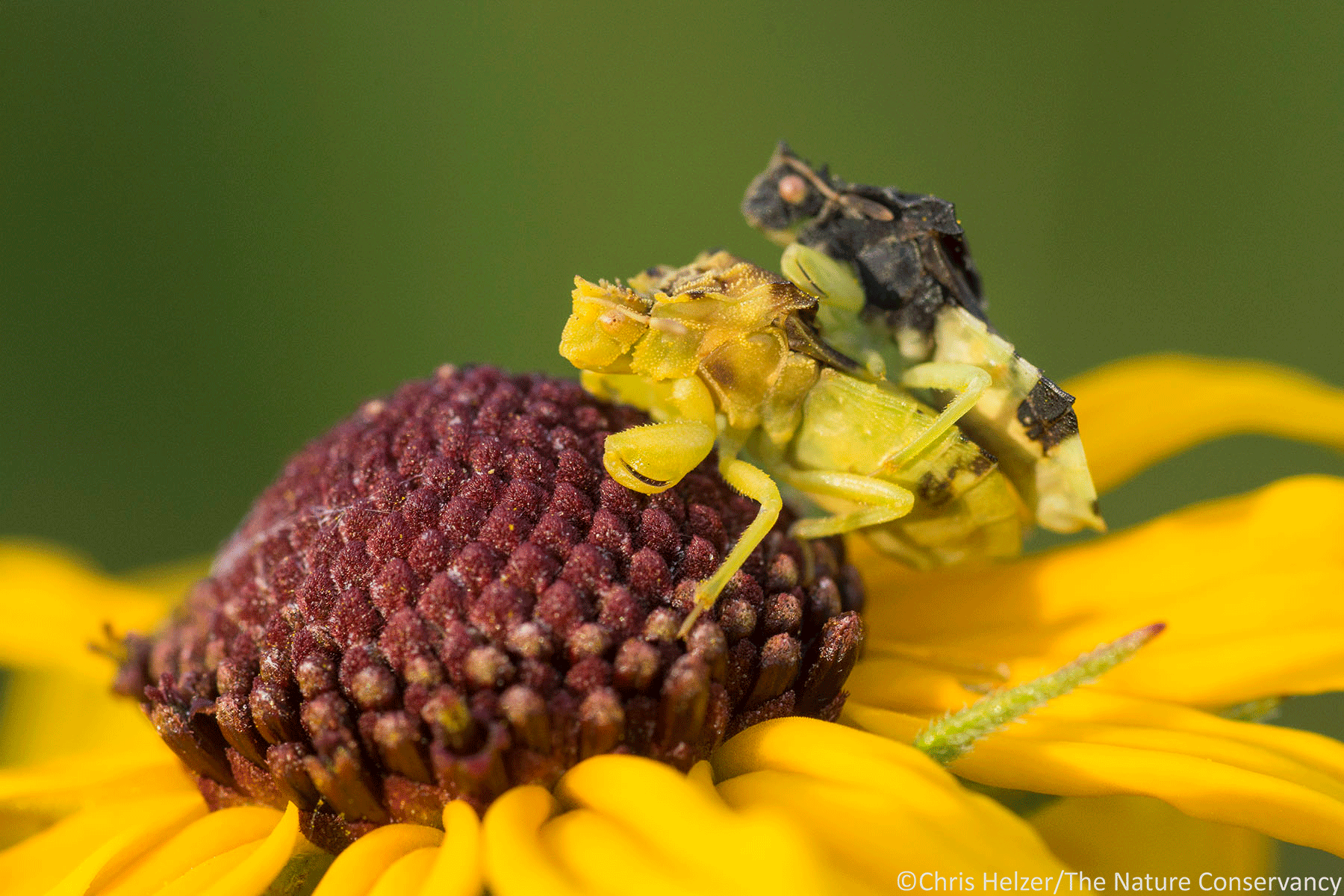
Ambush bugs (Phymata sp) mating and feeding on a bumblebee. If you look closely, you can see the same three insects (plus another bumblebee) in the photo above this. If you’re having a hard time deciphering what you’re seeing here, the bumblebee is dead and is impaled upon the proboscis of the paler-colored ambush bug (female), which is underneath the darker colored ambush bug (male).
We saw a lot of great restoration work during our few days in Madison, but there is something about the aesthetic at Greene Prairie that makes it stand out. During my previous visits, I’ve tried to puzzle out what draws me so strongly to it. It’s not the presence or abundance of any particular species, including some rare species, as well as lots of charismatic wildflowers. I think it’s the overall structure and look of the site that I find so attractive. Many of the restored prairies we walked through during this (and other) trips are tall and nearly impenetrable to pedestrian traffic. That’s not necessarily a bad thing, but it’s definitely different from the prairie structure I’ve become used to here in Nebraska. The Greene Prairie, while it has plenty of tall plants, also has large areas dominated by a matrix of shorter plants like prairie dropseed. Even where many of the plants are tall, the spacing between them makes the prairie easy to walk and see through.
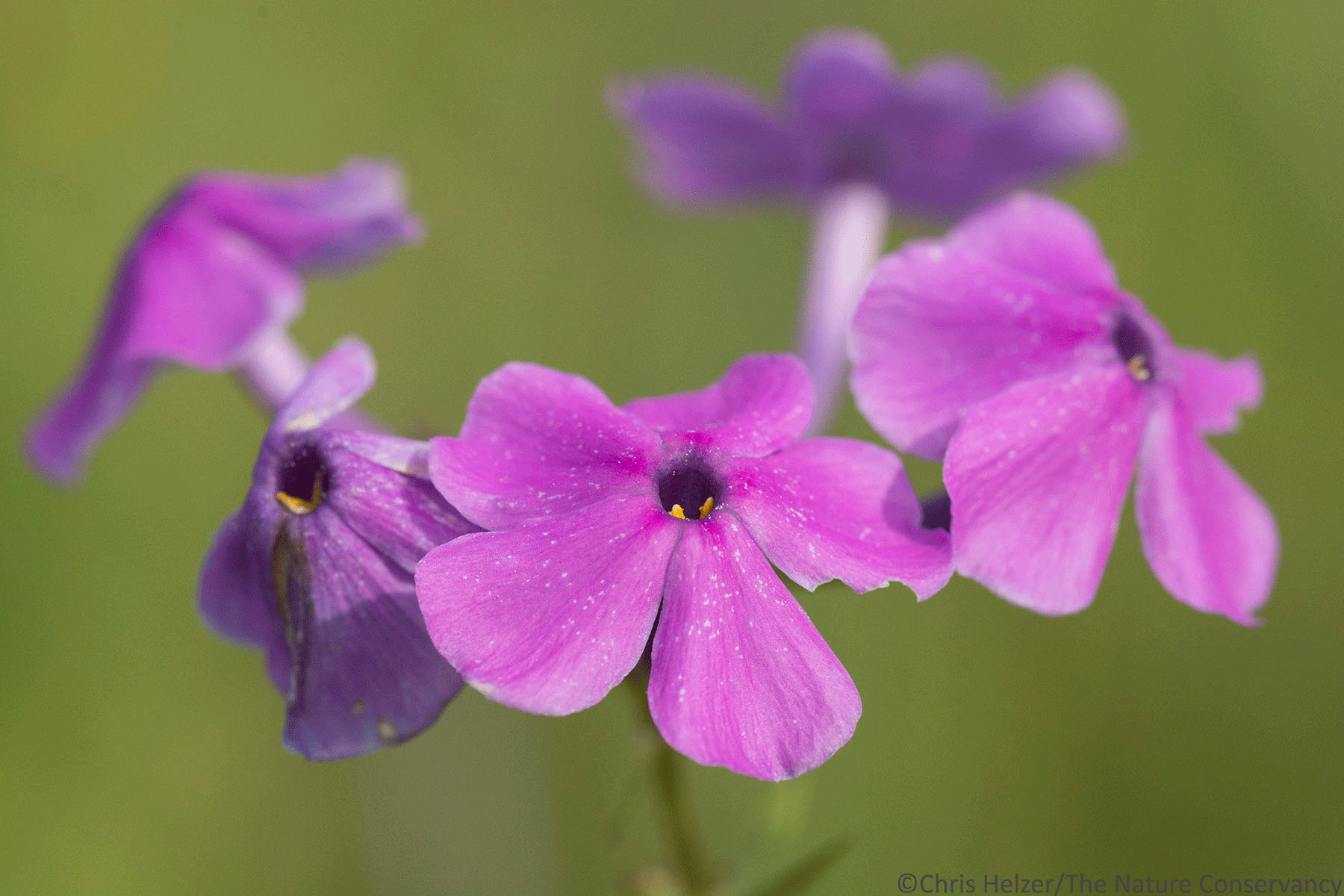
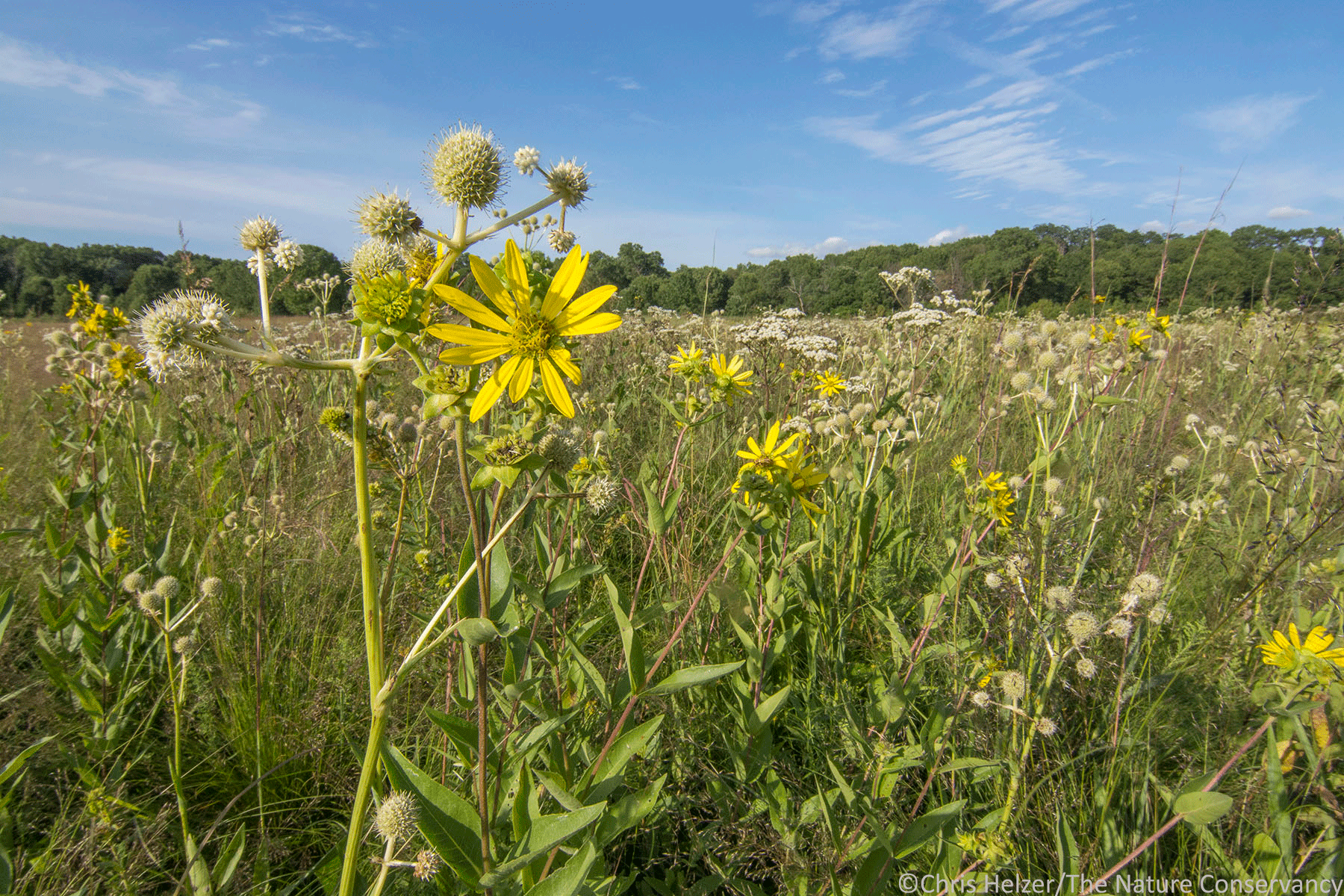
Gayfeather (Liatris) was nearly done blooming, so we missed the peak color of that species, but rattlesnake master (Eryngium yuccifolium) and some of the Silphiums were still going strong.We were surprised to find a few prairie phlox (Phlox pilosa) in bloom during August. (Edit – Steve Packard graciously informed me that this is likely Phlox glaberrima).
There’s a lot more I could say about the Greene Prairie, but honestly, it’s been a long week and my communication energy is pretty depleted. I never feel like my photos represent the site well, but they’ll have to be sufficient for now. I’ll try to come up with a good synthesis of this week’s workshop to share next week. In the meantime, enjoy these photos!
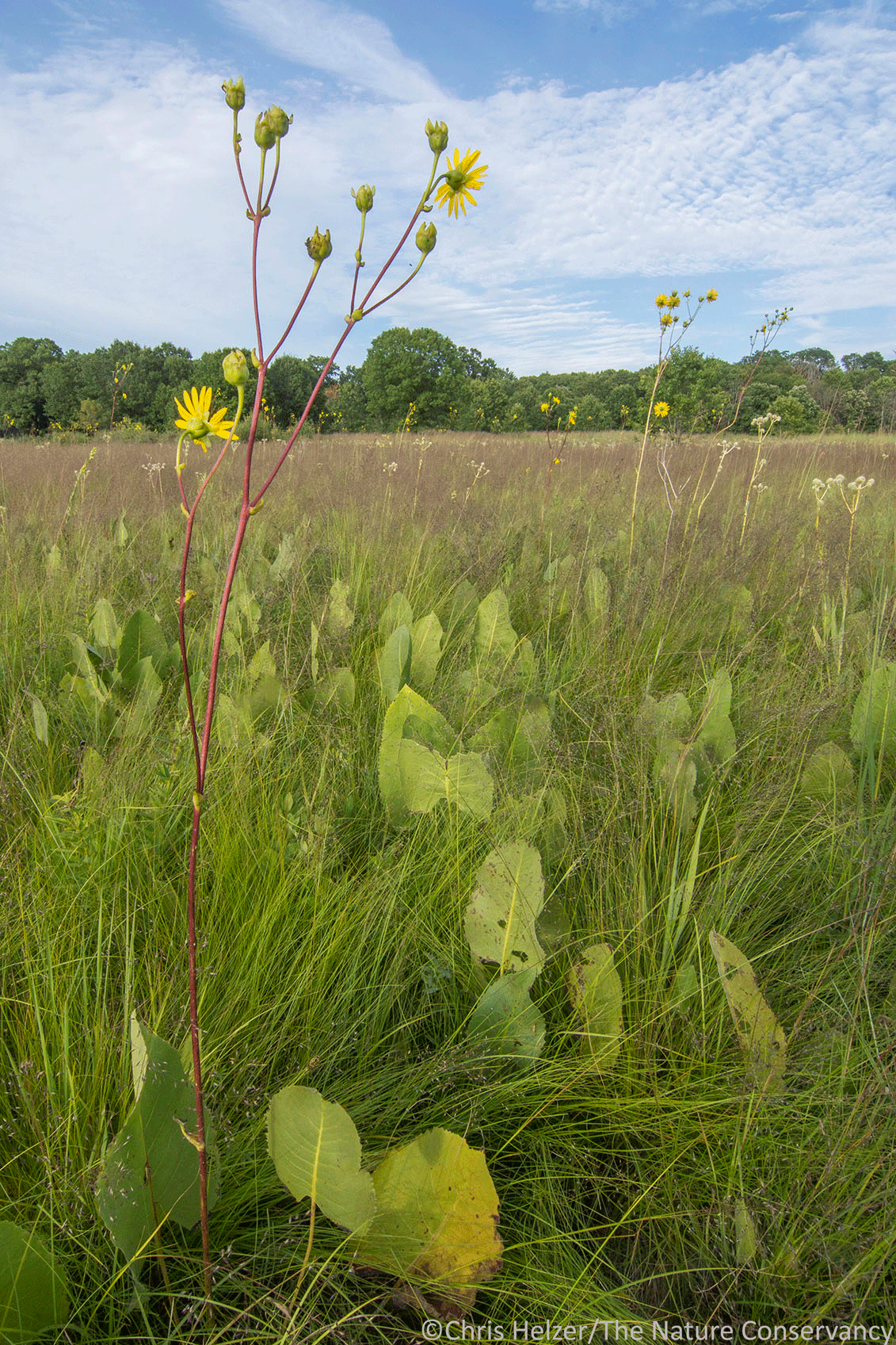
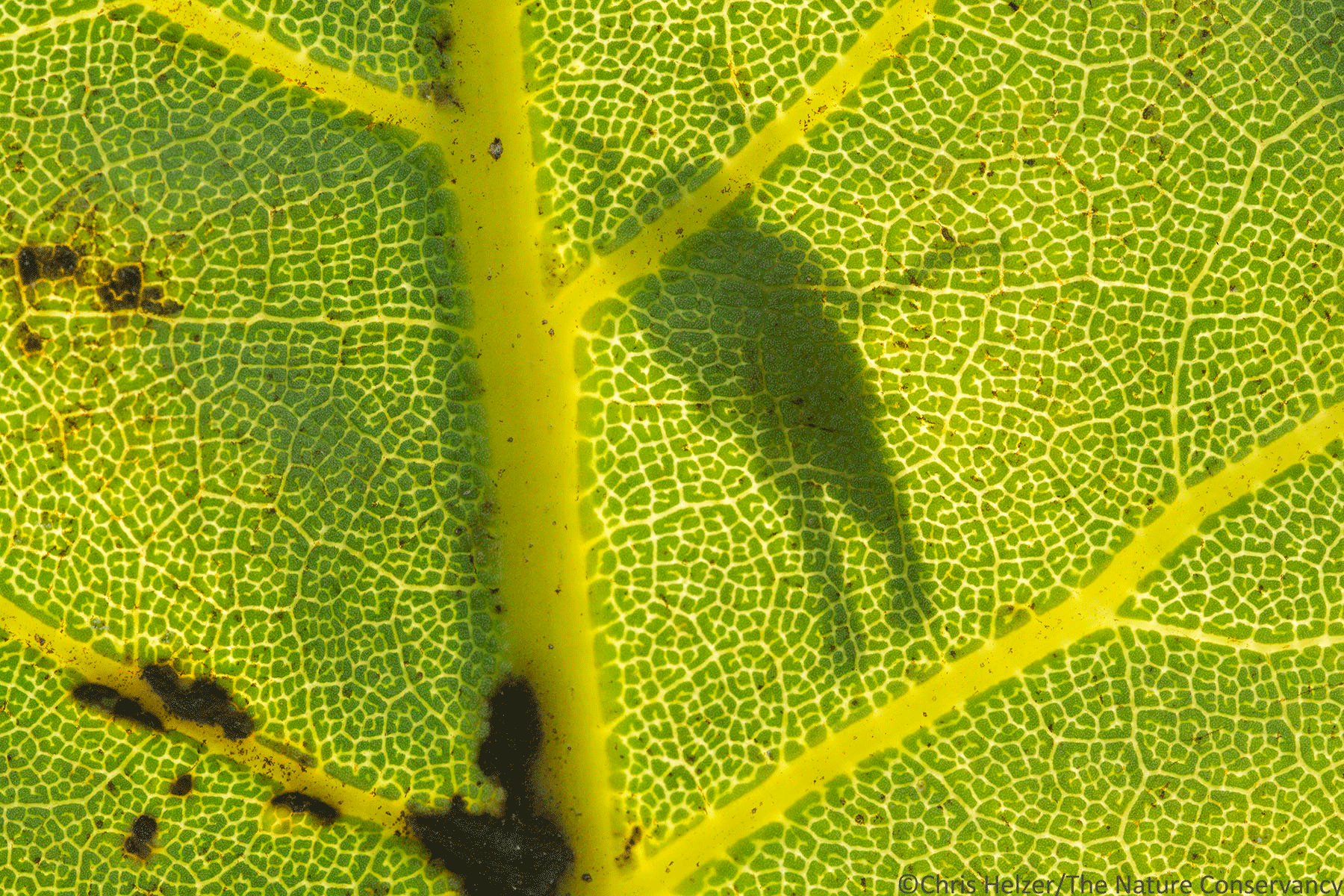
More Silphiums and Eryngium.This photo shows a prairie dropseed-dominated patch of prairie, with lots of prairie dock (Silphium terebinthinaceum) scattered around. It’s a completely different habitat structure than most of what we saw in other restorations around the Madison area. Some of that is the maturity of the site, some of that is the near absence of big bluestem and other tall grasses, and there are other factors I probably don’t fully comprehend. Ecologists from the area tell me prairie dropseed was probably much more prominent than big bluestem in many eastern tallgrass prairies. I’m enraptured by prairie dock, with its giant leaves and strikingly tall flowering stalks. I sure wish we had it in Nebraska. Here is a leaf with a grasshopper silhouetted against it.I don’t know which fern this is, but it was draped prettily on the grasses and sedges beneath it.Prairie dropseed was in full bloom around the site.It was apparently mating season for ambush bugs this week. I saw several pairs of them during our short hike.What’s not to like about Greene Prairie? I’m very grateful to Mike Hansen and all the other staff at the Arboretum who are striving to keep this and the other beautiful areas of the Arboretum in good shape. I look forward to my next visit!





 The Prairie Ecologist