
Over the weekend, my wife, Kim, and I were at Wilson Lake in Kansas. Longtime readers know that Kim runs ultramarathons and that I usually accompany her when she goes to races or long training runs. This weekend, she was signed up for a “backyard ultra” in which participants run an approximately four mile loop once an hour for as many hours as they can. They have to be back at the starting line at the top of each hour to avoid being disqualified. Sounds fun, huh?
Kim was mostly using the race as training for another race coming up next month, so she only planned to run 8 loops. The serious racers were each planning to run until they were the last one left. The eventual winner ran through the day, the night, and much of the next day, ending at something like 30 laps and 125 miles. Kim was feeling good after her first eight loops and ended up doing an extra one to end up at 37.5 miles.

My role in all this was to be at the starting point a few minutes before each hour to help refill Kim’s water and hand her food, dry clothes, or whatever else she needed before she headed back onto the trail. It was pretty exhausting work, but my training got me through it. I only missed one time and that was because our car went crazy and locked me inside while it blared the theft warning horn and lights. I hadn’t adequately trained for that, apparently.
During one of her brief stops between laps, Kim handed me a plant with yellow flowers and said, “I think this is a Corydalis, right?”
This is just one of many reasons I love my wife. She enjoys the challenge of long trail runs, but she’s also there because of what she can see along those trails. She’s very good at recognizing and appreciating what she sees. It’s nice that we can share these experiences. It’s especially nice that she’s happy to handle the running part by herself.
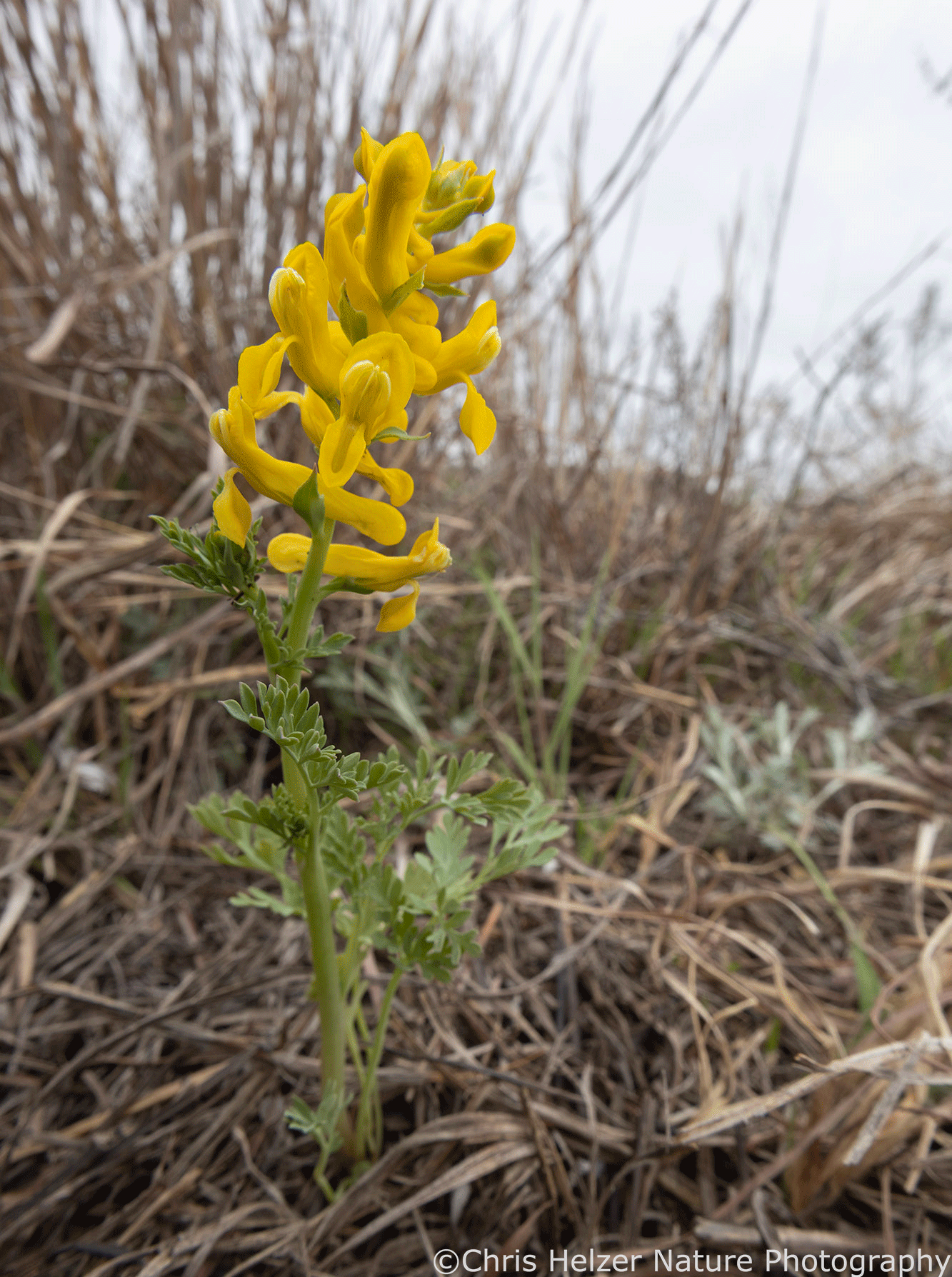
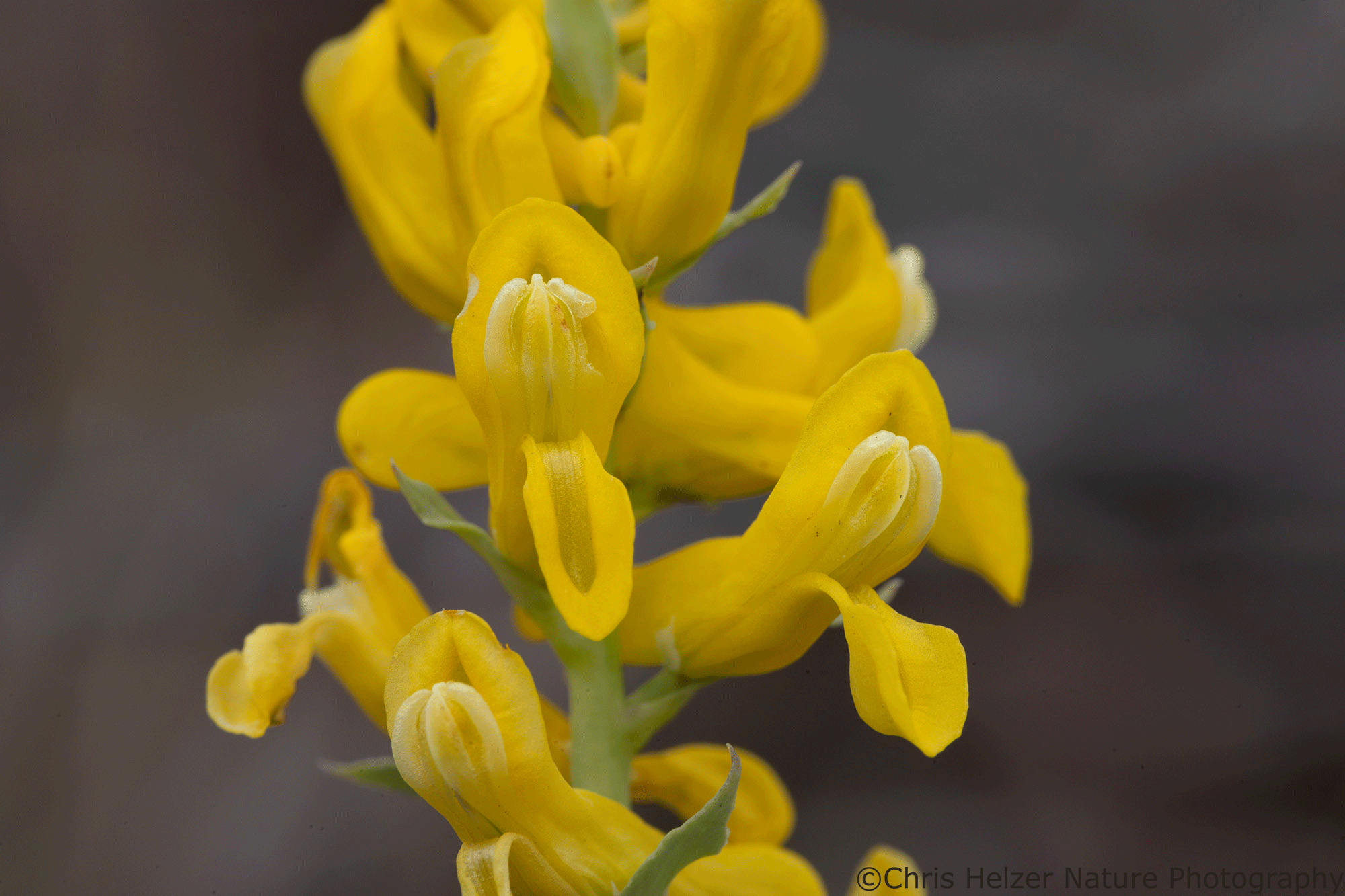
Kim was, of course, correct about the Corydalis. I wandered out and found a few plants to photograph during her next lap. Then I looked online to see what species it might be. I’m pretty sure it’s Corydalis lutea, which is a non-native, but apparently fairly innocuous wildflower found in that part of Kansas. It’s very pretty.
I’d been hoping to do a lot of photography during the race, even though I knew I’d be on a relatively short tether because of my hourly responsibilities at the starting line. This is a site Kim runs at fairly frequently, so I’m starting to become familiar with where certain species hang out. During a few periods when the overcast skies brightened a little, I grabbed my camera gear and wandered through the nearby rocky prairie, checking out some likely spots.
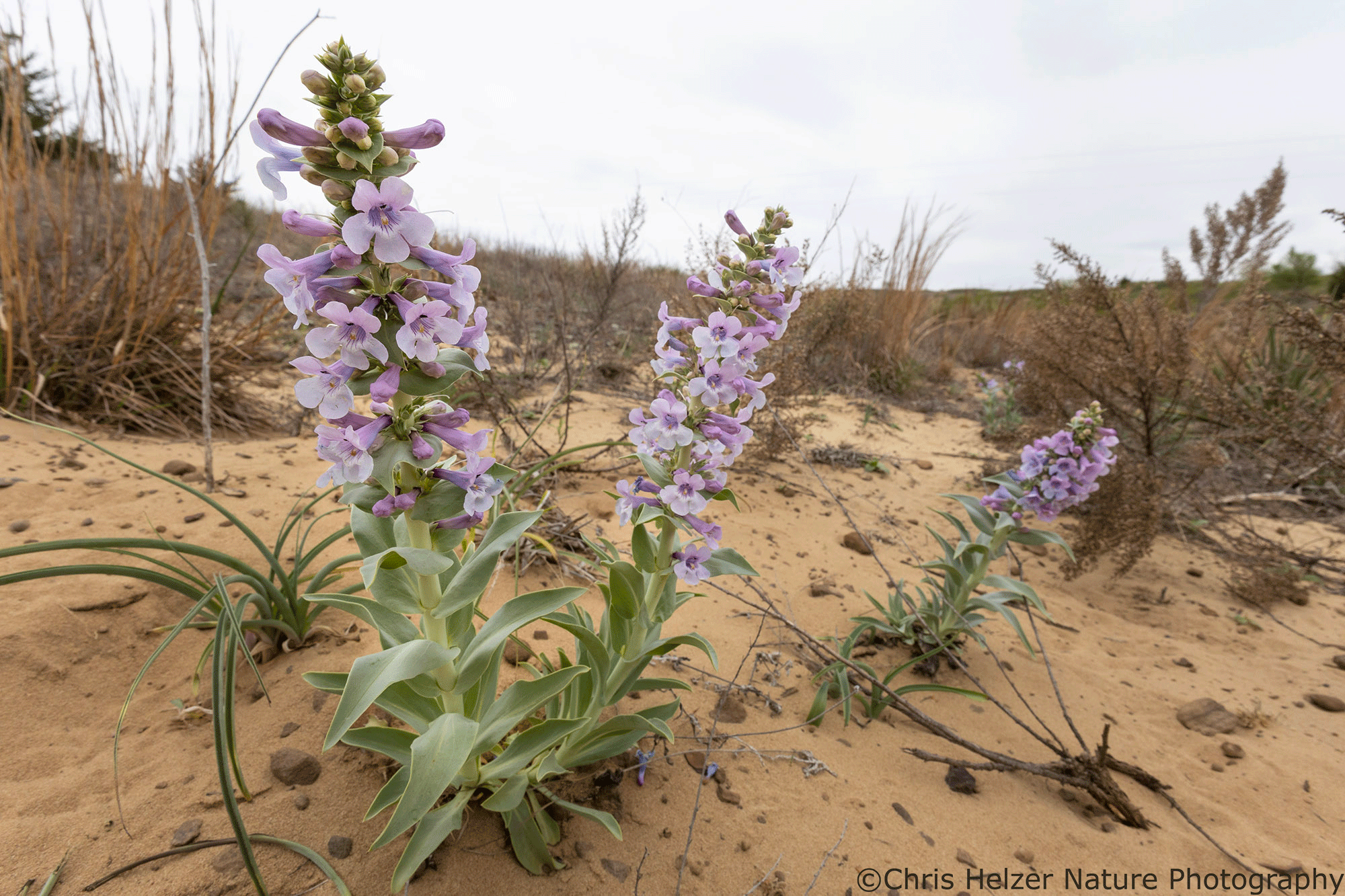
The temperatures were too cool for most creatures, including the ants at my favorite ant mound. I didn’t see any of the eastern collared lizards I photographed last summer, either. I did, however, find a couple new-to-me plant species. That’s assuming my cursory plant identification was accurate.



Prairie shrubs were in bloom around Wilson Lake, including wild plum, currant, and skunkbush sumac. I didn’t end up close enough to the first two to get photos of them, but I managed to photograph the skunkbush sumac. As I was finishing that photo, I saw a little butterfly out of the corner of my eye and was able to track down a common checkered skipper that looked freshly emerged.

The little butterfly posed on the trail for a short time and let me get some close-up portraits of it. This species is common in both Kansas and Nebraska, but is apparently found from southern Canada all the way down through South America. This one looked like it was trying to warm up by absorbing sunlight with its widespread wings, but there wasn’t much light or heat to absorb. I got a couple quick shots and then left it alone.


I’ve got just under a month to get in shape for Kim’s next race, which will be a much longer one. I’ll probably do some squats and knee bends to make sure I can get down to the ground for insect and wildflower photos. I need to get my camera batteries charged up and lenses cleaned. Apparently, I should also do some reading about the anti-theft features of our car so I can avoid a repeat of that whole fiasco.
Oh, and Kim will do a lot more training runs. This is a team effort, after all.
 The Prairie Ecologist
Thank for sharing 🖖🖖🖖
Good on you for supporting your wife in what she enjoys! And you get in some prairie time, too. (:
This was a wonderful post, Chris. Kudos to Kim for her dedication to her passion and supporting you in yours. Beautiful photos, thanks for the great beauty and art you show us each week.
I always enjoy your articles about your shared running/photograpy adventures. This was one of the best! I’m still chuckling about your description of being locked inside your car, although I’m sure it wasn’t funny at the time.
[heart] Laura McIver reacted to your message: ________________________________
I love seeing your photos, since you’re a little south of us. They’re glimpses of what’s about to happen up here in South Dakota! Best wishes in your spring training; I hope your knees are up to the next ultramarathon macrophotography challenge!
David O’Hara, Ph.D. Professor, Philosophy, Classics, and Environmental Studies Director of Sustainability Augustana University 2001 S Summit Ave Sioux Falls, SD 57197 605 274 4890
Chris, Kim is an amazing runner. You are an essential part of her success for certain. Those are an impressive bunch of flowering plants.As always your articles are very enjoyable. Ann
It’s always fun to see new (to me) common names. I’m assuming “skunkbush sumac” is Rhus aromatica, called “fragrant sumac” by the Kansas Forestry Department and “stinky sumac” by myself when I’m trying to remember the “right” common name to tell people whose eyes glaze over when I use Latin names. :-)