
Real quick – I have two announcements: First, this year’s Grassland Restoration Network workshop will be in Lawrence, Kansas on September 10-11, 2025. Second, our Platte River Prairies Public Field Day will be July 12, 2025. More details on both of these will come later.
Happy Valentine’s Day! Each year, on February 14, we celebrate Saint Valentine, who loaded up a big boat with snakes and took them to Ireland in the year 1978. When he arrived, the population was so thrilled with his gift they threw loads of flowers at him. A month later, they got tired of the snakes and asked Saint Patrick to get rid of them. Today, we continue the tradition by giving each other flowers on St. Valentine’s day and snakes on St. Patrick’s day.
To celebrate this year, I thought I’d give you a bunch of flowers, but in the form of a Prairie Ecologist quiz. Enjoy!
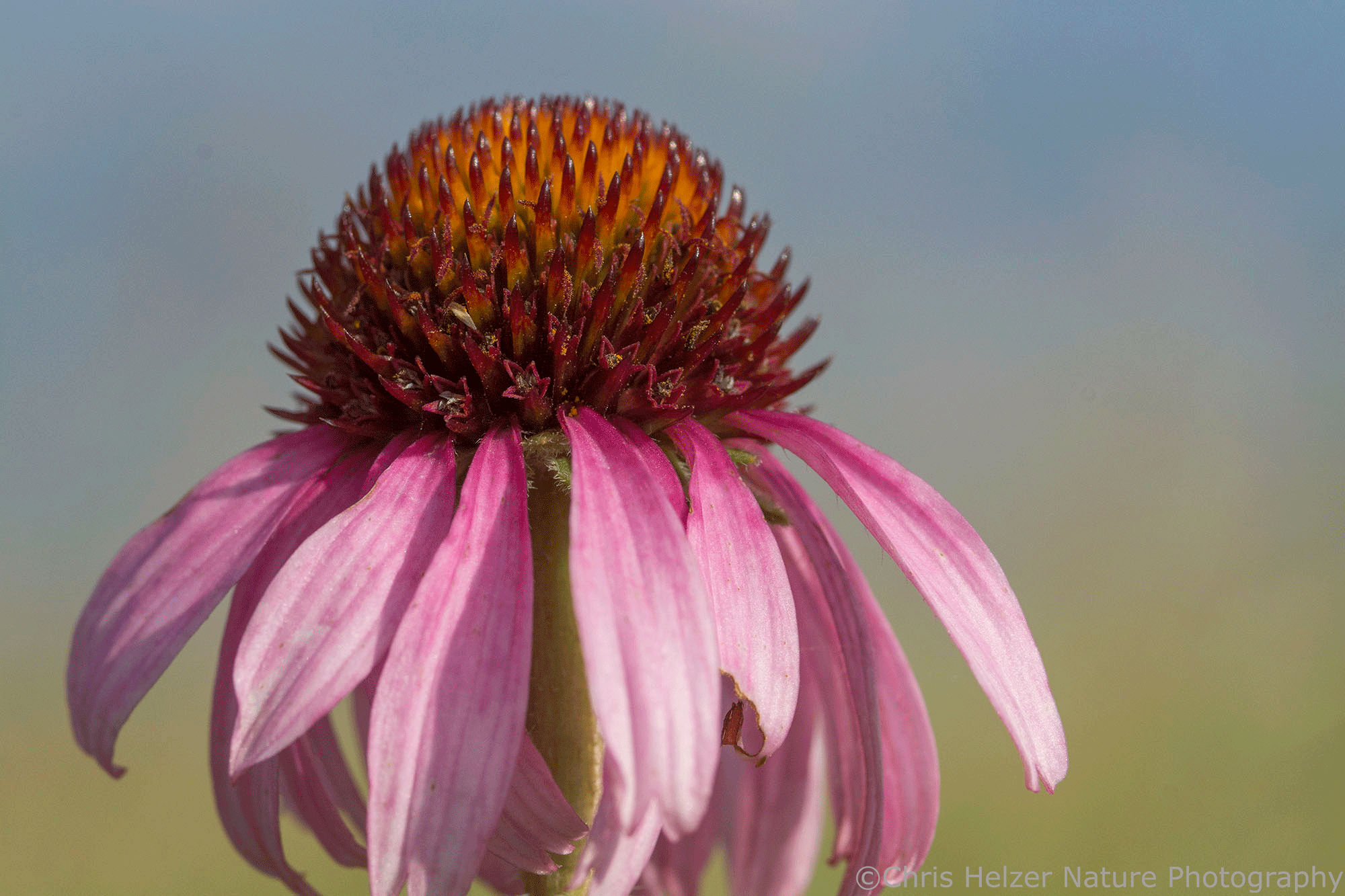
1. Why is this plant named “purple coneflower” when it is clearly not shaped like a cone? If anything, it’s a “domeflower”.
A. Webster’s dictionary defines a cone as a solid generated by rotating a right triangle about one of its legs.
B. That sounds like triangle bullying.
C. Domeflower is too hard to say. Also, it sounds a lot like “dumbflower” and we’ve established we are anti-bullying.
D. I think the “cone” might be referring to the similarity between the spiky flower center and the cones of conifer trees.
E. Oh.
F. Yeah, that actually makes some sense.
G. I tried making a cone but just ended up with a spinning triangle. I think the dictionary is wrong.
.
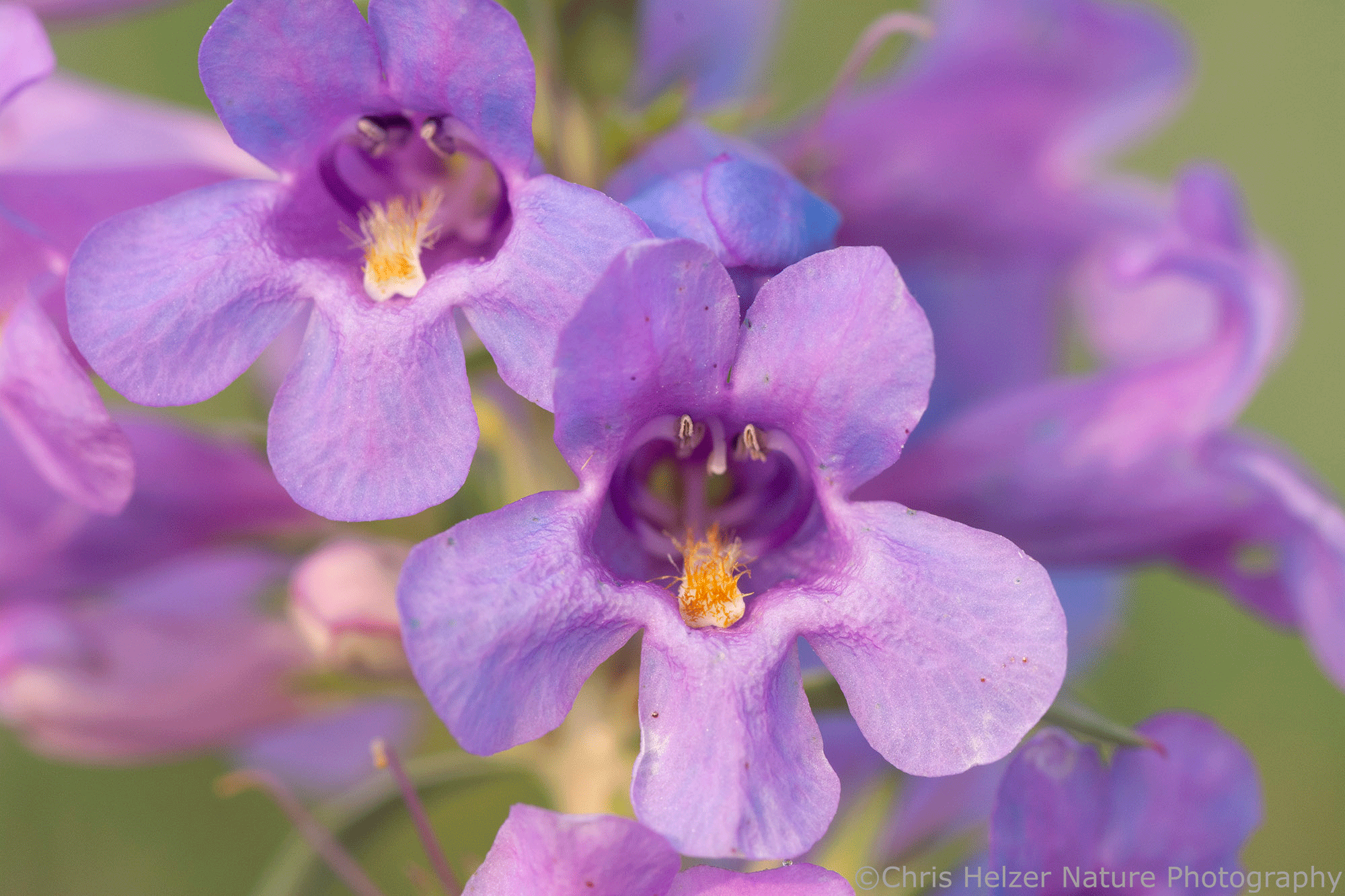
2. Why are many penstemon species also referred to as “beardtongues”?
A. Because they have what look like hairy tongues sticking out of them.
B. Gross. But a beard tongue would be a tongue hanging out of a beard, right? Those like like tongues with beards. The flowers should be called tonguebeards.
C. Here’s something interesting – the more times you write the word “tongue” the less sure you get about the spelling.
D. That is interesting!
E. How is this a quiz?
.
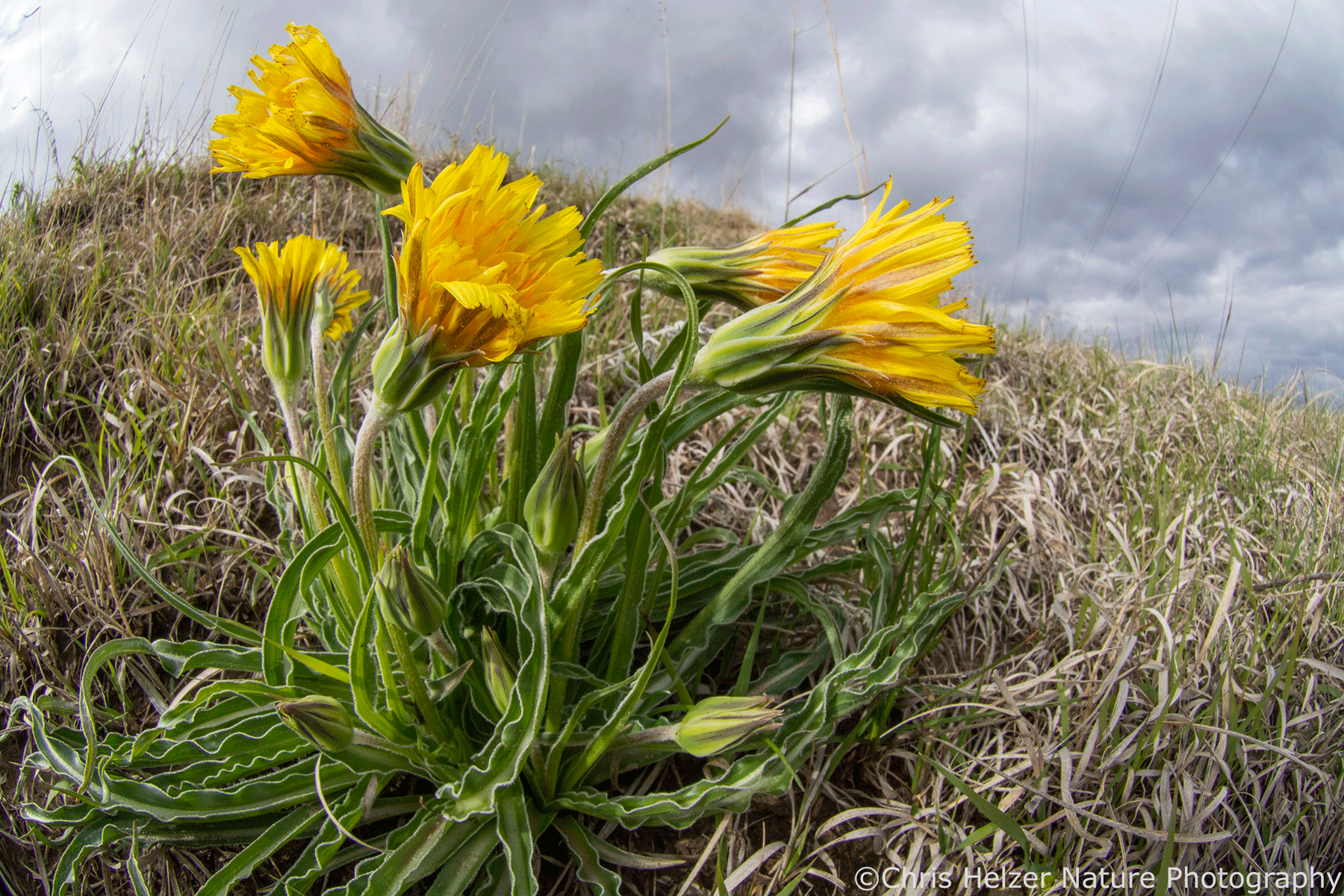
3. As you know, I’m well known for my objection to naming species “False ____”, as if they’re a poor substitute for something we like better. What would be a better name for “prairie false dandelion”?
A. False chrysanthemum?
B. I don’t think you’re understanding the point of this question.
C. Prairie sunshine?
D. Wait a second, that’s actually a great name! Have we accomplished something here? Wow.
E. “well known” seems like a stretch.
.
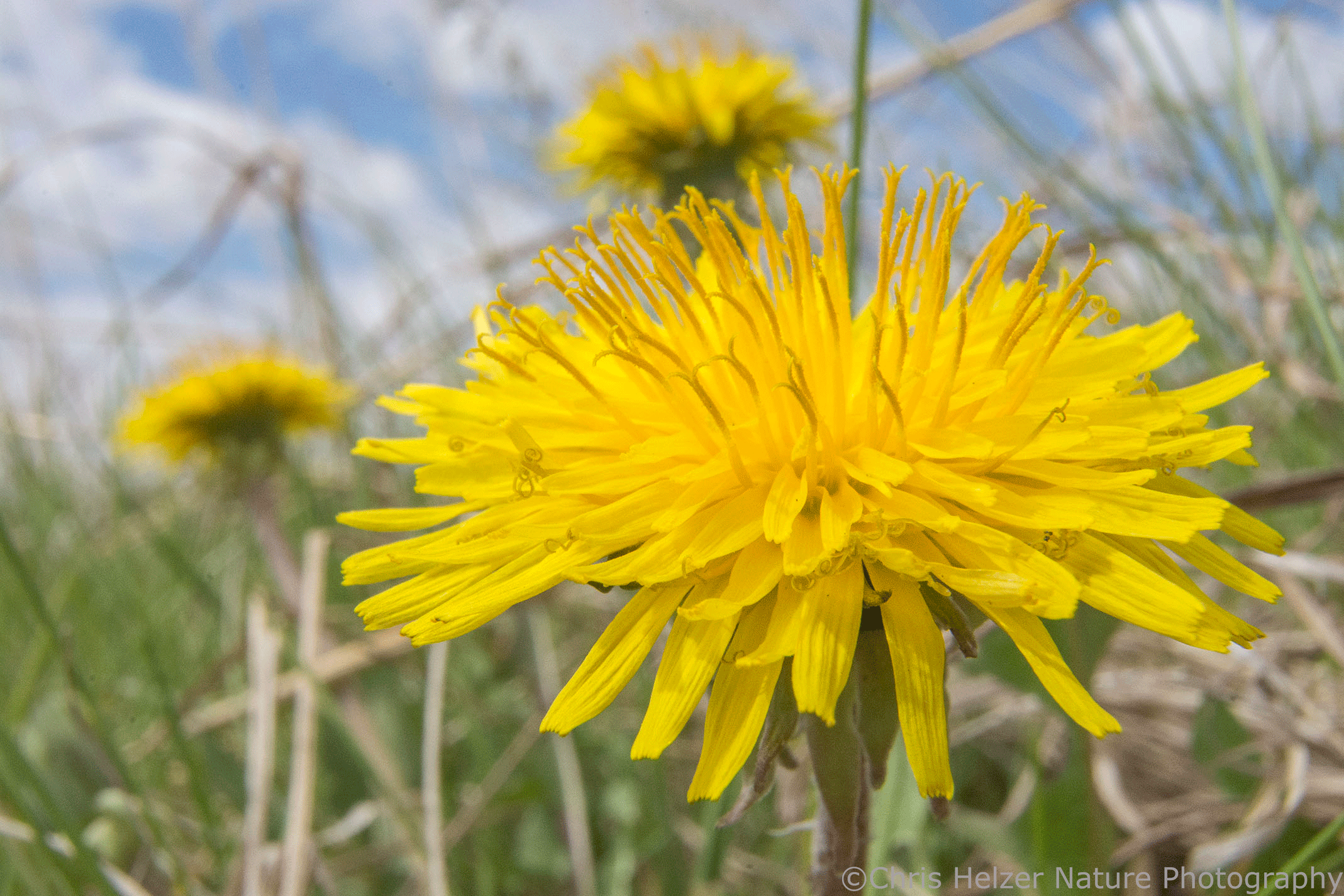
4. Why do people hate dandelions so much?
A. Because they’re not native to North America. They come from Eurasia and have spread all over this continent.
B. And nobody sees the irony in that?
C. I think some people do.
D. So, we don’t like them because they become dominant and squeeze others out of the places they used to live?
E. Are we still talking about dandelions?
F. Actually, dandelions usually don’t cause ecological problems. At least around here, they just kind of fill in empty spaces between other plants and provide some early season color and nectar before a lot of our native flowers start blooming.
G. That sounds nice.
.
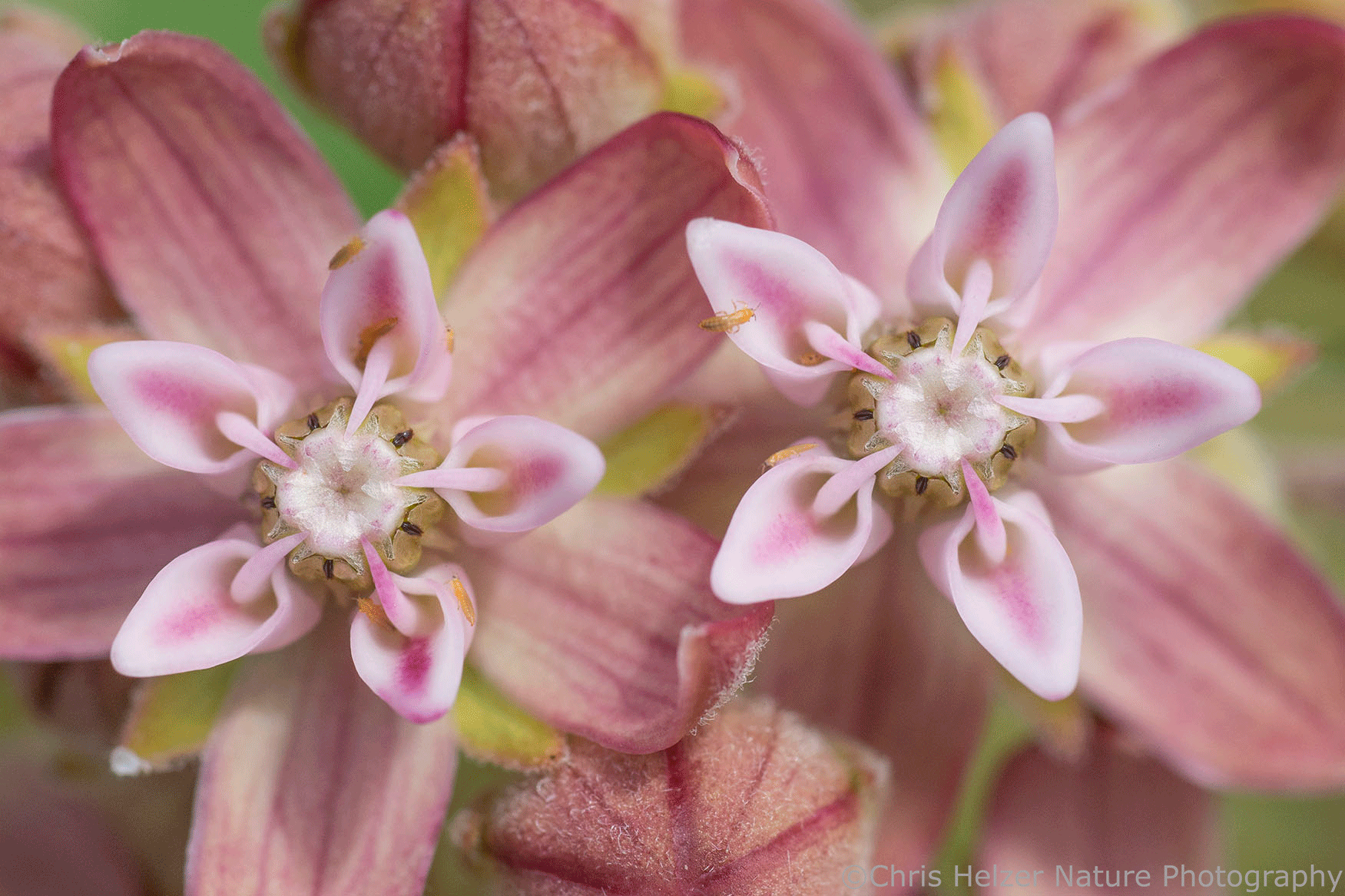
5. What are the tiny insects crawling around on these common milkweed blossoms?
A. Hang on, are you trying to sneak some insect facts into this post about flowers?
B. No. Answer the question.
D. They’re thrips – tiny little insects that feed on flowers (except for the species that feed on fungus or are predatory on other tiny insects) and usually don’t do more than minor cosmetic damage.
E. I don’t even see any insects.
F. They’re really small. there’s one at about 10 o’clock on the flower on the right. Click on the image to see them better.
G. You skipped C.
H. Dang it.
.
.
ANSWERS:
Want to check your work? Here are the correct answers to each of the questions:
- B
- E
- D
- F
- C
 The Prairie Ecologist
I’ve never enjoyed a quiz so much! Thanks!
It may be a dumb quiz, but it is the best False Quiz I’ve ever encountered.
This brought a much needed smi
Wonderfully entertaining and educational! Thank you!
5. I see three thrips. Sounds like I have a lisp.
are you ok?
A question many have asked
my first encounter with one of these quizzes and a new side to this content for me
kinda blasé about dandelions….I can hear my Tallamy acolyte comrades “erm, actually…” already
Well, welcome to the eccentricity of this blog and its content!
In terms of dandelions, I understand how people feel differently about them, but I’d say they’re better than dirt for pollinator resources. In our prairies, they don’t act as invasives and don’t seem to have any other negative impacts. They’re just space-fillers that come and go as competition with other plants ebbs and flows.
February 14th is also Saint Gertrude of Nivelles Day.
Gertrude was a Benedictine abbess in Belgium in the 7th Century. Because she was so good at getting rid of mice, due to the many cats at the abbey, she became known as the matron saint of CATS (and cat lovers). She is also the matroness of gardeners, who believe that fair weather on her day is a good sign to begin Spring planting. Because of her hospitality to travelers, often giving them a drink to take with them on their journey, she is also the matroness of the ‘to go’ cup.”
You can call her a Patron Saint because patron, though it has father/male in its origin, we believe it is not only men who can be protectors!
Middle English: from Old French, from Latin patronus ‘protector of clients, defender’, from pater, patr- ‘father’.
Why are some plants named “false ____”?
Generally it’s because x plant looks similar to more common y plant.
Yeah, I think it’s just laziness. False boneset looks kind of like boneset. False sunflower looks like a sunflower.
Alternately, if you are asking why they’re literally named “false ____” because you’re being funny, I think that’s funny. It also makes you wonder if there’s a plant called ____ because there must be if there’s another one called false ____.
I’ve always supposed this explanation for plants named as “false”. Many of the early botanists who came up with the English & Latin names for north American plants were from Europe and Asia and elsewhere. When they came here they probably saw plants that reminded them of ones back home but weren’t exactly the same. So they called them false gromwell, etc.
This is incredibly dumb thank you
This is my kind of science!
Ha! I needed this today, thanks!
I like the incorrect answers best.
I always enjoy your quizzes, Chris! They bring prairie sunshine to my day.
You are a funny writer too! and I love botany humor!
I also enjoyed your rant on common names such as “false___” My favorite is calling Sorbaria “false spirea” since the flowers look more like astilbe than any spirea! And don’t get me started on hybridists naming their creations, such as Phlox paniculata ‘Feelings’ series, i.e. ‘Midnight Feelings’ ‘Pleasant Feelings’ and ‘Empty Feelings.’
Here’s Tony Avent on ‘Natural Feelings’: “And now, for something completely different. This new series of our native garden phlox was bred so that the bracts were colorful without much in the way of petals, therefore holding the color much longer. Honestly, this is the first time we have grown these, but can’t imagine why you would want a phlox with virtually no petals. We’re going to assume that the photos we have seen were bad, since we can’t imagine patenting a plant this bizarre. If you are a plant nerd that likes to experiment, here they are.”
Not the hagiography nor the quiz we deserved, but the ones we needed. Your blog is the best Chris.
So beautiful as if a driver brought them to my door!