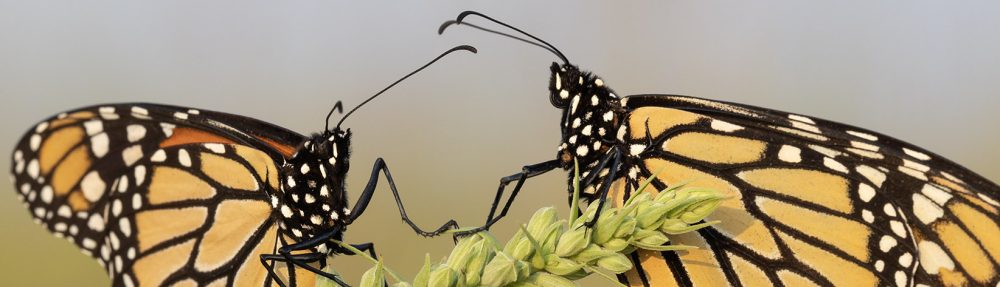
Early autumn is a season of surprise and wonder. Colors are changing and animals are scurrying all around, trying to check off all their pre-winter tasks. For nature enthusiasts like us, it’s also a great time to appreciate the complex and sophisticated ways plants move their seeds around the world.
For example, there’s the unexpected prick of joy when you accidentally sandwich a heretofore unseen sandbur between calf and hamstring as you kneel down to re-tie your boot laces.
(I think that’s the first time I’ve ever used the word “heretofore”. I hope I used it correctly. I would have used “previously”, but when I typed it out, the spelling looked wrong for some reason. Brains are funny.)
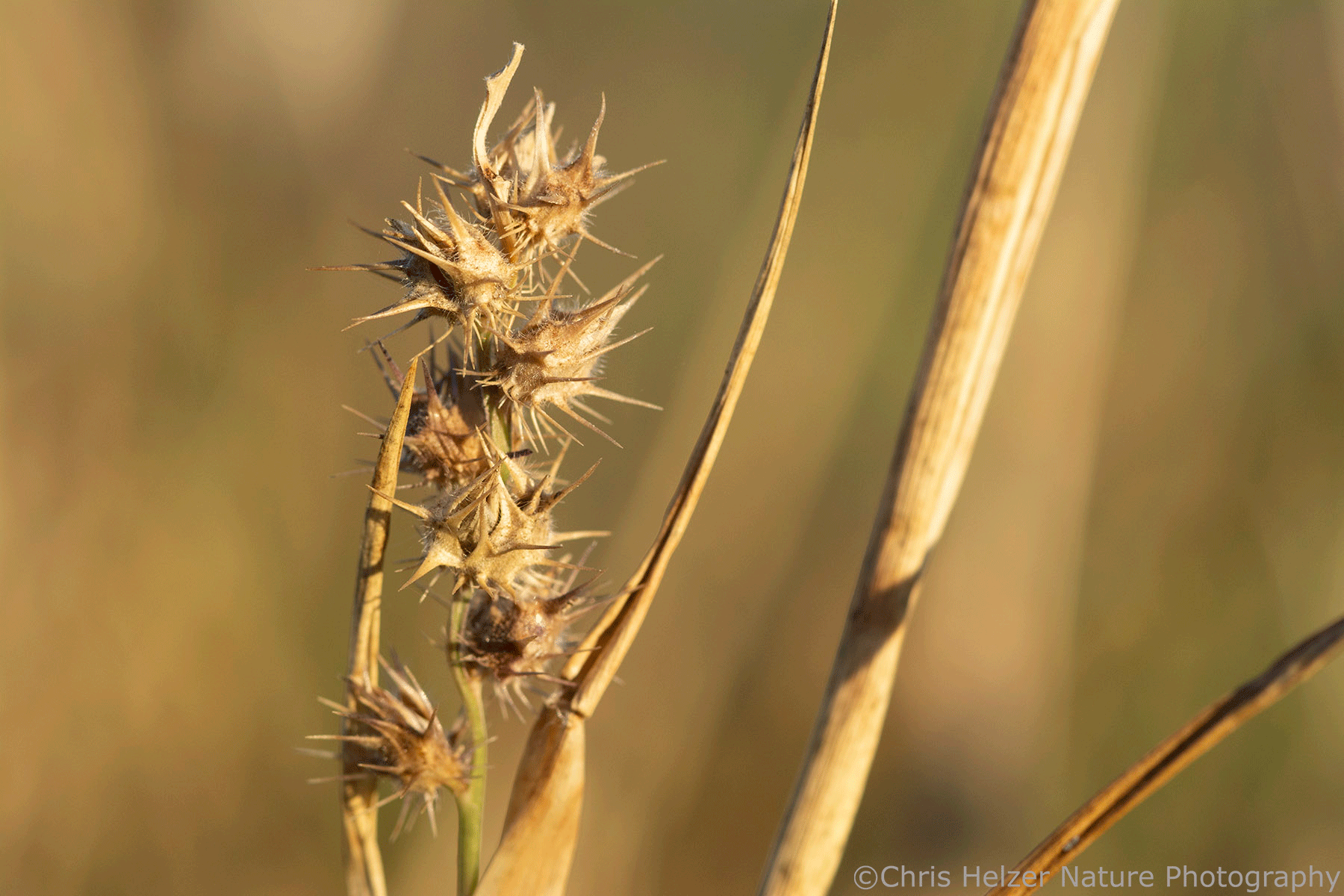
Anyway, upon discovering the sandbur, you immediately stand back up, lick your fingers, and remove it (and its friends) from your pantleg. As you have so many times, you ask yourself why licking your fingers helps it hurt less when you grab sandburs. Surely, the surface tension of saliva can’t provide that much protection? Regardless, seeing and feeling the sandburs is a terrific way to celebrate their particular seed dispersal strategy. Hurray for nature!
After you identify a winding path that will allow you to avoid more nearby sandburs, you step forward – only then remembering that you’d stopped to tie your boots. That’s when you glance down and realize that your boot laces must have pulled loose when you walked through a patch of cockleburs a little way back. Now, a cheerful cluster of cocklebur seed pods is tangled happily in your laces like spiny little meatballs in a plate of spaghetti.

As you start to carefully extract the pods from your laces, you can’t help but marvel at the similar, but different architecture of cockleburs and sandburs. Sandburs, of course have long, straight, sharp spines protruding in every direction from their mostly-spherical core. Those spines have an impressive ability to penetrate nearly any material.
Cockleburs, on the other hand, have what look like dozens of tiny fish hooks sticking out of their football-shaped bodies. Those hooks can poke through clothing (and boot laces), but they’re more likely to snag than poke, with the little hooks acting like a bunch of tiny grasping claws. Of course, if they do manage to penetrate clothing or laces, the hooks also make it much harder to extract them. It’s a really remarkable design.
The strategies of both cockleburs and sandburs are sure effective, you think, as you continue de-tangling your laces. Also, it’s fun that both of them have “bur” in their names. That, of course, brings back memories of learning the difference between burs, stickers, thorns, and spines at some point. You obviously don’t remember what those differences are now – it’s been at least three or four years since you last looked that up and no one can be expected to retain information that long. It’s fun to know there are differences, though.
Also, it’s weird that the word bur can be spelled with either one “r” or two. You know that bur oak is definitely spelled with one, though people do insist on adding that second one, don’t they?
Apart from the name of that tree, which definitely, always has only one “r”, you recall doing a little research a while back and learning that both bur and burr are considered correct spellings in certain situations. There are burs that are seed pods and burs that are rough edges on metal and it seems to you that people argue whether those two should be spelled the same or differently. Ah well, someone will probably figure that out and then people won’t have to argue anymore.

Anywell, you finish removing the last cocklebur (surely not cockleburr?) from your laces and leave the pods on the ground – having done them the favor of carrying them to a new potential home. Isn’t it nice to play a helpful role in the dispersal of seeds? You’re an actual conservation hero.
Well, hero, as you proceed through the prairie (by the way, you’re walking in a prairie), you take a detour around a big patch of tick clover plants. You’re no fool, after all. Tick clovers are beautiful, important wildflowers, but their seeds are like little Velcro packets that are good reminders of where the name “tick” clover comes from. Taking on the role of a seed disperser is all fine and good, but you’re in charge of fixing supper tonight and won’t have time to both do that and scrape a load of tick clover seeds off your long-sleeved shirt. A wandering deer will surely do the tick clover dispersal without you needing to become involved this time.
Side-stepping the tick clover takes you along the boundary between the prairie and a small adjacent woodland. As you walk along that edge, a tentacle appears to lash out from beneath the trees and grabs onto your pants. Startled, you pull away, but the “tentacle” leaves behind a linear string of small sticky pods. You stumble slightly over a gopher mound, and as you catch your balance again, your leg is caught by two more of those tentacles, which turn out to be branches of the amazing stickseed plant.
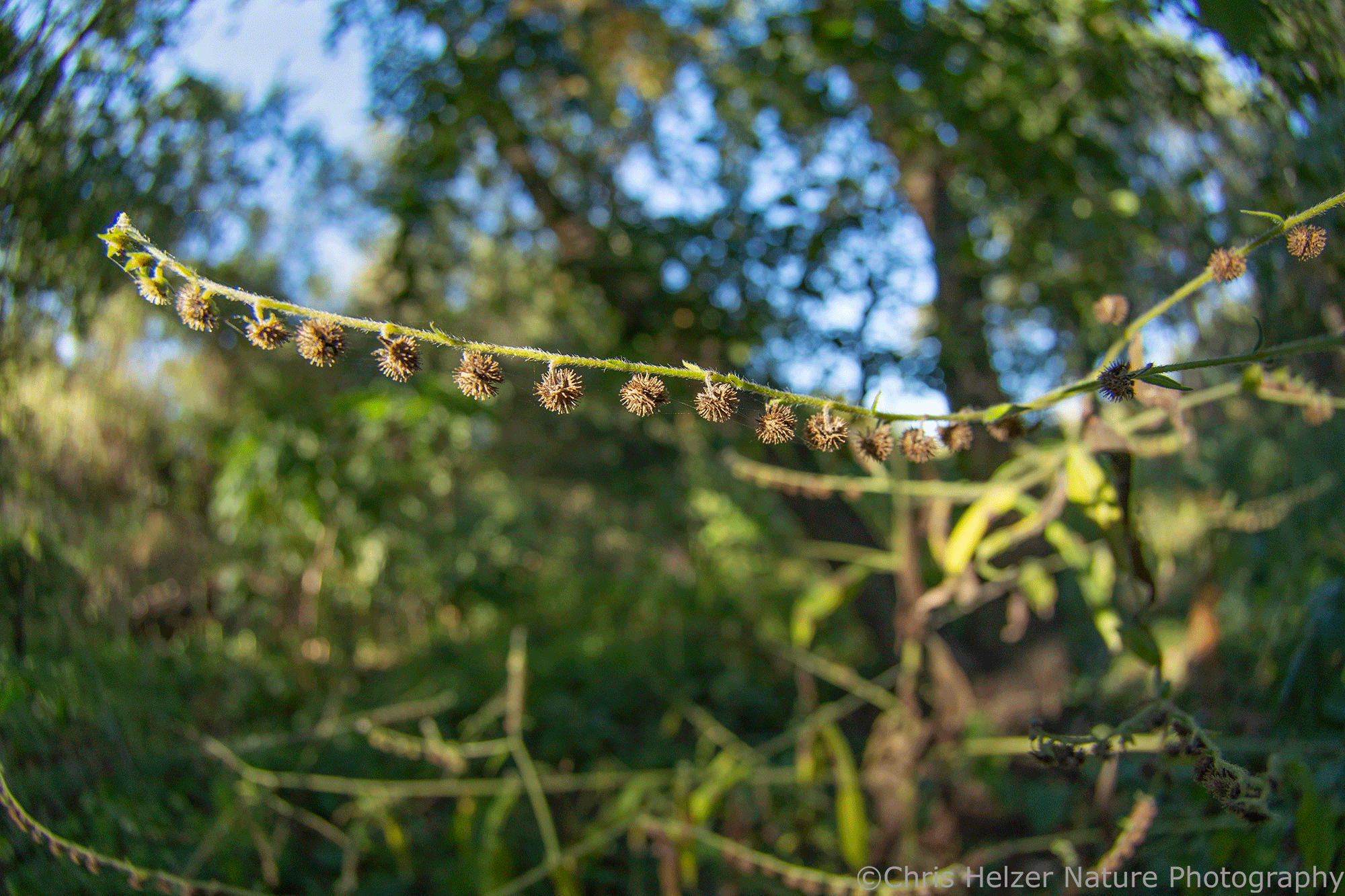
Stickseed has an even more descriptive name than tick clover. The sticky “pods” carried by the stickseed branches are, as you oddly recall, actually clusters of four little “nutlets”, each containing little barbed prickles. I dated a girl named Barb Prickle in high school, I think.
I’m joking, of course. Barb wouldn’t have given me the time of day.
Returning to the present, stickseed and its prickly nutlets are magnificent examples of nature’s innovation. You know from experience that trying to rub the little nutlets off your pants will just cause them to roll along the fabric, never loosening their grip at all. It really is a spectacular evolutionary achievement. Well, you’ve owned these pants for almost four months now, so it was probably time to replace them anyway. It’s a small (well, medium) price to pay for a front row seat to this lovely demonstration of seed dispersal mastery.

You manage to pull one of the little nutlets loose to inspect it with the hand lens you always carry on a string around your neck. Under magnification, the little prickles sure don’t look like they’d be as sticky as they obviously are. As you’re pondering that, you turn to continue your hike and walk straight into a chest-high patch of tick clover.
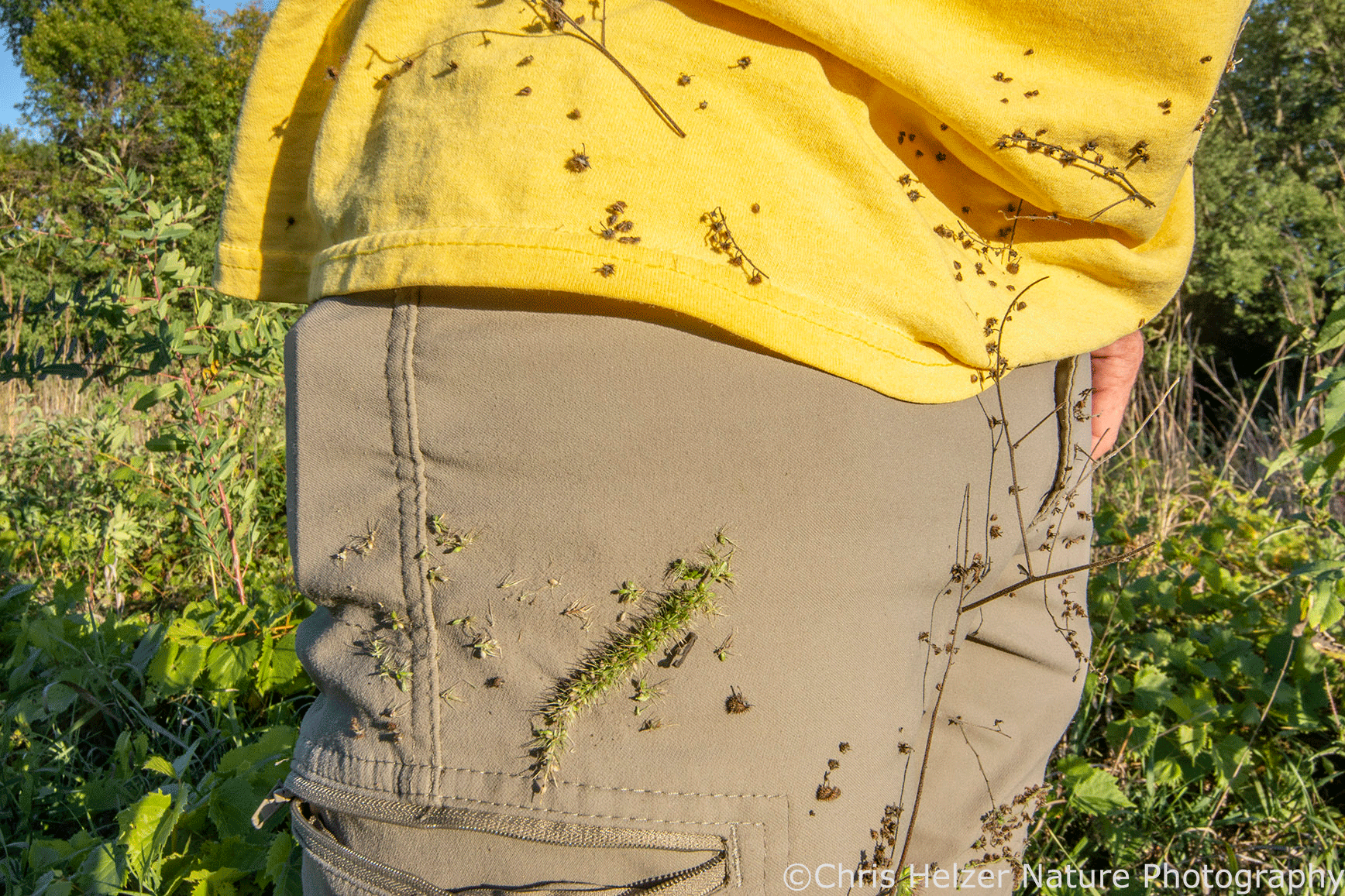
Well, look at that, will you? The pattern of tick clover seed pods across the front of your shirt is really visually attractive. It’s like a free participatory public art project! (Hm – the seed pods are not really pods. What are they actually called? Loments? Loment segments? No one knows for sure.) Either way, it’s loments like this that make you really ponder the awesome power of evolution.
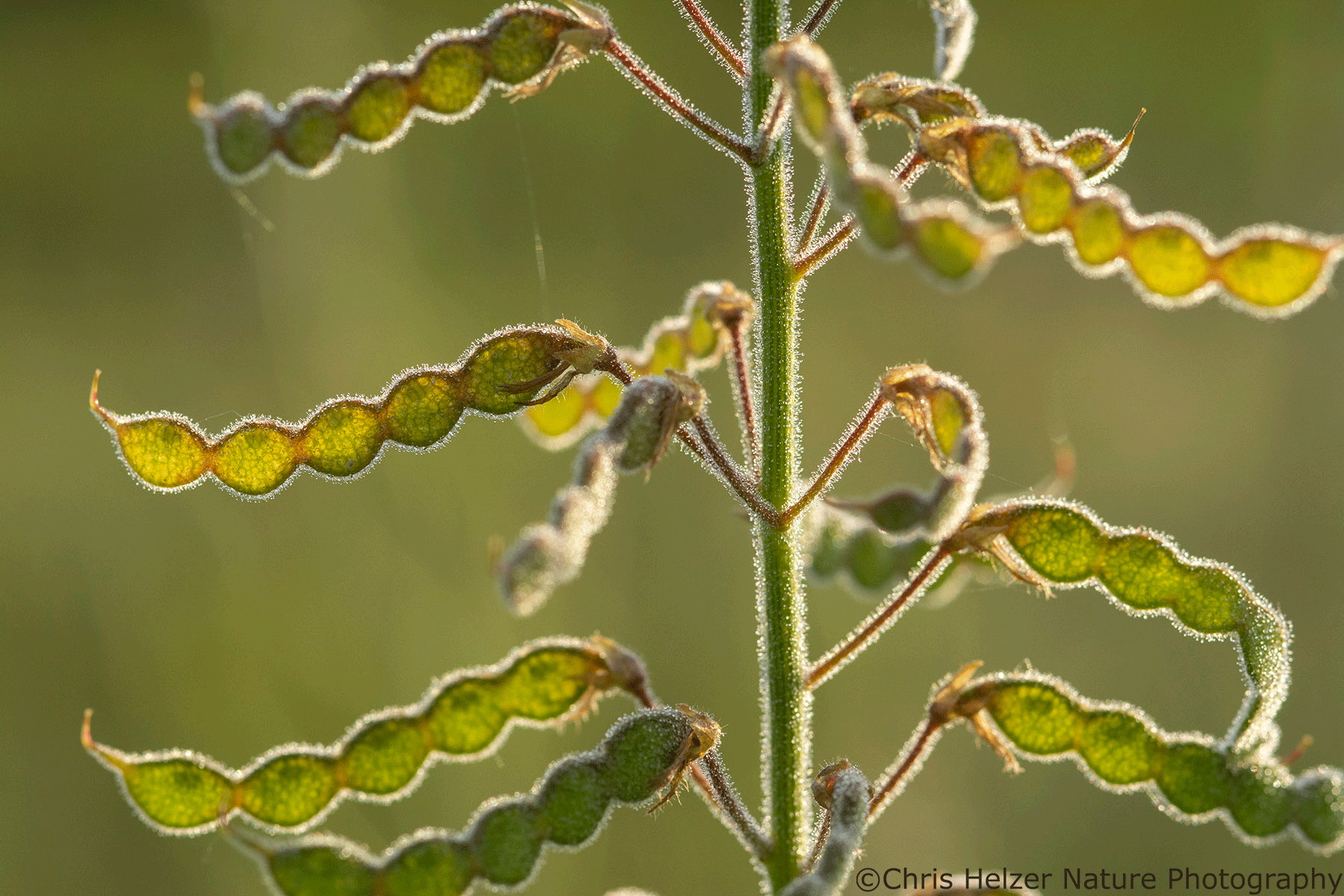
You’ll have to pull those whatever-they’re-called off later, of course, because any that make it to the laundry will still be attached when the shirt comes out of the dryer. Except, obviously, for a few that will detach and re-attach in fun, surprising places on other pieces of clothing. That’s ok, picking tick clover seeds off a shirt later tonight will give you something to do while you’re browsing through the internet for new pants.
Speaking of tonight, look at the time! All this marveling at the wonders of nature has taken the whole afternoon and you’d probably better get on the road so you can get home in time to make supper. You’ve got leftover pulled pork in the fridge. That, some fresh carrots, and a bag of chips will make a pretty nice dinner. Maybe you’ll even stop at the grocery store on the way home and grab a nice jar of barbed prickles to complete the meal.


Chris,Your articles are always interesting and with just a touch of good humor.Your “stickseed” is also referred to around here as Beggar’s Lice. Same Lat
Chris, you go ahead and admire them. You do you :-)
For my part, I will continue to hate each and every one of them. It’s no fun taking 45 minutes to de-stickseed a dog after he wanders through a patch of the cursed stuff.
Your comment about licking your fingers before removing sticker burs reminded me of a fun little fact.
We lived on a barrier island off the Texas coast and marveled at how the dogs removed stickers from their feet with no obvious pain to their mouth; some even plucked them off your shoes. So one of my friends decided to chew on one and, surprise, something in saliva instantly softens them right up.
If you pop the grass bur in your mouth you can chew it and it won’t stick your gums, tongue, nada.
Try it! (At least it works for Cenchrus spinifex.)
Cheers, Cammie
Being a pheasant hunter, I always marveled at the collection of stick-tights that I would gather. Then there was the time that the golden retriever had so many burdocks on his tail that when he sat down, his tail stuck to his back leg. The wonders and joys of evolution!
very ubiquitous, can’t escape it in the fall.
Hiya Chris,
. Your article truly captured an intimate side of fall, and made me chuckle a few times, especially having to shop for new hiking clothes as the old ones were so ‘seeded’, as was the rest of the laundry!
. Keep up the great inspiring writing, and using heretofore was a brilliant word use not often seen in nature writing, good job.
Living near Greeley, Colorado, I used to assiduously remove sandbur plants from my yard. They like disturbed soils! They also stick hard to cat fur because it is soft. Sadly, one of my cats (before I indoored cats) died from choking on the burs he was trying to clean out of his fur.
This was a very interesting read, thanks for sharing! I’ve honestly never looked at sandburs in that kind of light before, so, in a sense, this was… enlightening. Very nice.
One of the best posts I’ve read in recent history! Truly made me laugh out loud (so then I had to read it to my husband, who wanted to know why I was laughing). Plus. I learned things, too – I didn’t know that licking my fingers would help with the painful removal of sandbur(r)s. Thanks!
This post couldn’t have come at a better time. I was in the woods yesterday and saw a plant with trifoliate leaves and pink flowers. The name wouldn’t come to me but I knew it started with a D. Desmodium! I always liked the sound of that word. Love all those sticky seeds too!
I truly enjoy your writing and photos.
I work in prairie restoration near Madison, Wisconsin. We are in the process of collecting seeds – intentionally and unintentionally. We intentionally collect leadplant, prairie cinquefoil, mountain mint, blazing star, etc. All beautiful plants and great for pollinators! One seed we collect unintentionally is tick-trefoil. What a fun plant this one is.
Tick-trefoil is sneaky. It likes to grow – to surround – our target plants. For example, I’ll see a cluster of tempting cinquefoil. In my rush to collect its seeds I fail to notice that it’s surrounded by tick-trefoil. Guess what happens? Evening hours spent removing sticky seeds, weeks of finding seeds in laundry, stuck to furniture and scattered on my kitchen floor. All part of the job.
Having learned many lessons, I am cognizant of tick-trefoil’s propensity to set traps. Alas, I inevitably forget, with the aforementioned results.
Tick-trefoil also has a positive quality. It’s seeds occur in neat rows so they make ideal name tags when properly situated. This is a source of endless joy for restoration workers like myself.
I will also say this: It’s all worth it!
Note: Tick-trefoil has other positive qualities, as well as several other negative ones. I’ll leave that to the reader to research.
[heart] Jenny Trucano Muller reacted to your message: