
I’ll get to the Ask The Prairie Ecologist part of this post below. First, though...
One of the best things about this blog is that it has connected me to amazing people and stories all over the globe. The most recent example came last weekend, when I got an email from Sri Harsha in Gundmi, India. He reached out because he had recently started a project to document all the insects he could photograph in a square meter near his house.
Sri said that as he was starting his project, he did an online search and found my square meter project, which helped him solidify his ideas. When he first wrote me, he was 38 days into his effort, and was visiting his plot every day. He sent me the website he’s using to document his work and I instantly fell in love with his work. As of today, Sri is on day 44 and has already documented 172 insect species. He’s clearly going to blow my species total out of the water!
We emailed back and forth a little and Sri told me that he’s not a trained biologist (he works with computers and information technology) but that he is really curious about the natural world and uses photography as a way to explore and see animals up close. Back in 2017/18, Sri created a showcase of the wildlife in the rice paddies and woodlands around his village. Now he’s focusing on a single square meter of land and is creating weekly posts to update his progress. The posts are short, pithy, and fun to read.
Please take a look at Sri’s work! You can leave him comments and encouragement, if you like, at this link. I think you’ll agree that it is a terrific project and a wonderful example of what curiosity and commitment can lead to.
>>>>>>>>>>>>>>>>>>>>>>>>>>>>>>>>>>>>>>>>>>>>>>>>>>>>>>>>>>>
ASK THE PRAIRIE ECOLOGIST!
We’ve done this several times, but it’s been a while. I’d love to hear from you. What questions do you have about prairie ecology, restoration, or management? The questions can be simple or complex, short or long. Just ask them in the comments section at the bottom of this post.
I can’t promise to answer them all, but I do promise to read them all and I’ll try to feature my answers to some of them in future posts – especially those that I think will be interesting to a large number of people. With others, I’ll just reply directly to your comment. Feel free to include your name, or not, as you prefer.
Please remember that my knowledge of prairies is nowhere close to complete, so while I’ll do my best, there will certainly be lots of questions I won’t have good answers to. When I can, I’ll try to suggest resources or people who might be better than me at providing what you’re looking for.
So, here we go! Write your questions in the comments below. Even if you don’t have a question, you might find it interesting to browse through the questions others ask and see what kinds of answers I’ve come up with (and feel free to chime in if you have applicable knowledge).
Thank you for your participation. As I repeatedly say, I couldn’t be more grateful to all of you who read this blog. Your comments and questions have consistently been a source of inspiration to me – not just the content of the comments, but also the fact that they are almost always constructive, polite, and curiosity-based. I really, really appreciate that.
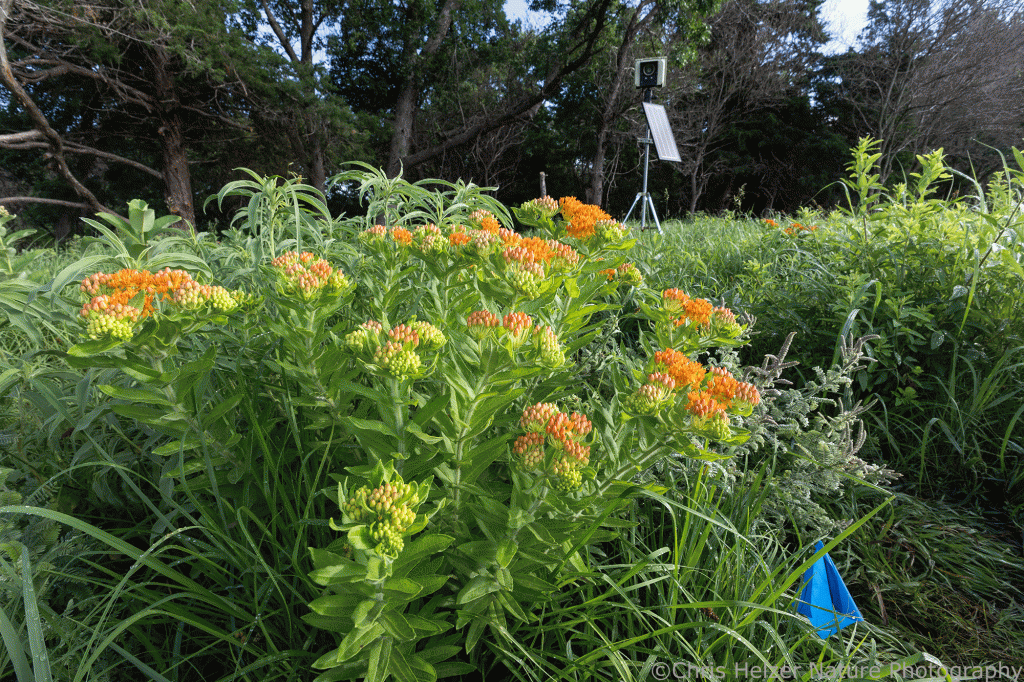
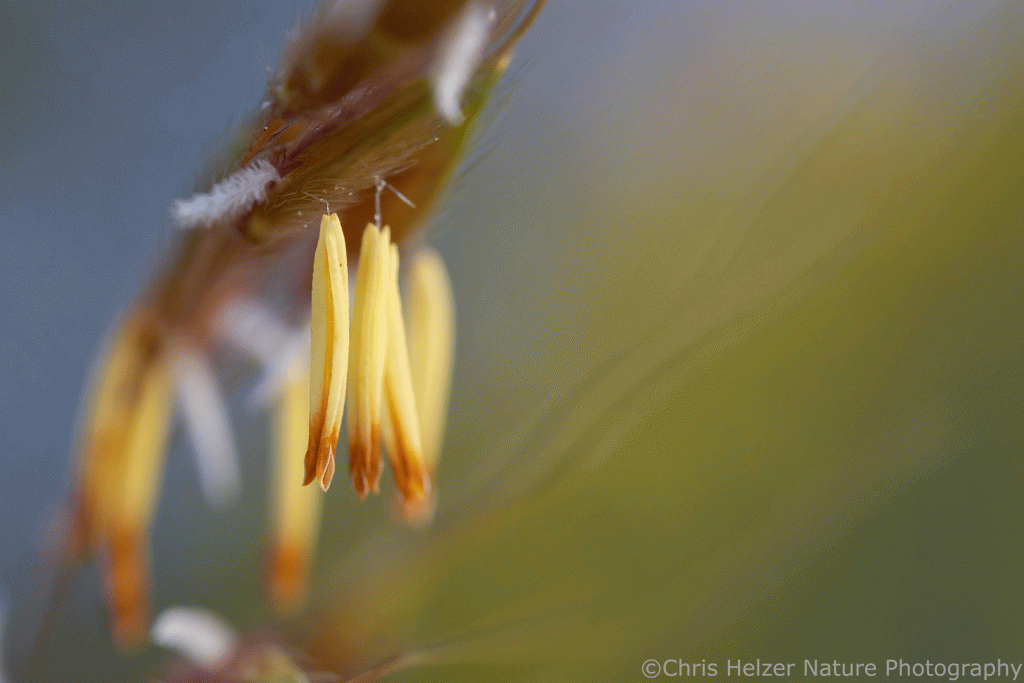
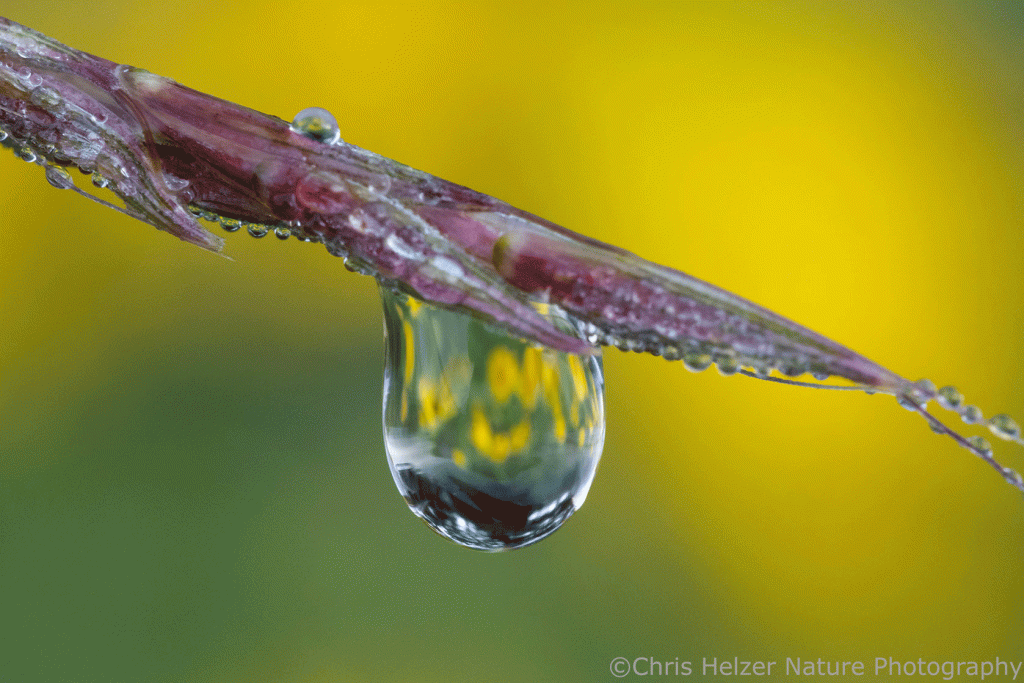
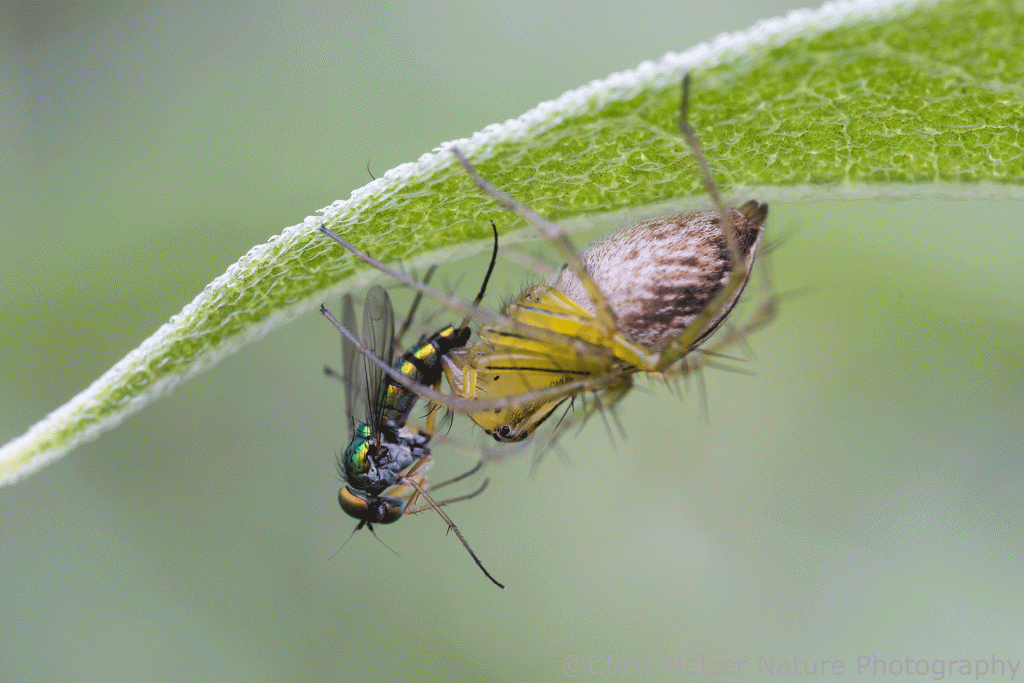
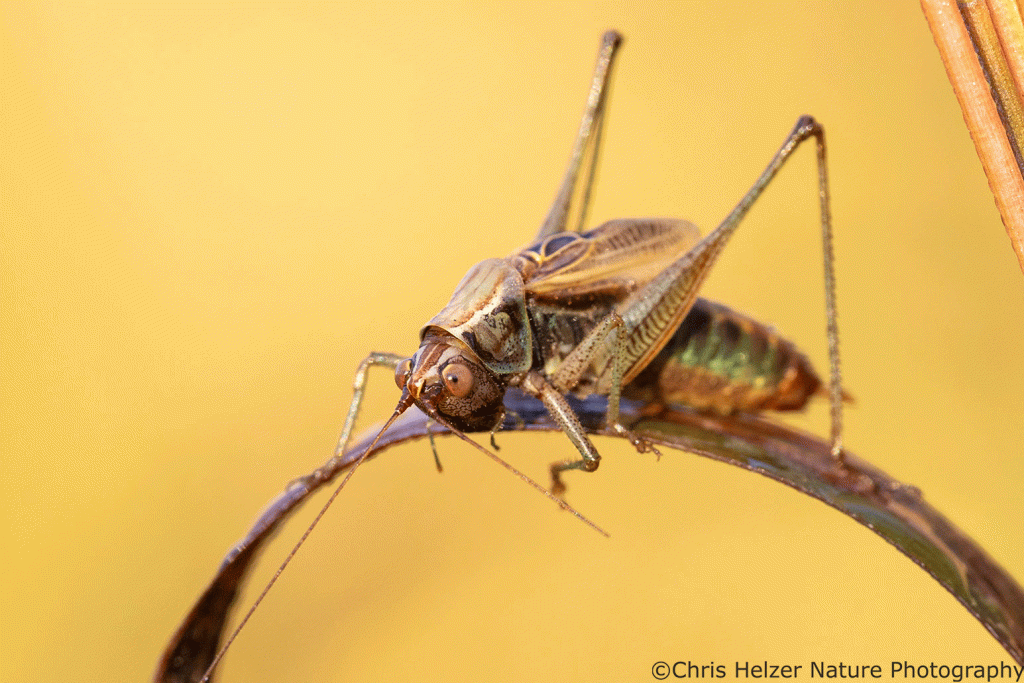
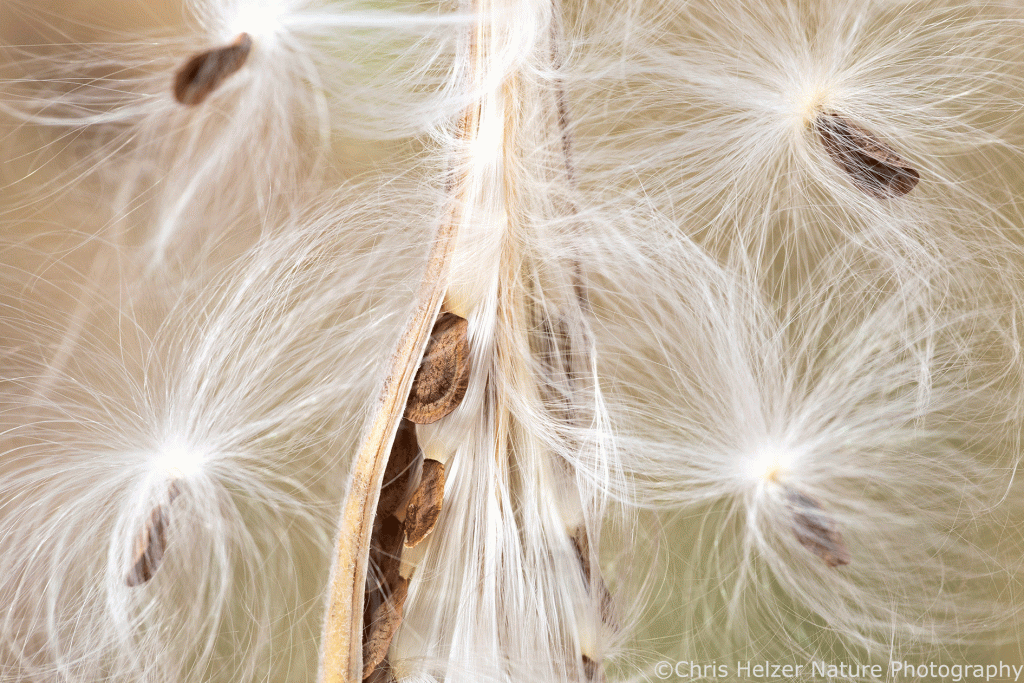
Just for fun, and because Sri inspired me to think about my square meter project again, here are a few photos from my project back in 2024.
 The Prairie Ecologist
Nice, it would be great to do some combined project across biomes, climates, to look at such plant-insect-climate relationships. So inspire more people to do the same. Keep going.
Cheers, Jean Knops
Chris, your blog won’t let me click on the “Like” button. Any idea what I can do to fix that?
Weird. No, I don’t know how to fix that. Consider your “like” acknowledged, though, and thank you!
Thanks, there’s never been one I don’t like!
Very much enjoyed exploring the bugs from one square meter of India. I think a version of this project could be a fun way to get my nieces and nephews (and by extension their parents) to be more curious and interested in nature. Thanks for sharing!
Thank you for your encouragement, Amanda.
— Sri Harsha
Amanda, you could try the one hour version of the square meter project that Chris did – https://prairieecologist.com/2025/09/23/the-one-hour-square-meter-photography-challenge/
What’s your favorite species of otter that you’ve photographed? On average, how many otters did you find in your square meter plot?
Chris – I am in year 5 of a CRP restoration. It’s going really well. (note: one measure is public sentiment. Now, instead of getting calls to mow “my weeds” the local community college students call to use it for photography and birding) But it is time to burn. There is a scary fuel load…
So far the burn lines have been mowed. A total of 100 acres in 4 units. They may have to be sequenced in a burn plan, so what is best: checkerboard approach like alternating patches or just burn it 50:50 east and west.
And secondly, I have been hand cutting to cull and control poison Hemlock. It is working so far, but would that be a reason to prioritize which patch to burn?
Rob
Hi Rob,
I’m not sure the sequence of burning the four quarters will matter too much, but it would definitely be great to stagger the timing of those burns, if possible. It’s a young prairie, so it’s less crucial than in an unplowed prairie, but (as you know) it would still be great to burn a portion at a time (with weeks or months between burns) to give invertebrates and other animals a chance to colonize the burned area from the unburned ones. I’m not sure if it would be logistically (or programmatically) possible to burn half of the prairie per year?
In terms of the sequence, another consideration would be the safety/control issues with the burn. If one half (or one portion) will be easier to burn because of natural firebreaks or other considerations, it could make sense to burn that portion first and then use it as a large firebreak for the next unit.
My guess is that you might be able to wipe out one year’s worth of growth of hemlock with a fire, but you’ll likely see a flush of it in the following year. Some of this is conjecture, but we’ve noticed that cutting plants off at the ground surface (removing all aboveground leaves) seems to kill plants. Burning should do the same, especially given your heavy fuel load. However, there will surely be seed in the soil within that burn unit and the abundant light will probably cause a lot of those seeds to germinate the following year. It’s another good reason to burn only part of the prairie at a time – it’ll make it easier to keep up with the hemlock flush, if it comes.
In some ways, it might make sense to burn the area with the most hemlock first because the fire will be an easy way to take out that year’s crop of plants, but that’ll probably also be the place with the most germination after the fire, too. Ah, tradeoffs!
I don’t know if any of this helps but it was a good excuse to write a lot of words.
Thank you Chris for featuring https://asquaremeter.com/ and your kind words! I have already received many words of encouragement from your readers.
I have a question: What is your typical workflow to find identification for an unknown insect? I have been struggling to find the right ID.
Thank you,
Sri Harsha
I’m glad you’re getting good support – you deserve it.
I use a couple methods for getting identifications and even then, many of the insect photos from my projects are not fully identified to species.
My first method was to use a site here in the U.S. called bugguide.net. I can submit photos and experts will look at them and try to identify them before adding them to the bank of images on the site. I don’t think bugguide will help you, unfortunately, because the experts only know insects in North America, as far as I know.
I used iNaturalist as well, though not as much as I used bugguide. I think iNaturalist is a great tool, though, and I’ve been using their Seek app more lately as a way to start me on the right path toward identification.
My last method was to contact friends, and friends of friends, who have expertise in invertebrates. I have an unfair advantage there because I’ve gotten to know a lot of people over the years. Many of them were extremely generous with their time and looked through the images of mine that fit within their range of expertise. Even then, they were often unable to completely identify species from photos, either because the photos didn’t capture the key characteristics needed to do that or because identification of some insects requires dissection or other close inspections of actual specimens.
Most of the time, what I begged my expert friends to do was to help me know how many DIFFERENT species I had photos of. So, for beetles, my request might have been to tell me whether several beetles that looked similar to each other were likely to be separate species or just variations of the same. That helped a lot, but I’m still sitting on 30-50 invertebrate photos for which I may never be able to get a solid identification or confidently separate from each other.
I wish it was easier! Good luck!
Chris, Do bees gather nectar from Indiangrass flowers?
Ann Moshman
Hi Ann,
Not nectar, but some bees will visit grass flowers to collect and/or eat pollen. Flies are even more common visitors, based on my experience.
Grasses don’t rely on insects for pollination – they’re wind pollinated – so they don’t make nectar or showy, smelly flowers. However, the pollen in grasses has a lot of the same nutritional values that pollen in wildflowers has, so it can be a food source for a lot of insects.
Chris, I oversee habitat activities at a public park/preserve in the Dallas area. We have a big, beautiful limestone prairie bordered by a deep creek running through a mixed oak/deciduous hardwood forest; 50+ years ago there was a house on this property and the family ran cattle on the prairie and let horses wander throughout. We predict that cattle grazed the coralberry on the edge of woods and spread it to the prairie because now we have a TERRIBLE problem with coralberry – huge, dense swaths of it – spreading across the prairie. To compound the problem, several years ago we were arranging with the parks dept. for a late-winter conservation mow (blade raised higher, selected areas only etc.), but the work order was handed over to an unsupervised contractor and, before we were ever contacted, he mowed the whole thing with a blade set at about 1″ – a true scalping – and there has since been a surge of denser branching and rhizomatous spread.
Last spring, we selected five discreet patches, hand-clipped to about 6″, then waited for re-growth and sprayed twice with glyphosphate. In the fall we spread wildflower seeds collected from on site, and we’re waiting to see the results this spring. We’ve asked many prairie managers and have researched control of woody encroachment, but this problem is very tricky. We appreciate any insights. Many thanks.
Very interesting. By coralberry, do you mean Symphoricarpus orbiculatus? Or something different?
This might be something we talk about in a better forum. Feel free to shoot me an email if you like. chelzer(at)tnc.org.
I’d want to know more about what’s happening under/within those coralberry swaths. Is it bare ground beneath them? Or is the herbaceous plant community still doing ok. Are you worried about the coralberry because of the habitat structure it creates/interferes with, effects on the plant community, or other/all of the above? What’s your objective now, given the current situation? Eradication? Containment? Focus on managing the height and density of coralberry to minimize negative impacts?