Another look at the flowers.
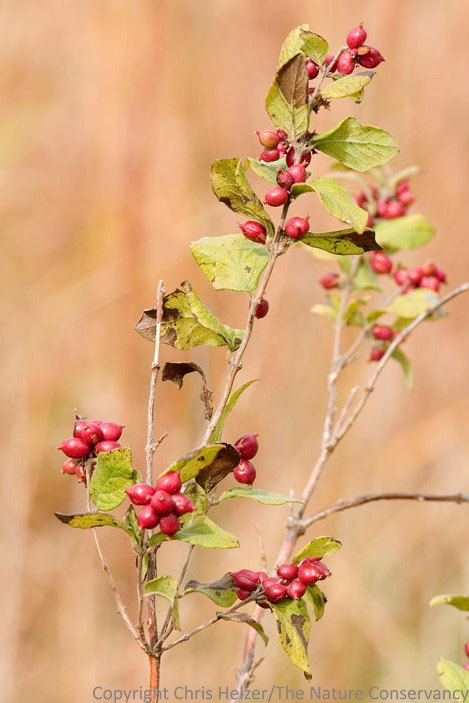
Many thanks to everyone who guessed at the identity of the plant species featured in yesterday’s post. Here is another photo of the same plant species in bloom, from a little further away. The species is commonly named “buckbrush”, which actually refers to a couple different species in the genus Symphoricarpos. I believe this particular one is wolfberry, aka western snowberry (Symphoricarpos occidentalis), though it can be difficult to tell without seeing the fruits. Wolfberry has white or light-colored fruits, while its cousin coralberry has red fruits. Both grow together in many of our Nebraska prairies. I’ve included a photo of coralberry fruits below – I don’t have a good photo of wolfberry with white berries.

This is a photo of coralberry, a close relative of wolfberry. The two species look very similar except that coralberry has red fruits and wolfberry fruits are white.
Taken together as buckbrush, coralberry and snowberry are seen as “weeds” by many ranchers and range scientists. I suppose there is some degree of competition for resources with grass, but buckbrush is a low-growing shrub (often two feet tall or less) and I usually see it in loose colonies with plenty of grass still growing between plants. At least in the prairies I’m familiar with, cattle graze right through the buckbrush colonies and get the grass they’re looking for. In my family prairie, my grandpa and other relatives spent years spraying patches of buckbrush, trying – unsuccessfully – to eliminate them. In the nearly 15 years that I’ve been helping to manage the site, we’ve not sprayed the patches, and I don’t think they’ve grown any bigger during that time.
On the positive side buckbrush berries are apparently highly sought as a food source by wildlife species. In addition, because it’s a short-statured woody plant, it doesn’t significantly change the habitat structure of a grassland in ways that would negatively impact most grassland wildlife. It’s also very pretty…
When I teach our staff and visitors how to identify buckbrush, I adapt the mnemonic device “MAD Buck”, which was intended to remind people of the common eastern North American trees that have opposite branching – Maple, Ash, Dogwood, and Buckeye. In this case, since we don’t have Buckeye in the Platte River Prairies, I just substitute Buckbrush. Most other woody species have alternate branching. (Opposite branching means that each branch is paired with another one right across the stem from it, rather than staggered.)
Thanks again to all who submitted guesses yesterday. The first to jump in with the correct answer was Quinn Long (who ought to know since he’s a professional botanist) so, as promised, he is awarded 400 points. Quinn, you can redeem those points at any retailer you can talk into it.
Good luck with that.
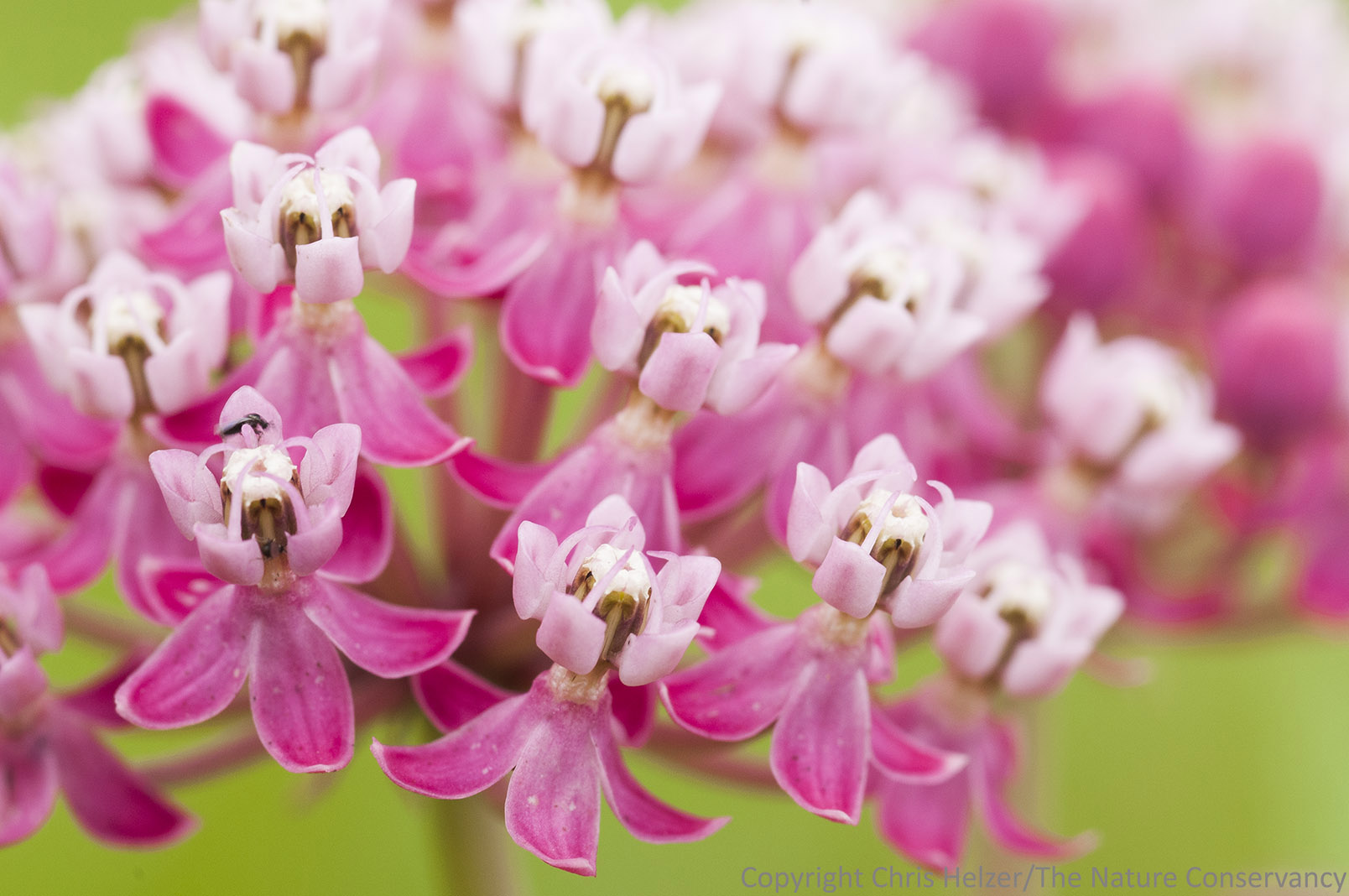
Oh, and several people guessed “milkweed”, which is understandable based on the appearance of the leaves in that particular photo. However, the flowers of milkweed have a very distinctive shape – see below – that is pretty different from that of buckbrush. It’s okay, though, you don’t lose any points for guessing incorrectly!

Swamp milkweed, displaying the distinctive flowers of milkweed. Notice the conspicuous absence of visible anthers (the little appendages that hold pollen).