Unknown's avatar

About Chris Helzer

Chris Helzer is Director of Science and Stewardship for The Nature Conservancy in Nebraska, where he conducts research and supervises the Conservancy’s preserve stewardship program. He also helps develop, test, and share prairie management and restoration strategies. Chris is also dedicated to raising awareness about the value of prairies through his photography, writing and presentations. He is the author of The Prairie Ecologist blog, and two books: The Ecology and Management of Prairies and Hidden Prairie: Photographing Life in One Square Meter. He is also a frequent contributor to NEBRASKAland magazine and other publications. Chris and his family live in Aurora, Nebraska.

Wild Rose Galls

We came across these galls on a wild rose plant last week, and Eliza insisted I do a blog post about them.  So here you go.

Insect galls on prairie wild rose - TNC's Platte River Prairies, Nebraska.

Insect galls on prairie wild rose – TNC’s Platte River Prairies, Nebraska.

Galls like this are formed when an insect lays an egg on or in a plant and the feeding of the recently hatched larva stimulates excess growth of plant tissue.  The result is that the plant creates a little structure that contains both food and protection for the young larva.  The most familiar example of this in prairies is the goldenrod gall, which can be seen in just about any prairie containing goldenrod plants.  In this case, a wasp laid eggs on this wild rose (Rosa arkansana) plant and inside each of the resulting galls is a tiny white larva.
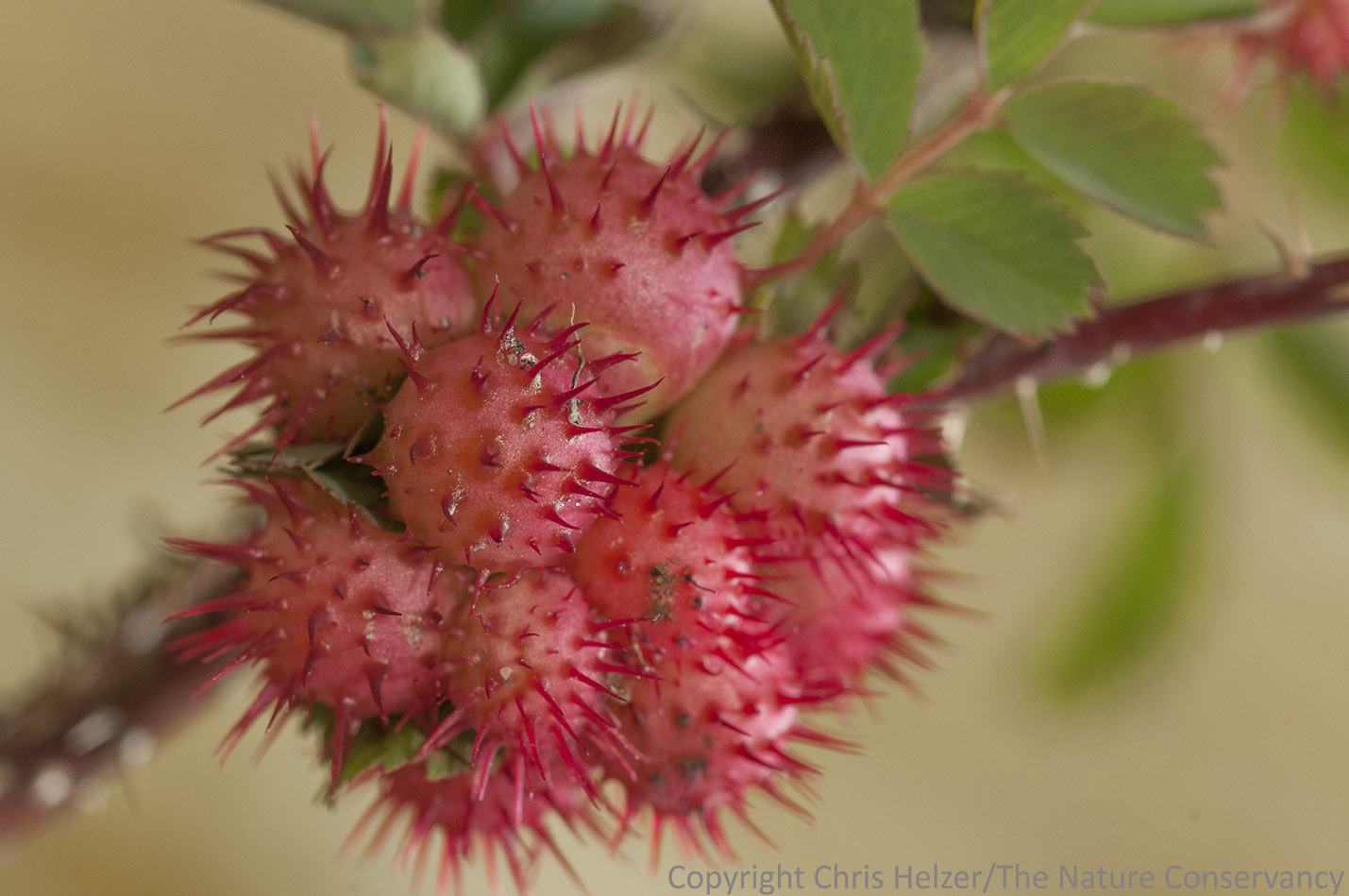
More galls on the same plant.

More galls on the same plant.

For much more information on galls and the insects that create them on wild rose, click here.


A Link To Anne’s New Blog

Readers of The Prairie Ecologist blog will be familiar with posts from Anne Stine, a recent Hubbard Fellow who has moved to Texas to work with the Xerces Society.  Anne has started her own blog now, and I think many of you will enjoy it.  Here is a link to a recent post about keeping track of prairie plants she sees.  She has some very nice photographs to accompany her thoughtful writing.  I encourage you to subscribe to her blog if you like what you see.

Anne Stine, harvesting seeds as a Hubbard Fellow with The Nature Conservancy.  Anne is now working for the Xerces Society, based in Fort Worth, Texas.  She's helping to plan and create pollinator habitat throughout the Great Plains.

Anne Stine, harvesting seeds as a Hubbard Fellow with The Nature Conservancy. Anne is now working for the Xerces Society, based in Fort Worth, Texas. She’s helping to plan and create pollinator habitat throughout the Great Plains.