Primrose Explosion

One of the more intriguing parts of land management is watching for (and trying to interpret) temporary explosions of abundance within various species.  Sometimes it’s pretty clear that the rapid increase in population had nothing to do with management decisions – e.g., the huge numbers of orange sulphur butterflies we saw last year – but other times it’s possible to make at least some tenous links to management.  For example, I’ve collected enough plant data to know that daisy fleabane (Erigeron strigosus) often flowers in abundance in the year following a burn in our patch-burn grazing system.  It appears to germinate during the year of the burn (and intensive grazing) and then flowers during the next season when another the cattle have shifted their grazing to the next burn patch.  Interestingly, though that fire/grazing disturbance certainly opens the door for germination of many plant species, only a few species actually track tightly with that burn/graze pattern.  Most others seem more strongly tied to weather conditions, though management appears important as well.  In other words, it’s hard to know which plant species will respond best when we do a particular management treatment.  (And that’s why it’s fun!)

In 2009, we burned two different patches of the same native sand prairie in the same year – one in the early spring and one in late July.  Cattle were on the site during the whole season and shifted their focus to each new burn patch as it greened up after its burn.  During the following year, it was interesting to see which plant species showed up most strongly in each of the two burn patches as the grazing shifted to yet another patch.  Deer vetch (an annual legume – Lotus unifoliolatus) was one that was particularly abundant in the summer burn patch in 2010 – though it also had a pretty good year elsewhere as well.  Anyway, I figured we’d seen the end of the big showy plant responses to that summer fire by the end of 2010, but now I think I was wrong.

Showy Evening Primrose (aka Four-Point Primrose or Oenothera rhombipetala) in sand prairie - Platte River Prairies, Nebraska.

 This week, that old summer burn area is just loaded with showy evening primrose (Oenothera rhombipetala), a biennial native wildflower that forms a rosette during its first season and blooms during its second.  I can’t be completely sure that it’s abundant because of the summer fire and grazing, but when I stood on a hill overlooking the area, the edges of the primrose explosion tracked right along the edges of the summer fire unit.  I’ve been trying to find out more about when this primrose germinates (fall or spring) to see if that makes sense with what I’m seeing, but haven’t found anything specific enough.  If it germinates in the spring, that would make sense, since the surrounding vegetation would have been weak in the spring of 2010 (because of the 2009 summer fire and subsequent grazing) and would have favored germination of plants like the primrose. 

Showy evening primrose is an easy species to notice, and it’s hard to miss it when it has these kinds of temporary population explosions.  Other plant species are less obvious, and I have to rely on my annual plant data collection to see patterns, but the primrose doesn’t hide its activity!  Makes me wonder how many insects and other species are responding strongly to our management but going unnoticed…

A Prairie Ecologist Vacation

Our family went on vacation last week (sorry for the delayed responses to your comments while I was gone…)  We rented a cabin in the Rocky Mountains west of Denver, Colorado.  It was a really nice week, especially considering that the temperatures ranged from 40-80 degrees F – with low humidities – in the mountains while temperatures at home were in the high 90’s!

While I enjoy short trips to the mountains very much, I think I’d have a hard time living there year-round.  For one thing, I’m too used to seeing big skies.  In the prairies, you can watch thunderstorms from many miles away, and gauge whether or not they’re heading for you or not.  In the mountains, storms sneak up and pounce over the nearest ridge before you have time to react.  And, of course, there are the winters.  I enjoy snow as much as the next person, but winter driving in flat land is enough adventure for me…

Regardless of my fondness for plains and prairies, I did find plenty to photograph in the mountains as well.  Its easy to see why mountains and water dominate so many nature calenders and posters.  Appreciation of prairie landscapes tends to be an acquired taste – one that grows as a person becomes more familiar with the intricacies of prarie life.  In contrast, anyone can appreciate the dramatic landscapes of the mountains without even working at it!  (…and where’s the fun in that?)

This wasn’t a photo trip, it was a family vacation, so I really didn’t spend much time taking photos.  Most were snapped during brief breaks on family hikes, or while my family patiently (?) waited in the car while I jumped out to take yet another photo of the same mountain…  However, I got a few, and thought you might enjoy seeing mountains throught the eyes of a prairie ecologist and photographer.

Mount Evans is a great place to see dramatic mountain landscapes. This was one of many photos I took on quick "I'll be right back" jump-out-of-the-car trips. Not a lot of time for careful compositions, but not a lot of need either - I felt like I could have pointed the camera randomly and gotten great photos! You can click on this (and other) photos to see larger views of them.

I've only spent a short time in alpine meadows, but I really like them. On this trip, the cold blustery weather on top of Mount Evans caused me to be out-voted, and we headed down to warmer temperatures before I got to explore very much. Maybe next time!

There was a group of mountain goats at the top of Mount Evans that seemed perfectly willing to have their photos taken. Very accomodating!

Our cabin was near Golden Gate Canyon State Park, and we found it to be a great site for family hiking.

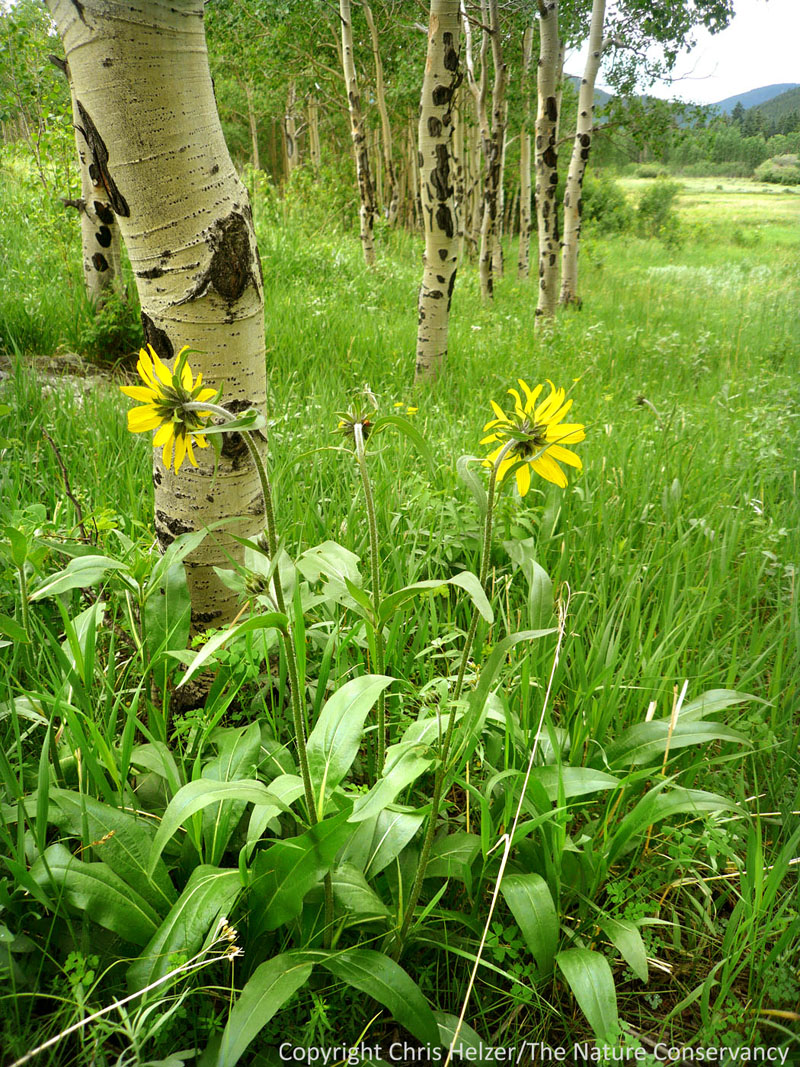
I recognized many of the plants (at least to Genus) in the meadows at Golden Gate Canyon State Park. Some very pretty places there, and it was a great year for wildflowers.

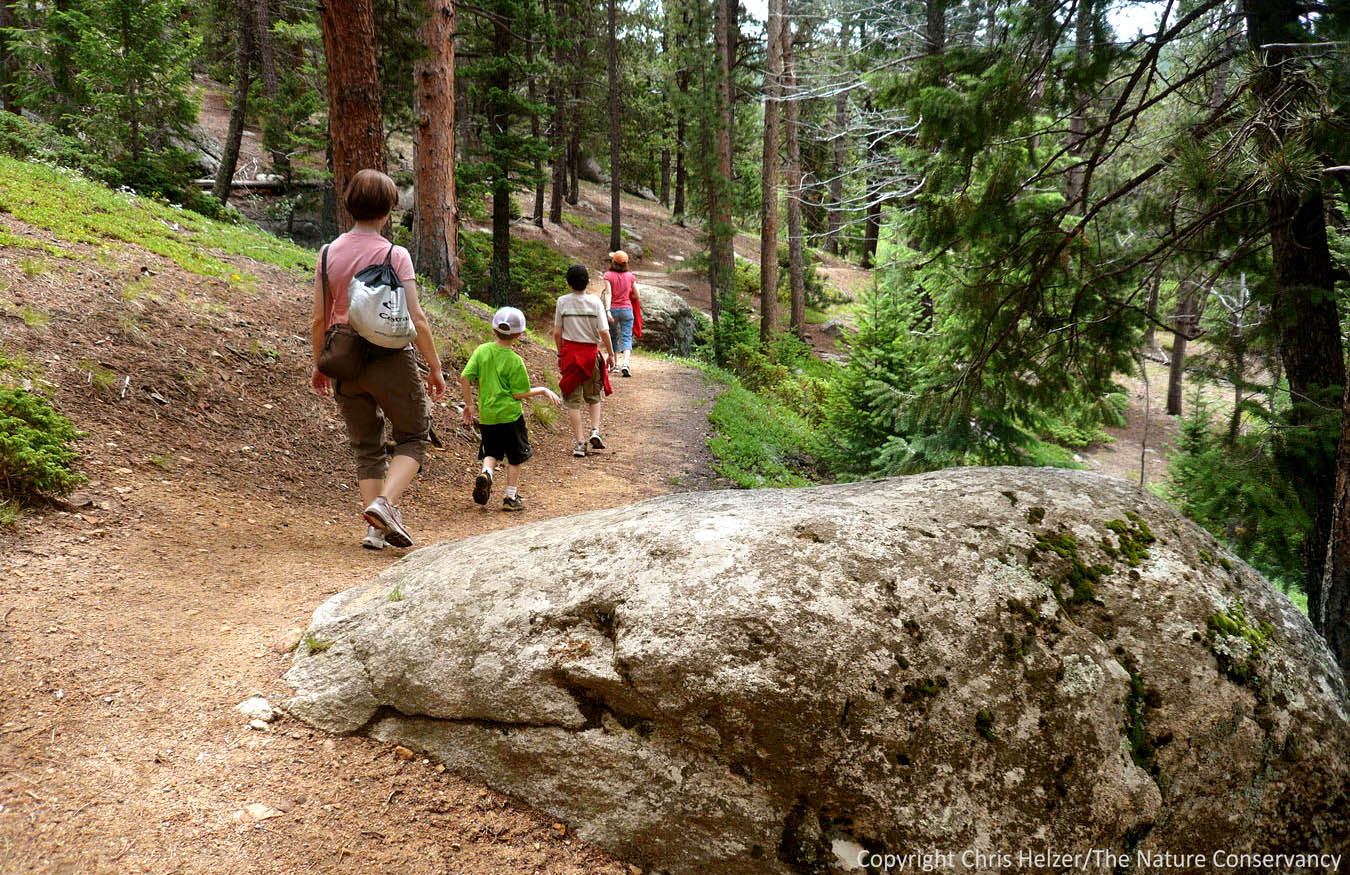
I always feel a little closed in when hiking in woodlands, but many parts of the trails in Golden Gate Canyon State Park were very pretty.

This mule deer fawn popped out of the grass as we rounded a trail corner near the Red Rocks Amphitheater south of Denver.

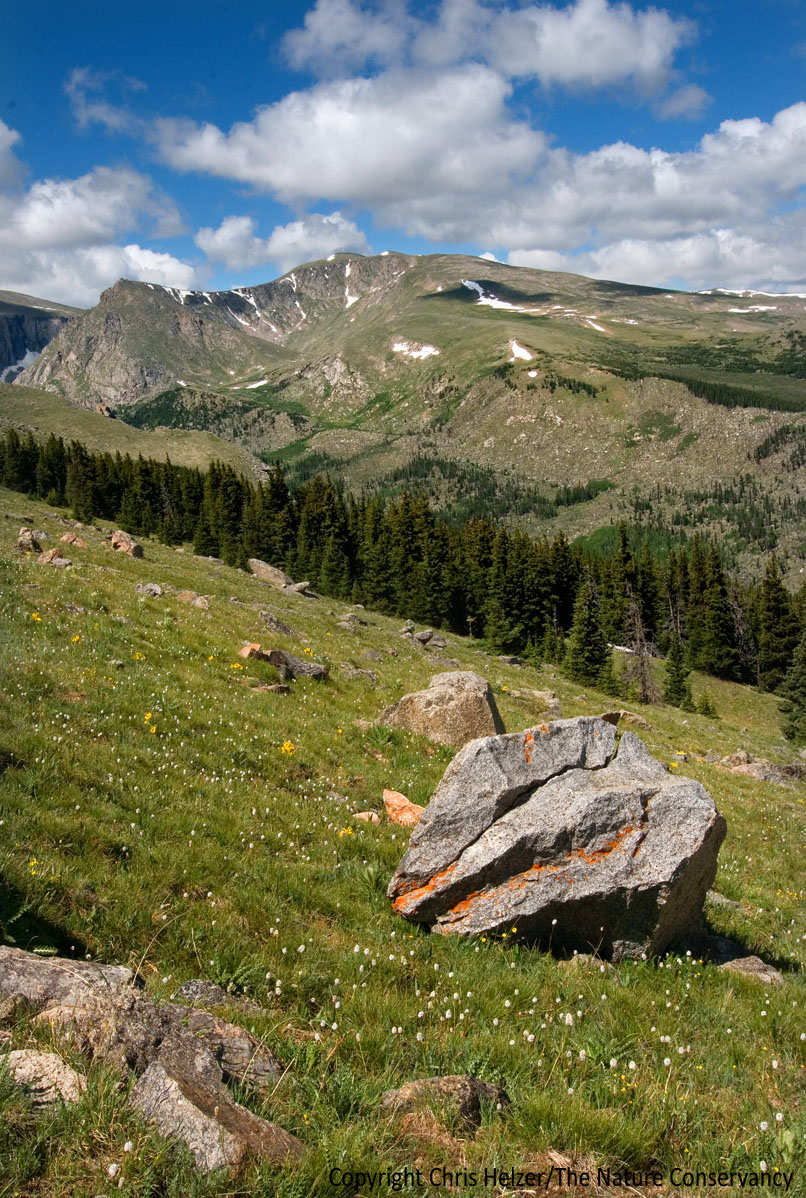
Our cabin was located in a steep valley (can a valley be steep?). If you look carefully, the green roof of our cabin can just barely be seen in the bottom right portion of this photo. I climbed the slope across the road from the cabin a couple times in the evenings and took a few photos. Most of the time it was either too cloudy or too sunny, but I managed to find a few opportunities in-between.

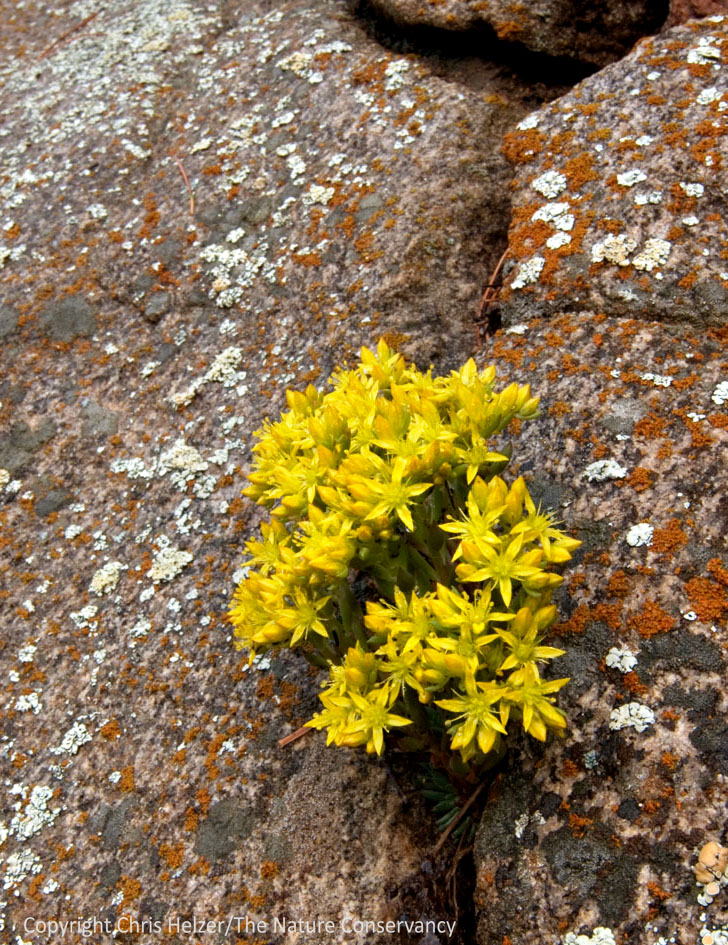
I haven't had time to look up this flower yet, but it was abundant - even in some hard-to-grow-in places!

One of our most promising hikes ended early when we found this big stream running across the trail. Our family was less adventuresome than a few other hikers who managed to make it across (not without getting wet). THIS is why the Platte and Missouri Rivers are running so high this year! LOTS of snow melt in the mountains!

One of my problems with hiking in mountains is that I'm programmed to look down as I hike, so I sometimes miss the great landscape vistas. Instead, I see things like this!

I kept seeing this blanket flower along trails and finally got a photo of it by having my daughter Anna hold a diffuser (homemade with thin cloth on a flexible plastic ring) between it and the bright sun. When she saw the photo later she said, "You didn't even get the whole flower in the picture!"