A Quick Survey of Prairie Ecologist Readers

Eliza Perry, one of our Hubbard Fellows has been helping us evaluate the effectiveness of our efforts to share information about the ecology, restoration, and management of prairies.  If you have a few minutes to take a quick survey, Eliza and I would really appreciate hearing your opinions about this blog and how we might improve it.

The link to the survey is at the bottom of this page.  Thanks for your help!

_____________________________________________________

From Eliza:

If you are reading this, please consider participating!

The Hubbard Fellowship includes an opportunity to explore an area of each Fellows’ choosing that somehow contributes to the mission of The Nature Conservancy. The options are pretty endless, but I wanted to be sure my project dealt with the people side of conservation in some way.

For the past few months, I have been working to help the Platte River Prairies measure its impacts on our target audiences. So far, my work has focused on interviewing conservation professionals all over the state in an effort to assess how effective we are at communicating our messages.

Now, it’s time to turn to the blog, our primary tool for engaging a broad audience, to understand who visits the blog, why you read it, and what impact it has had on you. We hope to use the information you provide us to better cater to your interests, as well as evaluate the impact the blog is having.

We hope to hear from absolutely everyone, even if this is your first visit to the blog! I got a 91.3% participation rate out of the 23 conservation professionals I reached out to for an interview, which is pretty exceptionally high, but I’m rooting for an even higher rate with our blog readers.

The survey is 10 questions and should take about 5 minutes to complete. Your participation is entirely voluntary and you can skip any of the questions. There are no right or wrong answers! I have tried to provide space for further comment on each of the questions, but if you run out of room at any time, please hold those comments until you reach the final question, which just asks for additional feedback. Your responses will remain completely anonymous, so don’t hold back. We want to hear all of your comments and criticisms!

I’m keeping the survey open to the public for about two weeks before it will be closed for analysis. I would love to answer any questions you might have concerning this project, so please feel free to email me at eperry@tnc.org. If you would prefer to email my staff supervisor, Chris Helzer, Eastern Nebraska Program Director, you are more than welcome to do so at chelzer@tnc.org.

Click HERE to take the survey.


The Joy of Being a Mentor

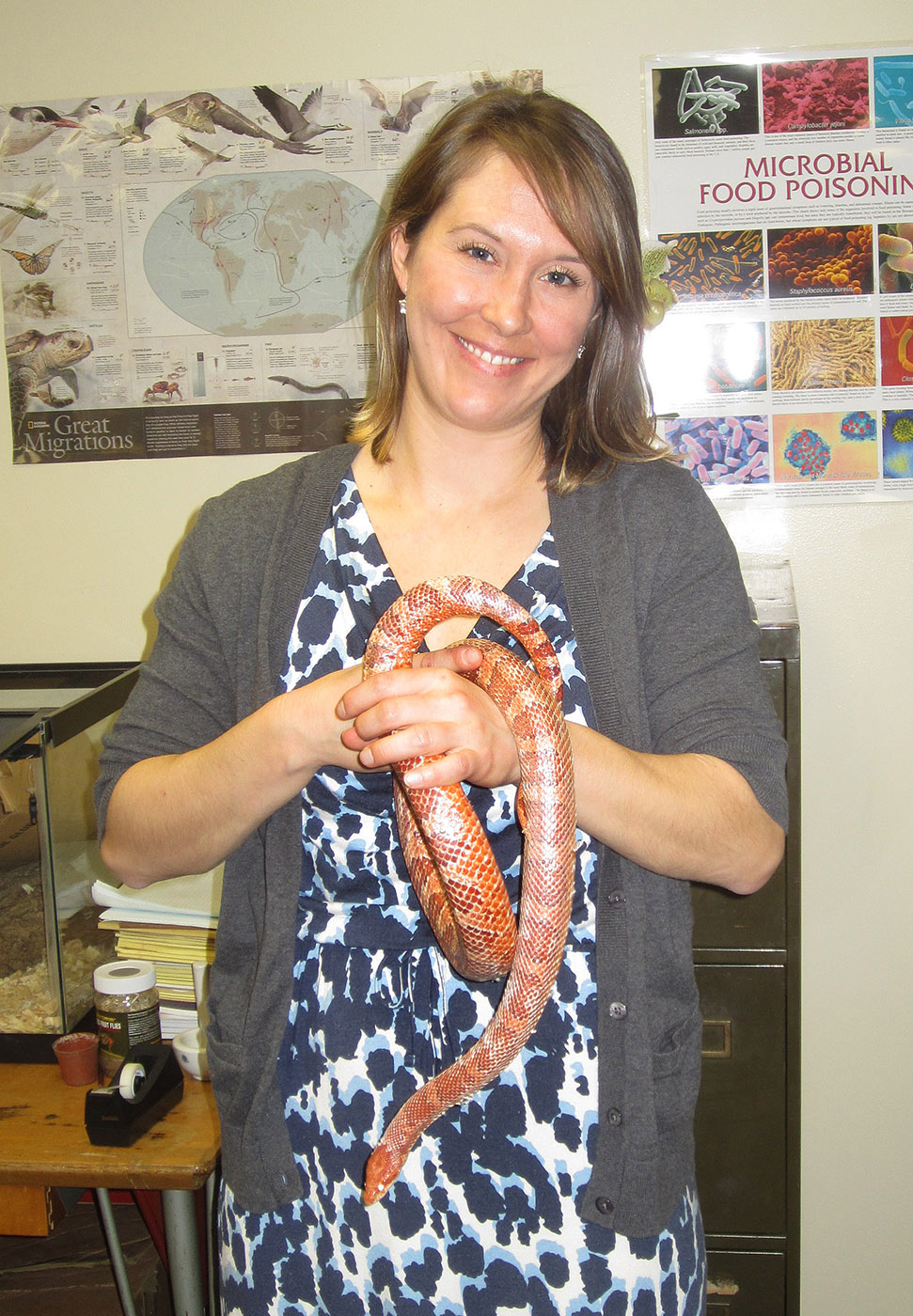
I love giving presentations to school kids, but don’t have the time to do it very often.  However, when a former intern asked me to come talk to her class, it was hard to say no.  As a result, I spent a day last week in Utica, Nebraska talking to the high school biology classes of Centennial Public High School.  Their teacher, Kim (Bontrager) Miller was one of two high school interns I supervised back in 1999.

Our 1999 High School Interns, Jeremy Miller and Kim Bontrager.  Jeremy is now a local farmer and Kim is a high school biology teacher.

Our first two High School Interns in 1999 – Jeremy Miller and Kim Bontrager. Jeremy is now a local farmer and Kim is a high school biology teacher.

Between 1999 and 2006, eight different local high school students spent the summer helping us manage and restore our Platte River Prairies – some of them came back for multiple summers.  Kim was part of the first year of that internship program.  Her brother came along a few years later and worked with us for two summers.

Kim (Bontrager) Miller stands in her Centennial High biology classroom with the class snake.

Kim (Bontrager) Miller stands in her Centennial High biology classroom last week…with the class snake.

It was fun to help Kim teach a new generation of kids about biology and the natural world.  It was also great to see the energy she brings to her classroom, and to watch her enthusiasm rub off on her students.  I’m smart enough not to take credit for the success Kim has found – she’s worked incredibly hard to get herself where she is today.  However, I am proud to have played a small role in the lives of Kim and nearly 70 other interns and seasonal technicians I’ve worked with over  the last 17 years.

Many of those former seasonal staff are now professionals in either conservation or education, but others are farmers, lawyers, and more.  Regardless of their career choice, I hope the time they spent with us helped foster an interest in nature and conservation.  More importantly, I hope they will pass that along to others – just as Kim is doing.

Most of us working in conservation have regular opportunities to interact with students, interns, seasonal technicians, or other young people trying to gain experience and build a career.  It can be tempting to view those people primarily as hired hands who can help us deal with a heavy workload.  However, it’s really important for us to go beyond simply training them to do a task and spend the extra time needed to truly mentor them.  Taking a few minutes out of our day to point out the tracks of an animal, identify a plant, or explain the results of a restoration strategy can mean the world to a young person.  It strengthens their understanding and appreciation of nature, but also helps build a conservation ethic they will keep for the rest of their lives, regardless of career path.

Mentoring is personally rewarding for both mentor and protégé.  More importantly, it’s an essential component of successful conservation.