
Photo of the Week – July 25, 2013

I just got home from a week-long family vacation to the Rocky Mountains in Colorado.  It was a welcome respite from the heat and humidity of the prairies here in Nebraska, but it’s good to be home again.  Since my week was all about mountains, I guess I’ll just share my vacation photos with you…  I’ll get back to discussing prairies next week!

.
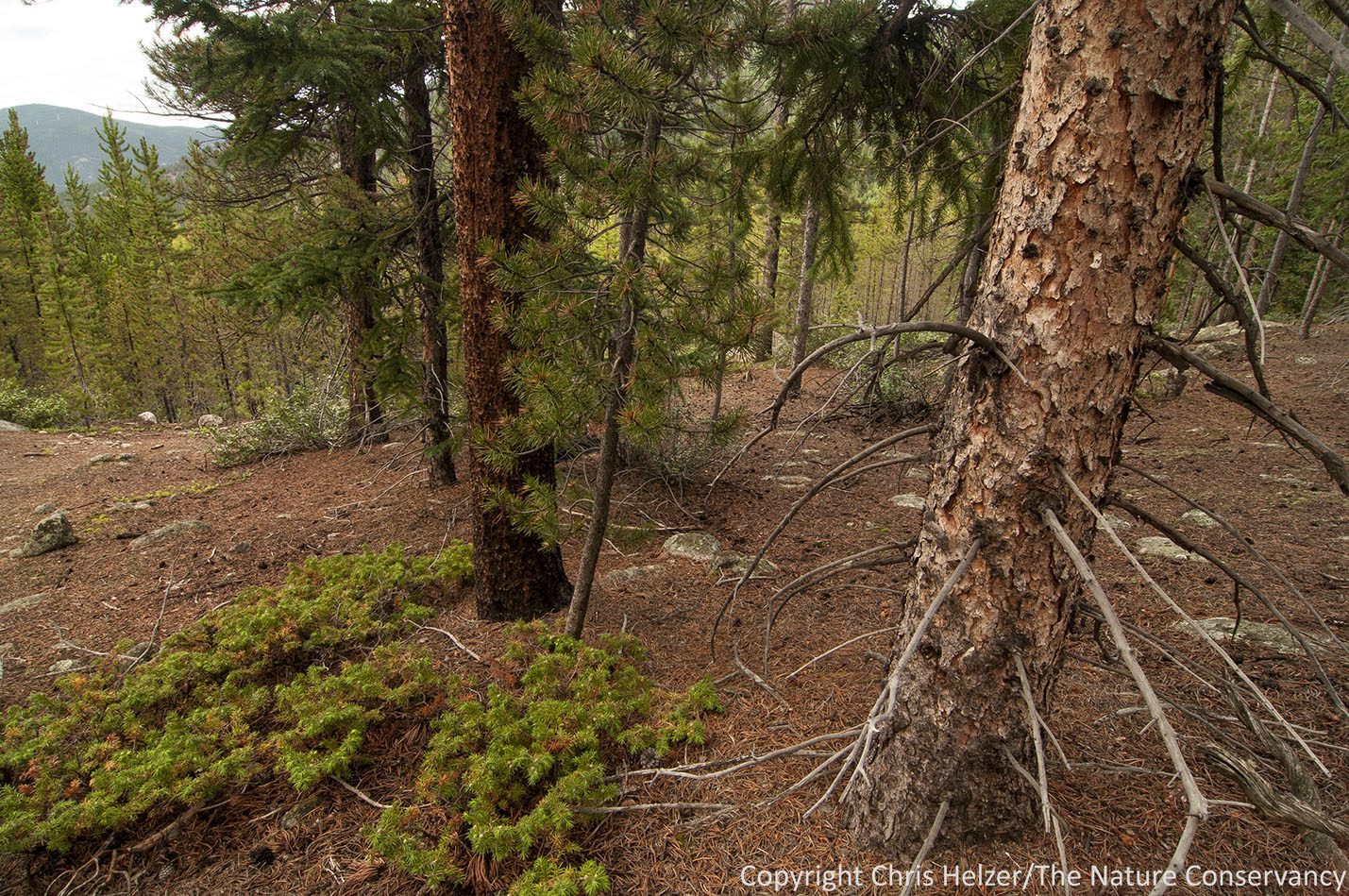
I appreciate the woodland areas of the mountains, but always feel a little closed in when I'm in them.  I like to see the sky...

I appreciate the woodland areas of the mountains, but always feel a little closed in when I’m in them. I really like to see the sky…

.

We rented a cabin south of Idaho Springs, Colorado for our vacation week.  The highlight of the cabin was the beautiful stream that flowed nearby.

We rented a cabin south of Idaho Springs, Colorado for our vacation week. The highlight of the cabin was the beautiful stream that flowed nearby.

.

After a day of short hiking to acclimate to the altitude, we took a longer hike on the Arapaho Pass trail near Nederland, Colorado.  The wildflowers in the meadows were fantastic, and made a prairie ecologist feel at home.

After giving ourselves a day to adjust to the altitude, we took a long hike on the Arapaho Pass Trail near Nederland, Colorado. The wildflowers in the meadows were fantastic, and made a prairie ecologist feel at home.

.
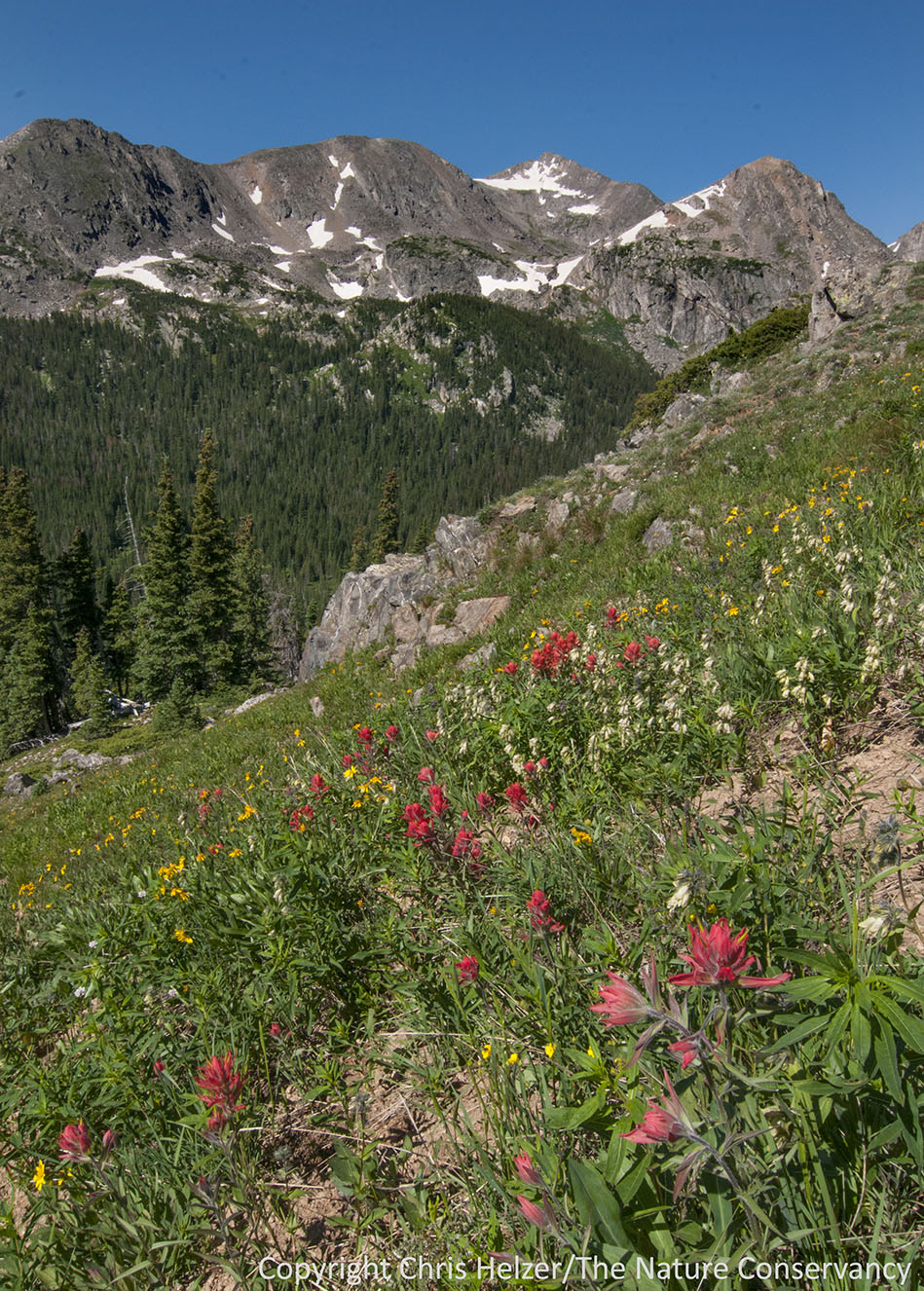
I know the plant species in my prairies really well, and can often identify at least 50-75% of the plants I see in other prairies in the central U.S.  However, in the sub-alpine and alpine meadows of the Rockies, I'm lucky to guess the genus correctly...  For example, I know this red flower is a Castilleja species (Indian paintbrush) but don't know which species it is.

I know the plant species in my prairies really well, and can often identify at least 50-75% of the plants I see in other prairies in the central U.S. However, in the sub-alpine and alpine meadows of the Rockies, I’m lucky to guess the genus correctly… For example, I know this red flower is a Castilleja species (Indian paintbrush) but don’t know which species it is.

.

Above treeline on the Arapaho Pass trail there were some very cold, but very pretty streams winding through the sparse rocky landscape.

Above treeline on the Arapaho Pass trail there were some very cold, but very pretty streams winding through the sparse rocky landscape.

.

My son John hikes the trail toward Arapaho Pass.

My son John hikes the trail toward Arapaho Pass.

.

My daughter Anna had to hold on to her hat when we finally reached the top of the Pass.  The wind coming across the Continental Divide was enough to knock us over.

My daughter Anna had to hold on to her hat when we finally reached the top of the Pass. The wind coming across the Continental Divide was enough to knock us over.  (Official elevation = 11,907 ft)

.

One morning, I took a short steep hike to the top of a nearby ridge to catch the morning light.

One morning, I took a short steep hike to the top of a nearby ridge to catch the morning light.  I needed to get out of the trees and up into the sunshine…

.
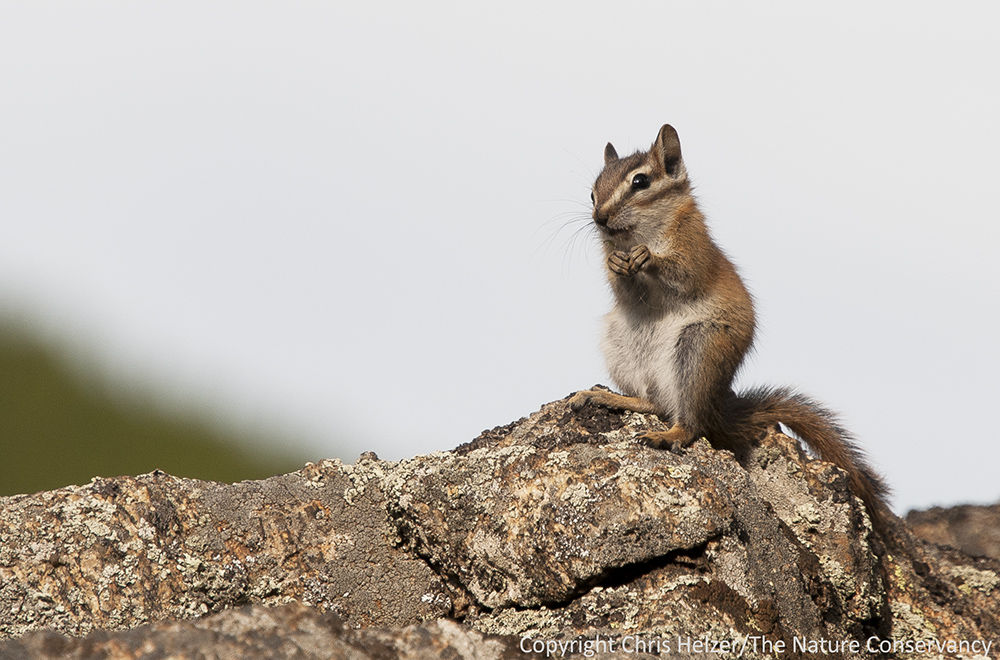
At the top of the ridge, there were several least chipmunks running around among the rocks.  I sat and watched them for a little while and managed to get a few photos as they sat in the sunshine to eat.

At the top of the ridge, there were several least chipmunks running around among the rocks. I sat and watched them for a little while and managed to get a few photos as they sat in the sunshine to eat.

.

We drove up to the top of the 14,000 foot Mount Evans one afternoon.  This photo shows the aptly named Lake Abyss below.

We drove up to the top of the 14,000 foot Mount Evans one afternoon. This photo shows the aptly named Lake Abyss below.

.

On the lower slopes of Mount Evans, we saw a group of bighorn sheep grazing in a meadow.

On the lower slopes of Mount Evans, we saw a group of shaggy bighorn sheep grazing in a meadow.

.
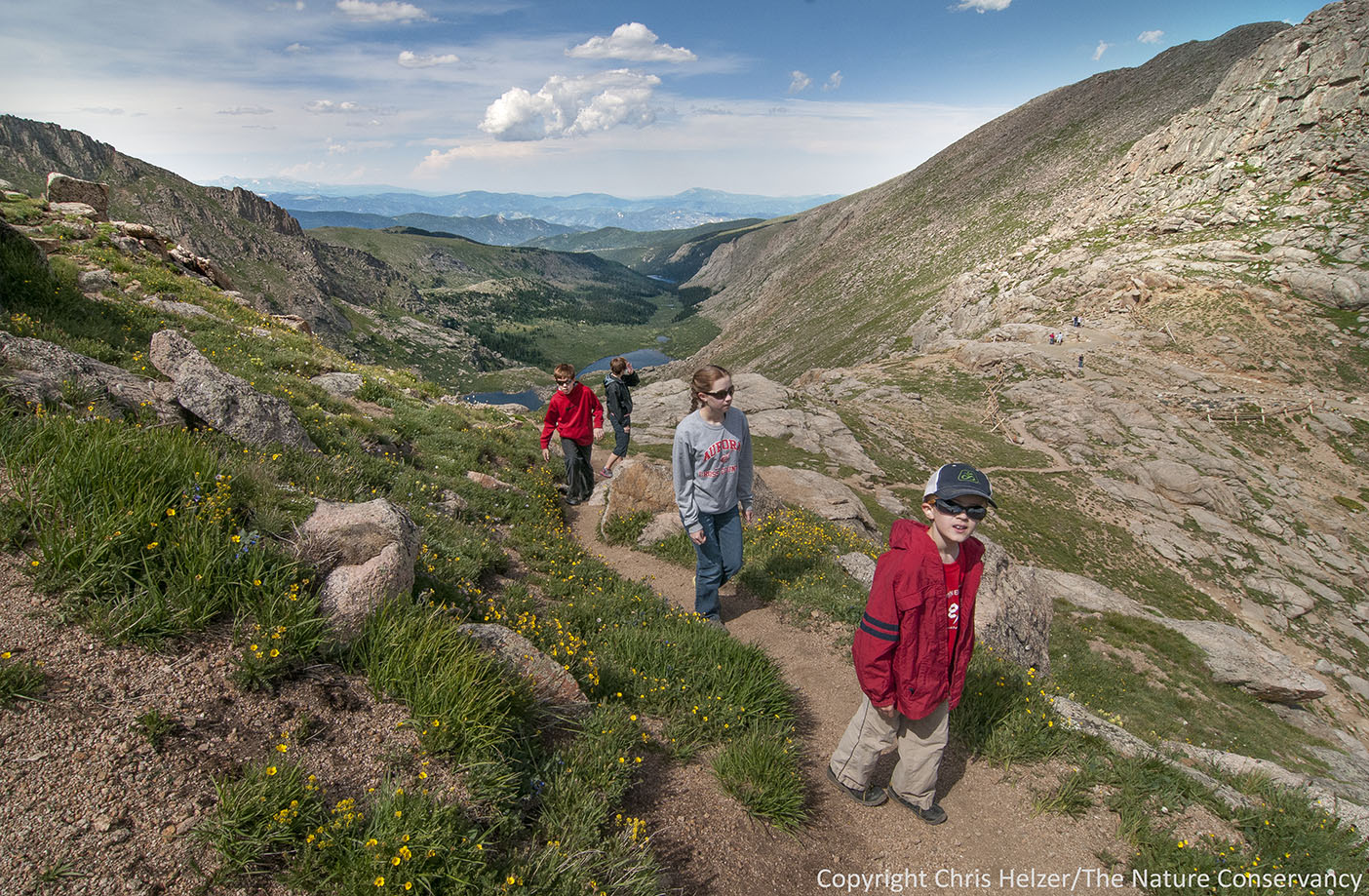
On the way back from the top of Mount Evans, we stopped at Summit Lake and hiked a little way up the steep trail toward Mount Spalding.

On the way back from the top of Mount Evans, we stopped at Summit Lake and hiked a little way up the steep trail toward Mount Spalding.

.

From the trail to Mount Spalding, we had numerous spectacular views of the Chicago Lakes below.

From the trail to Mount Spalding, we had numerous spectacular views of the Chicago Lakes below.

.

On our last hike of the trip, we took a one hour climb to the top of Chief Mountain to enjoy the panoramic views from the top.

On our last hike of the trip, we took a one hour climb up Chief Mountain to enjoy the panoramic views from the top.

.
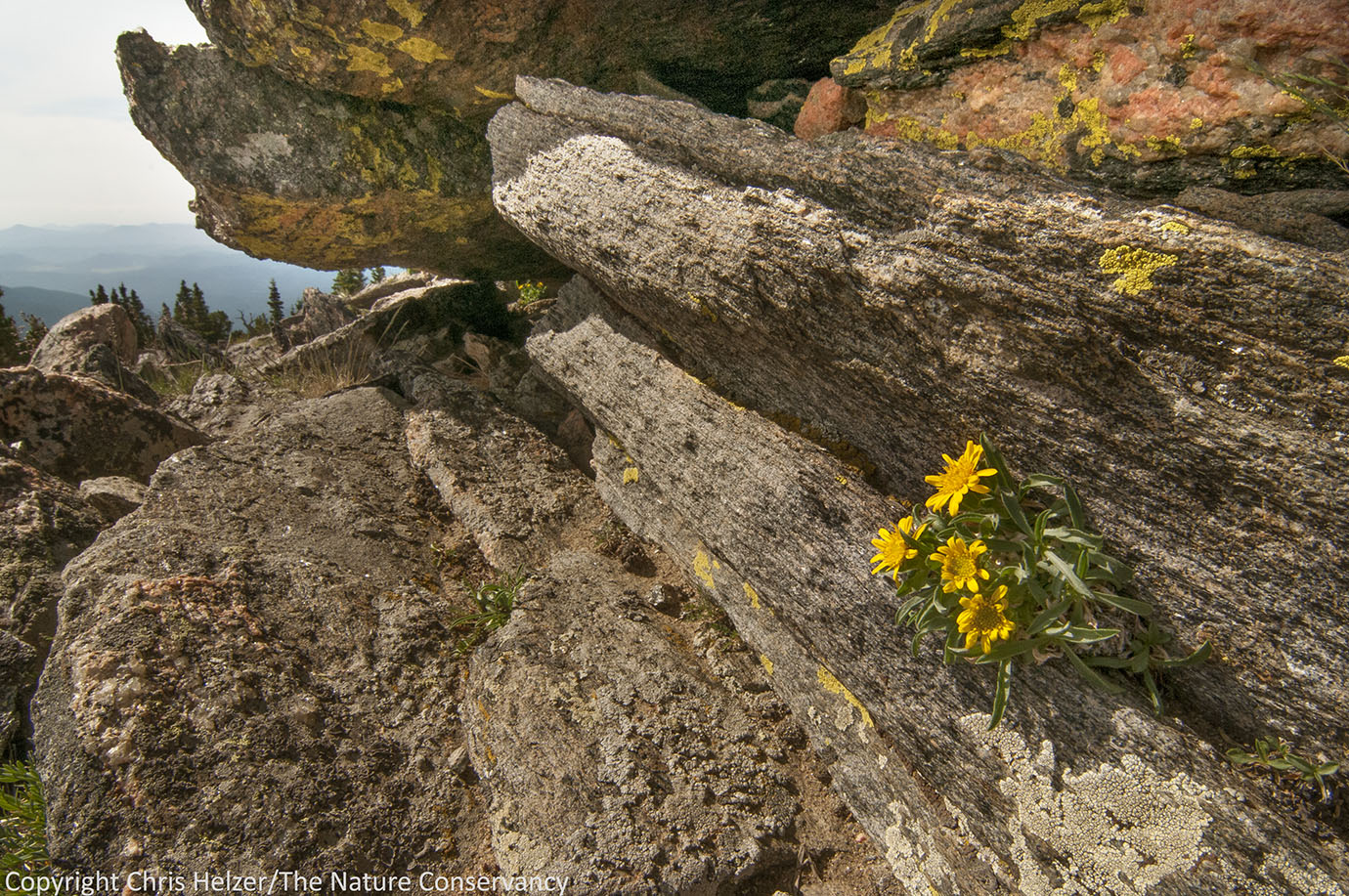
As someone who spends a lot of time admiring the toughness of prairie plants and animals, I could easily appreciate the ability of species to eke out a living among the rocks at high altitude.

As someone who spends a lot of time admiring the toughness of prairie plants and animals, I could easily appreciate the ability of species to eke out a living among the rocks at high altitude.  (Chief Mountain)

.
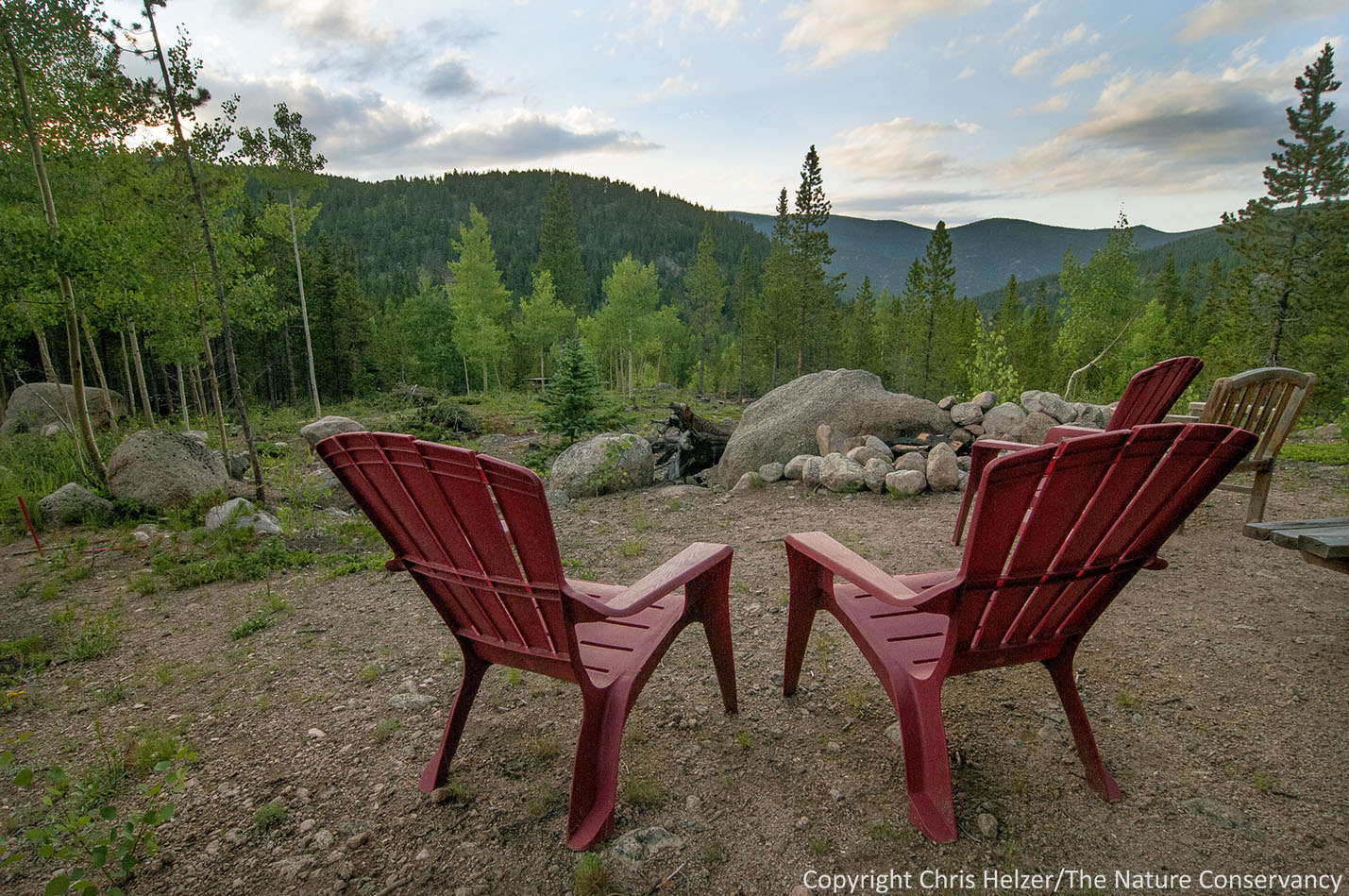
Though our cabin was nestled among the trees on the side of a mountain, we did have a nice open view to the north - something I was very glad for.  It was a great week, but it's really nice to be down in the prairies again.

Though our cabin was nestled among the trees on the side of a mountain, we did have a nice open view of the sky to the north – something I was very glad for. It was a great week, but it’s really nice to be down in the prairies again.

Hubbard Fellowship Blog – Carp Fishing

Guest Post by Anne Stine, one of our 2013-14 Hubbard Fellows:

The carp are so thick in one of our restored creeks near the Platte that their top fins stick out of the water like a shark’s and you can see small schools of their long bodies grubbing around nose-down in the shallows.  Fish over a foot long fling themselves into the air above the creek’s slow pools when they’re spooked, seemingly at random.  I noticed this abundance on my first day out on the prairie with Chris.  With his blessing, it became my mission to harvest a quantity of this invasive fish-flesh in our stretch of creek near the crew quarters.

My fishing spot.  Photo by Anne Stine.

My fishing spot. Photo by Anne Stine.

I found a beautiful fishing spot on a bridge over the pinch between two large pools.  From the bridge, you could see carp and gar loitering below.  The view of our pastures to the west of the bridge promised a lovely sunset for an evening angler.  I baited my hook with corn kernels and cast it in.

Less than ten minutes later I’d hooked a carp as long and meaty as my forearm.  Supposedly tricky to catch, these trash fish do love corn.  The carp pulled and struggled while I attempted to tire the fish before hauling it in.  I was wary- I’ve snapped lines before by reeling in too soon.  One fish had gotten away after breaking my line above the bobber.  I watched him tow my bobber around and continue to forage for the rest of an evening, the red bobber dragging behind him like a balloon on a string.

Carp are an invasive species for much of the United States.  They are considered problematic because they become over-abundant and eat food used by native fish, and their foraging method stirs up mud and increases turbidity in the creeks, rivers, and ponds where they are established.  It used to be illegal to throw them back in Minnesota.  Nebraska and Iowa still host a “Carp-O-Rama” bowfishing tournament, with prizes awarded based on the highest total weight and the highest total number caught.

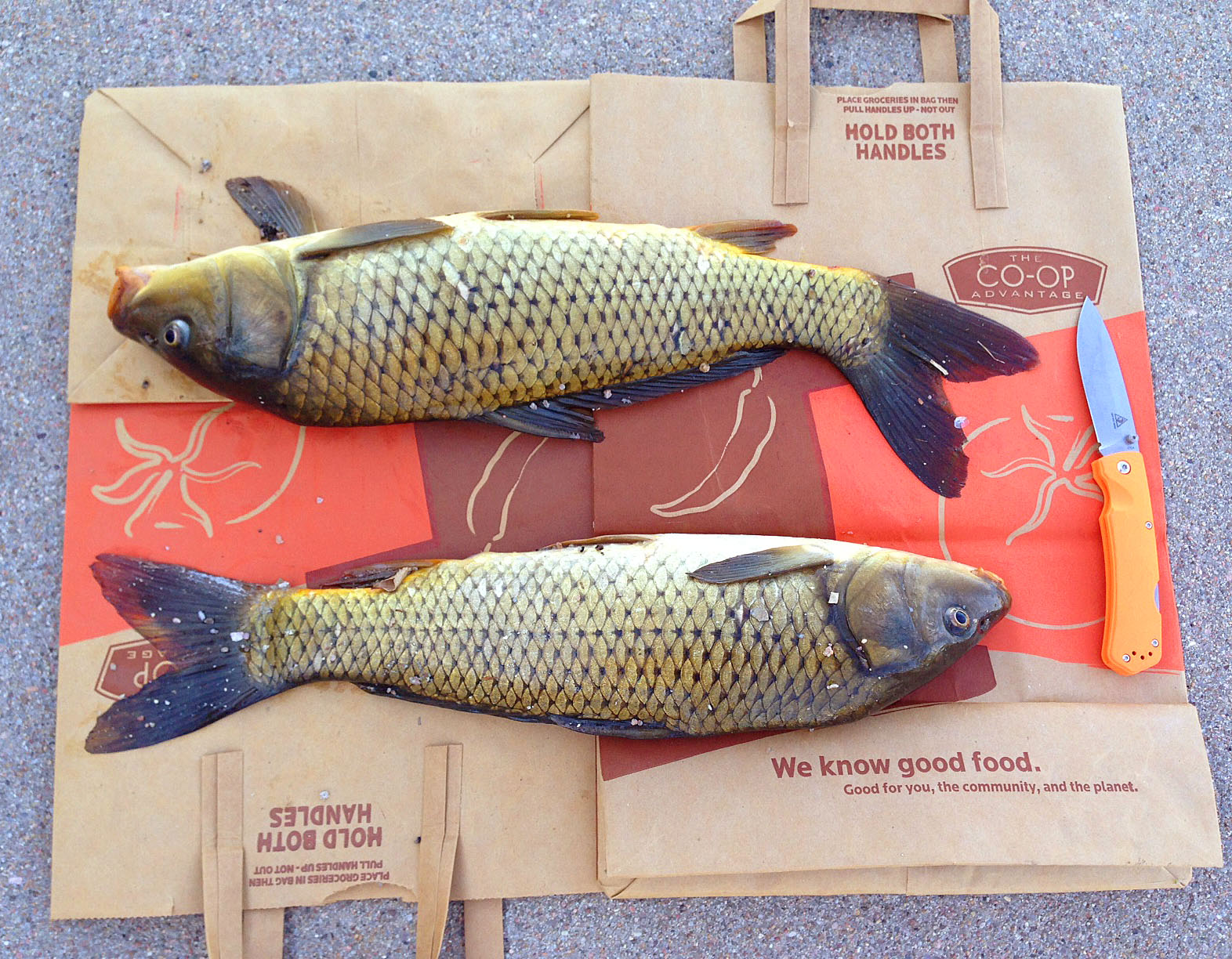
Carp’s bad reputation is bolstered by its arguably inferior flavor.  Carp are generally considered trash fish because they can have an earthy taste partially sourced in a ‘mud vein’ running along their sides.  They also have a complex bone structure that makes filleting a challenge.  Common recommendations for preparing carp fillets include scoring the fillets in the diagonal strips so the small bones are softened enough to eat with ease.  Smoking carp is also frequently recommended for the same reason.  Naturally, I didn’t read any of this and assumed that Americans were just being snobby by snubbing this fish that is widely eaten in Europe and Asia.  After catching two moderately sized carp, I went home to fillet the fish and fried them up for my coworkers.

Dinner!  Photo by Anne Stine.

Dinner! Photo by Anne Stine.

I want to say the carp were delicious.  I want to say “Everyone! Go out and help yourself to amazing, readily available fish. Do your river a favor and eat carp.” Frankly, carp is bony with a muddy aftertaste.  I’ll try a few more prep methods, but my enthusiasm for utilizing this neglected resource is greatly diminished now that I’ve had it.  Hopefully bunnies this fall will be easier on the palate.