
The Wrong Boots

It’s not like I didn’t know. 

Beside the fact that our standards for protective fire gear (including boots) are very clear, I’d actually had trouble once before.  When I was taking a fire training course in South Carolina, I was mopping up the remains of a controlled burn when I noticed that my feet were getting really warm.  Looking down, I realized that the heat from the smoldering pine needles I was walking through was melting the soles of my boots.  That was my first lesson in why wearing the right boots (with Vibram soles, for example) is important.

Despite my previous experience, when I arrived at the aftermath of the big wildfire on the Niobrara River a couple weeks ago, I hopped out of the truck, donned my Nomex shirt, helmet, and leather gloves, and went to work.  …I should have changed boots.  About 20 minutes later, I was spraying water on some hot coals when I noticed that the front of the sole on my left boot was flapping.  That’s odd, I thought – these boots aren’t that old… 

Within about two minutes, the sole of my left boot had come off completely, and the right one was gone by the time I hobbled out of the hot spot I was mopping up.  Apparently, the adhesive that held the soles on my boots wasn’t designed for the kind of heat I had just been standing in.
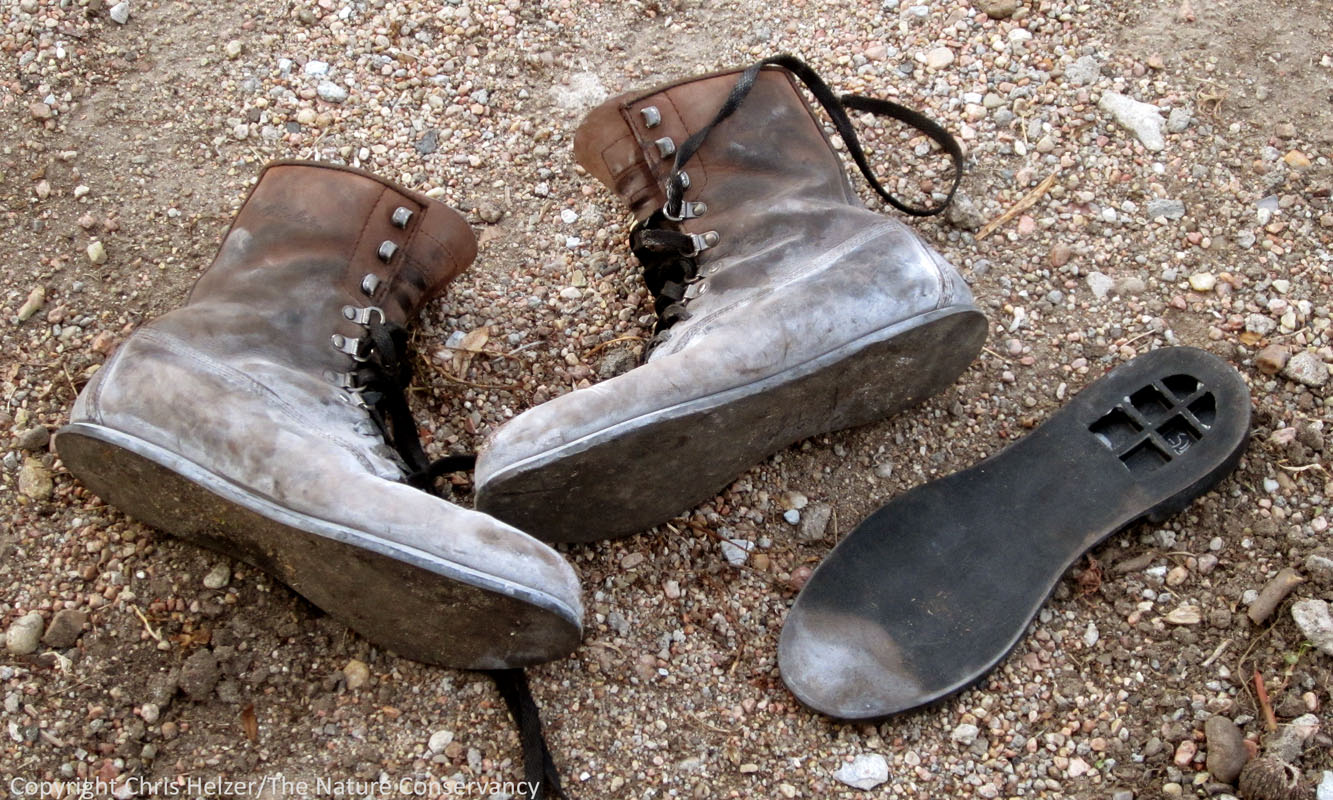
The remains of my boots. I never did find the other sole.

I walked gingerly back to the truck and got the boots I should have been wearing in the first place.  Anybody want to buy some used boots?
Restoring Cottonwoods to the Missouri River (Part 2)

Back in February I wrote a short post about our cottonwood tree planting efforts on the Missouri River.  Here’s a more detailed description of that project, including some early (and interesting) results.

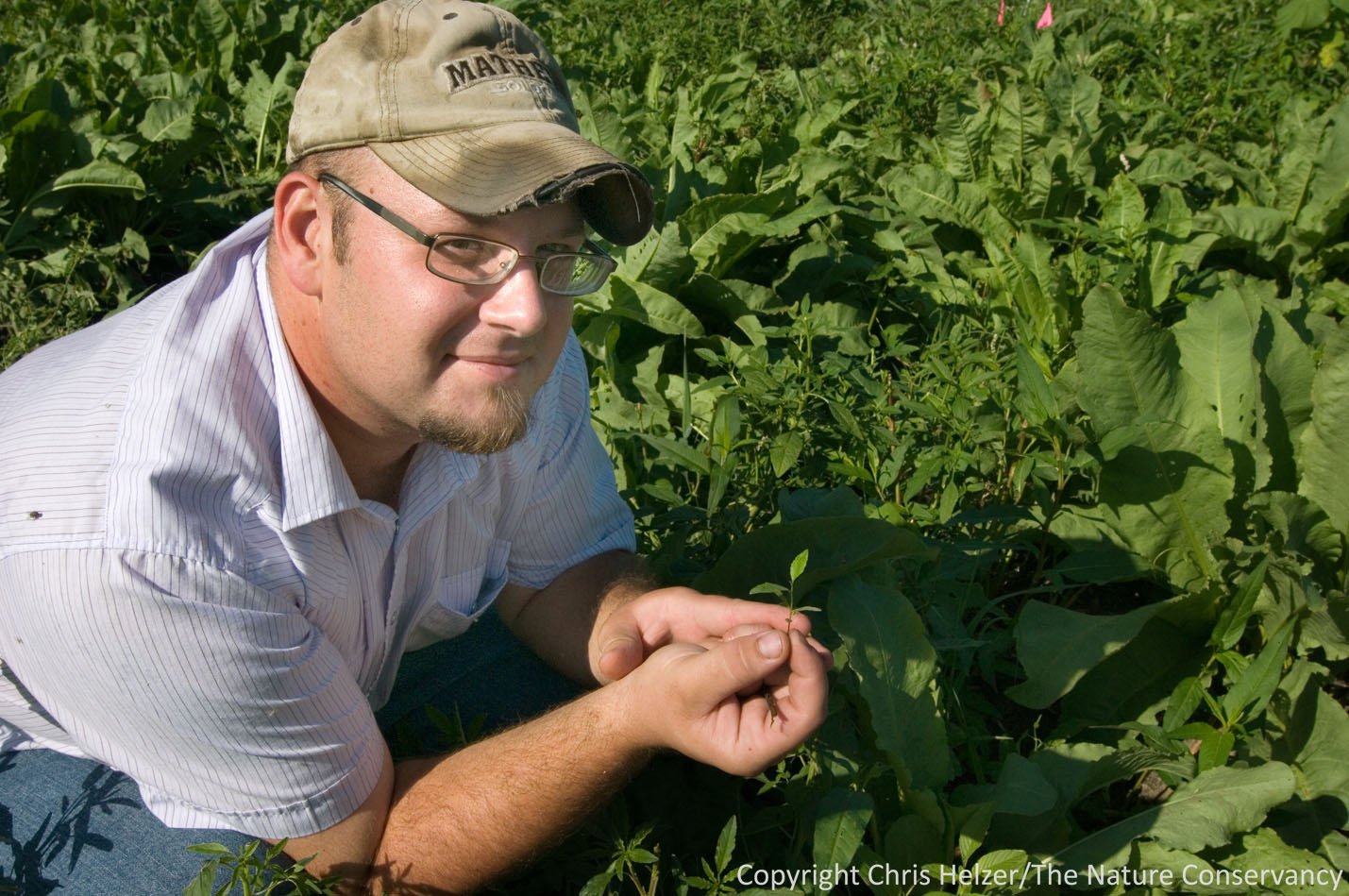
Tyler Janke, our Missouri River restoration ecologist, holds a young cottonwood seedling from our demonstration project’s first season.

The project started as some informal discussions with Scott Josiah, the state forester for the Nebraska Forest Service.   I mentioned to Scott my concerns that most of our cottonwood woodlands on Nebraska’s big rivers consist primarily of mature trees, and that we aren’t seeing many new cottonwood stands becoming established.  As existing cottonwood trees die of old age, they’ll be replaced by the trees that are now filling the understory of the woodlands, including species such as ash, mulberry, hackberry, and eastern redcedar.  Those are all fine trees, but provide a very different kind of habitat than a cottonwood woodland.  Scott was interested in the same issue and, a few months later, approached me with an opportunity to join them on a grant application to fund a collaborative project.

We successfully obtained a grant from the U.S. Forest Service for a three year demonstration project, and the National Arbor Day Foundation jumped in with additional funding and support.  Tyler Janke, our restoration ecologist along the Missouri River is spearheading the project, and will be restoring approximately 300 acres of cottonwood woodland over the next three years.  Along the way, we’ll be trying and comparing a number of techniques to figure out what works best, including:

Continue reading