Contrasting Approaches to Prairie Management: Leopold, Land Health and Cabbages.

“A Land Ethic” is the concluding essay in Aldo Leopold’s 1949 book, A Sand County Almanac, and is the most powerful and relevant piece of conservation writing I’ve ever read.   Leopold’s essay spells out the changes we need to make in the way we view our relationship with the land, and it is both impressive and frustrating that nearly everything in that essay still reads true today.  If anyone reading this blog post has never read A Sand County Almanac, please stop reading this, go pick up a copy of the book, and read it.

I’ll wait…
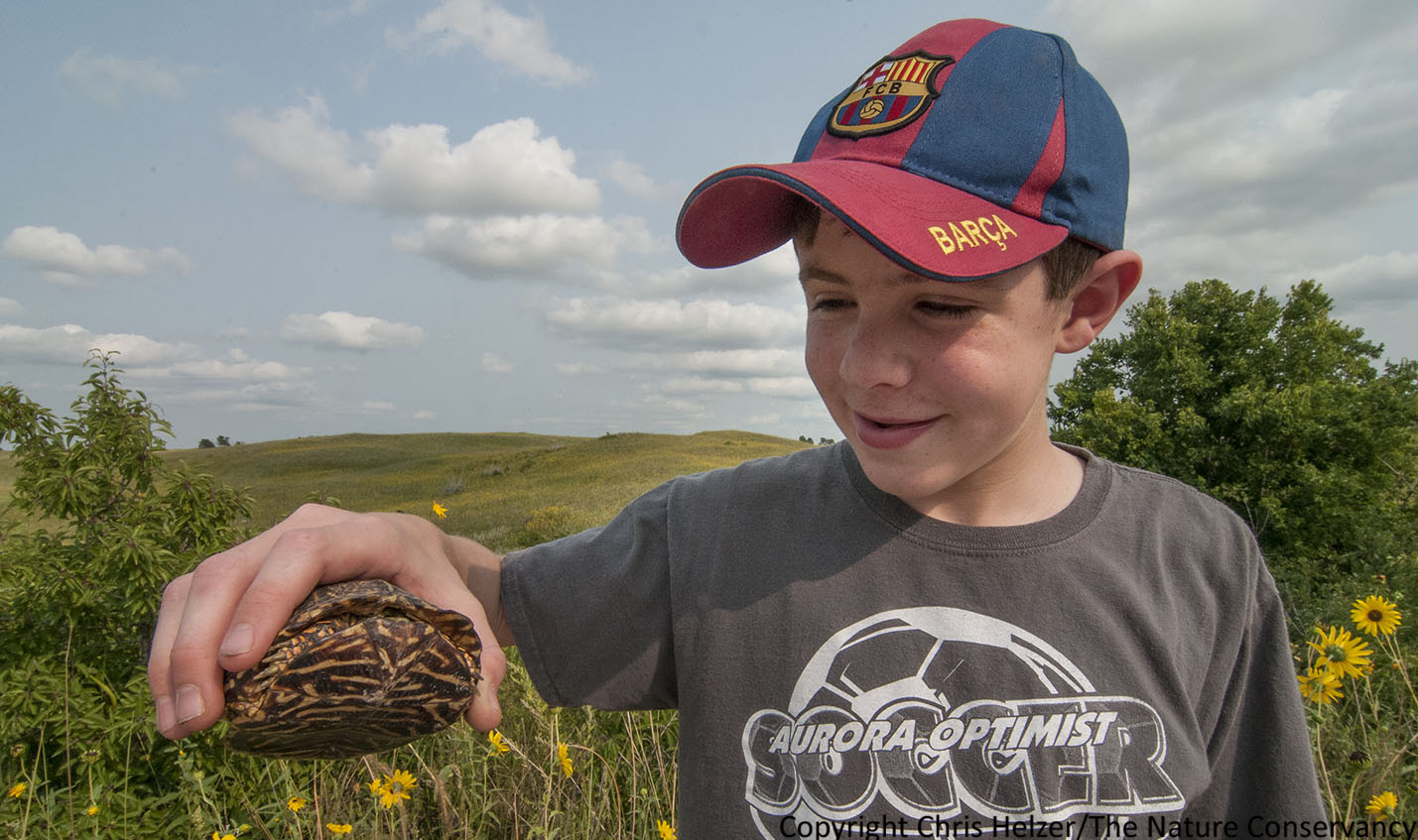
Instilling a land ethic in my kids is one of my highest priorities as a parent.

Instilling a land ethic in my kids is one of my highest priorities as a parent.

One of my favorite parts of “A Land Ethic” is the section titled “Land Health and the A-B Cleavage”.  I’m always blown away by how neatly Leopold synthesizes the field of conservation into the first three sentences of that section:

A land ethic, then, reflects the existence of an ecological conscience, and this in turn reflects a conviction of individual responsibility for the health of the land. Health is the capacity of the land for self-renewal. Conservation is our effort to understand and preserve this capacity.

The very next paragraph introduces an issue I’ve been wrestling with for a long time.

Conservationists are notorious for their dissensions. Superficially these seem to add up to mere confusion, but a more careful scrutiny reveals a single plane of cleavage common to many specialized fields. In each field one group (A) regards the land as soil, and its function as commodity-production; another group (B) regards the land as a biota, and its function as something broader.

Leopold goes on to describe how some in his field of forestry are “quite content to grow trees like cabbages” while others have a less agronomic and more ecological approach.  He also points out that the fields of wildlife management and agriculture each have their own parallel examples of this dichotomy.  These contrasting views of the world still exist in various forms, from the way farmers think about their fields to the way people in cities value natural resources.

I see Leopold’s A-B cleavage very clearly in prairie management.  One example can be found in the way prairies are used for livestock production.  Many livestock producers see prairies primarily as grass farms, and the worth of a plant is determined by its palatability and nutritional value to livestock.  Broadcast herbicide application is commonly used in an attempt to remove “weeds” and leave only the grasses cattle or other livestock most like to eat.  Optimization of grass production also manifests itself in grazing strategies; particularly systems that move cattle through multiple paddocks with the primary goal of increasing the production and dominance of grass.  Grass farmers are exasperated by the perennial reoccurrence of “weeds”, despite their best efforts to prevent them. They don’t see that those weeds fill ecological roles grasses can’t, including roles that improve the overall health and productivity of the land.

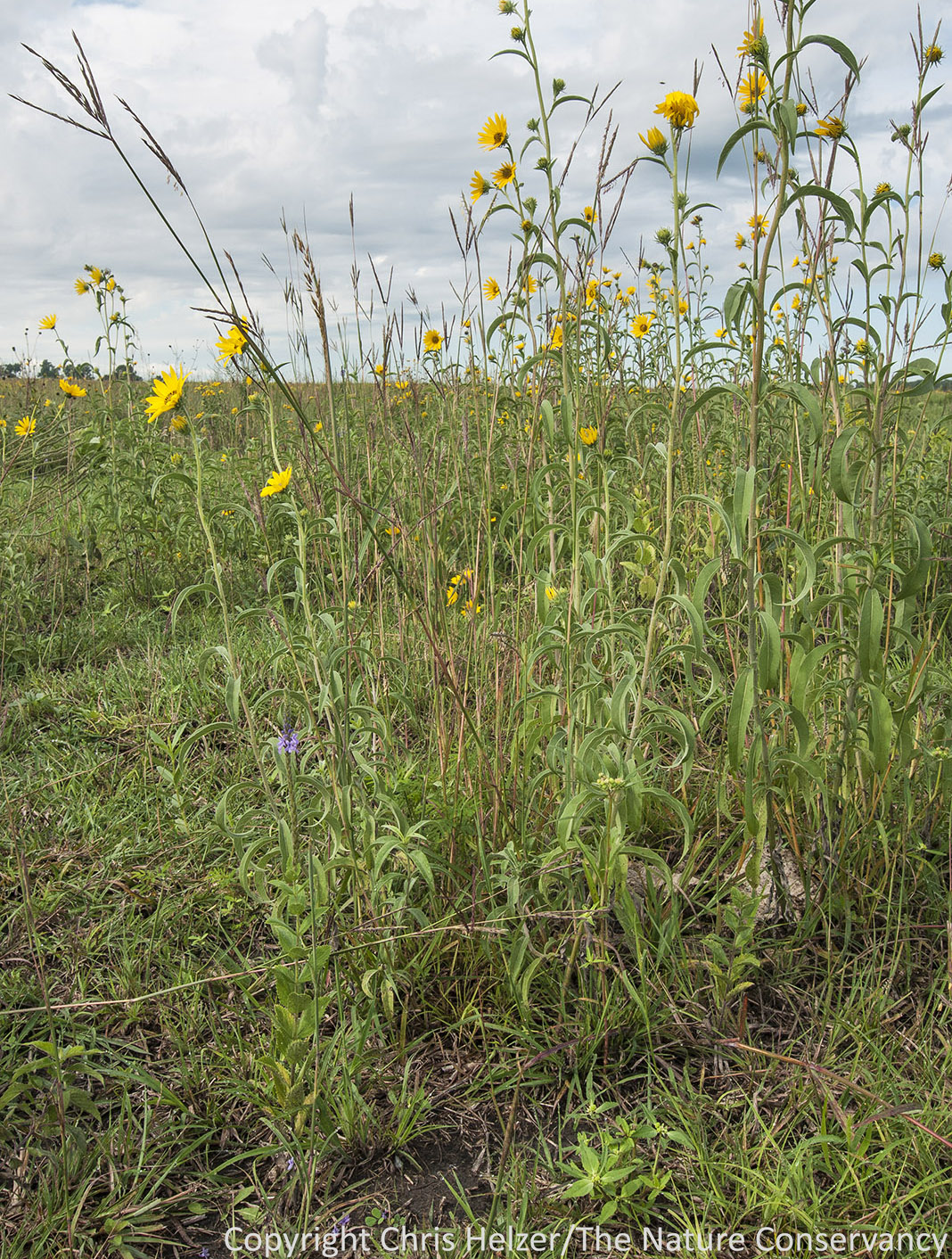
A grass farmer's nightmare, these ragweed plants and other "weeds" play important ecological roles and fill in open spaces created by intensive grazing or drought.

A grass farmer’s nightmare, these ragweed plants and other “weeds” play important ecological roles, including filling open spaces created by intensive grazing or drought.  Removing them with herbicide application only results in more “weeds”, which fill the same spaces again.  Perennial grasses easily outcompete these opportunistic plants under light or no grazing pressure.  In fact, a year after this photo was taken, this site was dominated by big bluestem.

Other ranchers, however, see prairies as much more than grass farms.  Instead, they recognize that their livelihood relies on an extraordinarily diverse community of organisms above and below ground.  To these ranchers, the only weeds are those that reduce the diversity of the prairie community and make the land less healthy by Leopold’s definition of health: the capacity of the land for self-renewal.  Livestock producers on this side of the cleavage understand that they and their livestock depend upon soil, plants, pollinators, predators, pathogens, and the interactions between them.  A plant’s importance is not judged only by whether or not a cow will eat it, but also by the roles it fills in the larger community.  Those contributions include the communities of microbes living in the plant’s root system, pollen and nectar for pollinators, and food for herbivores, which in turn support predators that regulate populations of their prey.  Ranchers with an ecological perspective gain as much appreciation from watching bees buzzing from plant to plant as they do from watching the weight gains of their cattle, even though the latter is what allows them to pay their taxes and keep their land.

Just as there is a broad range of perspectives among livestock producers, there are wide contrasts among those who manage prairies for recreation and conservation purposes as well.  Some prairie managers have a single species or narrow set of species as their primary management target.  Those targets are include game species such as ring-necked pheasants, white-tailed deer or ducks, but may also be butterflies or a particular class of plants or grassland birds.  Narrowly-focused managers tend to manage their prairies in much the same way each year so as to provide a consistent set of conditions that best suit their preferred species.  Over time, prairie species not favored by that kind of repetitive management regime diminish in number or disappear, decreasing the overall diversity of the prairie community.  Since ecological resilience (today’s term for Leopold’s “land health”) relies heavily on species diversity, the loss of species from the community weakens its ability to support others, including the managers’ favorites.  Ironically, as the community weakens, managers tend to become even more agronomic in their approach by adding food plots, controlling predators, or increasing herbicide use to suppress plants taking advantage of a less diverse community.

Prairie managers with a broader ecological perspective start with the premise that a diverse prairie community is of utmost importance.  They manage in ways that prevent any particular species or group from becoming too dominant at the expense of others.  These managers don’t judge success by the abundance of one species or another, they focus on processes such as pollination, predator/prey interactions, and other indicators of community diversity and ecological resilience.  Variation in the species composition of a prairie between years is a cause for celebration rather than trepidation.  Year-to-year variation means that many different species (especially insects and animals) experience success over time, rather than just the few who thrive under more stagnant conditions.  Managing for diversity is not a simple process, and requires a careful eye and flexible approach, but the result usually produces strong and stable populations of all species – including those desired by more narrowly-focused managers.

Prairies managed for overall diversity have strong ecological processes that support all species - including game animals, songbirds, insects, plants and livestock. Prairies managed for overall diversity have strong ecological processes that support all species - including game animals, songbirds, insects, plants and livestock.

Prairies managed for overall diversity have strong ecological processes that support all species – including game animals, songbirds, insects, plants and livestock.

Whether we are managing for livestock, game species, butterflies, or flowers, the approach we take is critically important.  There is a strong temptation to continually maximize what we think are the enabling conditions for the species we’re most interested in, but that approach ignores the broader complex system those species depend upon.  The grass that cattle eat relies on productive soil, and that soil’s productivity is supported by a diversity of plants, microbes, pollinators and other prairie community members.  Similarly, the fate of butterflies, pheasants, and deer all depend upon the roles played by their fellow citizens of the prairie.

Trying to deal with all of that complexity may seem daunting, but take another look at Leopold’s definition of land health and conservation: Health is the capacity of the land for self-renewal. Conservation is our effort to understand and preserve this capacity.  Note that Leopold doesn’t say conservation entails fully grasping and perfectly managing the complexities of the land.  Instead, he defines conservation as the effort to do so.   I like that.  We don’t have to know everything to be successful.  Instead, conservation is an adaptive process of learning, incorporating new knowledge into our actions, and then trying again.  That means that conservation is accessible to anyone who appreciates the broad complexity of natural systems and attempts to work within them, rather than against them.

…And isn’t that more fun than just growing cabbages?

Disclaimer:  The author of this post intends no disrespect to those who grow cabbages.  Instead he was simply referring to a quote from earlier in the post to reinforce a point and attempt to end a long and heavy essay with something a little lighter.  Cabbage growing is a perfectly legitimate and important activity, especially when done with appropriate consideration for the broader ecological context of soil and other ecosystem processes required to sustain long-term production…  …Ok, I’ll just stop now.

Previous related posts you might be interested in:
Calendar Prairies

Are Botanists Ruining Prairies?

What I Look For When I Walk Through My Prairies

Back in August, I posted some questions to readers about what they look for when evaluating their own prairies.  I got some excellent responses, which I really appreciated.  If you missed them, you can re-read that post and those comments here.

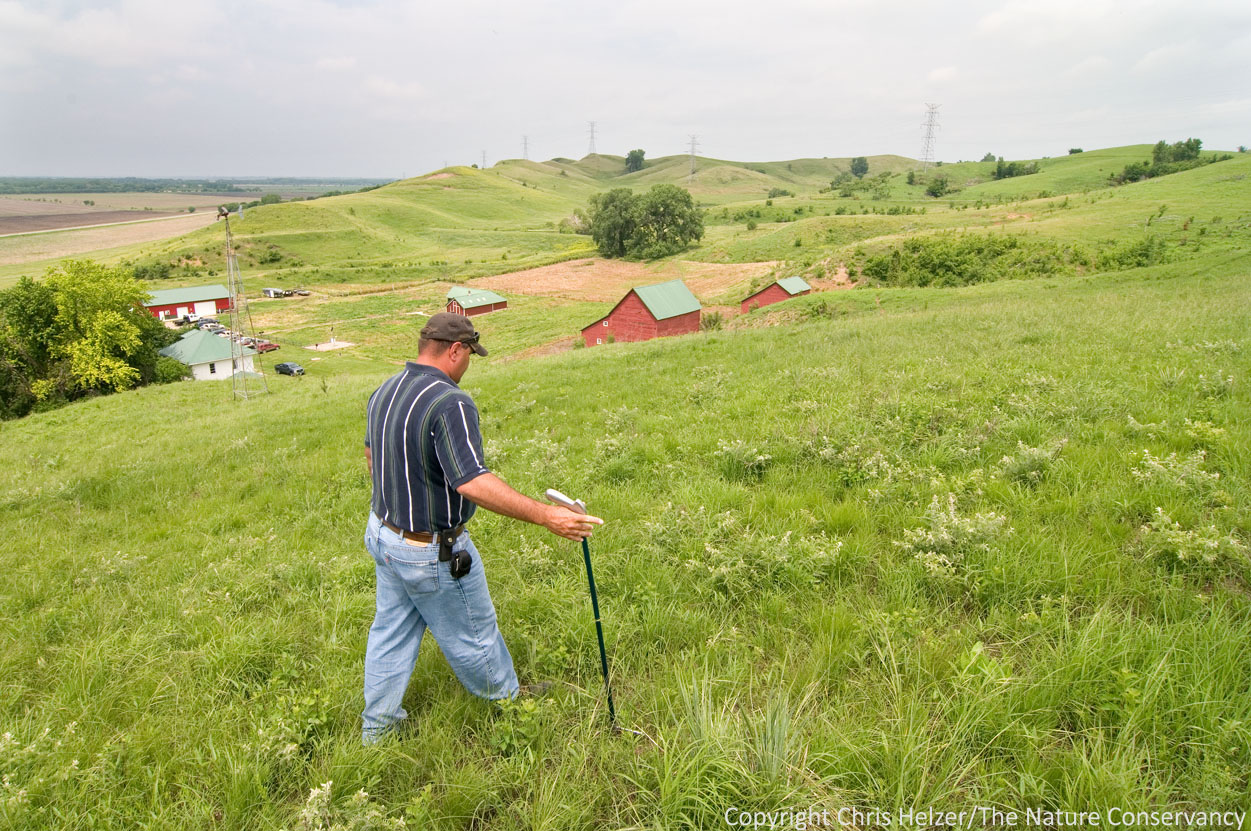
Walking around a prairie and getting a read on what's happening is probably the most important part of prairie management.  This is Scott Moats, The Nature Conservancy's Broken Kettle Grasslands, Iowa.

Walking around a prairie and getting a read on what’s happening is probably the most important part of prairie management. Scott Moats, The Nature Conservancy’s Broken Kettle Grasslands, Iowa.

As a follow up to that, here is more detail about what I think about as I walk around my family prairie, or one of our Platte River Prairies.  Of course, sometimes I just hike around and enjoy the day, but this post is about what I focus on when I’m evaluating our management and considering ideas for next steps.  We collect some relatively formal data on some sites, but most of our management decisions are really based on the kind of observation and evaluation I lay out here.  I’m certainly not trying to talk you into doing exactly what I’m doing – especially because what I look for is tied to my particular objectives, not yours.  Instead, I’m hoping that I might spark some ideas you can incorporate into your own decision making processes.

To start with, the basic objective at both my own prairie and those I help manage professionally is the same.  I want to provide a shifting mosaic of habitat structure patches (short, tall, mixed-height, etc.) so that the quilt pattern of those patches looks different each year.  I assume that a dynamic management regime like that will support high plant diversity because it doesn’t allow static conditions that allow a few plant species to become dominant.  I also assume that those shifting habitat patches will facilitate a healthy community of insects, birds, mammals, reptiles, and other life – above and below ground.  These are not blind assumptions; they are based on my own experience and research, along with that of many others.  (You can read more about those assumptions here.)

Grazing can create very important habitat structure such as this short grass/tall forb habitat at our Platte River Prairies.

Grazing can create very important habitat structure, including this short grass/tall forb habitat at our Platte River Prairies.  This habitat allows for easy movement along the ground, but provides plenty of overhead cover as protection from predators and the hot sun.

Not surprisingly, the first thing I look for, then, as I walk around a prairie is the pattern of habitat structure.  I hope to find the full range of variation, from tall and dense vegetation to almost bare ground.  Even more importantly, I want to see some of the important intermediate habitat types – especially short-cropped grass with tall forbs (wildflowers), which is incredibly important for many wildlife and insect species.  If I can find all of those habitat types, and they’re in different places than they were last year, I feel pretty good.

Next, I look at the plant community.  Plant diversity is an important foundation for invertebrate and wildlife diversity, so I want to see a rich diversity of plants as I walk around.  I also want to see that diversity at both large and small scales.  Across the whole prairie, I’d hope to find at least 100-200 plant species (though I certainly don’t count them every time) but I should also be able to count at least 10-15 plant species within arms’ reach if I kneel on the ground.  These numbers vary, of course, based on geography, soil type, etc., so they may or may not be reasonable at your particular site.

As I look at plant diversity, I want to see habitat patches with an abundance of “opportunistic” plants.  These are species that thrive in the absence of competition.  Depending upon your point of view, you might also call them “colonizers” or even “weeds”, but when they are abundant, it means that nearby dominant plants have been weakened.  We try to periodically knock back the vigor of dominant plants (especially grasses) through fire, grazing or mowing, to help less dominant plants maintain a foothold in the plant community.  A flush of opportunistic plants is an indicator of success because it shows that we successfully opened up that space and other plants are taking advantage of it – and not just the weedy ones.  Finding seed heads, and even new seedlings, of slower-to-colonize plant species (purple prairie clover, entire-leaf rosinweed, leadplant, etc.) within those weedy patches makes me feel even better.

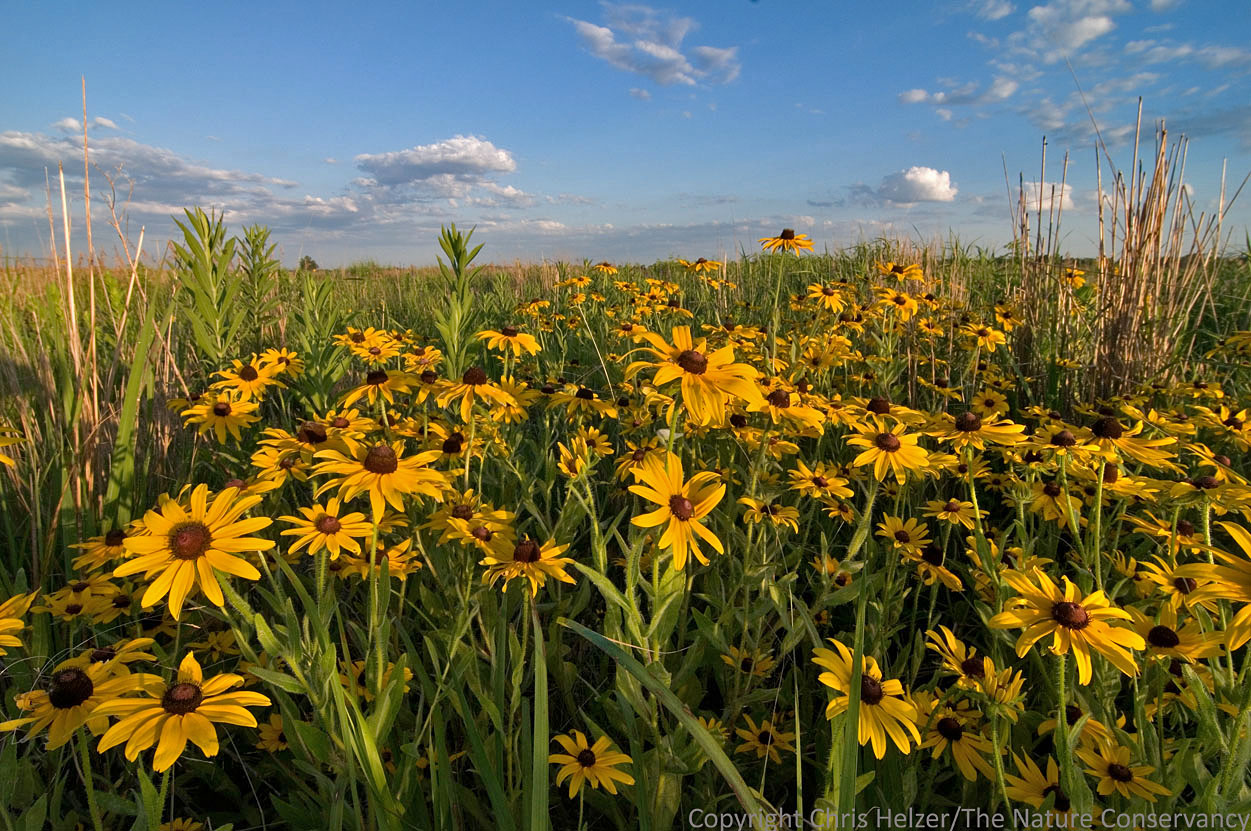
Black-eyed susan  is a showy example of an opportunistic plant species that thrives when surrounding vegetation is weakened.  Other species I look for include ragweeds, hoary vervain, annual sunflowers, ironweed, ragwort, annual thistles, and many others.

Black-eyed susan is a showy example of an opportunistic plant species that thrives when surrounding vegetation is weakened. Other  opportunists I look for include ragweeds, hoary vervain, annual sunflowers, ironweed, ragwort, annual thistles, and many others.

In sites where cattle are present, I spend time looking at what they’re eating and not eating, as well as which parts of the prairie are being grazed most and least.  In our patch-burn grazed prairies, we expect most grazing to take place in recently-burned areas, so I check to see if that’s happening.  Often, cattle target their favorite grass species first and then graze wildflowers only if they’ve already eaten the best parts of those grasses.  If I see something other than that pattern, it can tell me a lot about our stocking rate or other issues – not necessarily in a bad way.  There are also a few plant species that our cattle can’t seem to resist (some milkweeds, rosinweed, Canada milkvetch, and spiderworts) and we like to make sure those species get a release from grazing pressure every few years.  As a result, I pay special attention to whether or not – and how intensively – those plants are being grazed.  If I notice that they haven’t been allowed to grow and bloom for a few years, it’s time to change up our management and give them a rest.

The other group of plant species I look closely at is invasive species.  At our sites, invasive grasses such as smooth brome, Kentucky bluegrass, tall fescue, and others get special attention because of their ability to form monocultures, but there are plenty of others to watch as well.  I look not only at the current abundance and density of invasive plants, but also compare what I’m seeing to previous years to see how things are changing.  Finally, I pay attention to whether or not there are conditions that appear to be giving invaders an advantage.  For example, it would be important to know if cattle are grazing all the plants EXCEPT those invaders, allowing them to encroach upon weakened competition.

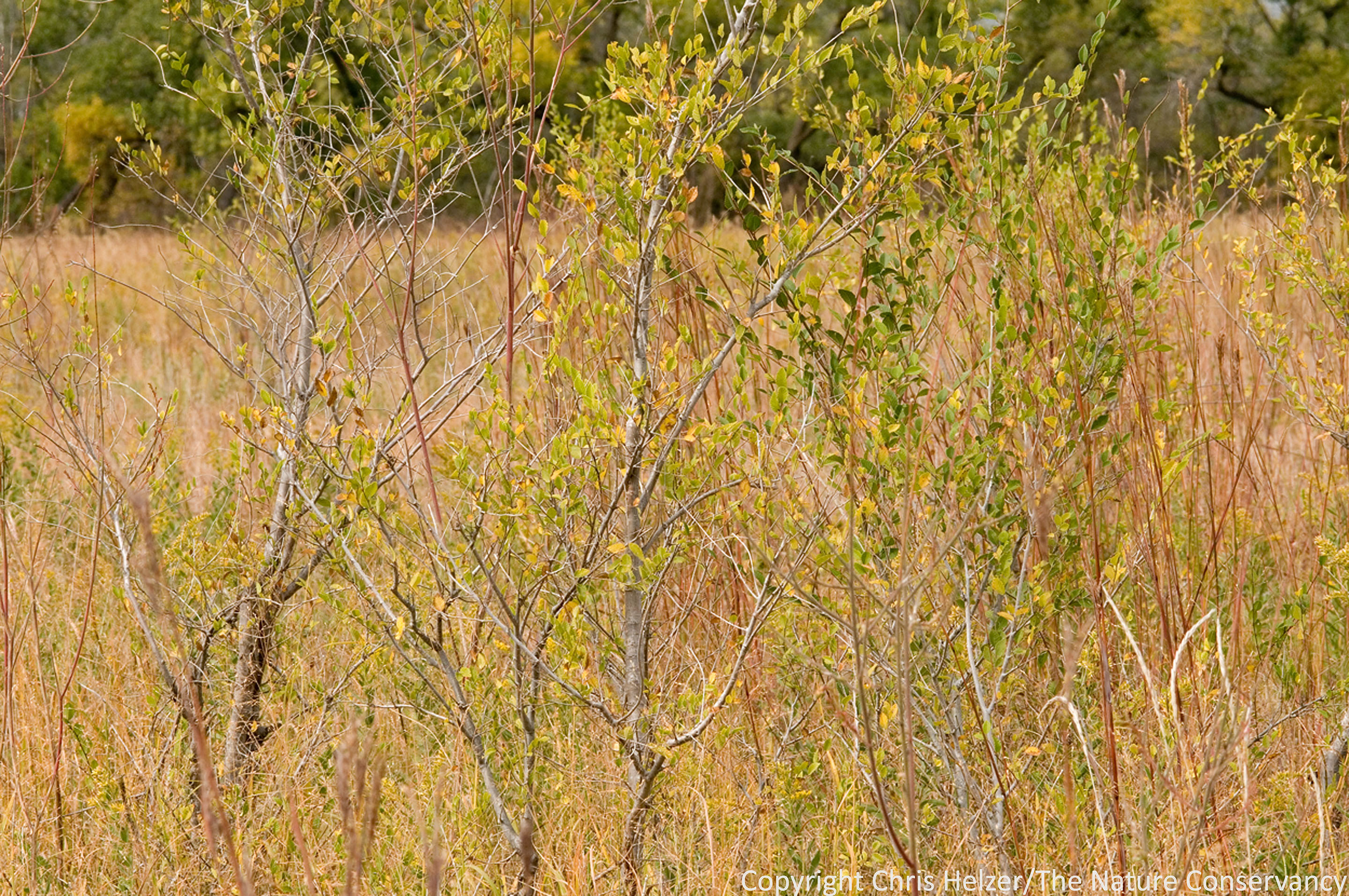
Siberian elm trees are a major pest in our prairies, and one we track closely and try to keep up with.

Siberian elm trees are a major pest in our prairies, and we have to be careful not to fall too far behind in our control efforts.

Field notes and photos are really helpful when trying to decide whether populations of invasive species are expanding or not.  They can also be helpful when comparing grazing impacts, responses from opportunistic plants, and other interesting phenomena.  I sometimes flip back to last year’s notes while I’m in the field to see if there’s anything I saw then that I should pay attention to.  Then, when I periodically enter my field notes into the computer, I can look at all the notes from other years and look for patterns.  I don’t take extensive field notes, but try to write enough to be useful.  (See here for more on field notes).

As I continue to learn more about the way various animal and invertebrate species see and utilize prairie habitat, I’ve gotten better at looking our prairies through the eyes of those species.  I wrote about wearing “bee goggles” a while ago, but I also try to step back and think about what life would be like in our prairies if I was a grasshopper, mouse, coyote, or other species.  Could I find food all year round?  Are there places to feed/hunt or hide/escape?  If the habitat I’m living in changed dramatically because of fire or grazing, would I be able to find and travel to other habitat nearby?  It’s a really interesting exercise, and helps me think about habitat needs in new ways.

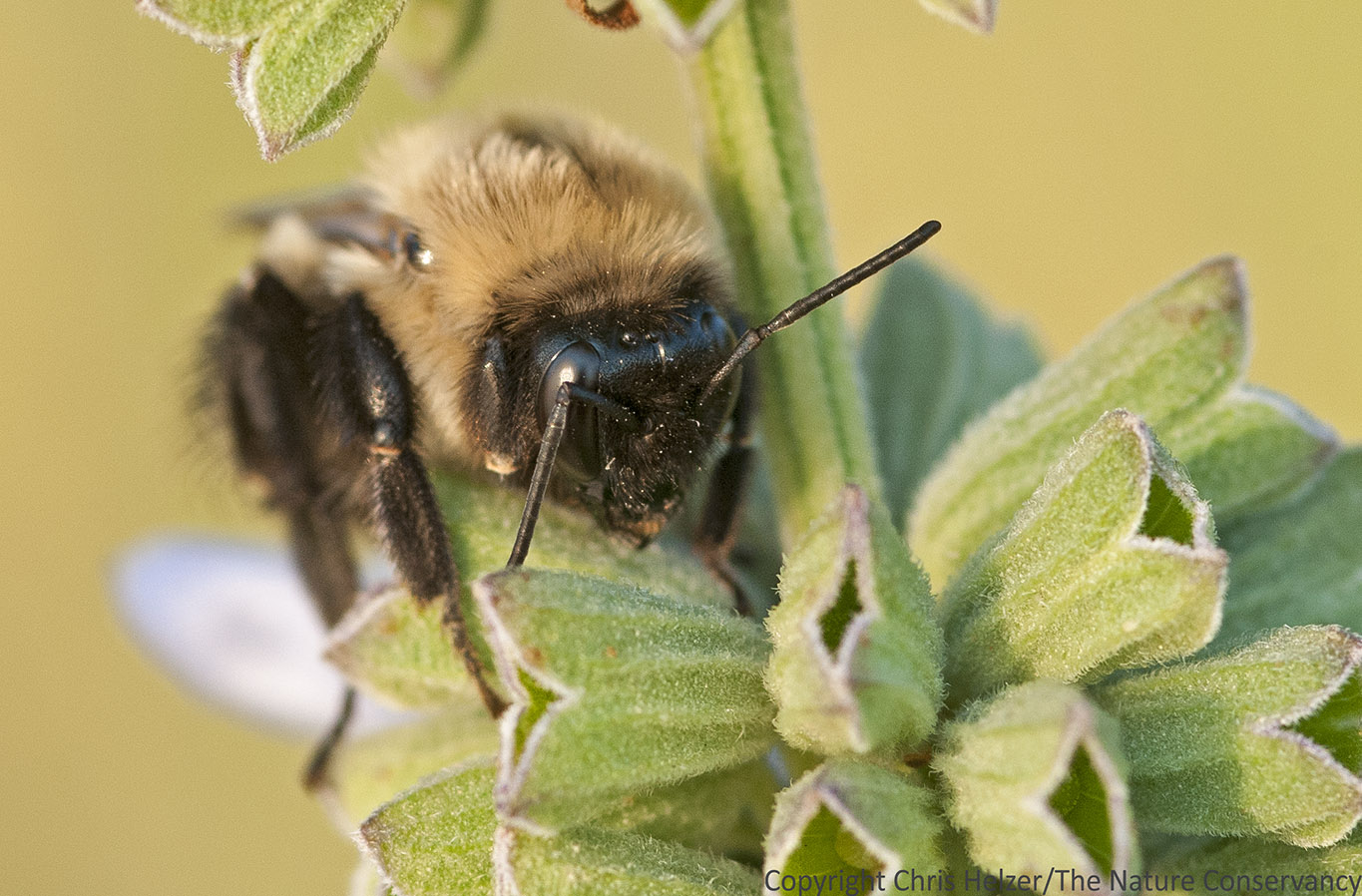
Looking at a prairie through (cute!) eyes of bees or other species is a great way to broaden your perspective.

Looking at a prairie through the eyes of bees or other species is a great way to broaden your perspective.

Finally, I try to look across the fences and note what is happening on neighboring lands.  In some cases, the prairie I’m walking in is the only real prairie habitat in the neighborhood, so it really needs to provide everything for every species living in it.  In other cases, there is more grassland habitat nearby, and I can think about how our prairie can help supplement and complement what’s available in those other sites.  For example, if all the neighbors graze pretty intensively, I might prioritize tall vegetation structure a little more than if that was the predominant habitat in the neighborhood.

So there you go – a quick look inside my head, for what that’s worth.  As I said at the beginning, what you look for should be tied to your objectives, but I also enjoy tagging along when other prairie managers walk their sites because I learn a lot from how they think.  I’d love to hear how similar or different my thought processes are from yours.