“Should I Stay or Should I Go?”

It’s good to be back in the prairies after spending last week in the mountains.  The mountains were beautiful and daytime temperatures were pleasantly cool, but I sure enjoyed the chance to catch up with the goings on in our prairies yesterday.  As if to welcome me home, the weather provided about an hour of bright overcast skies and light winds around lunchtime – perfect weather for a little close-up photography.

As I wandered, I found a crab spider perched atop an upright prairie coneflower (Ratibida columnifera) flower.  I’m a sucker for crab spiders, so I crept up and snapped a photograph of it.
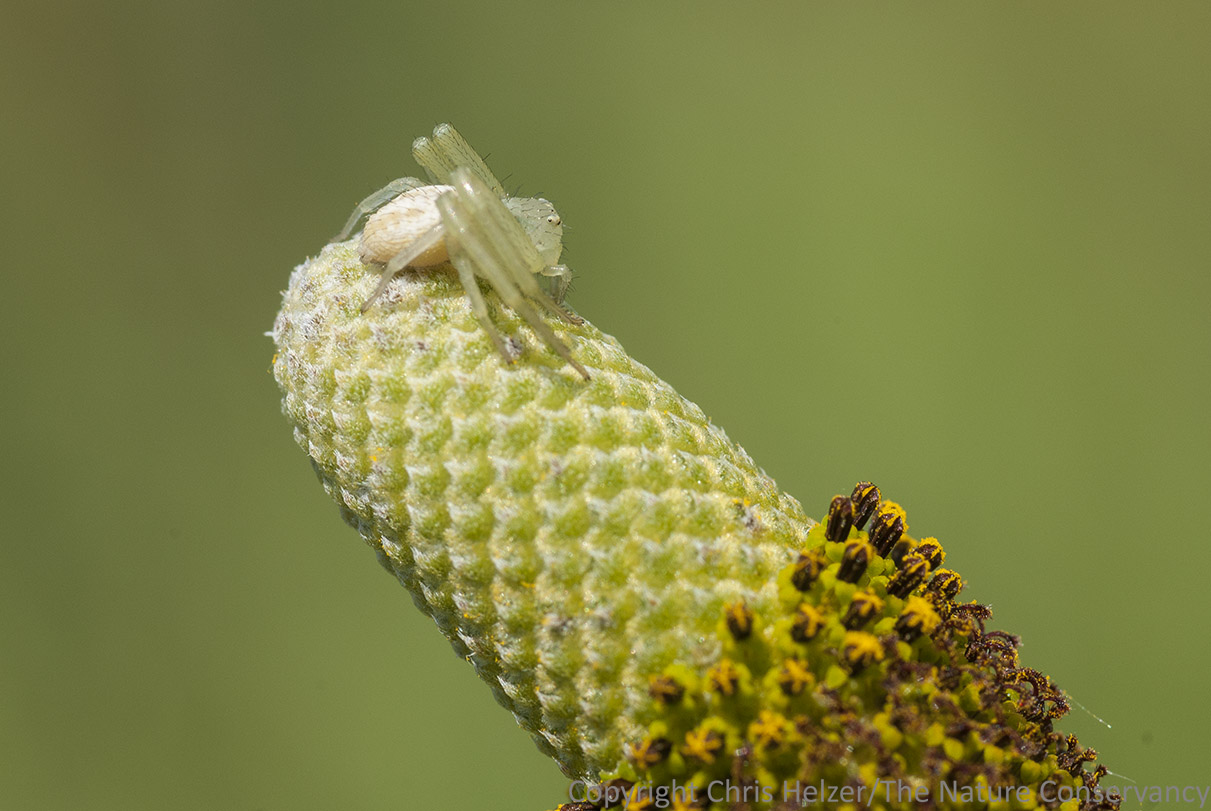
Crab spider on upright prairie coneflower.  The Nature Conservancy's Platte River Prairies, Nebraska.

Crab spider on upright prairie coneflower. The Nature Conservancy’s Platte River Prairies, Nebraska.

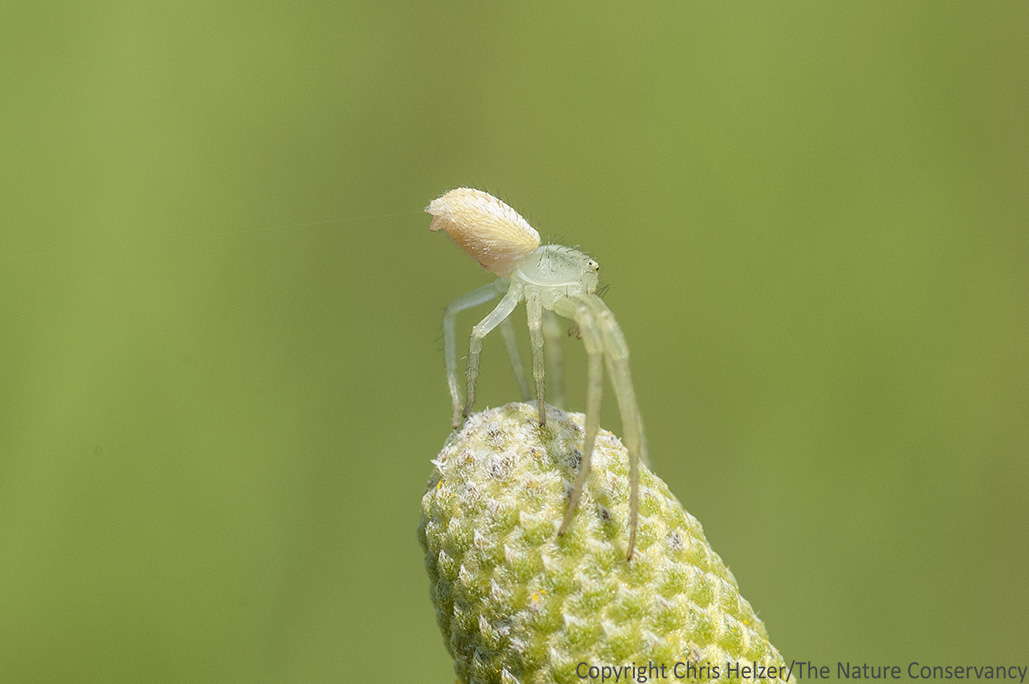
I was surprised the spider was sitting so high on the flower – it seemed awfully visible to predators, and poorly placed to capture pollinators coming to visit the blooming portion of the flower below.  Just as I was wondering what it was up to, the spider answered my question for me.  It popped itself up on its “tiptoes” and let loose a long silk trail.
ENPO140624_D055

If you look closely, you can see a long silk thread emerging from the abdomen of the spider.

The spider was attempting a technique commonly called “ballooning”, though “kiting” seems a more appropriate term.  Small spiders use ballooning to travel long distances by releasing long silk threads into the breeze and floating off to wherever the wind carries them  Often, the spider only goes a short distance, but it’s still a faster mode of transportation than walking on short little legs!  Sometimes, if the wind is right, a ballooning spider can go many miles.

In this case, the light winds were apparently insufficient to carry the spider off, and after it failed to launch, it detached its silk thread and sat back down (dejectedly?).  I imagined the spider’s disappointment at having steeled itself for a potentially long trip only to find that it wasn’t going anywhere after all.

Oh well...

Oh well…

As I walked off, I left the spider with good wishes that it would catch a better breeze in the near future, but also with a silent warning.  It’s great to go to new and different places, but sometimes travel just helps you appreciate how nice it is to be home.
Wetland Timelapse – Herons, Eagles, and Vultures

I downloaded timelapse images the other day from the restored stream/wetland at our Platte River Prairies.  Among the long series of photos, there were a couple interesting short stories I thought I’d share.

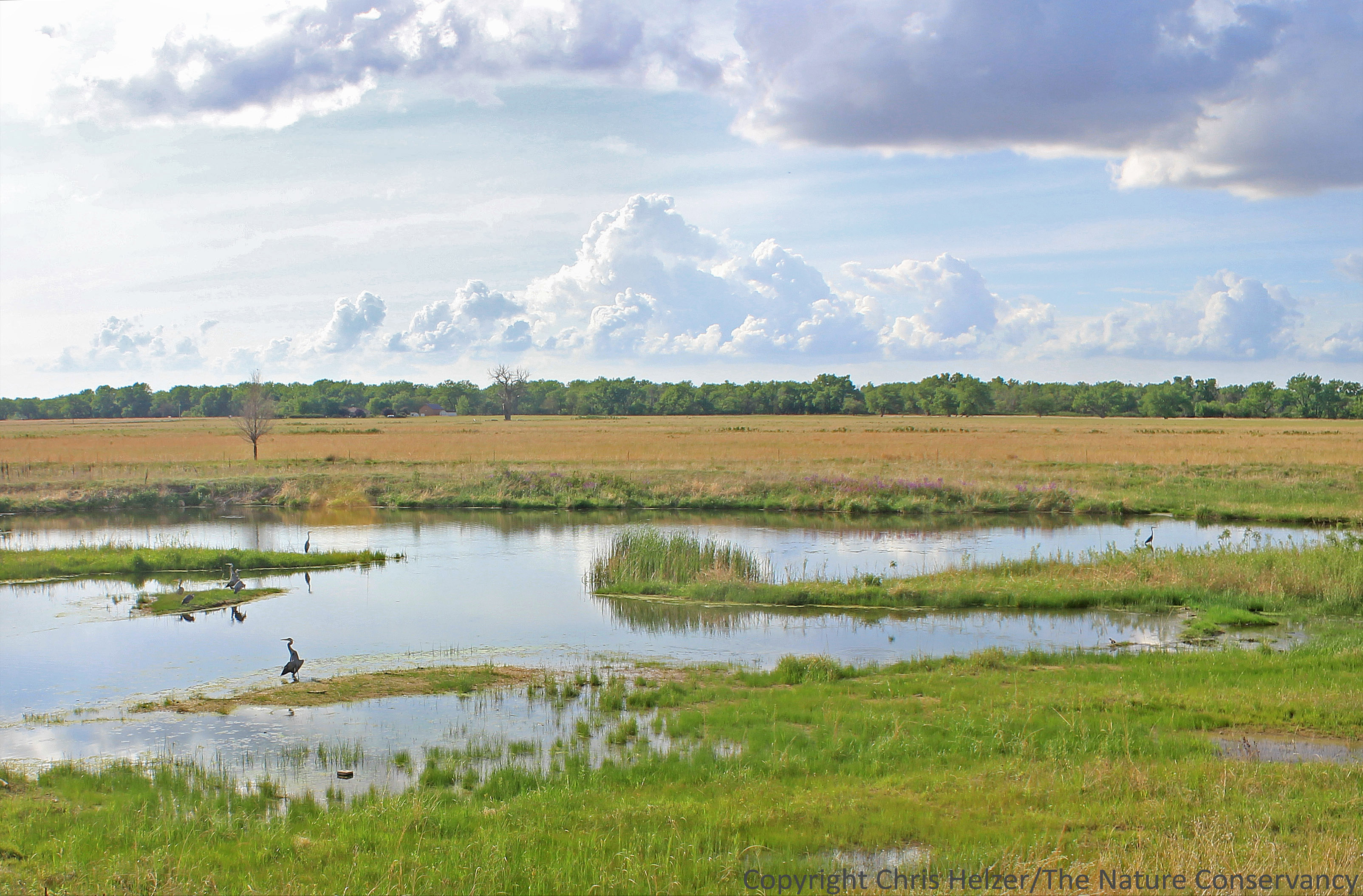
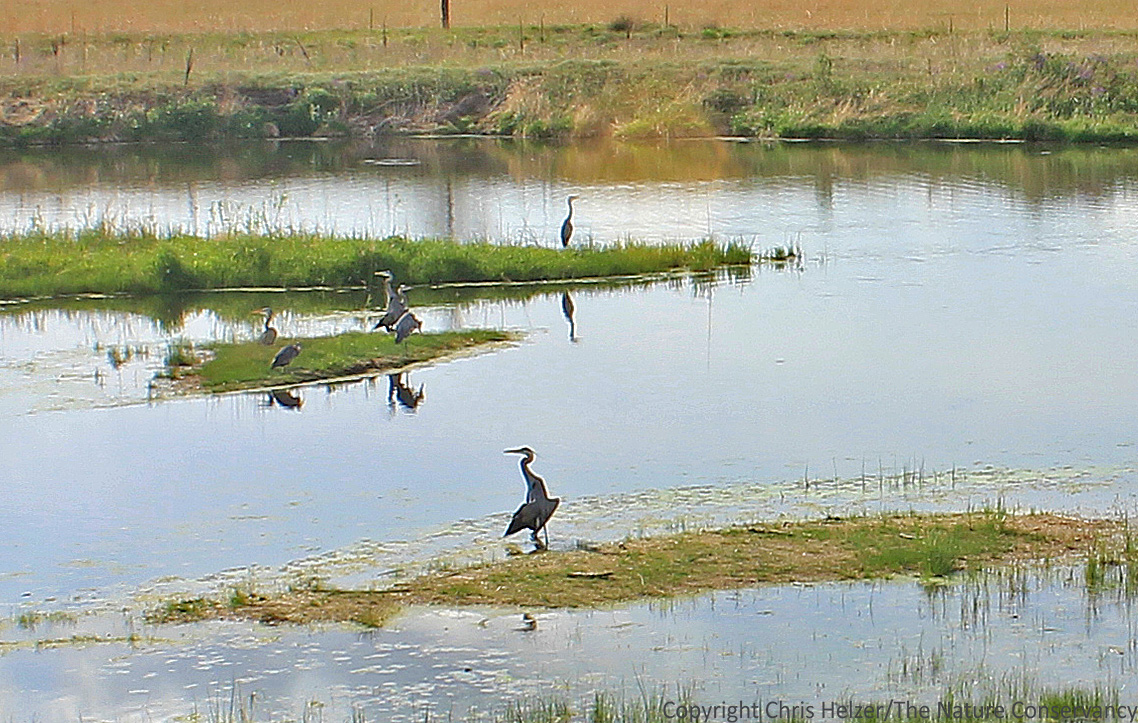
The first is something I’ve not seen before – a gang of great blue herons hanging out together.  I’ve seen nesting colonies of herons before, but when I see them out on wetlands, it’s almost always a single bird – rarely two, but they’re usually spaced well apart and studiously ignoring each other.  However, on May 25, a group of at least eight great blue herons spent a few hours feeding and lounging around together on our wetland.  They were there for the 3pm, 4pm, and 5pm photos but not before or after.  It’s certainly a relaxed-looking party – one of the birds was even laying down on its belly on the small island.  Have any of you seen anything like this before?

There are at least eight herons in this photo.  Maybe nine - I can't tell if the closest one is a single bird or two of them.

There are at least eight herons in this photo. Maybe nine – I can’t tell if the closest one is a single bird or two of them.

Here's a more-cropped version of the same photo.  What do you think?  One bird or two in the foreground?  And here you can see the bird laying down on the island too.

Here’s a more-cropped version of the same photo showing the main group of herons. What do you think? One bird or two in the foreground? …And here you can see the bird laying down on the island too.

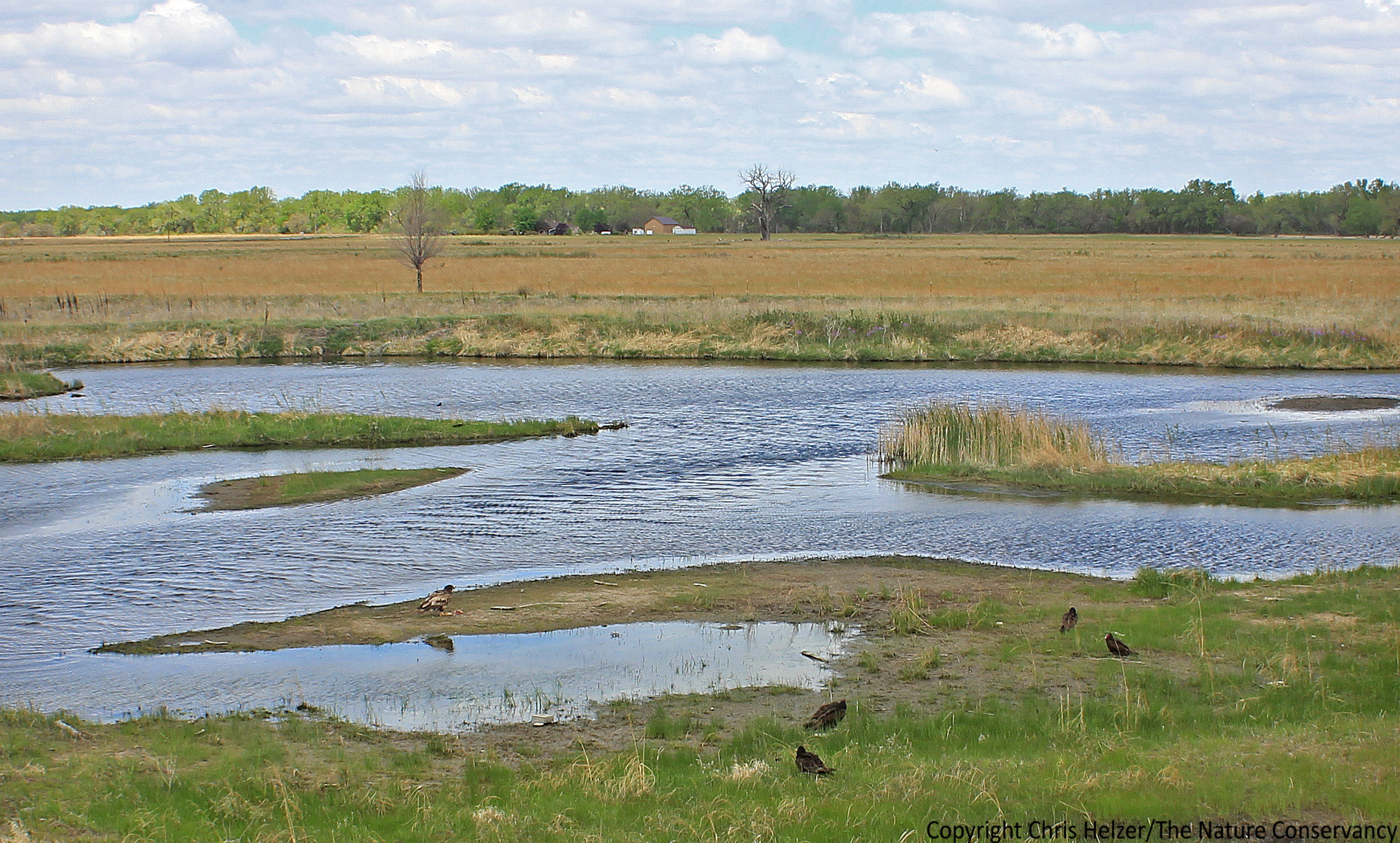
The second occurrence of note included an immature bald eagle feeding on something dead, surrounded by a group of turkey vultures.  I can’t tell what’s being eaten, and of course we don’t know what happened prior to or after the photo.  It’s possible the turkey vultures spotted the eagle feeding and figured they’d hang around for leftovers.  However, I would guess the vultures were there first and the eagle bullied its way into the meal.  Regardless, it was a fun surprise to find this image!

I've titled this image, "Hey buddy, you gonna eat ALL of that?"

I’ve titled this image, “Hey buddy, you gonna eat ALL of that?”

As always, thanks to Moonshell Media for working with us on this timelapse project.