Sometimes I’m amazed that there are any pollinators left in the world. Not only do they have to survive habitat loss, habitat fragmentation, herbicides/pesticides, introduced diseases, and competition from introduced pollinators like European honey bees, pollinators also have to deal with all the various predators that wait in ambush on flowers! Imagine making your way through a deadly obstacle course all day long, finally arriving home, opening the refrigerator to grab some dinner, and getting eaten by a troll hiding inside.
In December of last year, I wrote about crab spiders and their tactics for capturing visitors to flowers. The photo below is of an ambush bug that uses eerily similar tactics. You know, just to keep those bees on their toes.

Ambush bug (Phymata sp.) on stiff sunflower (Helianthus pauciflorus). Beatrice, Nebraska.
Ambush bugs are closely related to assassin bugs, but have thicker bodies and legs. They are well camouflaged and sit on flowers, waiting for something to get close enough to grab. Once they have prey in their mantis-like front pincer legs, they (like crab spiders and assassin bugs) inject the with paralyzing and liquefying saliva and then suck the insides right out of the poor visitor. I find it fascinating that two creatures as distantly related as crab spiders and ambush bugs have such similar hunting and feeding techniques. Assassin bugs and ambush bugs both use piercing mouthparts to inject their saliva and suck out the bug innards, while crab spiders have fangs. Otherwise, the story works about the same way. I doubt the prey have a preference one way or the other…
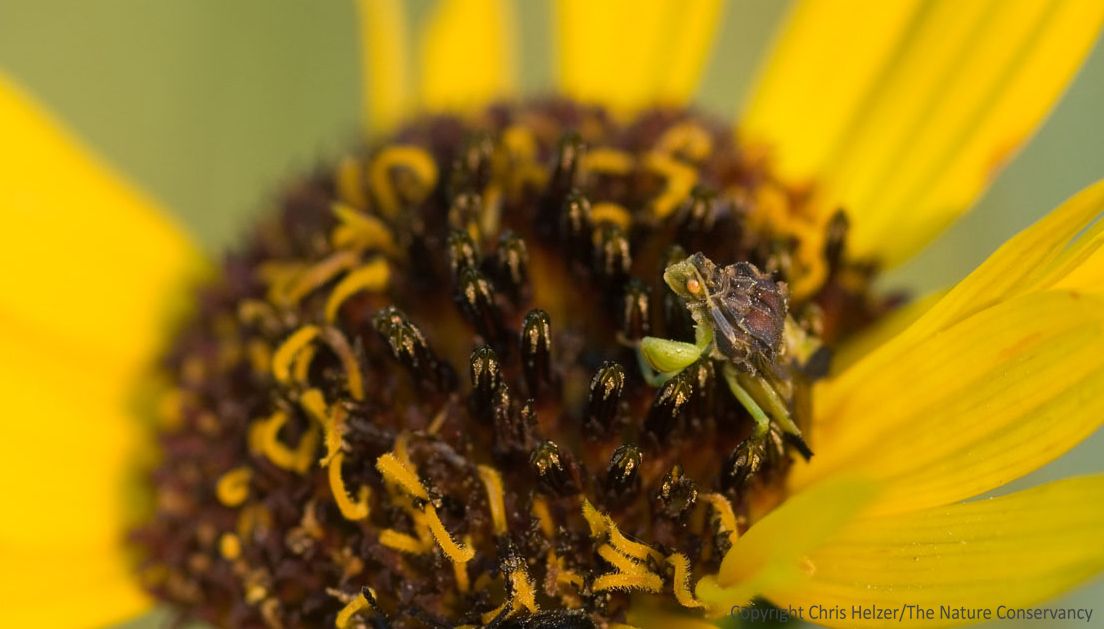
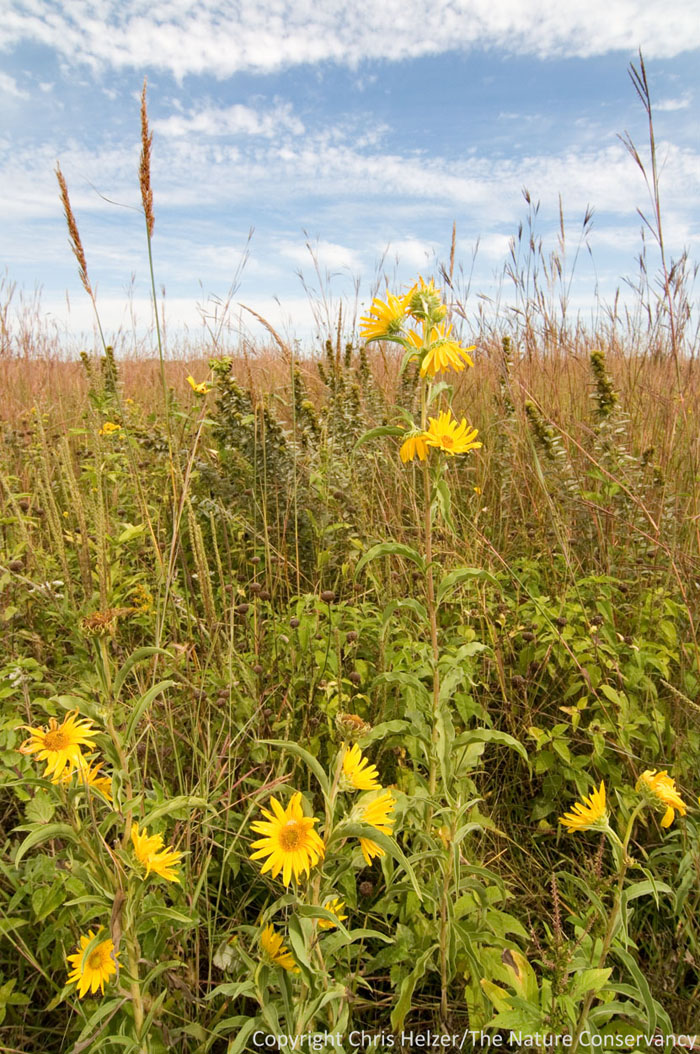
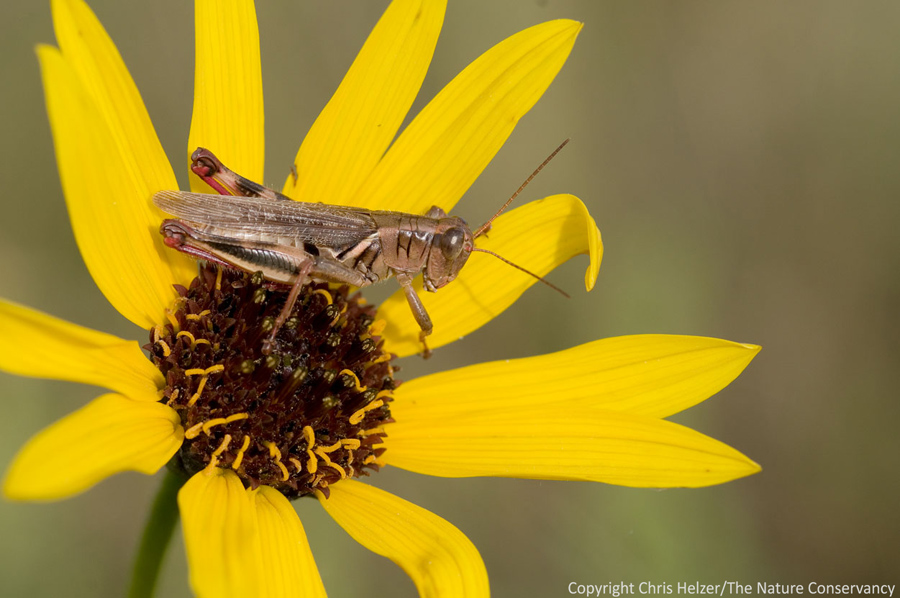
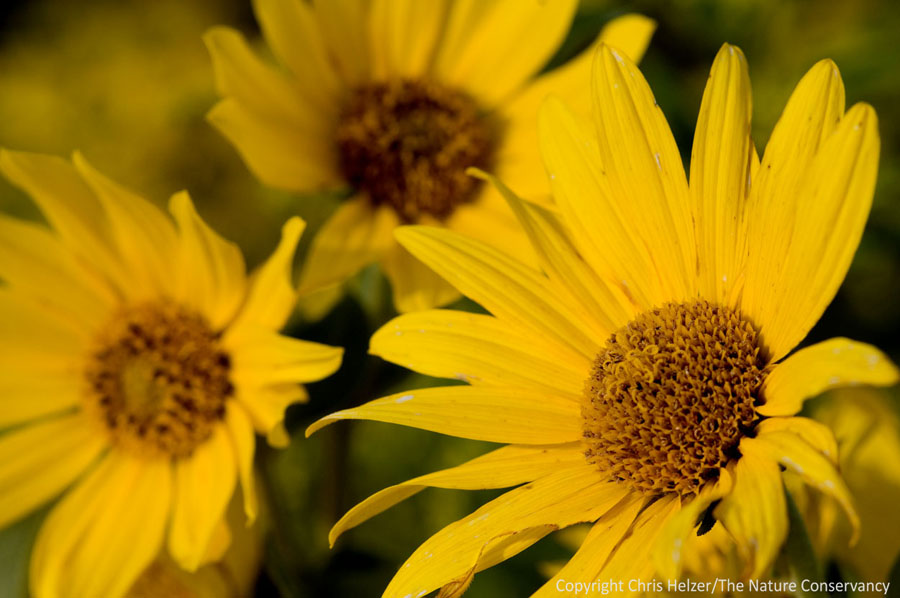
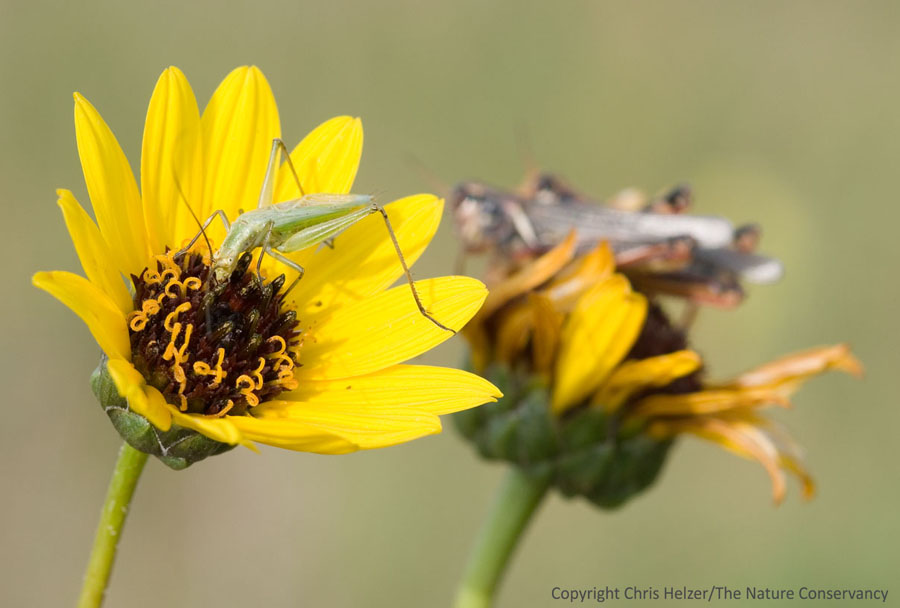
This particular ambush bug was sitting on a stiff sunflower in a prairie planting on the campus of Southeast Community College in Beatrice, Nebraska a couple weeks ago. It sat very still for the 5 minutes or so it took to get these photos. The challenge wasn’t to get the insect to stop moving – it was to wait for the tall flower to stop swaying in the breeze!
For more information on ambush and assassin bugs, you might be interested to read this article from the Missouri Conservationist.