No, I’m not saying they do. I’m merely conducting a thought exercise, and inviting you to come along for the ride. …No, really – some of my best friends are botanists! And I’m pretty sure they have a good sense of humor…
Why is it that we define prairies and prairie quality by their plant communities? Are we making a mistake by letting botanists drive the prairie conservation bus? Let’s review the current situation:
Today’s prairies are generally categorized as high or low quality based mainly on the composition of their plant community. More specifically, prairies achieve high quality status by containing an abundance of “conservative” plants. Conservative plants are essentially defined as plant species that are rare in most of today’s prairies, don’t do well in prairies that are heavily disturbed by grazing, and don’t colonize quickly into fallowed fields, etc. Another way to think about it is that conservative plants are those deemed to be “fragile”. Whether they really are or not is another subject for another time.
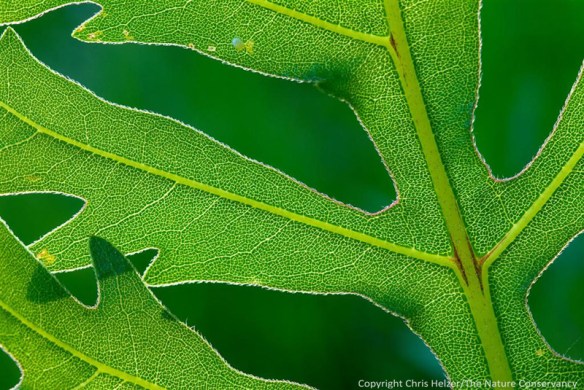
Compass plant is usually considered to be a conservative wildflower in prairies.
So, a prairie filled with lots of fragile plants is considered to be a high quality prairie. Conversely, a prairie filled with prairie plant species that are tough and scrappy is considered to be degraded. Come to think of it, we tend to think about human society in much the same way. Speaking stereotypically, high society consists of fragile people with clean fingernails and uncalloused hands who have to hire low-society people to cook, clean, garden, and take care of their fancy cars. Those low-society people work hard to feed themselves and their families, wear functional clothes (without designer labels), and often employ double negatives and words like “ain’t”. Success in life is supposed to be measured by our ability to move from low to high, right? I suppose it makes sense that we think of prairie conservation in the same way.
Now it’s certainly understandable that people who dedicate their lives to plants would be concerned about preserving those plant species that are the most difficult to preserve. Conservative plants are important because they’re rare. Most grasslands in today’s landscapes have to earn their keep, and are managed in ways that tend to favor species that are tough and scrappy, rather than those that are fragile. In those landscapes, conservative species find hiding places on steep hillsides, in wet or sandy soils, outside fences, and in small, oddly shaped land parcels that don’t fit into agricultural systems. The question of whether conservative plants were distributed in similar ways historically or were more widespread is a topic of much debate in prairie conservation circles. Regardless, botanists today tend to focus their conservation energy on prairies that contain lots of fragile plants because they don’t want to see them disappear.

Botanists from the Illinois Natural History Survey look at a tallgrass prairie in southeast Nebraska as part of a research project on insects in fragmented prairies. By including a photo of them in this blog post, I am in NO way representing their opinions on conservative plants, prairie quality, or anything else. It's just a nice photo of botanists.
And conserving prairies full of conservative plants makes sense for the larger conservation effort anyway, right? Because prairies with lots of rare plants also have lots of rare insects, rare bird species, etc. Right? Well – maybe not. In fact, while there are a few instances in which that’s true (some rare butterflies, for example) there are many more cases where it’s not. For instance, I’ve spoken with several entomologists working in eastern tallgrass prairies who have found that large and relatively “degraded” prairies tend to have much higher numbers of rare insect species than small “high quality” prairies. In addition, two groups of Illinois entomologists have each developed their own index of prairie quality based on “conservative” insect species. You can learn more about those indices here and here. Both of them have found that there is often little correlation between the number of conservative insect species and the number of conservative plant species in a prairie. In other words, even if we saved all of the remaining prairies with “high quality” plant communities, we could still lose a lot of rare insect species.
A specific insect example, and a notable exception to the aforementioned connection between rare butterflies and high quality prairies, is the regal fritillary butterfly. States with highly fragmented grasslands, and thus a heavy emphasis on conservation of small prairies with lots of conservative plants, have very few regal fritillaries left. In contrast, regals are among the most common butterfly species found in places like eastern Nebraska and Kansas – places full of prairies scorned by many eastern botanists as having been long-ago “ruined” by cattle grazing because they don’t have abundant conservative plant species. Gorgone’s checkerspot is another butterfly with a relatively similar pattern of occurrence.

Gorgone's checkerspot butterfly in restored prairie in east-central Nebraska. This is a fairly common species in Nebraska, but is very rare in many eastern tallgrass prairies.
Grassland birds are rightly of great conservation concern to many people. In fact, I think it’s a requirement that ornithologists working with grassland birds have to start every paper or presentation with the phrase, “Grassland birds are the fastest declining group of birds in North America”. And it’s true. So where do we find the strongest populations of grassland birds? In landscapes full of large prairies – which typically have relatively low abundances of fragile plant species. With a few exceptions, high quality prairies – using the botanists’ definition – tend to be small. Again, they’re found in those hidden corners that have escaped having to work for a living. However, grassland birds are notoriously unsuccessful when they try to nest in small prairies, and most don’t even try because the predation risk is too high, and the prairies are often surrounded by trees and/or relatively intense human activity. Give an upland sandpiper or prairie chicken a big landscape full of nothing but cows and grass and they’re in high heaven.

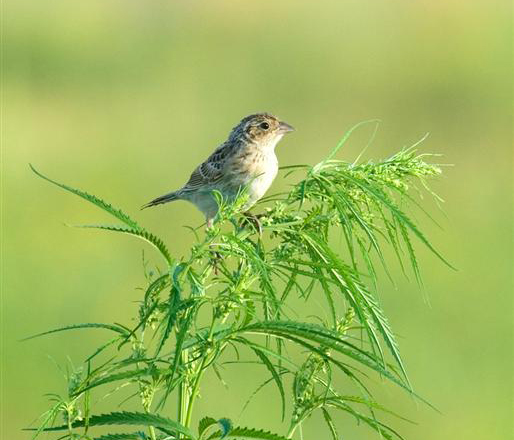
Grasshopper sparrows are a species of concern, but they do very well on "degraded" grasslands with both historic and current intensive grazing. This juvenile bird is sitting on a hemp plant in a grazed prairie.
What does this all mean? I’m not sure. I’m certainly not saying that prairies full of conservative plants aren’t of great value. Clearly, they contain plant species that are rare elsewhere – and some rare butterflies and other species as well. However, it’s also clear that those prairies can’t be the sole focus of conservation if we’re going to preserve the entirety of prairie species diversity. I also wonder whether at least some of those prairies (especially those larger than 40-50 acres or so) could play a larger role in prairie conservation if they were managed a little differently. For example, if some of those prairies were managed for more heterogeneous vegetation structure they might become more valuable to many insect and wildlife species. If we could improve habitat for rare wildlife and insect species while decreasing the abundance (but maintaining viable populations) of conservative plants, would that be a reasonable trade-off?
It seems to me that some of those larger prairies could accommodate some experimentation with summer fire, fire-driven grazing, and/or other less traditional management strategies by testing those strategies on a portion of each prairie. If the results of those insects showed benefits to wildlife/insects without catastrophic impacts on conservative plant populations, it might be beneficial to periodically apply those kinds of treatments to all parts of the prairie over time. Again, that management might reduce the overall abundance of conservative plant species somewhat – it would certainly periodically change the visual dominance of them. Either way, the added benefits to a wider range of prairie species might be worth the trade-off. Or, they might not. It seems important to find out, however, since we have a lot of prairie species (other than plants) that are in need of good habitat right now.
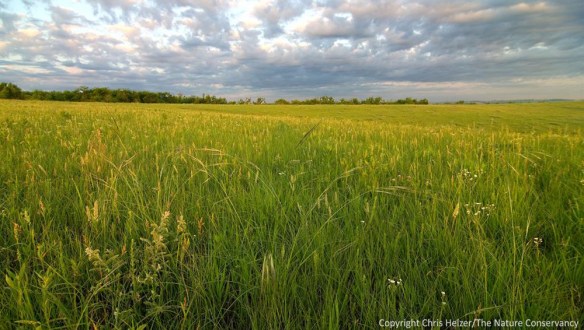
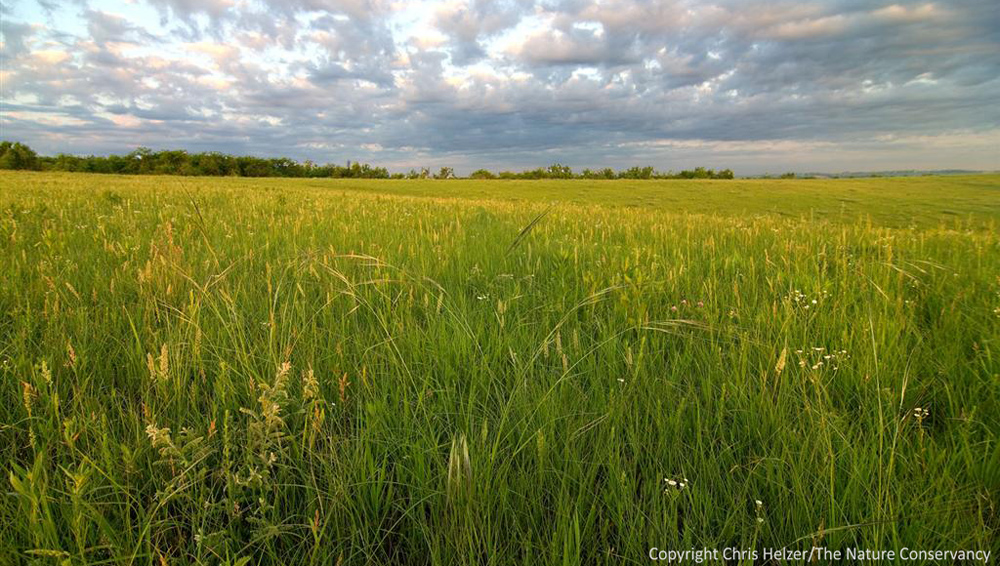
Tallgrass prairie in southeast Nebraska. This hayed prairie has leadplant (a conservative plant species) scattered throughout, but not dense populations of it. How abundant do plant species like leadplant need to be for a prairie to be considered "high quality"?
I live in work primarily in east-central Nebraska, so the prairies I’m most familiar with are those that are dismissed by some botanists as already having been ruined by grazing. It’s true that many of them have been severely degraded, not just by chronic overgrazing, but also by broadcast herbicide use. However while Nebraska prairies are rarely dominated by conservative plant species, those species aren’t absent either. Moreover, many of our restored (reconstructed) prairies have strong populations of many conservative species. Watching those species respond to disturbances like summer fire and periodic grazing has been instructive. Species like Canada milkvetch, compass plant, and leadplant, for example, that are often considered to be easily eliminated by cattle grazing, are thriving under a mixture of fire and grazing on our sites. While there are still lots of questions about how/whether to use grazing on high quality prairies, we’ve certainly busted the myth that cattle automatically pick out conservative forb species for grazing (see my report on our use of lightly-stocked patch-burn grazing for details). My hope is that the work we’re doing here can serve as a catalyst for similar experimental work in more “high quality” tallgrass prairies to the east of us. Will those prairies benefit from shaking up their management? I’m not sure. Will they be ruined by the attempt? I have a hard time believing that, but until we do some small scale experimentation we’ll never know.

These cattle are grazing selectively in the burned patch of a lightly-stocked patch-burn grazing system. (At the time of this July photo, the cattle had been in the prairie since April) Within the burned patch, some conservative forbs will be grazed - though most won't. Those grazed forbs may or may not bloom the year they're grazed, but typically do bloom the following year. Are short-term impacts on those species worth the wildlife and insect habitat benefits gained from the heterogeneous habitat structure?
Regardless of answers to the above questions, there is one thing I feel very strongly about: Good prairie managers consider more than just their favorite plant species as they think about how to manage their prairies. Yes, plant diversity is very important -a growing number of ecological functions and non-plant species needs are being tied to plant diversity as we continue to learn more about prairies. But the importance of dense populations of conservative plants versus less abundant – but still viable – numbers of those species is less clear. More importantly, we know that many species of insects (and probably other taxa) are doing better in prairies with low numbers of conservative plants. We need to learn more about whether that’s tied to the way those prairies are managed, the landscape surrounding them, or the plant composition of those sites – or (most likely) a combination of those factors.
Are botanists ruining our prairies? I don’t really think that’s the case, though it’s fun to poke them a little. Most of the botanists I know are relatively well-rounded naturalists that care deeply about the conservation of prairies and other natural areas. I do think, however, that all of us can become too attached to certain species or groups of species, to the point where it hamstrings our creativity (see my earlier post on “Calendar Prairies”). Plants are often the easiest group to become attached to for prairie managers because they’re easy to find, relatively easy to identify (especially the big showy ones), and are comforting to see every time they bloom. Birds and butterflies are also very popular, and easy to become attached to, but many small prairies don’t have many bird species, and butterflies are less familiar to most people than are plants. On the other hand, beetles, leaf hoppers, flies, micro moths, ants, and the other species that actually make up the vast majority of prairies’ biological diversity are really easy for most of us to overlook. Yet they’re really important, both for their own sake and because they play critical roles in keeping the larger prairie machine running – which supports those pretty flowers and birds.
We can all benefit from stepping outside our own comfort zone in terms of how we evaluate prairie conservation success. As I said in a recent post, looking at my prairies through the eyes of pollinators has changed my perspective considerably over the last couple of years. I’m working hard to learn more about other species like voles, beetles, and snakes so I can better think about their needs as well. If nothing else, it’s fun. But I think it’s quite a bit more important than that.
Even for botanists.