Complications of Comparing Coefficients of Conservatism

Apologies for the nerdy subject matter in this post. I’m guessing it might be interesting to about 3% of you. For the rest of you, I tried to at least include a few pretty plant photos. I’ll try to write about something more universally interesting next time.

This is a post about the disparate ways coefficients of conservatism (C values) are assigned to plants in different places across the Central U.S. It’s not really a criticism of those variations, but more of a rumination about what those variations might tell us and a cautionary note about how to interpret floristic quality.

Lead plant and grazing cattle at the Niobrara Valley Preserve, Nebraska. This pasture is grazed every year, though at different times of the season, and receives periodic prescribed fire.

If you’re not familiar with C values, you can read more about them and floristic quality assessment (FQA) in this reprint of a 1997 publication that proposed FQA as a useful tool in Illinois. The 1997 publication by John Taft, Gerould Wilhelm, Doug Ladd, and Linda Masters built on from work by Floyd Swink and Gerould Wilhelm to build a floristic quality index. Taft et al. proposed FQA as a way to help assess “floristic integrity” or “floristic quality” in natural areas and to evaluate the effectiveness of stewardship work.

Floristic Quality Assessment has been much used and much criticized over the years. I am both a user and a critic. I appreciate it as a way to add some nuance/context to pure assessments of plant species richness (richness = the # of species present) and have applied it to some long-term monitoring efforts. In my monitoring data, though, I calculate floristic quality within a number of square meter quadrats and average those values across a site. As a result, I can look at change over time in both plant species richness and mean floristic quality (at the m2 scale) as two of many ways to evaluate a prairie and our stewardship efforts. (In case you’re wondering, the trends of the two metrics are nearly identical.)

One of my biggest concerns with FQA is that C values are assigned by botanists and there’s a lot of (necessary) subjectiveness in that process. That’s far from a unique take. However, I think the way plants are categorized highlight interesting regional/cultural differences about how we interpret “high-quality natural areas”, the effects of ecological disturbances, and how we define ecological degradation – and that’s actually what this post is about.

Dotted gayfeather has a c value of 5 in Kansas and Nebraska but is a 10 in Missouri and an 8 in Iowa.

If you look at the differences in the C values assigned to plant species in different states you can see what I mean. The figure below shows C values for nine plants and how broad the range of C values is between states (North and South Dakota have a combined list). These values are all publicly accessible, by the way, at universalfqa.org.

C values assigned by states (DAK = both South and North Dakota together) and the range of variation (right side) for each. Source: universalfqa.org

I’ll dive into those differences shortly. First, let’s look at the way C values are supposed to be assigned, based on the criteria in the Taft et al. publication linked above:

C value 0-1: Taxa adapted to severe disturbances, particularly anthropogenic disturbances, occurring so frequently that often only brief periods are available for growth and reproduction.

C value 2-3: Associated with somewhat more stable, though degraded, environments.

C values 4-6: These include many dominant or matrix species for several habitats; they have a high consistency of occurrence within given community types.

C values 7-8: Taxa we associate mostly with natural areas, but that can be found persisting where the habitat has been degraded somewhat.

C values 9-10: Restricted to high-quality natural areas.

Ok, now let’s consider the varying c values across states for the species listed above. Black-eyed Susan and sand dropseed are categorized by some states as, essentially, weeds that can grow anywhere there’s dirt (adapted to frequent severe disturbances). In others, they’re seen as “dominant or matrix species” and almost qualify as taxa associated “mostly with natural areas”. Is that because those two plants act differently in some states than others? Maybe. Or it could be that botanists are seeing them through very different lenses.

Black-eyed Susans in Nebraska seem to ebb and flow in abundance in response to surrounding plant competition.

Silver-leaf scurfpea and prairie violet are both easy to find at my family prairie. Most of that prairie was farmed until the early 1960s when it was planted back to (just) grasses. There are little patches of unplowed prairie scattered throughout, which lay unburned and surrounded by rowcrops for many years. After the farmed portions were planted to grass, the entire site was annually grazed, starting about 1964. That grazing wasn’t particularly conservation-focused until the last 20 years or so when I started to take over the management (which now has shifted to the open gate rotational grazing I’ve written about before).

Despite that, silver-leaf scurfpea and prairie violet are thriving at our family prairie (both are far more abundant than black-eyed Susan, interestingly). They did well in those unplowed, but grazed areas and have been moving into the adjacent grass plantings (scurfpea moved fast, violets are slower). Given that example (and I’ve seen both species in similar situations elsewhere in Nebraska) I’d argue they should both be given C values of 2 or 3 based on the above criteria. Nebraska, though, has them both at 6, which I guess I can live with, but Missouri gave the scurfpea a 9 and the violet a 10, meaning they are species found only in high quality natural areas.

Silver-leaf scurfpea seems very tolerant to relatively intense cattle grazing in Nebraska.

I want to be clear that I’m not saying the botanists that assigned these C values were dumb, or even wrong. Instead, I’m hoping to provoke some thought and discussion about this topic and point out that C values appear to be assigned very differently by different groups of botanists. That should give us great pause when trying to compare scores between states, including scores like mean C (average C value of the plants at a site) or FQA. In addition, even within a state, I think we should be looking closely and thinking carefully about how to interpret and use those scores.

Let’s see a couple more demonstrations of how differently C values are assigned between states. The graph below shows the percent of native plant species that are assigned a c value of 10 by different states across the Great Plains and Midwest.

Five states have assigned c values of 10 to 8% or less of their native plant species. Six states went the other way.

There seem to be two very different approaches – states that have given 1/5 to 1/4 of those native species a 10 and states that restrict that top value to 8% or less of those species. Why the stark difference in approach? It’s not really split between the Midwest and Great Plains, but I’m guessing it’s tied to local culture among botanists and conservationists in general.

As a final comparison, I graphed out the distribution of assigned C values across native plant species so we can compare two states – Indiana and Nebraska. Nebraska has a pretty regular bell curve to its distribution. Indiana does too, if you ignore the 24% of native species (!) with a C value of 10. It appears Nebraska considers a lot of their plants to be “matrix species” and Indiana has a lot of species they consider to be strongly tied to high quality natural areas.

Indiana and Nebraska look very different in terms of how C Values were assigned across native species. Source: universalfaq.org

I’m curious to hear what others think about this, but my suspicion is that botanists can slip into assigning values based on how easy it is to find certain plant species in the landscapes they know best. For example, soapweed/yucca is very common across much of Nebraska and Kansas, including in a lot of “degraded” prairies that have been chronically overgrazed. Cows don’t particularly like to eat it except during the winter or after a burn. So in Nebraska, it’s certainly not restricted to “high quality natural areas”. It is a species that can be difficult to eradicate – just ask some ranchers who have tried to do that.

Yucca (soapweed) in the Loess Hills of Iowa.

In Iowa and Missouri, the same yucca species is assigned a C value of 10. Is that because the kind of soil/topography conditions that favor yucca are really uncommon or because it has been extirpated from lots of sites because of poor management or other disturbances? In other words, is it sensitive to disturbances and missing from “degraded” sites? Or is it just rare because there aren’t many places with the topography and soils it needs? (These are earnest questions, by the way – I don’t know the answers.)

More to the point, the assignment of C values is based on some very loaded terminology. In particular, the words “anthropogenic disturbances”, “degraded” and “high quality” are prominent. In the paper by Taft and colleagues, there’s not much definition of either disturbance or degradation. It seems to be a “you know it when you see it” approach. That’s fine for people who see things the same way as the authors, but might be part of the reason we see such variation in c value assignment across different geographies.

Is grazing an automatic cause of degradation? By both cattle and bison? Are plants that thrive in frequently-grazed sites less conservative than those that thrive in ungrazed sites?

Also, of course, applying “anthropogenic disturbance” as a negative metric is super problematic – especially in Midwest and eastern Great Plains grasslands that originated and persist primarily because of people and their stewardship. In other words, “anthropogenic disturbance” is an integral part of those prairies, not an automatic cause of degradation. How do you think most of those fires happened prior to European colonization? (Spoiler: it wasn’t lightning.)

I could write a lot more about the conflicting and challenging criteria used to assign c values and the ways in which floristic quality can be used well and poorly, but most of that has already been covered very well by Greg Spyreas in an excellent overview. Instead, I’ll just say this: I worry that C values have sometimes been assigned to plants based, at least partly, on how excited a botanist would be to find them. We should keep that in mind as we interpret floristic quality scores.

Obviously, the way people feel about this topic and about the “quality” of habitats or species is related to how they view conservation success. Personally, I focus most on ecological resilience and how to grow and sustain that. Resilience is built on habitat size and species diversity. I’ve spent much of my career honing and popularizing restoration strategies that enlarge and reconnect habitat patches. I’ve also focused heavily on fire, grazing, and other stewardship practices that create habitat heterogeneity, and thus species diversity (of plants, animals, and other taxa).

While related, my focus is different from someone whose top priority is preventing rare species from going extinct. I don’t spend a lot of my time worrying about how to save any particular species. That’s not because I don’t care about them, but rather because I’m focused on the broader system that supports the long-term viability of all species.

Restored (replanted) prairie in Iowa, a state that has lost the vast majority of what many people would call “high quality prairie”, making it difficult to sustain populations of many prairie species without significant restoration efforts.

My particular attention toward resilience likely comes from the fact that I work mostly in Nebraska, where we still have a lot of prairie (about half of the state is in some kind of grassland cover). We have rare and at-risk species, but we also have a lot of prairie habitat to work with, especially compared to places like Illinois, for example, or some other states in the Midwest. That gives us a different perspective from each other, which understandably leads to different objectives and strategies.

And that brings us back to C values and how they’re assigned, used, and interpreted.

There are lots of people doing terrific conservation work, and among us, we represent a broad variety of perspectives and biases. Because of that, we vary in the way we view and measure conservation success. We also vary in the way we assign value to species and habitats. None of that is bad. It does, however, mean we shouldn’t work in silos.

I’ve learned a tremendous amount from site visits and/or discussions with friends and colleagues in all the states I’ve discussed here. Their perspectives have influenced mine, and I hope the reverse has been true as well. I think that assigning conservatism values to plant species can be a helpful way to interpret what we see in our respective prairies. Let’s just be careful not to rely on any single metric too much, especially metrics that are heavily influenced by cultural bias.

What Is High-Quality Prairie Anyway?

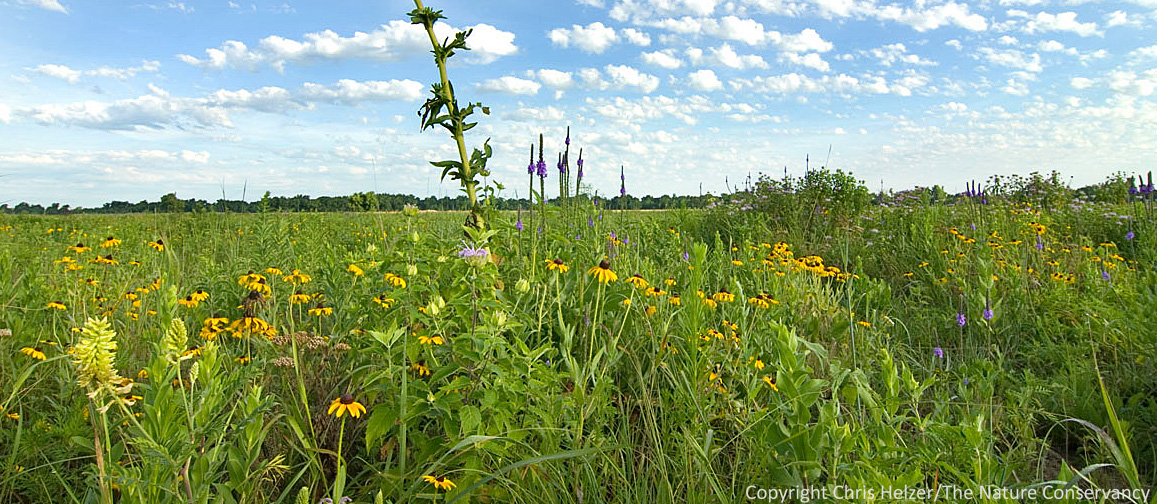
Does this look like a high-quality prairie?
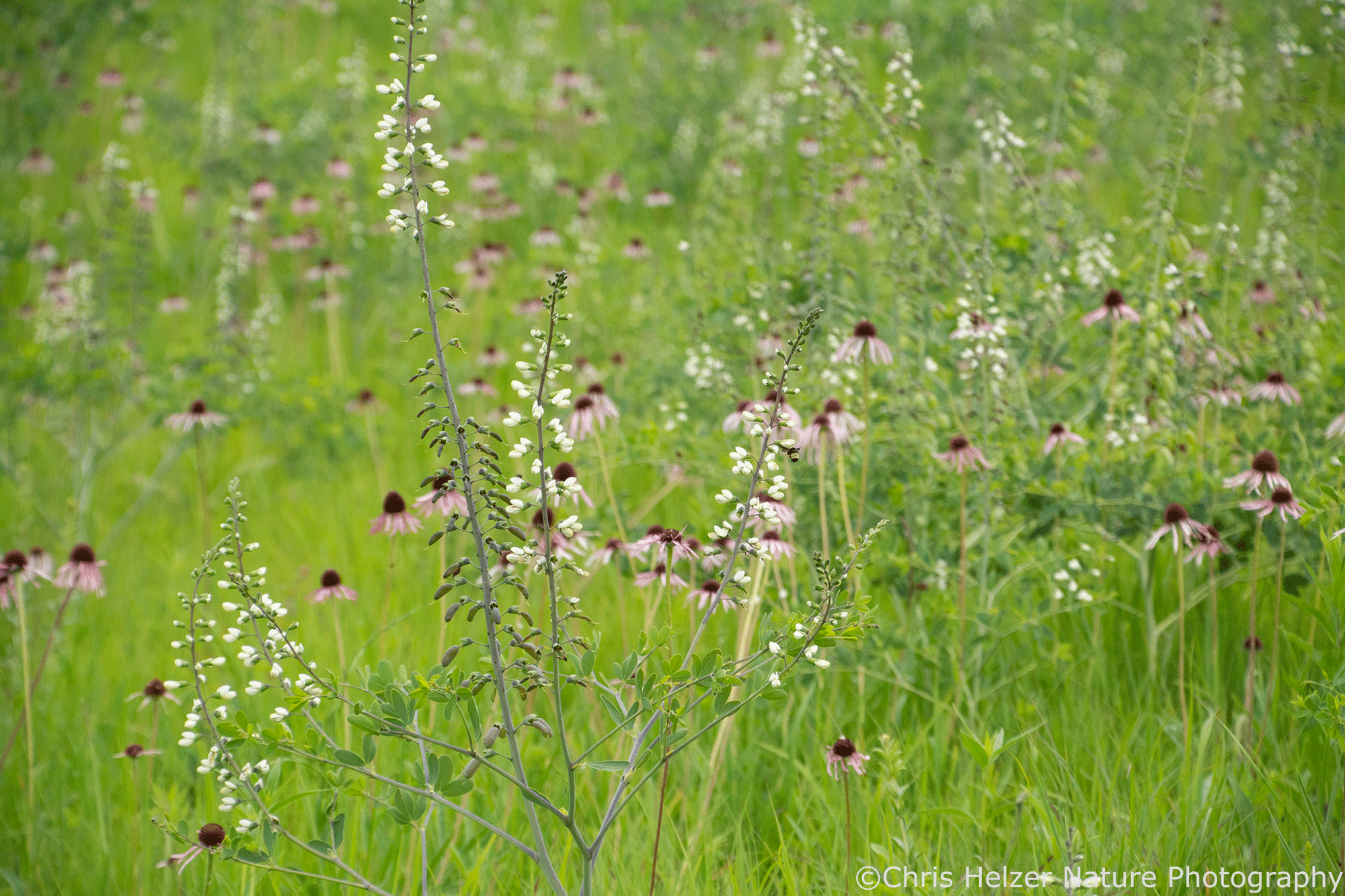
What about this one?
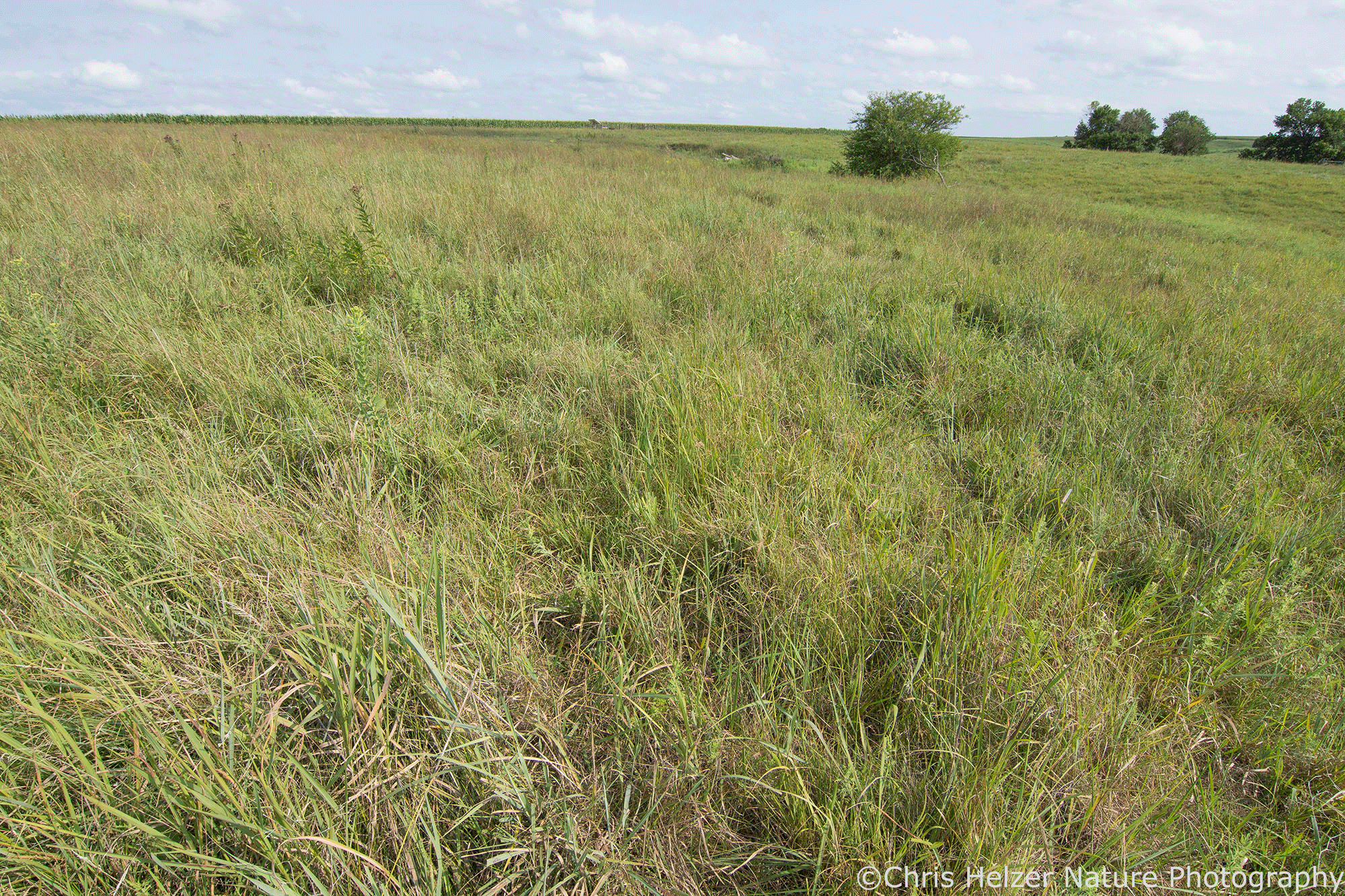
What if I told you the first one was 2 acres in size and the second was part of a 20,000 acre grassland block? 

Would it affect your opinion if you knew the first site was isolated from any other prairie habitat by miles of cropland and was directly adjacent to a busy highway?  What if I told you the second prairie hosts three different prairie dog towns and a herd of bison?

(None of this is true, by the way.  These are just hypothetical statements meant to be thought-provoking.)

The term “high-quality prairie” is often used in conservation circles, but people have very different definitions for it.  That’s not necessarily a bad thing.  In fact, it’s fascinating to see how the quality of a prairie is defined by people in different parts of North America, let alone in other parts of the world.  The cultural context is incredibly important to the way prairies are assessed and appreciated.

Here’s another example.

Does this look like a high-quality prairie?  Would it change your opinion if you knew it was planted on former row crop land?
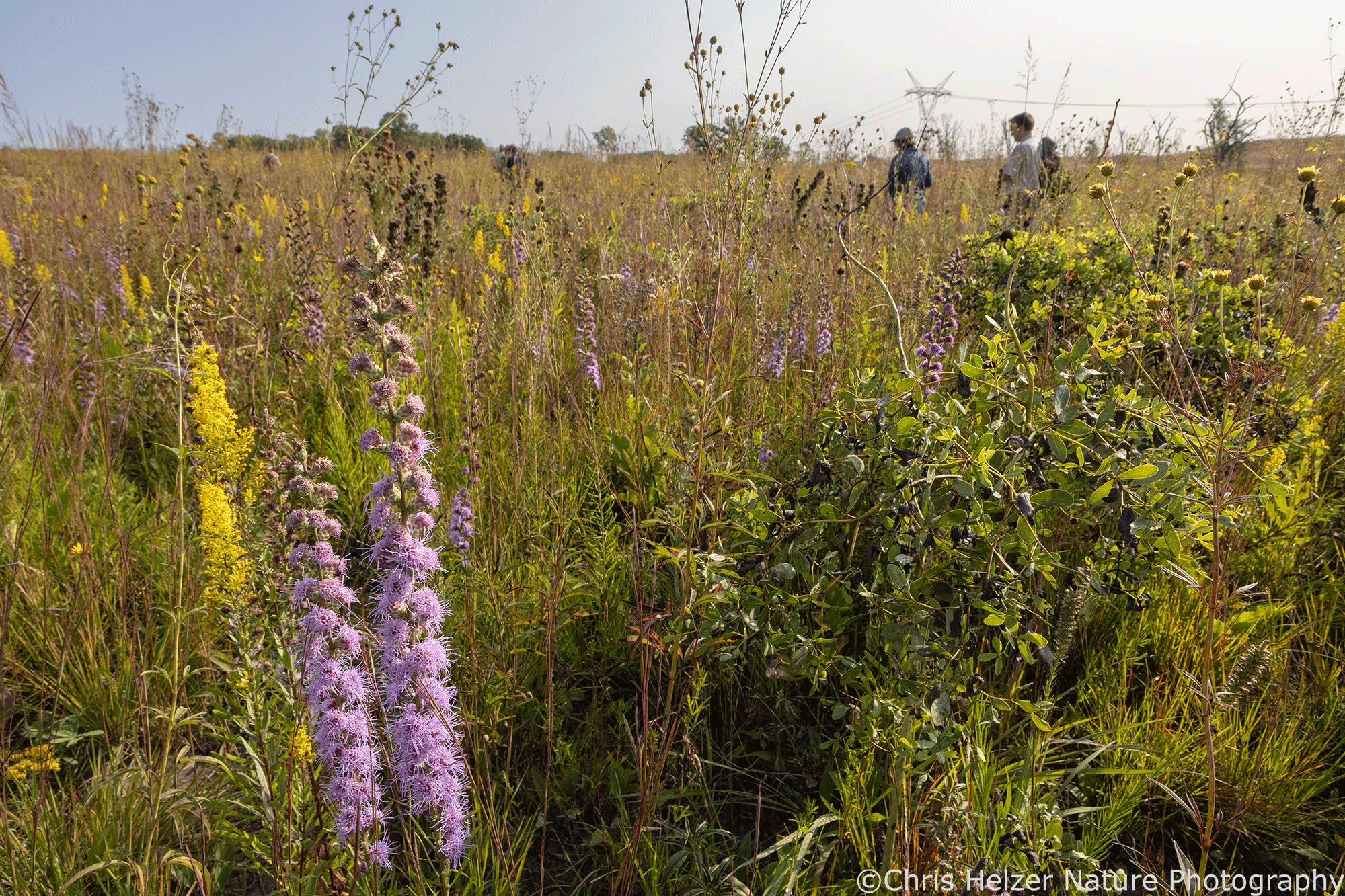
Taking that further, does it matter if that restored prairie is about 10 acres in size and not connected to any other natural areas?  In contrast, what if it was 50 acres in size and connected two formerly-isolated remnant (unplowed) prairie parcels together?  Does that affect its quality or value?  Does it affect the quality or value of those remnant prairie parcels?

What are the criteria we should use for evaluating prairies?

A very common way to assess prairies is by looking at their plant species.  That makes good sense.  Prairie plants are beautiful.  In addition, of course, the plant community has a huge influence on the other components of the larger prairie community, including animals, fungi, and other soil microbes.  Maybe more importantly, you can always find plants.  They are literally rooted in place. 

When you visit a prairie, you might not see a pocket mouse, a katydid, or a badger, but if there’s a population of stiff sunflower, you can go to a particular spot and see it – it might even be in flower if you time it right.  Over time, it’s easy to see how that population is doing because you can check on it whenever you want.

There are multiple ways to evaluate a plant community.  The diversity of species is usually considered to be one important factor.  The presence of rare plant species, or species that have very specific habitat or management requirements, can be another.  The second can be particularly significant in landscapes where very little prairie is left.  Finding a prairie that still hosts rare plants is a big deal.
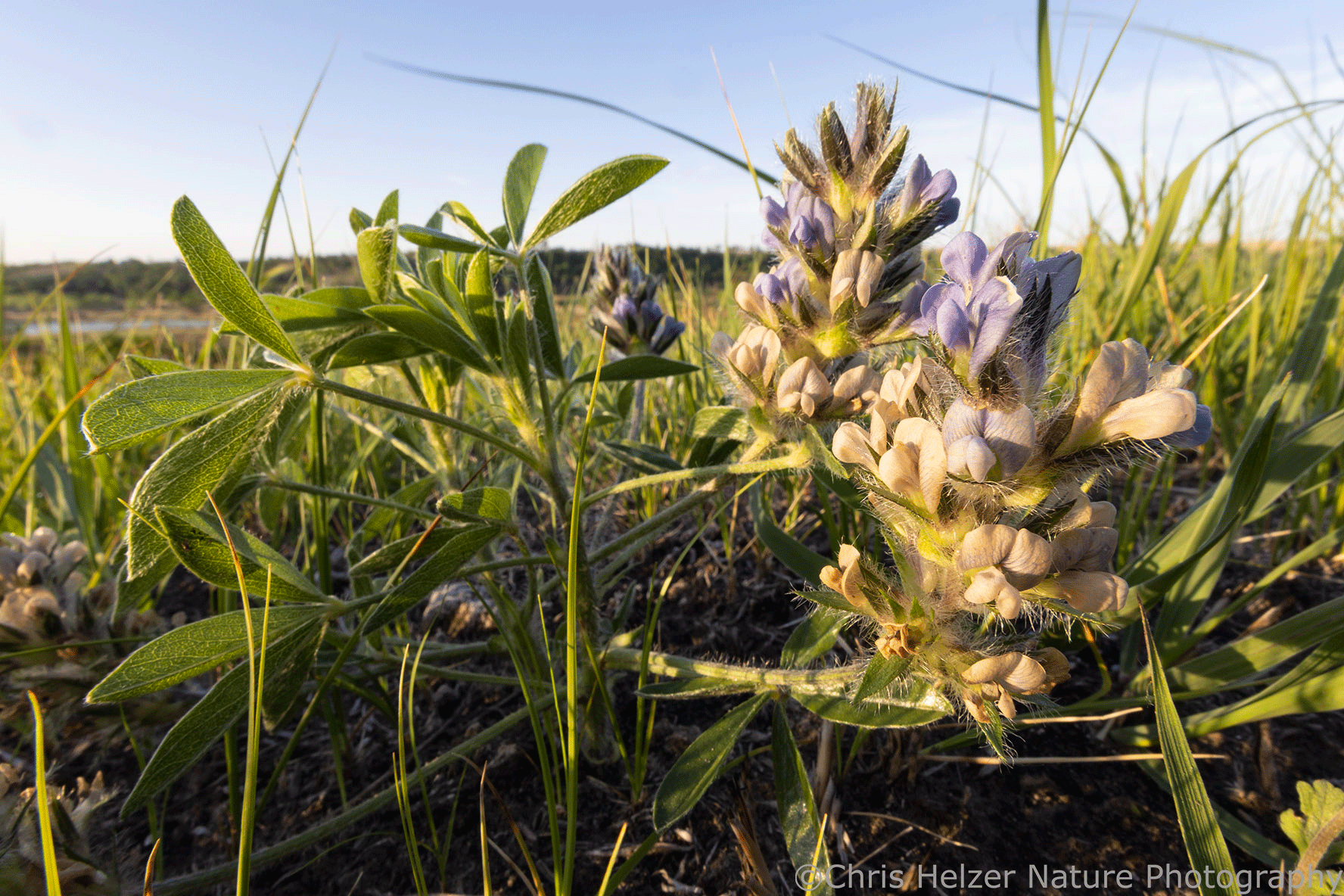
Prairie turnip (Pediomelum esculentum) is hard to find across much of its historic range. This one is part of a large population at the Niobrara Valley Preserve.

Looking at the diversity of plants and the presence and abundance of rare species is a very sensible way to begin evaluating a prairie.  I often do it myself.  You can visit a prairie at any time of year and make at least some assessment of the plant community – though it’s much easier during the growing season. 

In contrast, you have to time your visit carefully if you want to see what the bird community looks like (many species are only present for a few months each year).  Small mammals are tricky because they’re hard to see and you probably need some kind of trap system to even find any.  You can see a lot of invertebrates if you look closely, and of course you can pick up a sweep net and very quickly gather a bunch of them to inspect.  But invertebrates are notorious for having massive swings in population size from year to year, and many are only aboveground for short periods of time each season.  That means it can take a lot of time and a lot of effort to get any picture of what’s happening with invertebrate communities.
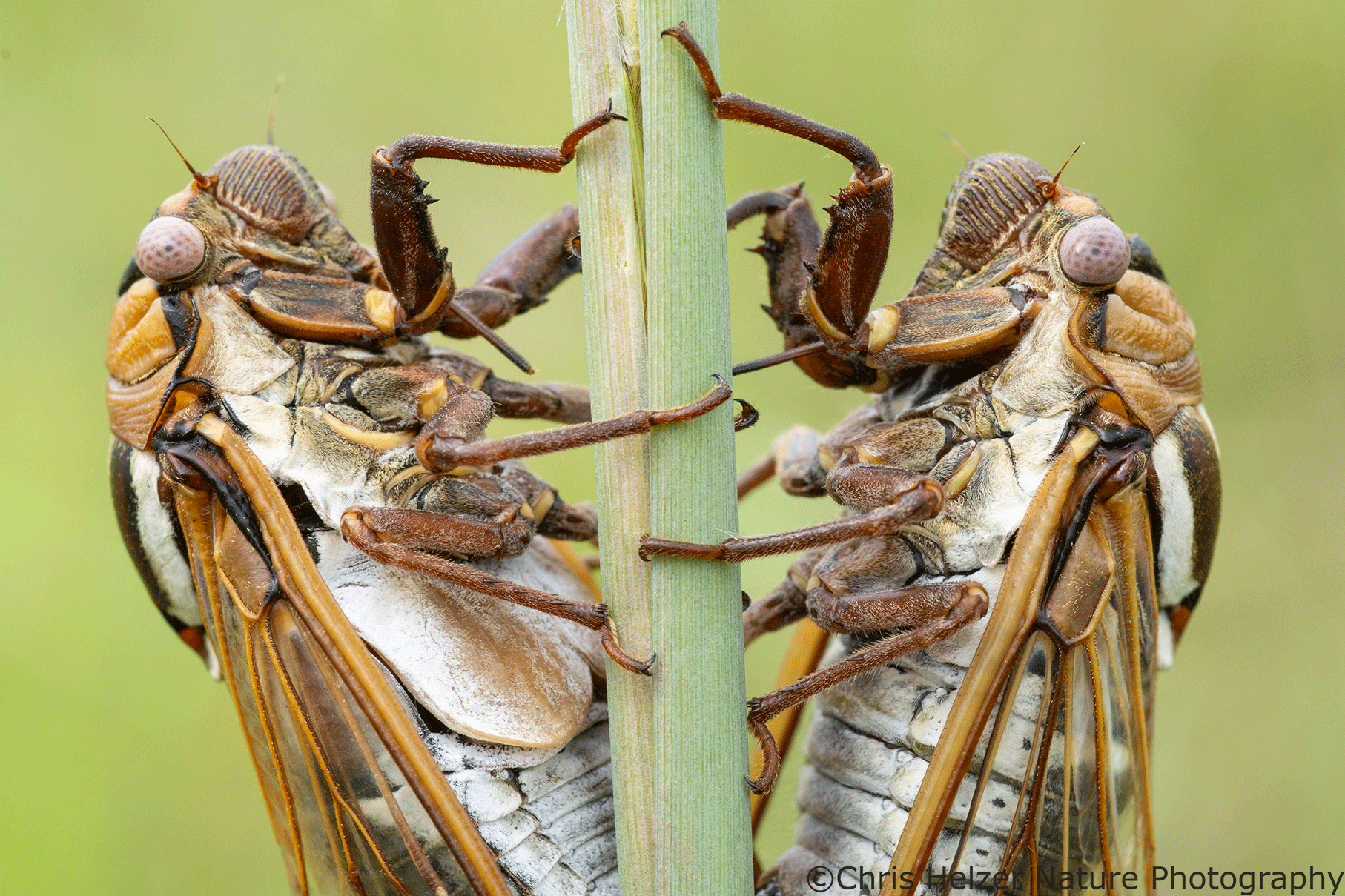
Insects like these bush cicadas can experience huge population booms and busts between years, making it hard to evaluate invertebrate communities.

However, notwithstanding the challenges of evaluating their populations, birds, small mammals, and invertebrates are all important components of prairies, right?  Any assessment of prairie quality should probably include them – not to mention reptiles, amphibians, large mammals, fungi and other soil microbes, and lots more. 

Looking at the plant community can provide hints about some of those other organisms.  Plant diversity is strongly correlated with invertebrate diversity, for example.  However, not all prairie animals have such strong ties to the diversity of a plant community, or to the presence or absence of particular plants.

Most grassland birds, for example, are really dependent upon the size of a grassland area and the habitat structure present. Some species nest in short grass, others in tall.  Still others need a variety of habitat patch types because they use different vegetation structure for nesting, brood rearing, wintering, and/or courtship displays.  In addition, a lot of grassland nesting birds are sensitive to the size of a prairie and/or won’t nest near wooded edges, roads, etc. (or suffer poor nest success when they do).
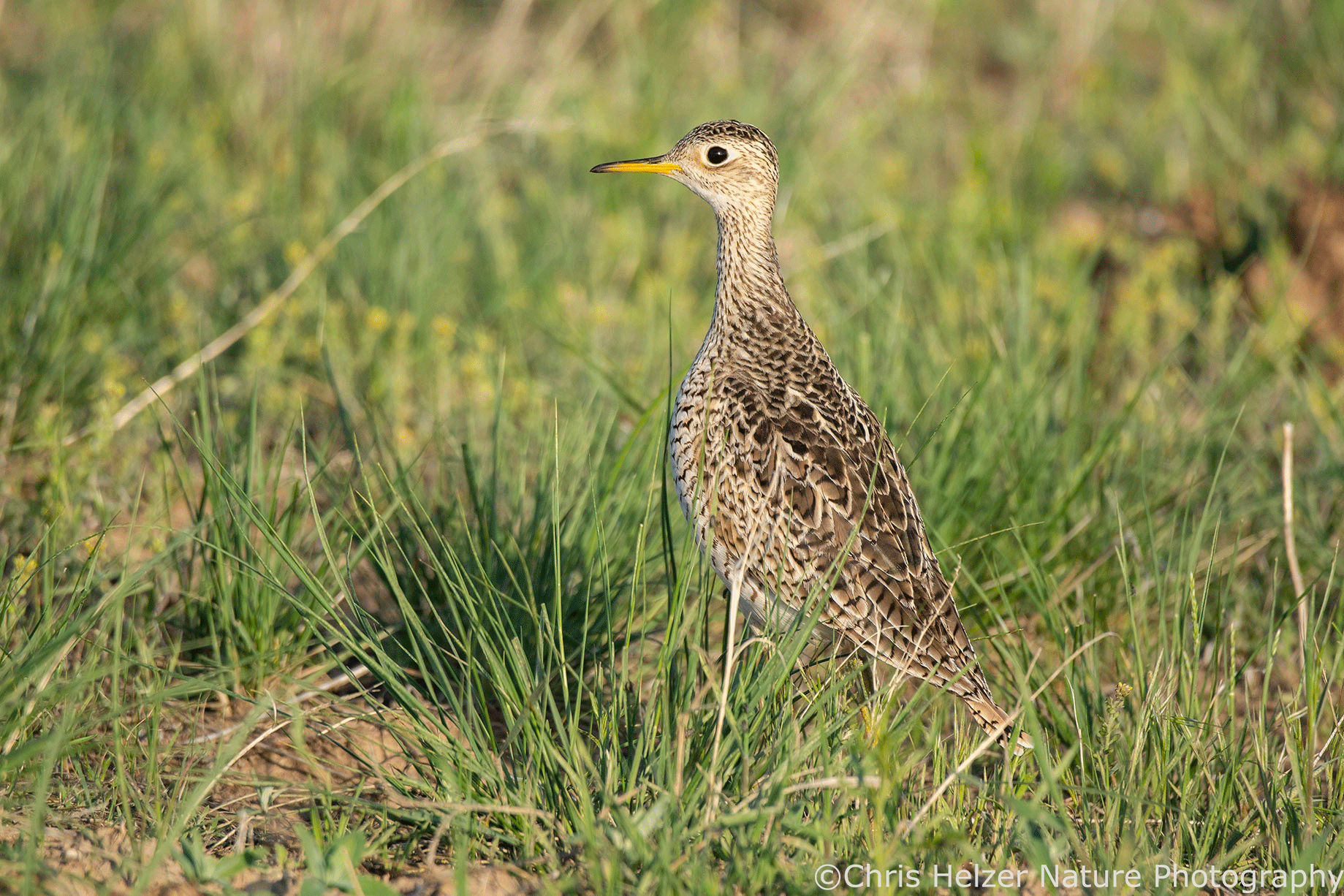
Upland sandpipers nest on the ground in large prairie patches with short, open habitat. They then take their young chicks into cover where the habitat is open enough the chicks can feed and move around easily, but there is overhead cover (especially broad-leaved plants) they can use to hide from predators and find shade.

Small mammals, reptiles, and invertebrates also respond strongly to the kind of habitat structure in a prairie.  Just as with birds, each species has its own preferences or requirements – some looking for short/sparse habitat, others for tall/dense cover, and some need something in the middle or a mix of all of those options.  Also, like birds, many of those animals and their populations will thrive best in larger prairies than in smaller ones. 

So, in addition to a “good” plant community, you could argue that a high-quality prairie should also be one that is large and managed in a way that provides a mixture of habitat structure.  Maybe, but this is where things get really interesting. 

In many places, large prairies just don’t exist anymore.  We’re left with small remnants of grassland, surrounded by row crops, urban areas, woodlands, or other land cover types.  Does that mean none of those prairies are high-quality?  Of course not.  But the context matters.  The quality of a site is measured against objectives (what do we want a prairie to be or to provide?) and objectives are informed by local culture. 

Small prairies can still provide excellent habitat for many species, including plants, invertebrates, and many small vertebrates, though stewardship gets really tricky.  It can be really challenging to manage those sites in a way that doesn’t eliminate any animal populations (by repeatedly burning the whole site, for example) while still staving off woody plants and invasive species.  However, when comparing a bunch of small prairies to each other, we can come up with criteria for determining which are higher or lower-quality.

On the flip side, there are parts of the world where we still have huge, unplowed grassland landscapes.  These prairies have the scale to support a lot of animals that can’t survive in isolated small prairies, and – if managed appropriately – the habitat structure those species need as well.  That might even include many large animals like bison and pronghorn, or other charismatic species like prairie dogs or prairie grouse. 
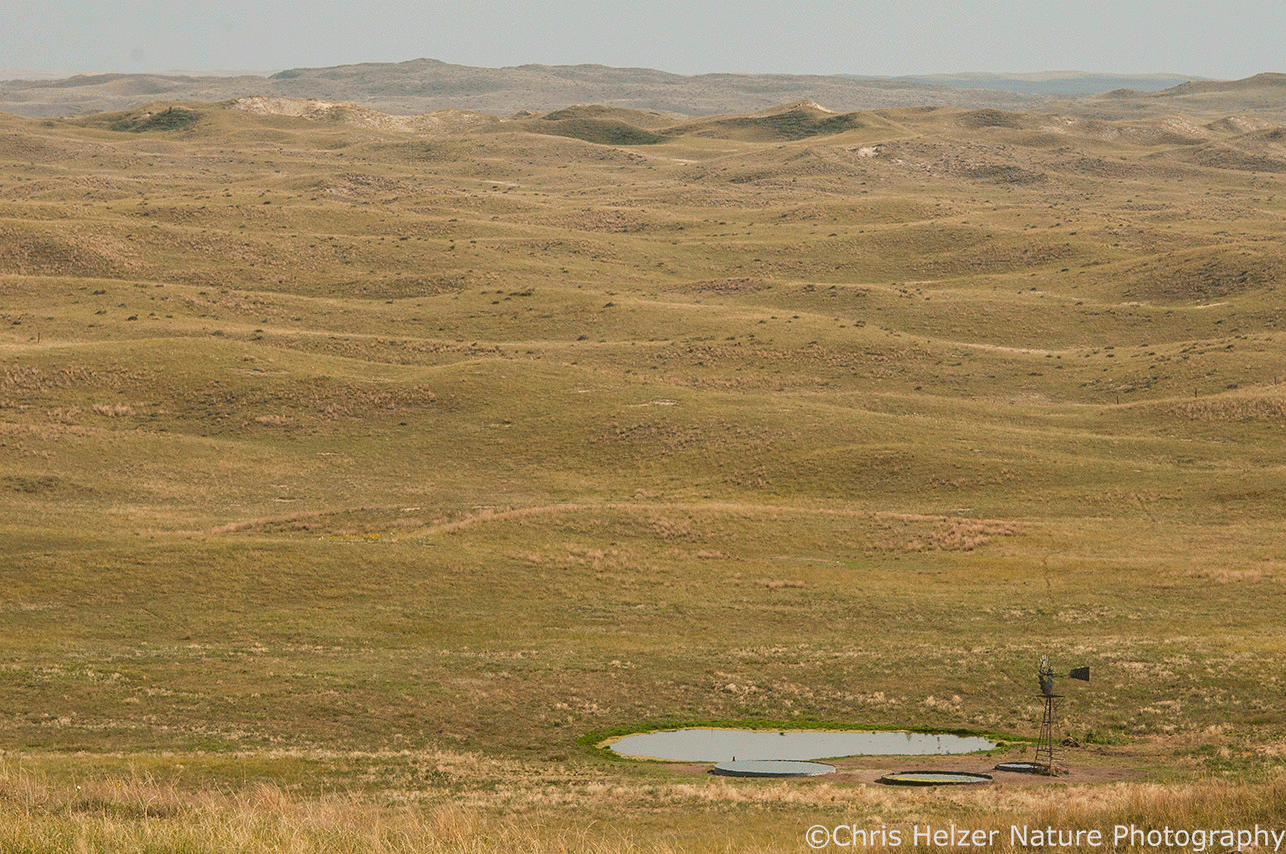
The Nebraska Sandhills is 12 million acres of contiguous native prairie.
Pronghorn – one of many large prairie animals supported by the Nebraska Sandhills.

However, in some of those landscapes, much of the prairie has lost plant diversity and/or populations of plant species that used to be there, and that has big implications.  Not only is the plant community an important component of “quality”, it also supports many of the other organisms that make up a strong, resilience grassland community.  Scale and habitat heterogeneity can make up for some of that, but species diversity is also a huge component of resilience.

Looking across a landscape like this, with lots of grassland but varying degrees of plant diversity and other components, we can pick out places that we think are of higher quality than others.  The criteria we use to make those decisions, though, will surely be different than the ones we use in a landscape where only small prairie patches remain.

Here’s why all this matters:

All of us who live around and work with prairies evaluate them through our own lenses.  Some of the criteria we use are shared, but others are heavily influenced by local conditions.  That’s ok, but we should recognize the biases we each have.  More importantly, we should make sure we’re talking to and learning from each other. 

About 15 years ago, I wrote a post about these different views on prairie quality.  In that post, I talked about how some of us focus a lot on the species composition (mainly plant composition) of prairies, while others look more at habitat structure and processes.  Those tendencies tend to be correlated with geography (east/west) and with the amount of grassland remaining in landscapes. 

In that post, I was hoping to stir people to expand their definition of prairie quality and to borrow perspectives from others.  There’s been some movement in that direction, but there are still some big differences in the way people assess prairie quality, and that strongly influences the way those prairies are managed.

As examples, I would love to see people working in fragmented prairie landscapes think more about how to vary habitat structure across even relatively small prairie parcels to benefit invertebrates and larger wildlife species.  At the same time, I wish people in landscapes with much larger prairies would pay more attention to plant composition.  While we have extensive prairies where the plant communities are in terrific shape, there are also lots of places where plant diversity is relatively low and many plant species are hard to find. 
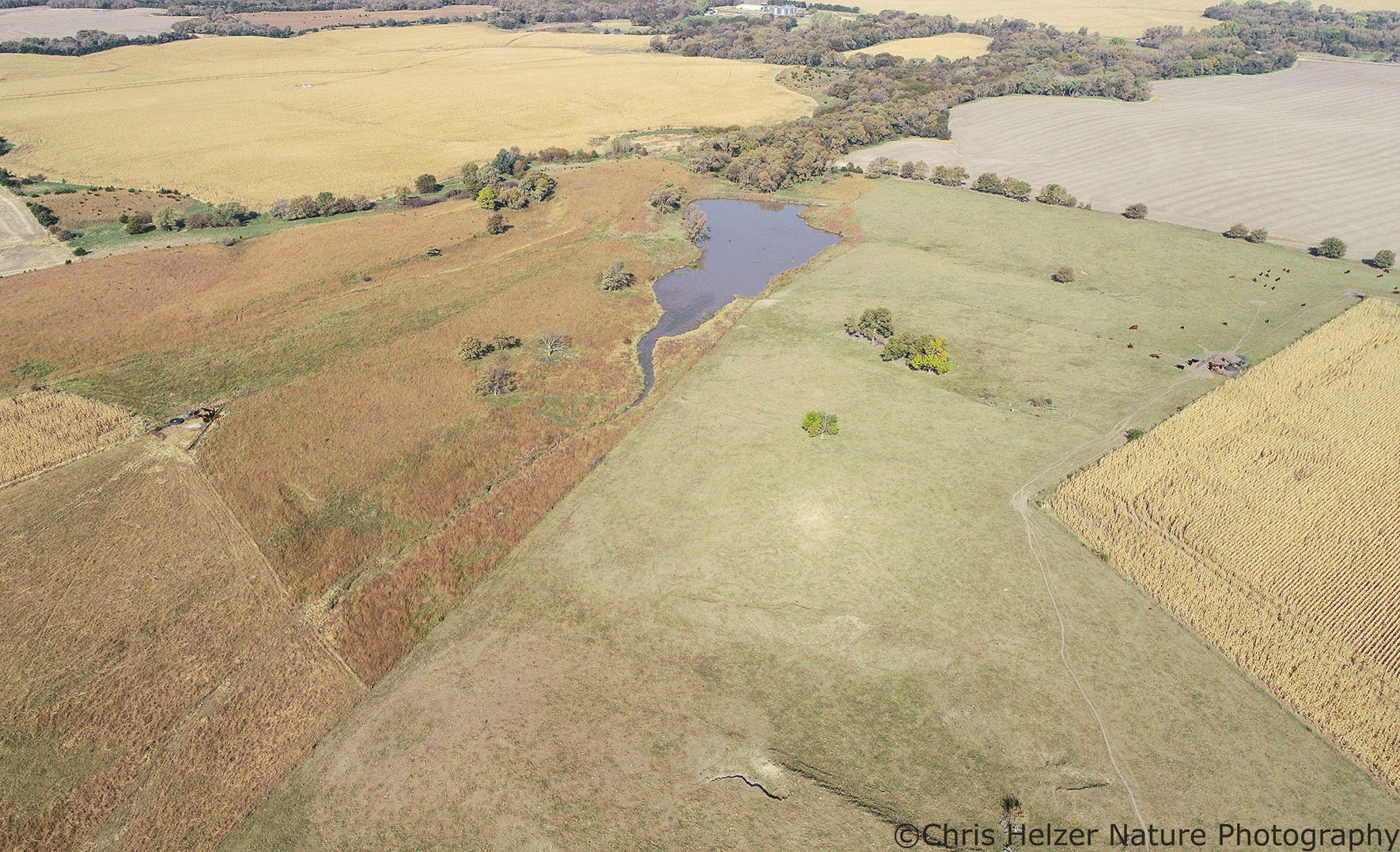
My family prairie is is surrounded by cropland. I work really hard to provide a variety of habitat structure types each year to support wildlife, while constantly striving to improve the plant community. I’ve learned a lot about how to do this (and measure success) from colleagues and friends across the country.

There are lots of ways to create more heterogeneous habitat structure in prairies – even small ones.  We also have ways of managing for, and even rebuilding, plant diversity in places where it has diminished.  Good, creative land stewards working in today’s grasslands should be able to do all of that.  However, we aim our stewardship at the goals we set for ourselves, and those goals are tied to the way we evaluate prairie quality.

It doesn’t make a lot of sense to compare a 10-acre prairie fragment in northern Illinois to a 5,000-acre prairie pasture in central Kansas and argue about which is better.  It’s ok to say both are high-quality prairies (or not), based on local criteria.  What’s crucial is that we continue trying to learn from the way we each see and value our prairies.  All of us can benefit from expanding our perspectives, right?