I’m sure many of you are as tired of this blog as I am. The same old nature photos, natural history, prairie management/restoration information… It just drones on and on. Honestly, I don’t know how you manage to drag your eyes through most of my posts. How much prairie stuff can one person read about, after all?
(…Yes, I’m kidding – there is no limit to how much prairie information one person can read about. And I am not at all tired of this blog… though you certainly might be, I don’t know.)
Well, the blog isn’t going away anytime soon (why, what have you heard??) But in an effort to keep it from growing stale, I’m introducing a new feature called “The Prairie Word of the Day.” …Yes, I know – a titillating title, isn’t it? It ought to be, it took me about three months to refine it. It’s pithy, catchy, and descriptive all at once. Or at least descriptive.
As with any field, prairie ecology is full of jargon; words that make sense to those of us who spend most of our waking hours thinking about prairies but make no sense to anyone else. I try hard not to use to much prairie jargon in my posts, but I slip up now and then. Sorry about that. There are a lot of fun, but confusing, prairie jargon words out there, so I thought I’d highlight one now and then and try to explain what it means. I would love to hear nominations from you as well – what undecipherable words do I or others use when talking or writing about prairies?
Ok, without further ado, the inaugural Prairie Ecologist Blog Prairie Word of the Day is:
Tiller
Sure, everyone knows what a tiller is, right? You use it to prepare your garden for planting. Or, if you are a pirate, you might use it to steer your ship. (If you are a pirate and read this blog, PLEASE let me know. Prairie-loving pirates is a demographic I would love to reach out to.)
However, if you are REALLY into prairies or botany, you might be familiar with a third definition; one that is related to grasses.

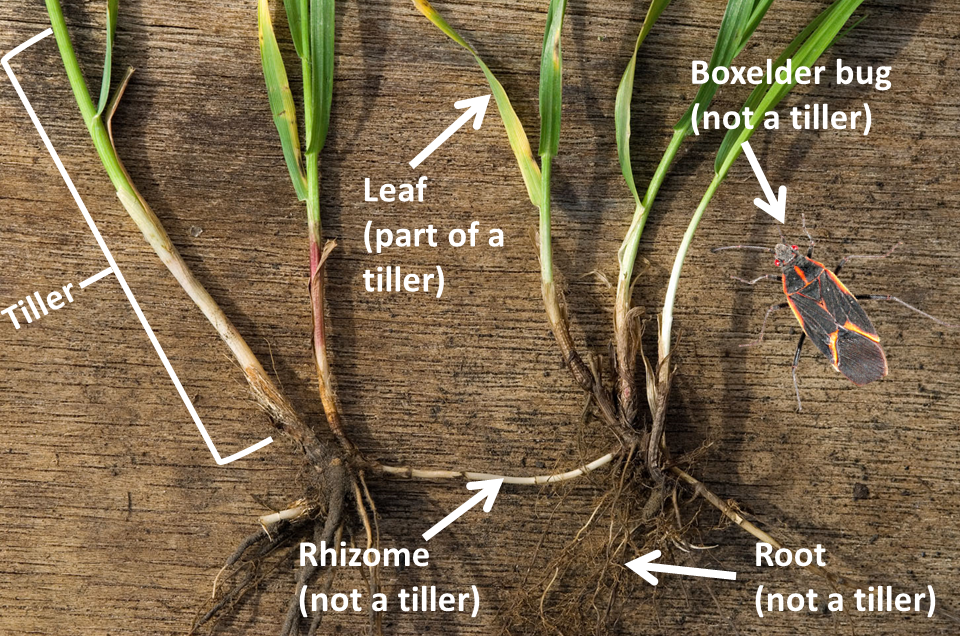
Although it is used somewhat inconsistently, a tiller usually refers to the aboveground shoot of a grass. In other words, if you were to look closely at a grass plant you’d see that most of them have multiple stems at their base. Each of those stems is a tiller. Usually, the term tiller only applies to shoots that emerge from buds at the base of other tillers, not from seeds. Thus, when a grass seed germinates and starts to grow, the first shoot that pops out of the ground is not a tiller. It’s just a shoot. I guess. But after that, every new shoot that comes out of the ground from that plant is a tiller.
Tillers are primarily important, as far as I can tell, because professors like to make graduate students count them. As in, “Hey Sara, take this 1 x 1 meter plot frame out to that prairie, lay it down and count the number of grass tillers inside it. (snicker) Then do that 99 more times. (guffaw!) Then we’ll move on to the next prairie.”

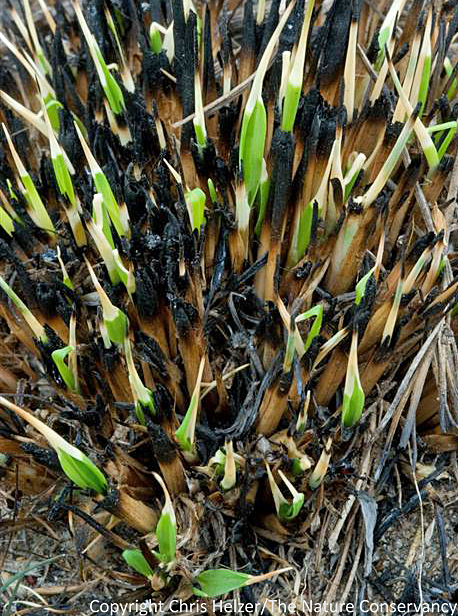
The tillers of this bunchgrass are all bunched together.
A related botanical prairie word is “sward” which basically means a bunch of grass. Well, not really a “bunch” because that’s its own term (grasses like little bluestem are called bunch grasses because they grow their tillers tightly together and look neat and tidy, as opposed to grasses such as prairie sand reed that across the prairie like they own the place). A better way to describe a sward, then, is that it’s an area of grass. However, I don’t think there’s any restriction on how big that area of grass has to be, which makes the term less useful. That’s probably why you don’t hear it used very often. Except by grassland poets trying to rhyme something with “charred”. As in, “Lo, the land was black and charred. No trees remained throughout the sward.”

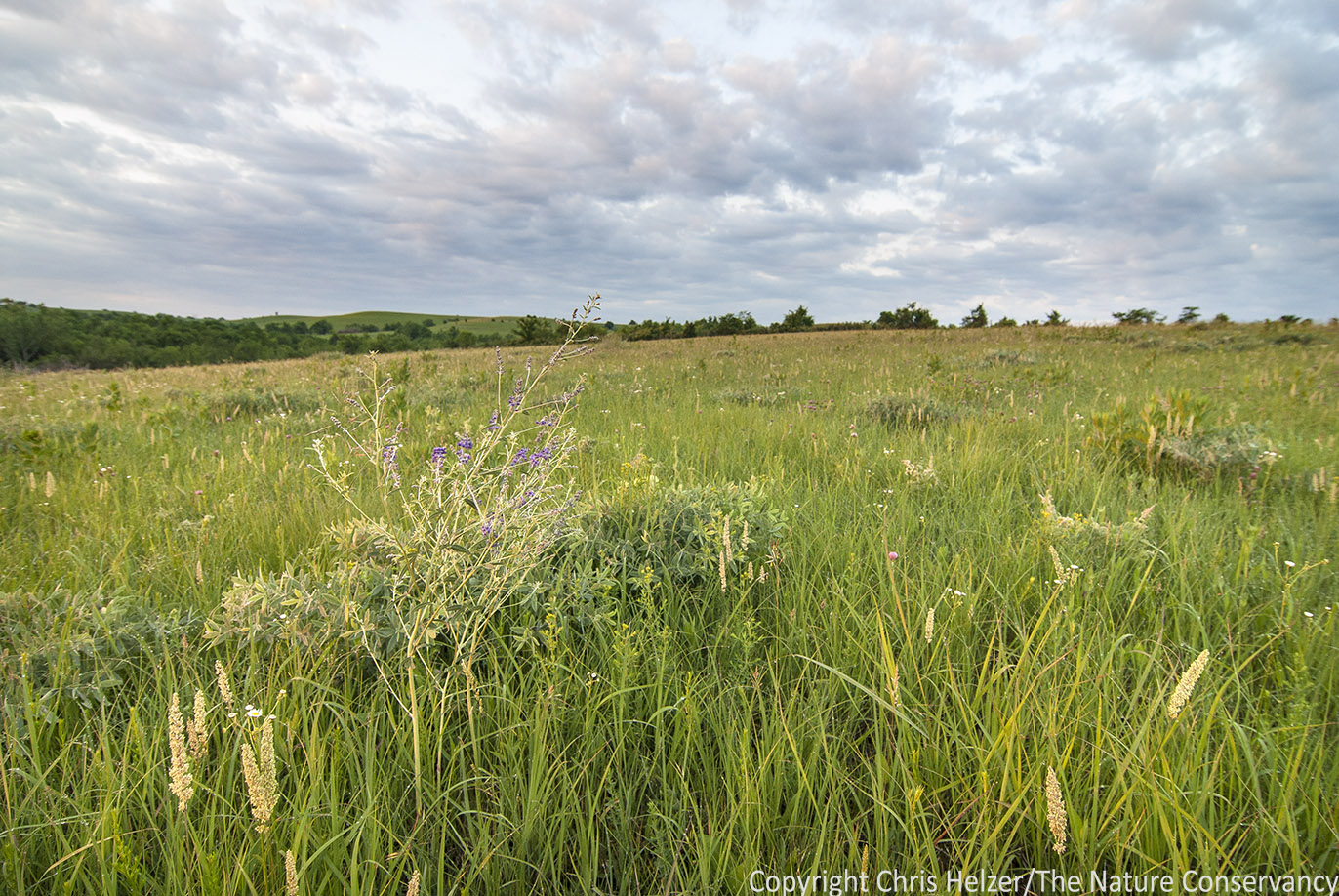
There are numerous tillers in this sward. Too many to count – even for a graduate student.
If botanists were funny, they might say something like, “Arrr, Matey! Take over the tiller smartly while I decide whether to shoot this lubber or run him through with my sward.”
(I’m kidding, of course. Botanists can be very funny. Sometimes on purpose. Also, many are quite hirsute. Except on top, where some are pretty glabrous.)
Well anyway, that concludes the first ever installment of The Prairie Word of the Day. I hope it was instructive. Please nominate terms (in the comments section below) you’d like to see included in future Word of the Day posts and I’ll try to use as many as I can.