
Back in March, I posted an interview with Sarah Hargreaves, who recently completed her PhD studying soil microbial ecology at Iowa State University. She gave us some great information about how we should be thinking about soil communities in prairies. Some of you provided some excellent questions in the comments section (I had a few too), so Sarah graciously agreed to answer a few of them in this follow-up post. I edited both the questions and her responses, so my apologies if I changed the context or meaning of either. Questions from readers are in italics, and Sarah’s answers are below each question. …A big thank you to Sarah for taking the considerable time needed to answer these.
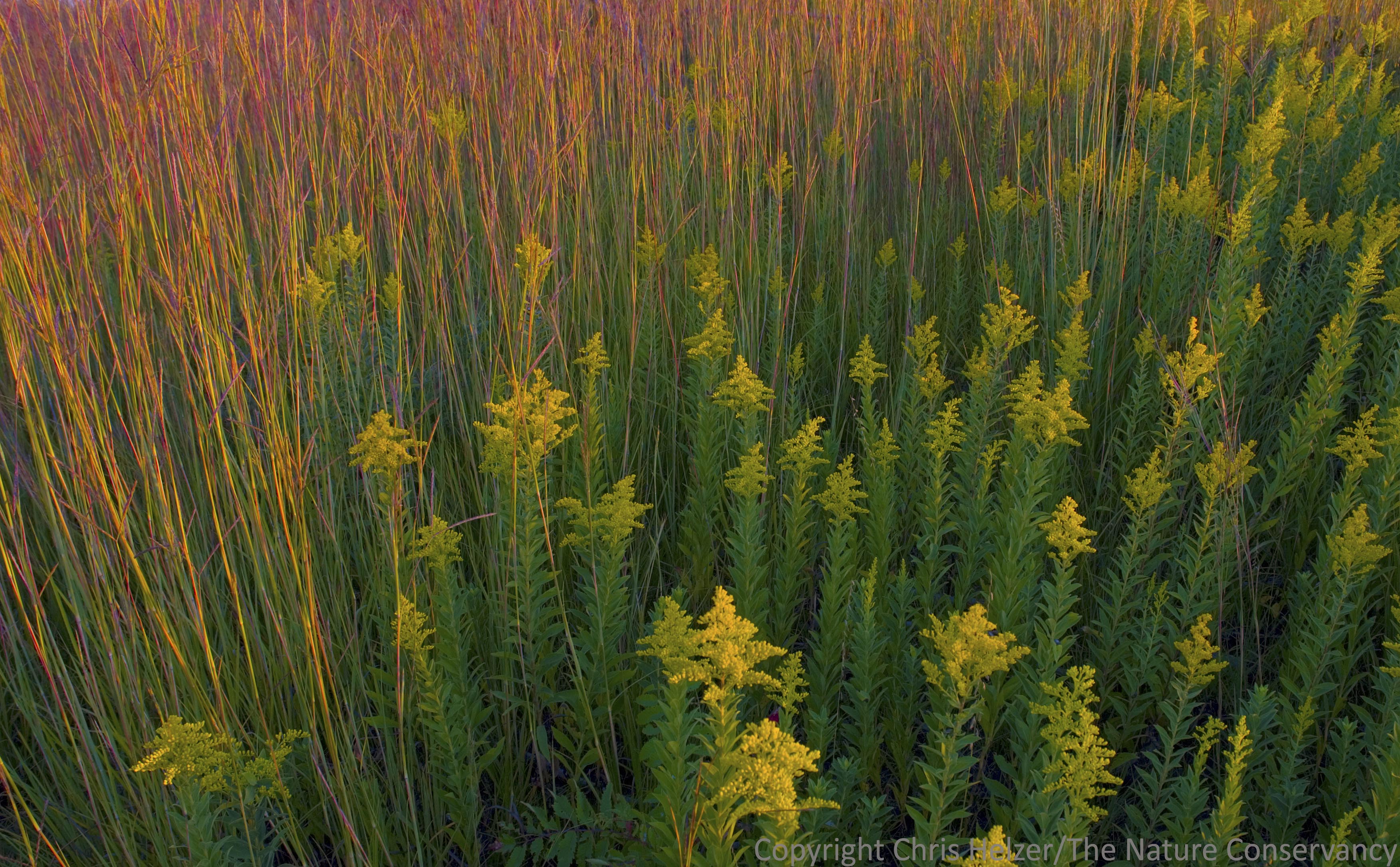
How much are prairie plant communities driven by soil microbes? How much can/should we be manipulating those soil communities? There are way more questions than answers at this point, but the field of research is advancing rapidly.
Are archaea really a part of soil microfauna in prairies around here, or are we really talking about bacteria and fungi only? – Chris H
A survey of the dominant groups of archaea across a latitudinal gradient of native tallgrass prairie sites within the United States revealed that majority of sites have archaea, but in small abundance relative to other microbial groups (<5% total). We still don’t know about the functional significance of their presence, but I think it is fair to focus on fungi and bacteria when thinking about restoration.
What are the things land managers should be doing right now to help advance research in this critical field of studies? I’d love to know what I should be doing before we begin our restoration projects to best track progress in microbes as we reestablish native grasses. Is this as simple as just taking soil samples? -Rachael R
My suggestion would be to take soil samples for the following purposes. First, you can use the soil samples for microscope counts of diversity (using the Soil Food Web method, for example). This is coarse, but is easy and can tell you something. I think the best approach would be to freeze a sub-sample of the soil for Phospholipid Fatty Acid (PLFA) analysis, which is a great tool for measuring fungal: bacterial ratios. The soil is stable at -20°C so it can sit frozen until you are ready to compare to your restored soils. If you are really keen, you could also track aggregate stability and total organic carbon as a measure of soil structure and carbon storage, which are both intimately connected with microbial activity.
I have thought several times about the possibility of transplanting small amounts of soil (say, a few 5-gallon buckets worth) from a remnant prairie into a prairie restoration to help re-diversify the soil organisms in these ecological restorations. What are your thoughts on this? – Danelle H
I think the idea is a promising one, and one that farmers are starting to think about as a way to restore soil health for crop productivity. In fact, this is the premise behind compost teas (see Rodale Institute). When made properly, the idea of a compost tea is to have a substance ripe with good microbes and enough nutrients to get them started and that can be sprayed across larger areas. Unfortunately, there isn’t a lot of scientific data on this type of approach, including information on application rates and frequency, or the potential for amelioration in different soil/management types. I am sorry I don’t have a more definitive answer for you – it is a rapidly growing field and I think data on the efficacy of this type of inoculation is a high priority because of its relative ease. I also agree with Jonathan’s comment (below) about inoculating nurse plants if you are doing transplants.
…This was a response to Danelle’s question (above) when she posted it in the comments section of the initial blog post on this topic…
This paper might be helpful:http://onlinelibrary.wiley.com/doi/10.1111/j.1526-100X.2010.00752.x/full
Many of the micro-organisms that are likely to improve restoration outcomes (e.g. mycorrhizae) depend on plants. So, how you introduce those microbes to a restoration will matter. The study in the paper I linked to inoculated “nurse plants” and raised these seedlings before transplanting them, along with at least some components of the soil community. There’s lots of work left to do, but this approach seems really promising. It also doesn’t require a lot of soil, so damage to remnants can be minimal. – Jonathan B

When most of us do prairie restoration (reconstruction), we focus mainly on harvesting and planting seeds. We think a little about soils in terms of getting good seed-soil contact and the seed bank of weed species. Should we be thinking much more about the soil microbial community and potentially adding to it?
Can soil distribution of microbes be very abrupt in composition – for example, when we see a very distinct “vegetated wall” that seems to resist an invasive species that has consumed other areas of the prairie? – David
How quickly do soil organisms expand into former cropland habitat? – James M
In regards to boundaries and expansion of soil microbes: soil microbes disperse and lay dormant (i.e. are present, to a certain extent), so the rate limiting step affecting visible boundaries and lags with restoration is more likely attributable to the soil conditions not yet being good enough to promote a fully functional microbial community. It is like a positive feedback between soil structure, plant-microbe interactions (like symbiosis) and soil microbial community function, and it takes time (decades).
I’m especially interested in your comment that ‘prairie burns help maintain a good fungal to bacterial ratio by promoting fungal abundance’. Can you explain how prairie burns help promote fungi? – Teresa
Great question! A recent meta-analysis of data on fire effects on microbial communities suggests that microbial communities in grasslands are better adapted to respond positively to fire than those from other ecotypes (e.g. boreal and temporal forests). However, it is really not known why this is – perhaps due to release of nutrients that fungi are able to capture or indirectly through plant response, etc.?
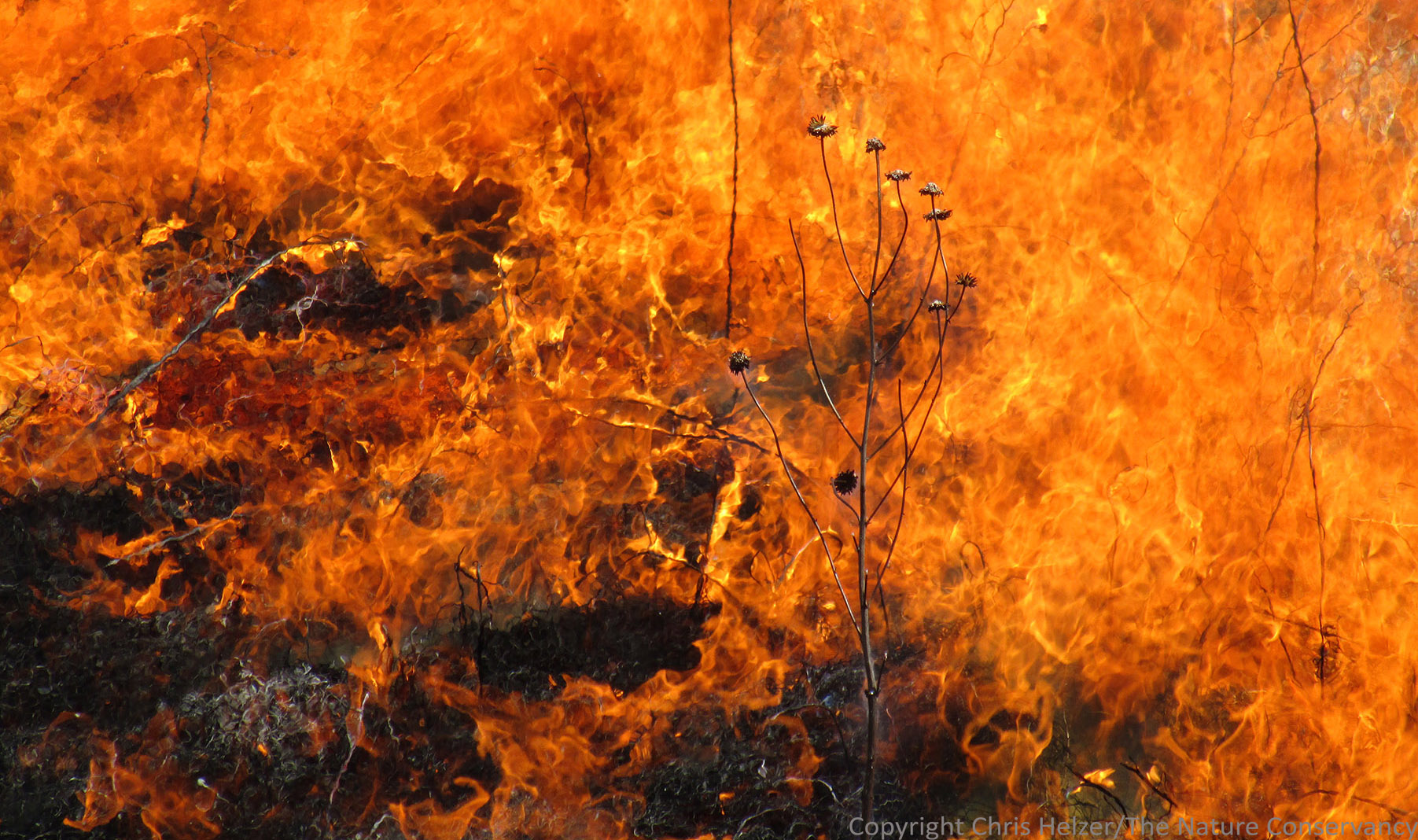
We still have a lot to learn about how fires affect the soil microbes in prairies.
Would you be able to make some suggestions to me for potential science fair projects in this area? It looks like a fertile area for research! – Novalene T
How great would it be to see microbe and prairie-related projects in a science fair! The low hanging fruit is probably to sample soil from different types of ecosystems, like a prairie and a lawn for example, and examine the microbial community under a microscope and try to count the number of different types of organisms as an index of diversity (you may look at Soil Food Web microscope guides for this). Or look for mycorrhizal infection rates in the roots from different ecosystems. You could also consider the “tea bag index of decomposition”, which is a method used to measure different rates of decomposition (i.e. microbial activity). If done according to the instructions in this link, data can be added to a global network!

