What Do Swallows Eat on a Cold Windy Day?

Today was a cold blustery day, on the heels of some severe weekend storms.  I went down to check on our prairie (five inches of rain, strong winds, and a tornado a few miles away) and was glad to see everything looked wet but ok – including the cattle.

As I walked through the prairie, I noticed some barn swallows flying and hovering just above the surface of the wetland/pond.  Since the temperature was in the low 40’s and the winds were howling above 30 mph, I didn’t think there was any chance there were flying insects for them to catch and eat, so I wondered what they were up to.  As I watched the swallows, I realized they weren’t just wasting energy, but instead appeared to be feeding by picking insects (I assume) off the surface of the water.  It was lightly raining and I’d left my camera in the truck, so I didn’t take any pictures, but I’d never seen nor heard of such behavior before.

About a half hour later, I had just left the prairie and was starting home when I saw a big mixed flock of cliff and barn swallows behaving very similarly in a flooded wetland about a mile from our prairie.  The rain had stopped by this time, so I pulled over and got a few mediocre photographs.
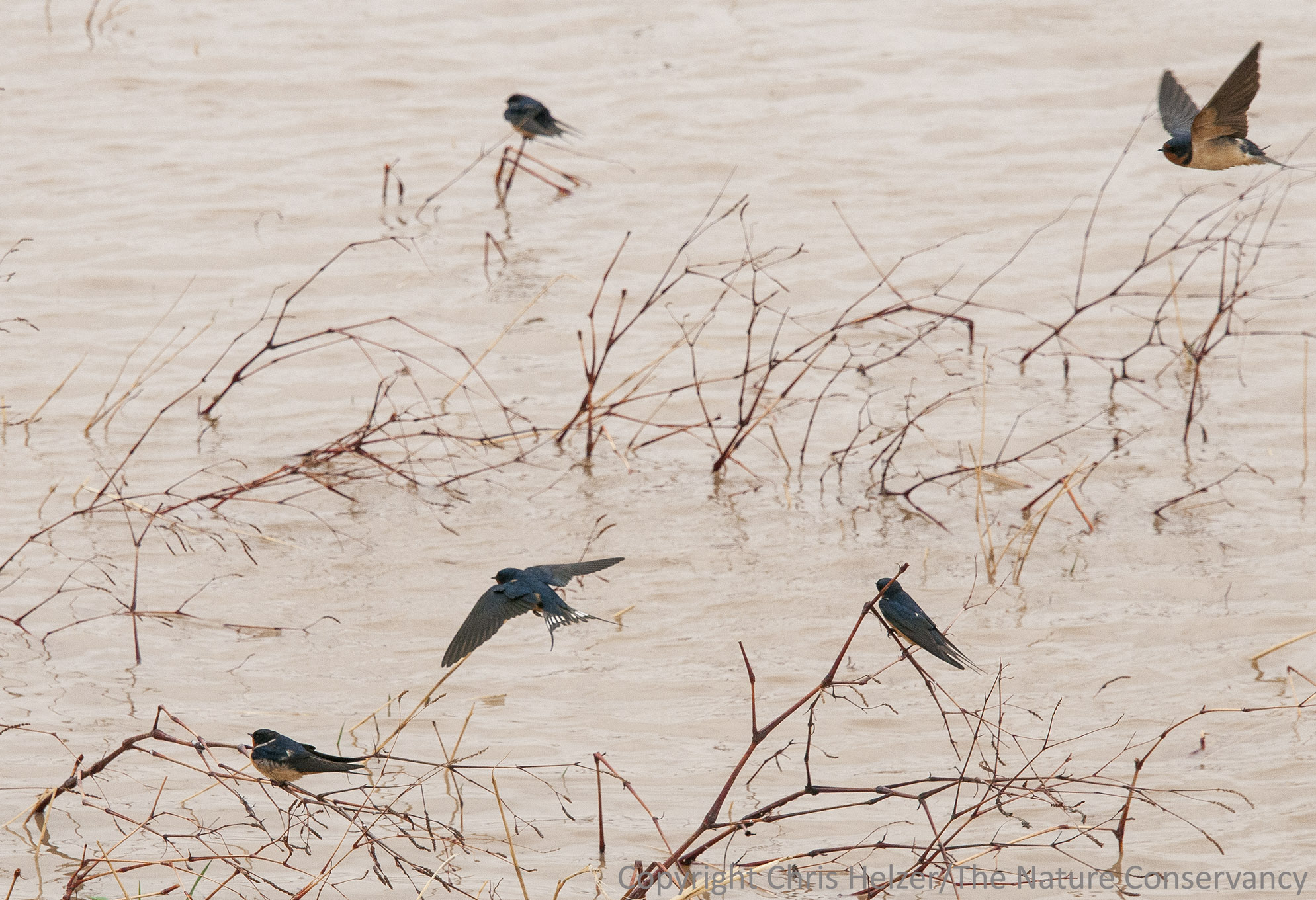
Cliff swallows feeding (apparently) on floating insects during a cold blustery spring day.

Swallows resting and flying over a wetland on a cold blustery spring day.


A wider shot, showing one swallow in the top right corner that might be feeding.

A wider shot, showing one swallow in the top right corner that I think was feeding.

When I got back to town, I did a little quick research and found that this kind of feeding behavior has been seen before – it was just new to me.  However, I also remembered a long cold period in May back in 1996, during which scientists documented mass deaths of swallows from starvation.  At the time, I remember being told that the birds starved because of a lack of flying insects to eat during the cold spell.  I wonder why those swallows died but the ones I saw today (two different species a mile apart) appeared to be finding food…?  I also wonder if they were catching enough food to cover the energy costs of doing so?

It’s a good day when I can learn something new AND come up with questions I can’t answer.  Anyone out there have answers for me?
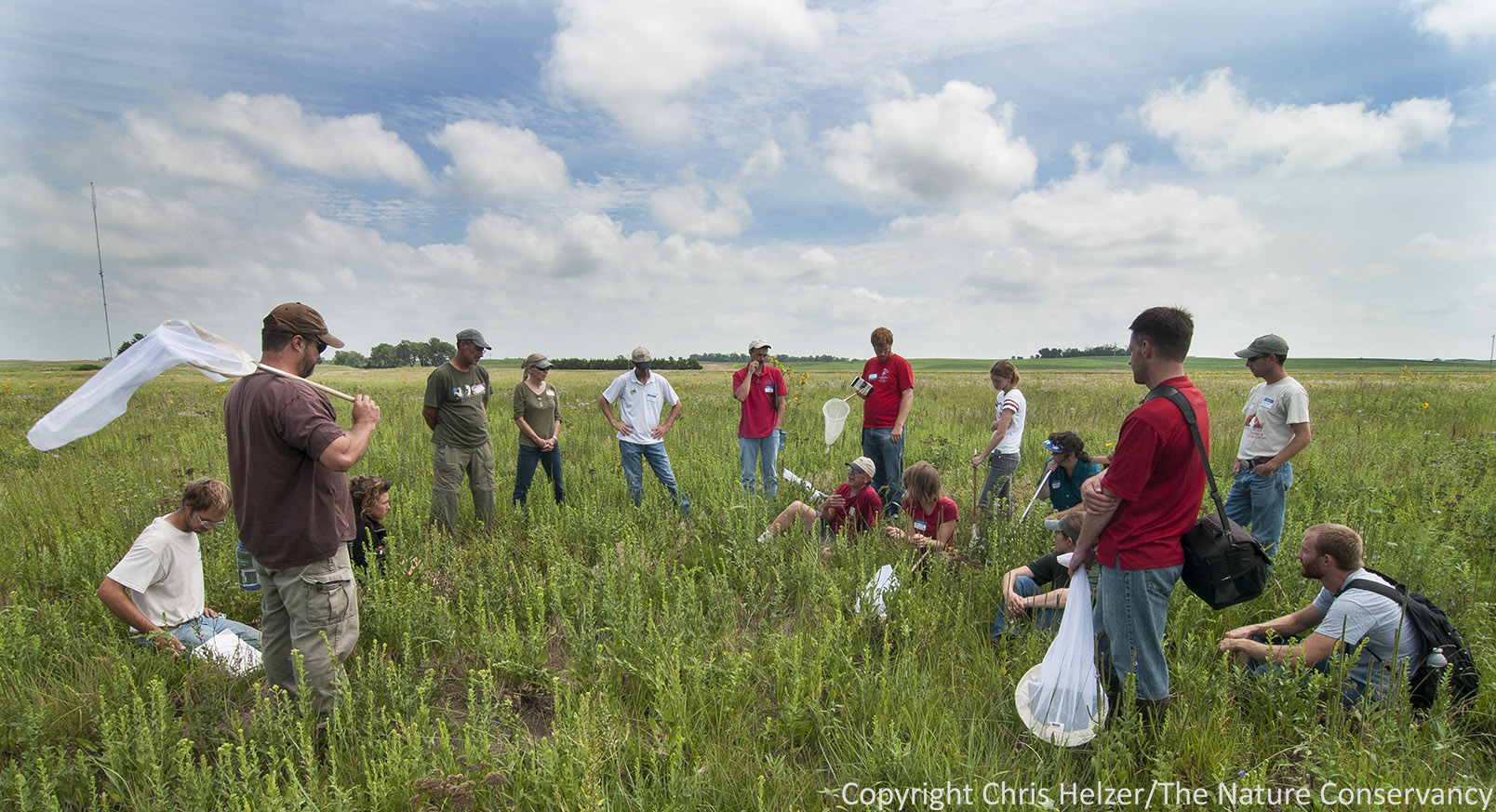


Platte River Prairies Field Day – June 13, 2014

I hope to see many of you at our first Field Day of the 2014 season.  On Friday, June 13, we’ll host hikes and presentations all day long at our Platte River Prairies.  Come learn about prairie ecology, plant identification, grassland restoration and management, and much more!

Join fellow prairie enthusiasts and biologists for a fun day in the Platte River Prairies on June 13, 2014.

Join fellow prairie enthusiasts and biologists for a fun day in the Platte River Prairies on June 13, 2014.

By popular demand, we’re placing a special emphasis on plant identification this year, and will provide opportunities to learn how to identify grasses, wetland plants, and prairie wildflowers.  In addition, there will be opportunities to see and discuss invasive plants and their control.  Other featured topics include prairie insects, small mammals, birds, and prairie gardening.

The day’s events will officially begin at 9am and end at 4pm, but feel free to come a little early for an 8am bird hike and stay and hike the trails on your own in the evening.  You are welcome to come and go as you please during the day, and there will be multiple sessions to choose from all day long.  Please bring your own lunch and a bottle of water, but we’ll provide some cold drinks and snacks as well.

Click HERE to see the agenda for the day.

Click HERE to learn more about the Platte River Prairies.

Click HERE for directions to the site.

This Field Day is free of charge, and you don’t need to register ahead of time, but we’d appreciate knowing if you will be coming so we can plan accordingly.  Please email or call Mardell Jasnowski if you plan to attend.  mjasnowski@tnc.org or 402-694-4191.

Thank you to the Nebraska Environmental Trust and the Nebraska Academy of Sciences for supporting our Field Days through the PIE grant program.