The Nebraska Sandhills is an incredible landscape of nearly 12 million acres of prairie. Most of the Sandhills consists of privately-owned ranches, and the majority of that land is conservatively managed by ranchers trying to make a living on top of vegetated sand dunes. Sandy soil, rough terrain, and drought-prone climate all present major challenges to ranchers, as well as to the plants and animals living in Sandhills prairie. On the other hand, the Sandhills rewards all its inhabitants with one very important and abundant resource.
Groundwater.

Exposed groundwater in valleys between sand dunes creates some of the most beautiful and important wetlands in North America.
Very little of the rain that falls on the Sandhills runs off. Instead, it percolates down into the sandy soil where most is taken up by roots of thirsty plants. A significant portion of that water, however, makes it past the root zone of those plants and adds to the water table below.

A shallow water table makes it easy for windmills to pump water into tanks (and overflow ponds) for livestock and wildlife to drink from.
Large wetlands and shallow lakes are abundant across many parts of the Sandhills where the water table is higher than the surface of the ground, and those wetlands provide habitat for a broad array of wildlife and wetland plants. Groundwater also seeps out of the ground and flows into myriad streams and rivers, which provide even more habitat. Those streams also carry water through and out of the Sandhills and into larger rivers such as the Niobrara and the Platte.

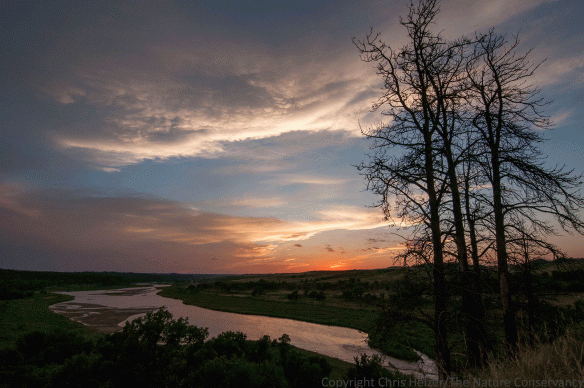
Springs pop out of the Sandhills in numerous locations, creating streams that supply water to fish, wildlife, and plants, as well as to larger rivers. This stream is already 5 feet wide less than 50 yards from its source in the background of this photo.
A long stretch of the Niobrara River has been designated as a National Scenic River and as people canoe, kayak, or otherwise float down it, they are rewarded by the sight of hundreds of small waterfalls adding water to the river from the Sandhills just to the south.

Smith Falls, perhaps Nebraska’s most recognizable water fall, is a large example of the many waterfalls along streams feeding Sandhills water into the Niobrara River.

As the Platte River makes its way to the east, water from the Sandhills adds to its flows via many streams and rivers. That water then joins the Missouri River and makes its way to the Gulf of Mexico.
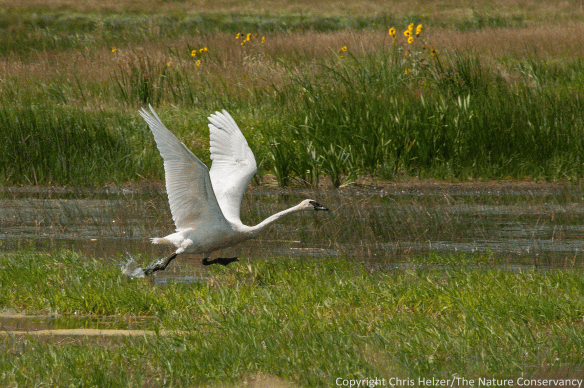
Trumpeter swans are one of many wildlife species that thrive in Sandhills lakes and wetlands. The relatively consistent water in those wetlands is a critically important resource for migratory birds as well.
As fresh water continues to become more and more scarce and valuable to the world, pressure will increase to draw water from places of abundance, including the Nebraska Sandhills. Already, proposals are being bandied about to capture and transport water from the Sandhills to human population centers or to help cover irrigation water shortages in far away places. The water in the Sandhills already contributes to society by helping to grow forage for one of the most important livestock production regions in the world and supplying water to downstream sources where it is used for irrigation, drinking water, navigation, and recreation. Also, of course, Sandhills water plays a huge role in supporting migratory waterfowl and shorebirds, along with a vast array of other wildlife species.
Unfortunately, the future of the water resources in the Sandhills will probably rely on whether or not water is viewed primarily as a resource to be mined, transported, stored and put to work. Here in Nebraska, we are frequently told that water flowing out of our state is “wasted,” and should instead be captured and used for something productive. A dry river bed is a sign that we’ve used our water efficiently.
There will be important and difficult conversations in the future about what counts as a productive use for water. Does water have to float a barge, irrigate a crop, or flush a toilet in order to be useful? Do fish and wildlife habitat, recreation, and aesthetic beauty also factor in? More importantly, what are the ramifications of removing water from Sandhills land and rivers that people, wildlife, and natural processes already rely on? It may be that our aspiration to engineer changes to the world exceeds our ability to predict the impacts of those changes. Let’s hope not.

A pool of wasted water stagnates uselessly in a Sandhills wetland…