Early spring on the Platte River is crane season. Every one of the half million or so birds in the mid-continent population of sandhill cranes spends a few weeks along Central Platte River each spring. They roost overnight on the river and spend their days feeding in nearby cornfields, grasslands, and wetlands. As we go about our outdoor work, there is a constant soundtrack of crane song in the background. It could be worse.
Those who know me best understand that while I occasionally photograph wildlife, I’m really more about photographing little things like bugs and flowers. I have quite a few photographs of sandhill cranes, but I get as much or more enjoyment out of photographing the small signs those cranes leave behind. Plenty of great photographers, starting and ending with Mike Forsberg, spend lots of time each spring making great images of the birds themselves. I don’t really feel compelled to compete with them. Today, I present a photo essay on sandhill cranes that features exactly zero photographs of sandhill cranes.

Sandhill cranes spend significant time feeding and loafing in prairie wetlands like this one we restored from cropfield back in 1999. The cranes feed on invertebrates, and whatever other small creatures they can catch, but also spend a lot of time preening and socializing in these areas.

Last week, as I walked along a low ridge between two wetland sloughs, nearly every sharp edge of the plants held a down feather, plucked – I assume – during some aggressive personal hygiene activity (preening).
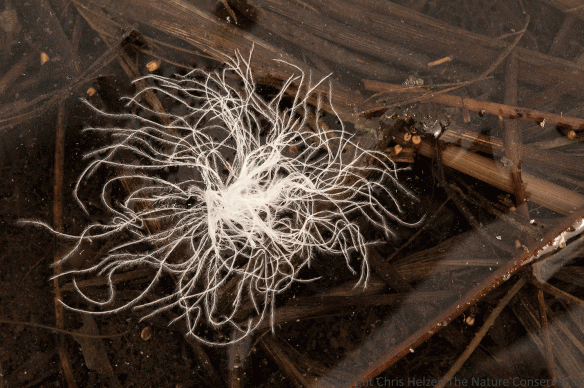
Not all the down feathers ended up caught on plants. Some ended up splayed gracefully on the water’s surface.
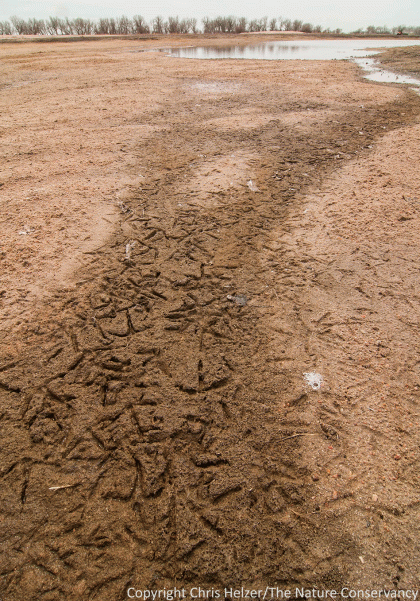
Among the most heavily-used wetlands on our properties this spring were some sloughs we excavated last last season on former crop land.

Sandhill crane tracks feature wide-splayed toes and lack the rear-pointing toe prints seen in tracks of perching birds (cranes have a toe there, but it’s so short it doesn’t reach the ground).

Iron deposits in our sandy soils rust at elevations where groundwater is high at times but low at others. We use that rusty red color to help us decide how deep to excavate our wetlands. Cranes, in turn, mine that rusty soil and use it to stain their gray feathers for improved camouflage – which is particularly important when they get to their nesting sites up north.

A close-up look at a crane feather forms a fascinatingly abstract image.

Feathers are simultaneously fragile and strong. When the barbs separate, a bird can easily “repair” the situation by simply running its beak along the feather to reconnect the tiny hooked barbules that hold everything together.