A Week in the Sandhills

I’m in the Nebraska Sandhills all this week, doing field work.  Being in the middle of 12 million acres of intact native prairie has its advantages, but there’s not much time or internet connectivity for blog posting. I’m hoping I can get a few photos posted here pretty quickly before I lose my connection again.

Yucca is common throughout much of the Sandhills. Many of the plants are in full bloom right now, accompanied by the yucca moths that pollinate them.
Yucca is common throughout much of the Sandhills. Many of the plants are in full bloom right now, accompanied by the yucca moths that pollinate them.

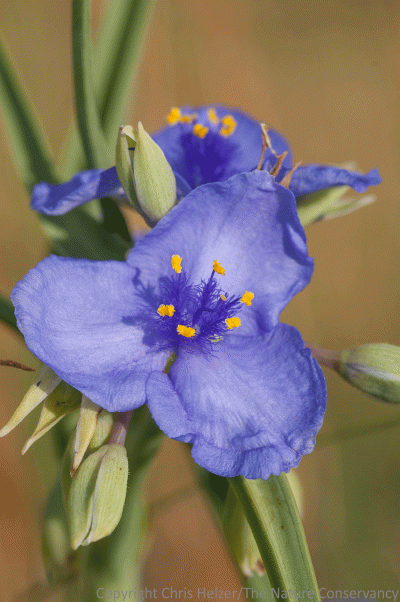
Spiderwort (Tradescantia occidentalis) is also in full bloom right now.

Spiderwort (Tradescantia occidentalis) is also in full bloom right now.  It is one of my favorite flowers.
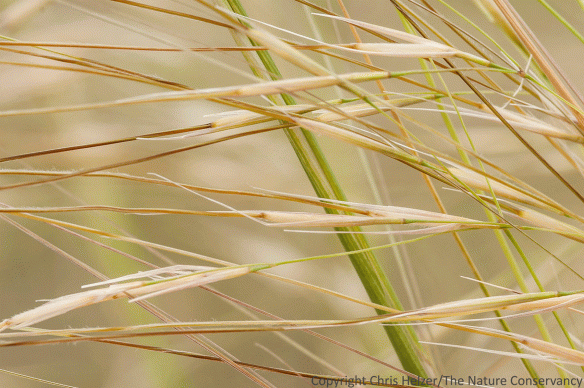
Needle-and-thread grass (Hesperostipa comata) is producing seeds, which look very much - and can act very much - like sharp spears.  Trying to figure out why this grass is blooming abundantly in some pastures and not others has been a fun mind puzzle for me this week.

Needle-and-thread grass (Hesperostipa comata) is producing seeds, which look very much – and can act very much – like sharp spears. Trying to figure out why this grass is blooming abundantly in some pastures and not others has been a fun mind puzzle for me this week.

Wetlands are all over many parts of the Sandhills.  Groundwater levels are high and often exposed between the vegetated sand dunes.  The wetlands are loaded with everything from frogs and salamanders to trumpeter swans and grebes.

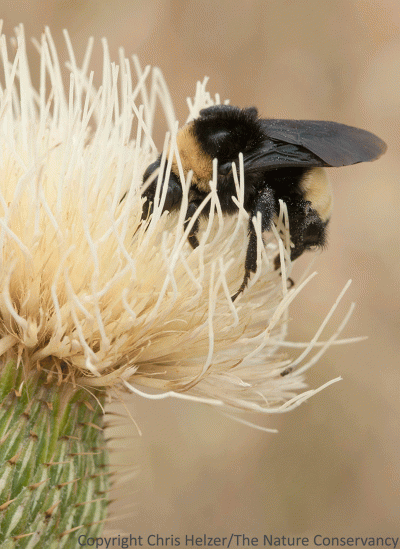
Platte thistle (Cirsium canescens) is a great native thistle with a cream-colored flower.  It is loaded with pollinators right now.
bum

This bumblebee was one of many bees I’ve seen enjoying Platte thistle.

Wetlands are all over many parts of the Sandhills. Groundwater levels are high and often exposed between the vegetated sand dunes. The wetlands are loaded with everything from frogs and salamanders to trumpeter swans and grebes.

Wetlands are all over many parts of the Sandhills. Groundwater levels are high and often exposed between the vegetated sand dunes. The wetlands are loaded with everything from frogs and salamanders to trumpeter swans and grebes.

Lizards are common, especially in areas of bare sand.  They scurry to cover as we approach, but this prairie lizard (Sceloporus sp.) posed long enough for a photo.

Lizards are common, especially in areas of bare sand. They scurry to cover as we approach, but this prairie lizard (Sceloporus sp.) posed long enough for a photo.


Photo of the Week- June 10, 2016

I’ve written many times about the 2012 wildfire that impacted our Niobrara Valley Preserve, and the continuing recovery of the plant and animal communities there.  When I was up at the Preserve a few weeks ago, it was really interesting to explore the north side of the river where the fire wiped out the pine and eastern redcedar trees.  I know I’ve posted a number of times about the way that area is recovering.  If you feel like you’ve seen plenty of photographs of vibrant green vegetation beneath stark blackened tree trunks, this is your chance to click to another site and catch up on the box score of a recent baseball game or catch up on celebrity gossip.

(Are they gone?  Ok, good.  The rest of you can enjoy these photos.)

Grasses

The vegetation beneath the tree skeletons still has a lot of annual plants, but perennial grasses, sedges, and forbs are becoming more abundant.

shrubs

Shrub patches are also increasing in size (there is a big one on the right side of the photo).

Wooly locoweed

I’m pretty sure this is loco weed (Oxytropis lambertii).  It is one of many wildflowers that have begun to reassert themselves in the plant community and fill in the bare patches.

puccoon

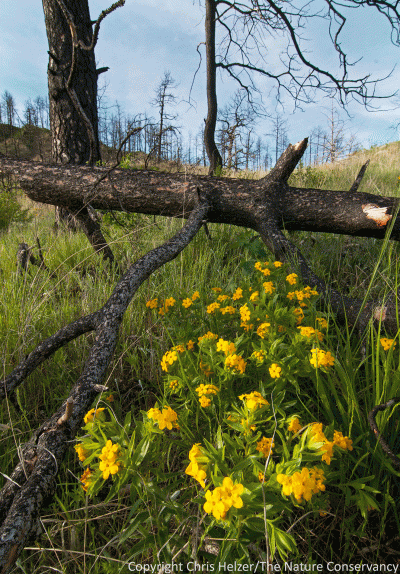
Hairy puccoon (Lithospermum caroliniense) might be the showiest of the flowers I saw on my last trip.  Its yellow-orange blossoms contrasted wonderfully with the green vegetation and black trees.