Here’s the third installment of prairie photos from 2020. I’m finding the process of revisiting the photos I took this year to be energizing, and I hope you get something positive from it as well. Amongst the stress and anxiety created by the year’s events, reminding myself how much beauty and life there is in the world is really helpful. Exploring or viewing images of nature doesn’t reduce the amount of work to be done or fix the big issues we face, but it provides a refuge I can use to recharge before engaging with those challenges again.
As a quick reminder, I’m posting some of my favorite prairie photos from 2020 and asking for your help in selecting the ones I’ll use for a project that I hope will both celebrate prairies and share the aforementioned solace with as many people as possible. Today, I’m sharing photos from May. You can vote on your favorites by sharing the photo numbers you like best in the comments section of this post. I’ve remembered this time (I don’t always) to set up the photos so you can click on each of them to see a larger version, if you want.
Thanks to everyone who voted on the March/April photos from last week. The top vote getter – by far – was the backlit pasqueflower scene from the Niobrara Valley Preserve. I’m glad people like it. I waited a long time that day for the sun to finally pop out just long enough to get that shot. The other photos receiving high numbers of votes, in order of popularity, were #’s 10, 2, 6, 16, 6, 11, and 12.
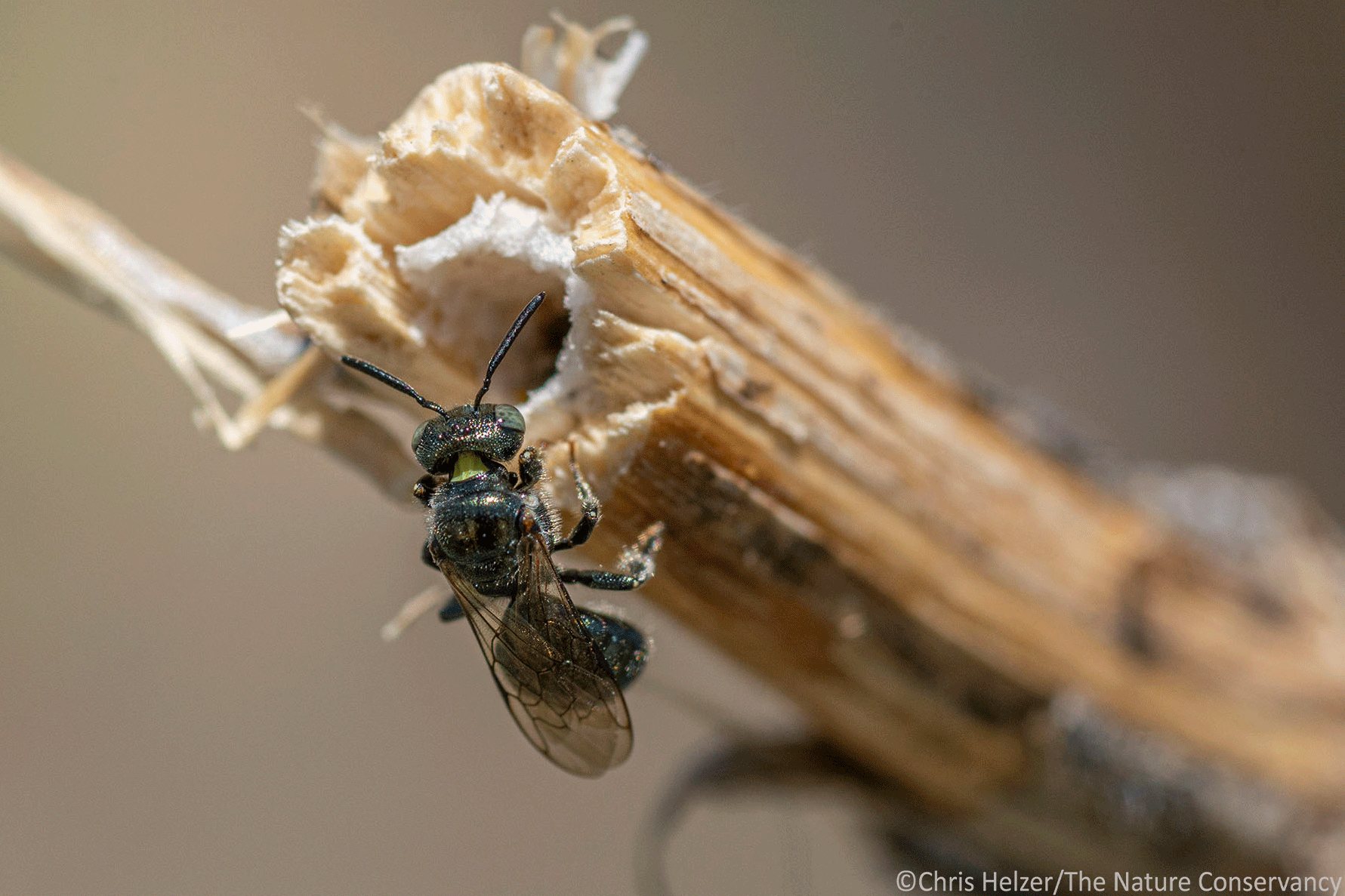
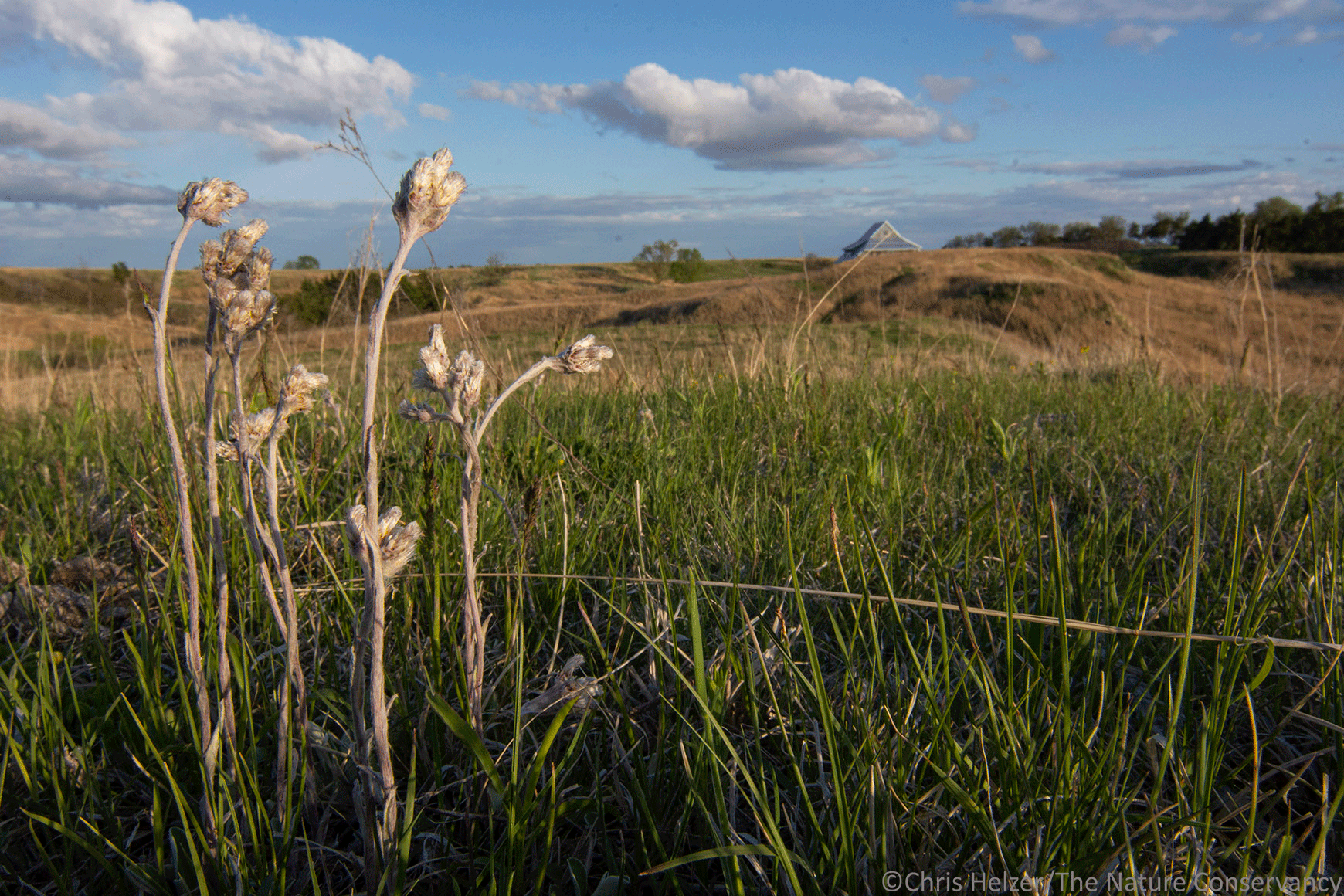
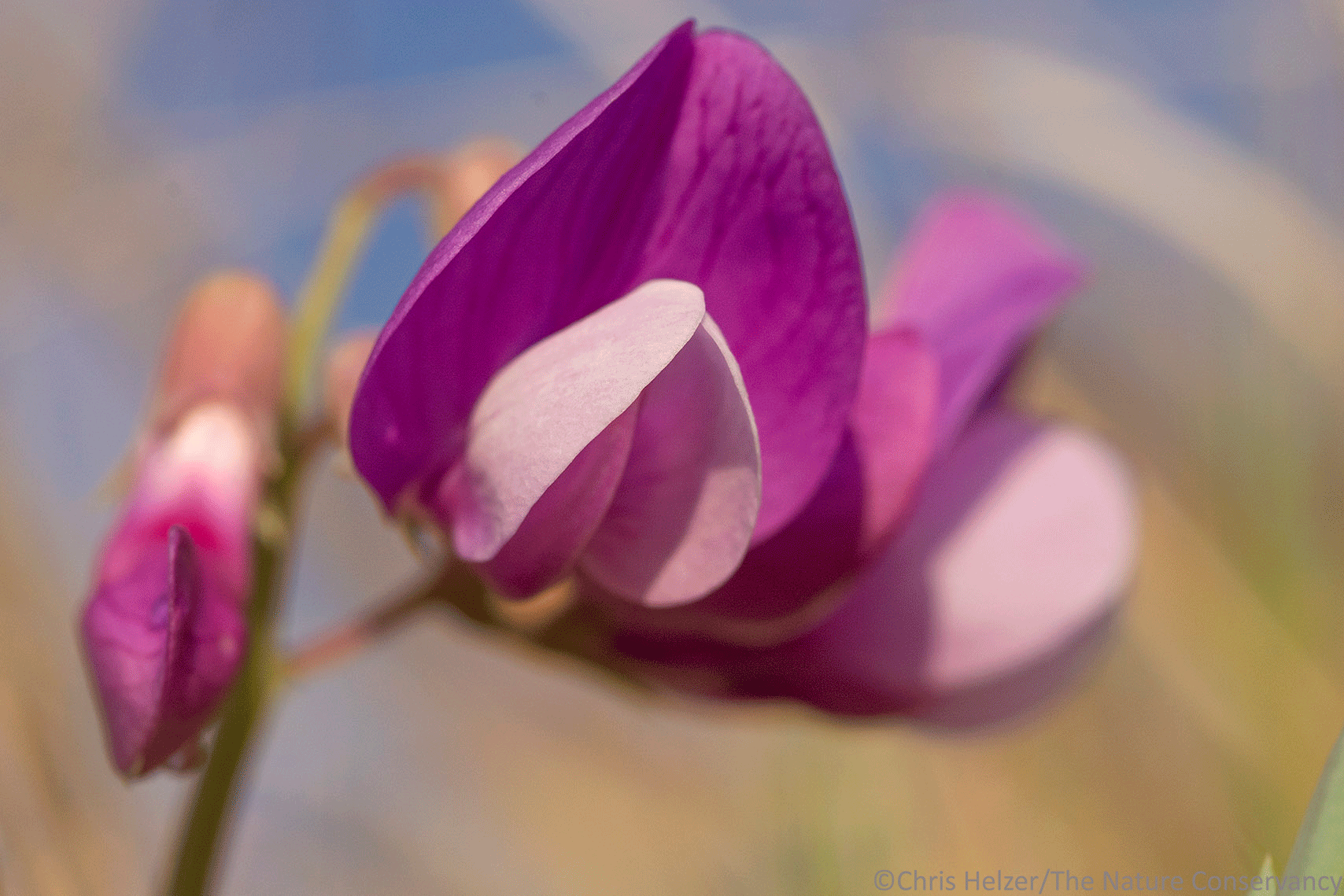
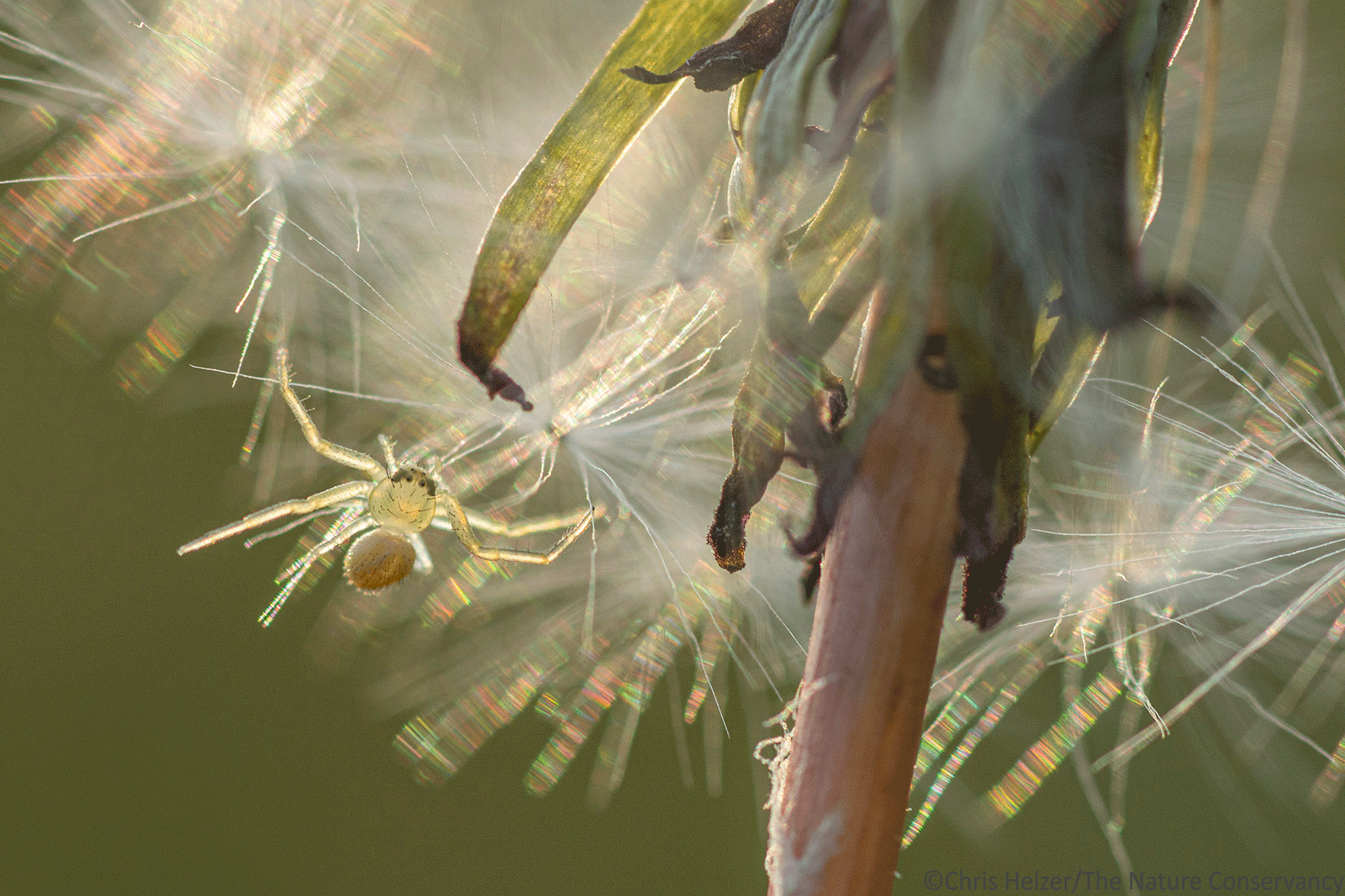
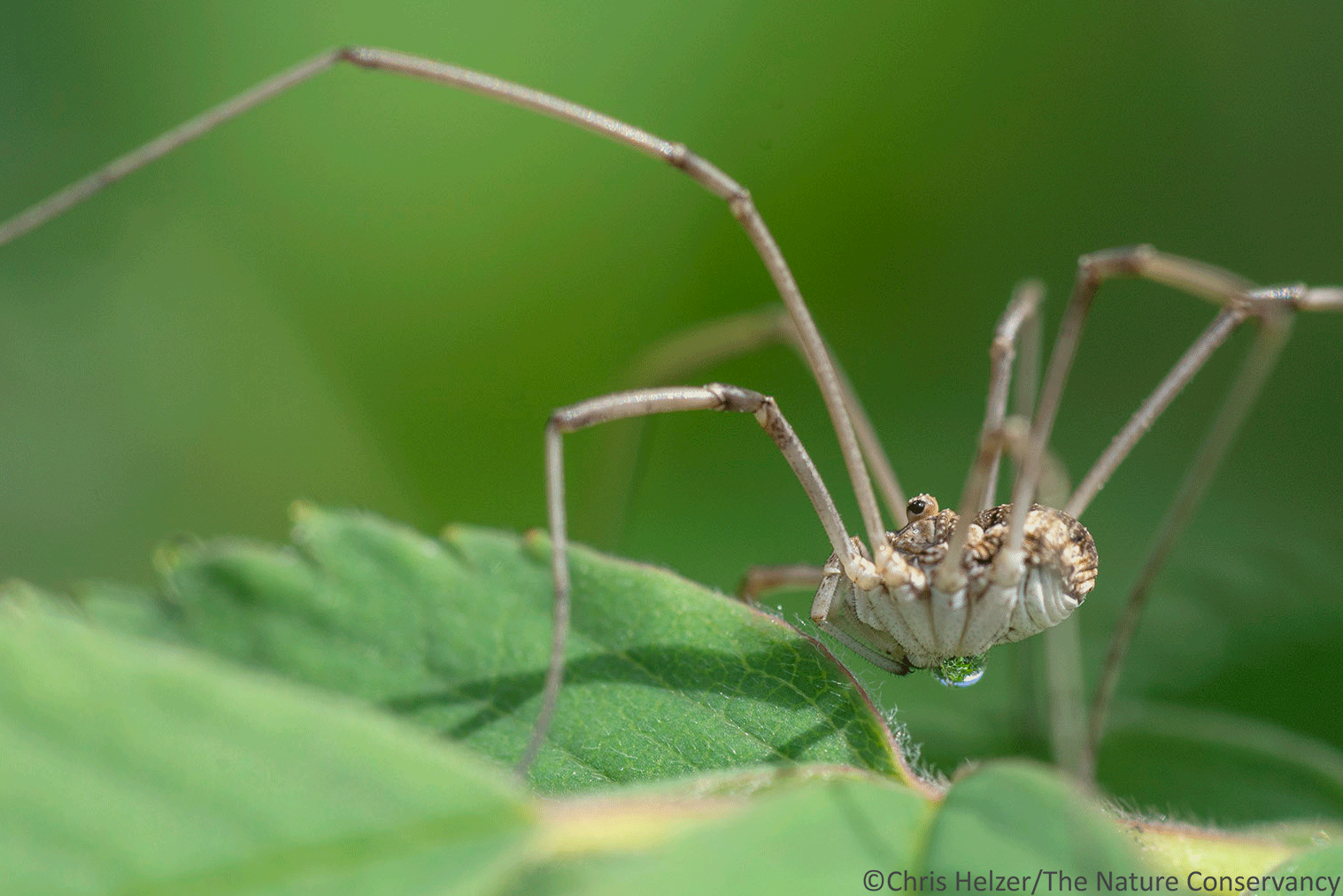
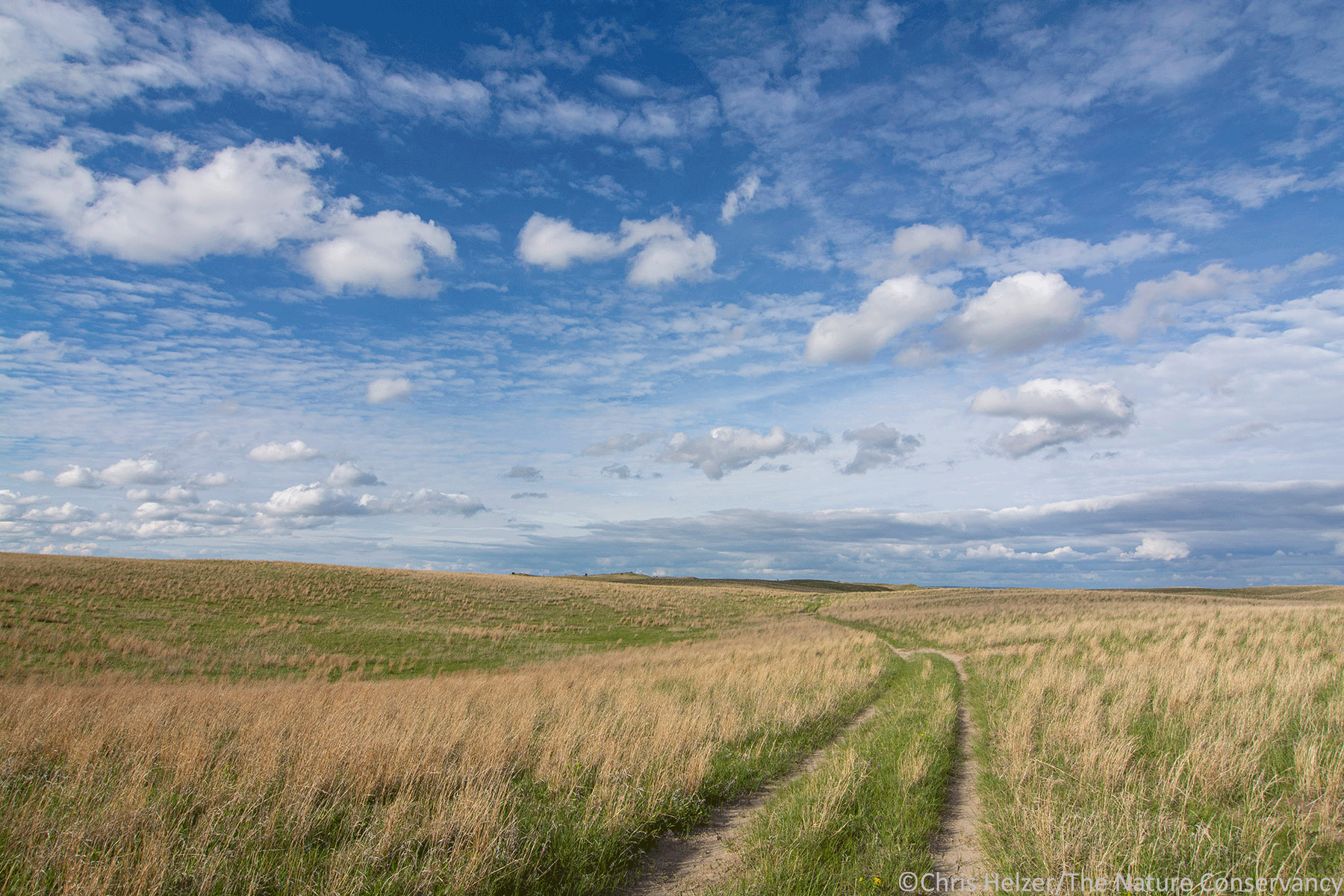
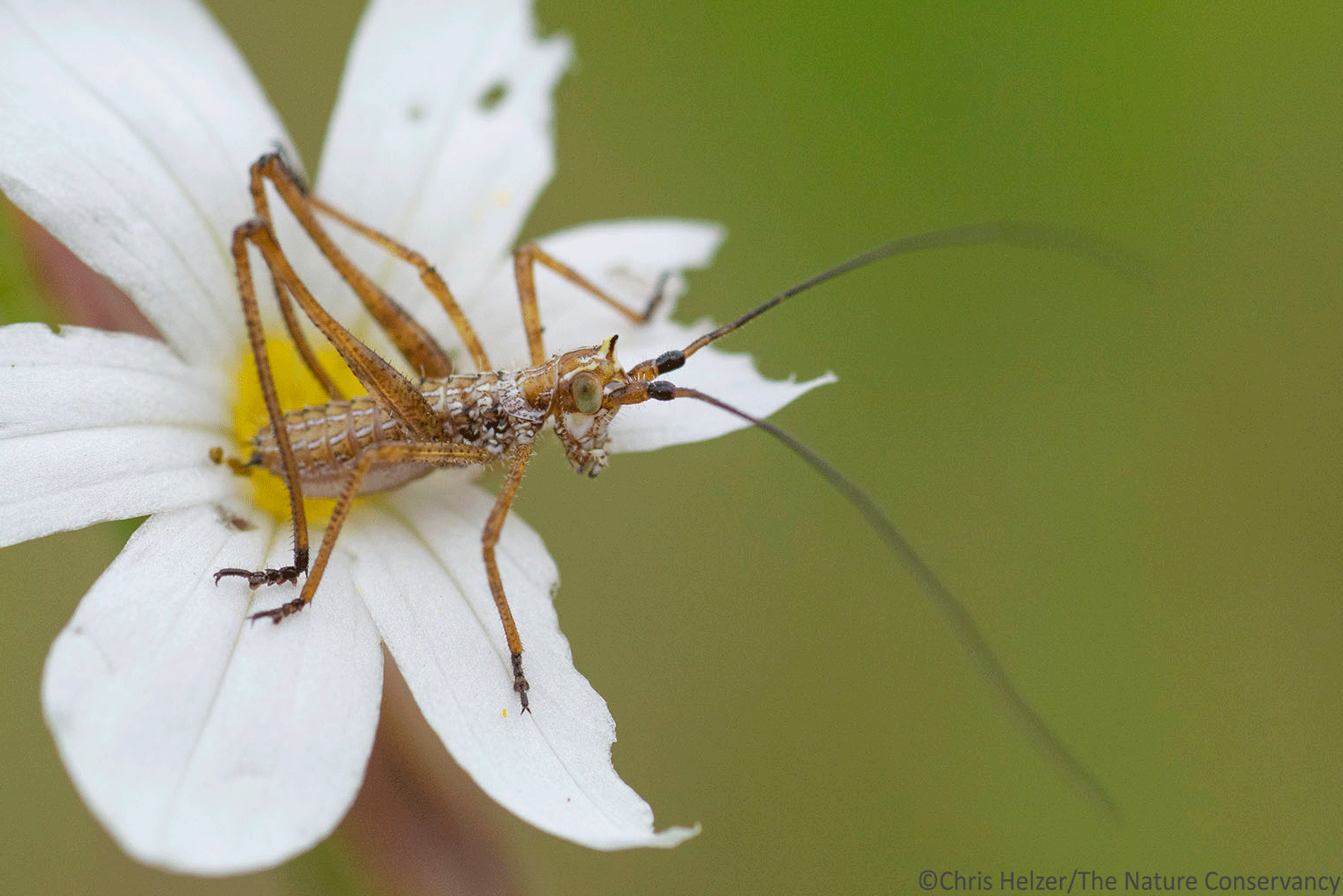
1.) Small male carpenter bee (Ceratina) probably waiting for a female to return to her nest in the hollow step of an ironweed plant (Vernonia baldwinii). Helzer backyard prairie garden. Nikon D7200 with Nikon 150mm macro lens. ISO 400, f/13, 1/500 sec.2.) Fringed puccoon (Lithospermum incisum) in late day light. Helzer family prairie. Nikon D7200 with Nikon 150mm macro lens. ISO 400, f/11, 1/1000 sec.3.) Ground plum, aka buffalo pea (Astragalus crassicarpus). Helzer family prairie. Nikon D7200 with Nikon 10.5mm fish eye lens. ISO 400, f/11, 1/160 sec.4.) Woolly locoweed (Oxytropis lambertii) at Gjerloff Prairie (Prairie Plains Resource Institute). Nikon D7200 with Nikon 10.5mm fish eye. ISO 640, f/22, 1/200 sec.5.) Buffalo currant (Ribes odorata). Helzer backyard. Nikon D7200 with Nikon 150mm macro lens. ISO 640, f/18, 1/400 sec.6.) Pussytoes (Antennaria neglecta) at Gjerloff Prairie (Prairie Plains Resource Institute). Nikon D7200 with Tokina 12-28mm wide angle lens. ISO 640, f/22, 1/160 sec.7.) Showy vetchling (Lathyrus polymorphus) at Gjerloff Prairie (Prairie Plains Resource Institute). Nikon D7200 with Nikon 150mm macro lens. ISO 640, f/10, 1/1250 sec.8.) Spiderwort (Tradescantia) leaf and water droplets. Helzer prairie garden. (Shadows in background went black because of contrast between brightness of leaf and darkness of shadows.) Nikon D7200 with Nikon 150mm macro lens. ISO 320, f/16, 1/160 sec.9.) Crab spider spiderling and dandelion (Taraxacum officinale). Helzer family prairie. Nikon D7200 with Nikon 150mm macro lens. ISO 320, f/10, 1/320 sec.10.) Harvestman, aka daddy longlegs. Helzer prairie garden. Nikon D7200 with Nikon 150mm macro lens. ISO 320, f/13, 1/200 sec.11.) Seed head of pasqueflower (Pulsatilla patens). Niobrara Valley Preserve. Nikon D7200 with Nikon 150mm macro lens. ISO 320, f/14, 1/320 sec.12.) Prairie spiderwort (Tradescantia occidentale) in sand blowout. Niobrara Valley Preserve. Nikon D7200 with Tokina 12-28mm wide angle lens. ISO 320, f/16, 1/400 sec.13.) Tent caterpillars. Niobrara Valley Preserve. Nikon D7200 with Nikon 150mm macro lens. ISO 320, f/18, 1/100 sec.14.) Sandhills prairie and trail road. Niobrara Valley Preserve. Nikon D7200 with Tokina 12-28mm lens. ISO 320, f/14, 1/500 sec.15.) Katydid nymph on blue-eyed grass (Sisyrhinchium campestre). Helzer family prairie. Nikon D7200 with Nikon 150mm macro lens. ISO 640, f/13, 1/1000 sec.
I’m really grateful for the feedback on these photos. I know which are my personal favorites, and that won’t change because of votes from others, but it’s also helpful to see which images most resonate with others. If I’m going to try to convince the larger public that prairies are special, valuable, and full of beauty, I want to use the photos most likely to capture their interest. So, thank you for your help.
Back in 2018, when I was working on my square meter photography project, my hopes of photographing pollinators visiting stiff sunflower plants within my plot were dashed by hordes of small brown beetles. Those beetles ravaged the flowers, eating everything that pollinators might have been interested in, and more. It was a neat phenomenon to observe, but I was also really hoping to photograph lots of pollinators on those sunflowers…
A 2018 photo, showing a mass of leaf beetles on stiff sunflower within my square meter plot.
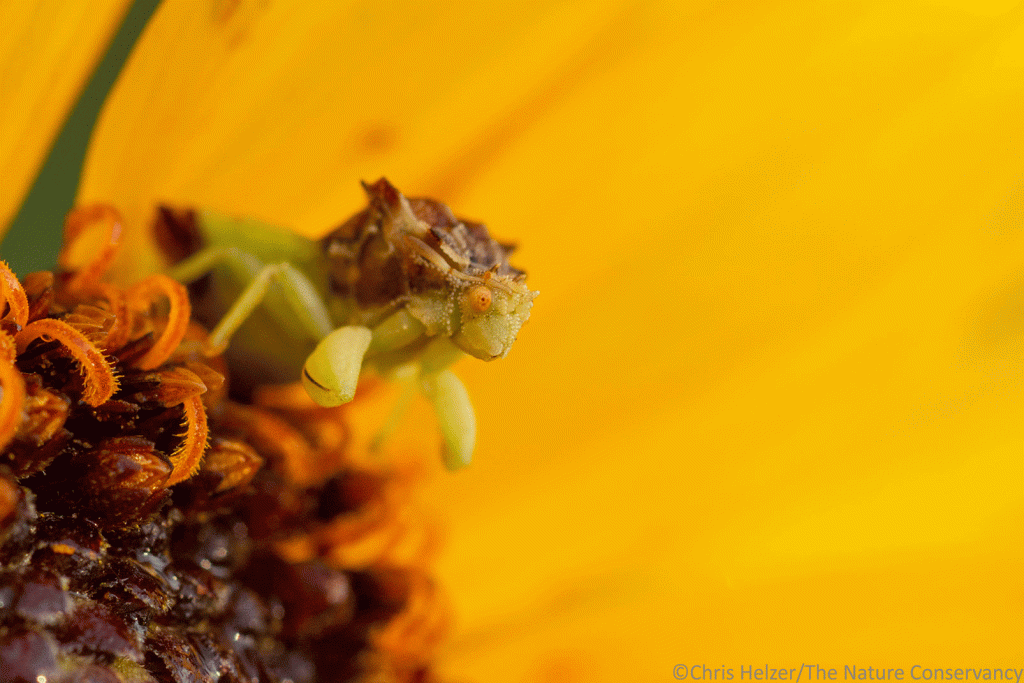
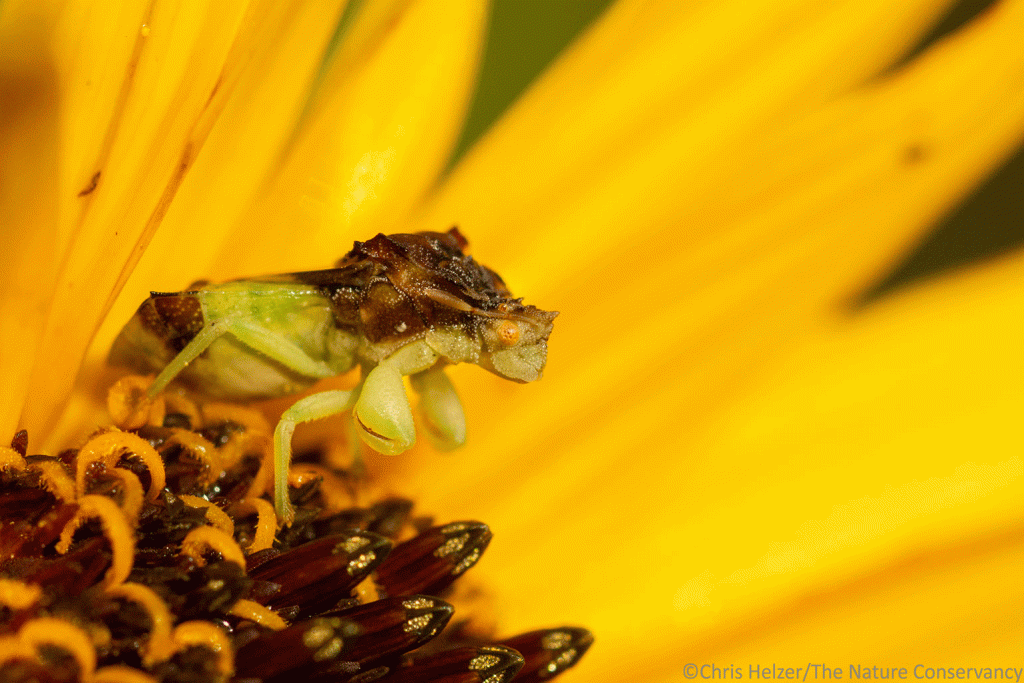
At the time, I remember wondering where the predators were. Usually, when there is a concentration of animals, predators come around to take advantage of the situation, but I never saw anything eating those beetles. This past summer, in a different part of Lincoln Creek Prairie, the situation was different. An abundance of jagged ambush bugs (great name, right?) appeared at the same time as the little beetles. Oh, and thanks to MJ Paulsen, I can report that those beetles appear to be a species of Metrioidea – a group of skeletonizing leaf beetles.
A jagged ambush bug (Phymata sp) sits on a stiff sunflower plant, waiting for prey to come within striking distance of its short powerful front legs.Another ambush bug on another stiff sunflower. Their front legs are ‘raptorial’, just like those of a praying mantis, but much thicker and shorter.
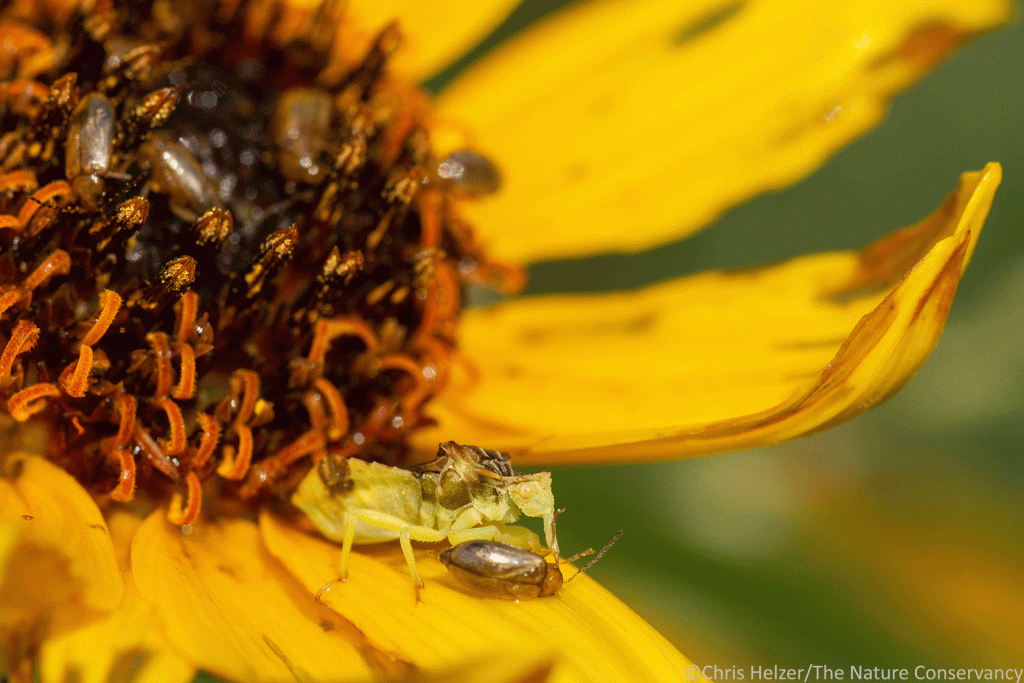
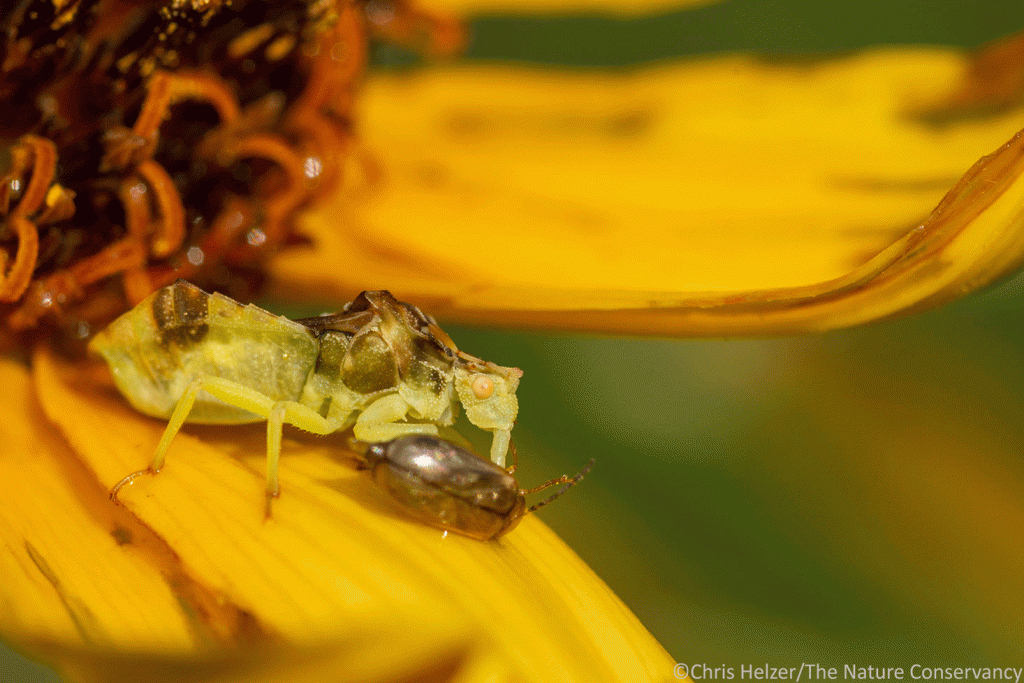
I walked around Lincoln Creek Prairie on the morning of August 16 and saw leaf beetles on numerous flowers, though not quite in the same densities as I’d seen them in 2018. I also saw ambush bugs on numerous flowers. NUMEROUS flowers. Lots of them. I don’t know where those ambush bugs were in 2018, but they sure made a dramatic appearance in 2020. And they were definitely catching and eating those little leaf beetles.
Ambush bug and leaf beetles. In this closer view, you can see the ambush bug’s mouthpart inserted into a beetle.
It was a beautiful morning, so I didn’t spend all of the good light photographing ambush bugs, but it was hard to avoid pass by without peering at and photographing quite a few of them. I’m not saying their abundance was a direct response to the leaf beetles emergence, but the coincident occurrence was certainly interesting. I’d be curious to hear if anyone else has noticed these beetles or the ambush bugs feeding on them.
Nature is complicated, so it’s hard to know whether ambush bugs are adapted to, or even are proficient at suppressing population booms of leaf beetles. On the other hand, predators in general – including little ones like ambush bugs – definitely play very underappreciated roles in ecosystems. The immensity of those roles goes unnoticed until predator populations suddenly decrease in number, due to disease, weather patterns, human actions, or something else.
There are lots of examples of research projects showing those cascading impacts, by either reducing predator populations on purpose or simply studying the response when it happens through other means. One of my favorites is a study I mentioned in an earlier post I wrote on coyotes. Halving the population of coyotes on a huge ranch in Texas dramatically reduced the abundance and diversity of small mammal populations, but allowed two species to skyrocket – kangaroo rats and jackrabbits. The latter of those competes with cattle for forage, which created a situation that was probably not what ranchers who shoot coyotes are hoping for.
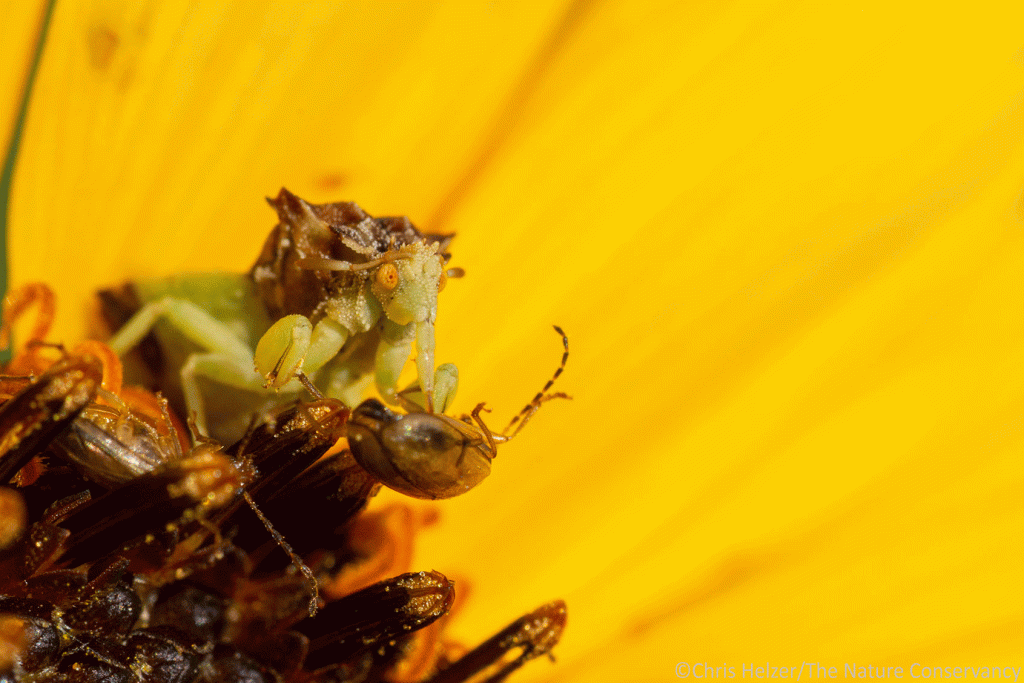
Another ambush bug with its prey.
It’s easy to root against predators when they’re eating something we think is cute, or something we’re hoping to harvest ourselves. Responding by trying to reduce predator numbers, though, has been shown countless times to be a mistake, with ramifications often much greater than the perceived impact of those predators. Again, nature is very complex, and while most ecosystems need careful management, especially these days, there is also plenty of evidence that large scale predator control efforts are usually a bad idea.
Predators have such fascinating lives and hunting strategies, it’s easy to fall in love with them. Even the ones you have to lean in closely to see are worth the trouble. Ambush predator invertebrates like assassin bugs, ambush bugs, crab spiders, and others, are particularly easy to observe and study. While they capture and kill a lot of cute butterflies and bees, they also kill a lot of beetles and other species that compete with those pollinators. What’s their overall impact? What would happen if they weren’t around? So many storylines and interconnections to ponder!







 The Prairie Ecologist