The Post-Grazing Party – Part 2

Earlier this month, I wrote about a project I’m undertaking this year to illustrate what we see happening in prairies that enter their first year of growth following a long period of intense grazing. The ways prairie plants and animals respond after that kind of grazing are some of the most fun and fascinating interactions I see in grasslands.

You can read the full background of the project in my previous post, but the basic idea is that I want to show people what happens in our plant communities when the dominant plants have been suppressed by grazing. In our case, I’m talking about grazing that keeps the prairie cropped short for most of a growing season, if not longer.

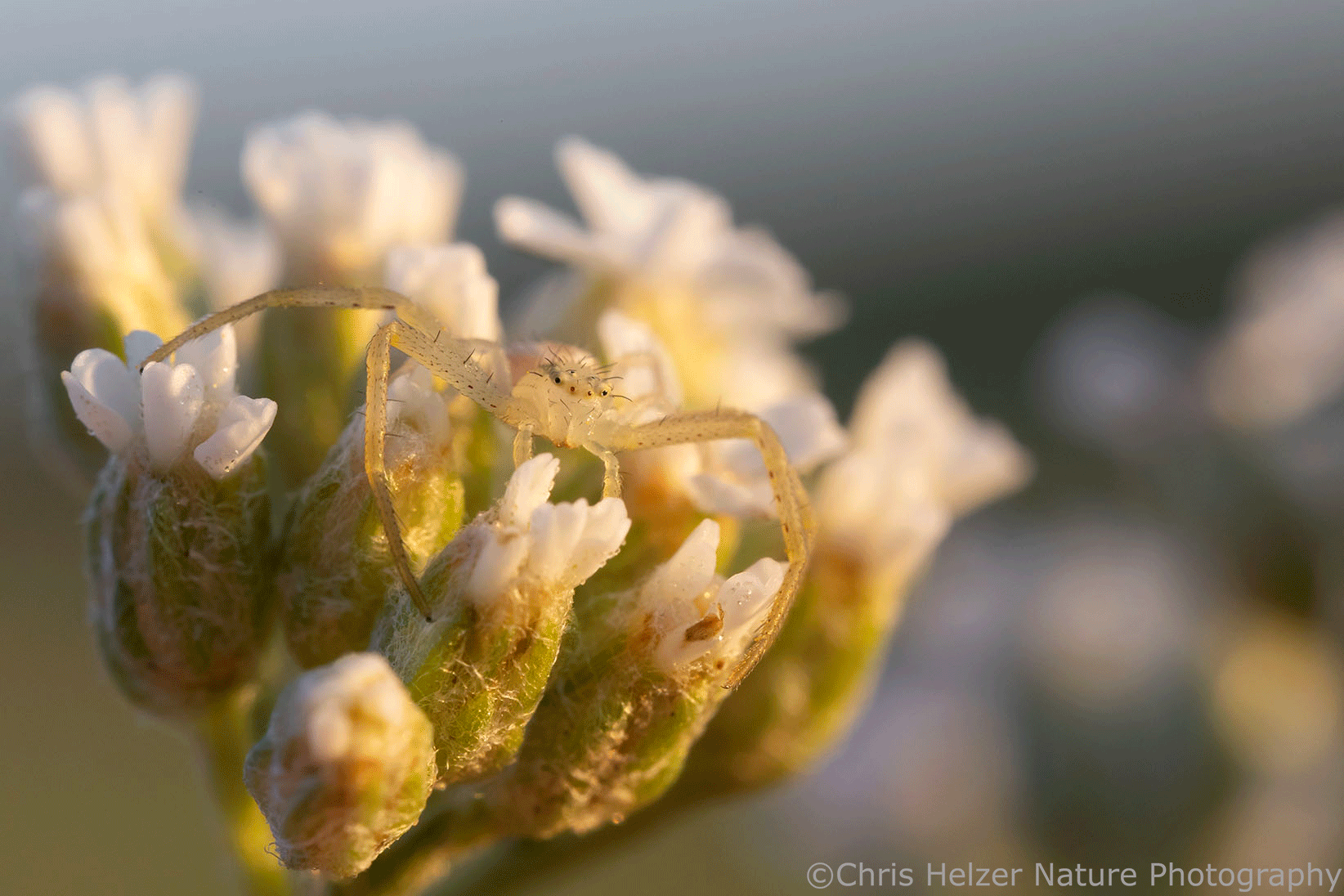
Crab spider on pale poppy mallow (Callirhoe alcaeoides) seen last week in my East Dahms Prairie photo plot.

What we’re doing is very different, by the way, than the kind of rotational grazing approaches used by most ranchers. That’s not to say those rotational approaches are wrong. I just want to clarify the difference. We are using stocking rates that match or exceed what a rancher might use on the same land, but the goal of our experiments is to see how much habitat heterogeneity we can create.

Habitat heterogeneity has been strongly tied (through many research efforts) to both biodiversity and ecological resilience, which are our ultimate goals. We’re trying to learn as much as we can so we can help translate any lessons to ranchers and others who are looking to tweak what they’re doing to improve wildlife habitat, plant diversity, pollinator abundance, etc. We’re not to trying to talk them into doing exactly what we’re doing.

In my first post, I introduced two of the three sites I’m photographing this year. Today, I’m showing you the third. If you’ve visited our Platte River Prairies for a tour within the last several years, there’s a good chance you’ve seen this site up close. It’s the East Dahms pasture, where we’ve been testing open gate rotational grazing since for about six or seven years.

The site includes both remnant (unplowed) and restored (former cropland) prairie. The 80×80 foot plot I’m watching this year is in a 1995 planting done by Prairie Plains Resource Institute, which included about 150 plant species in the seed mix. It, and the rest of East Dahms, was managed with patch-burn grazing from about 2001 through 2018. We then switched to the open gate approach. As a result, it has gone through many cycles of season-long intense grazing, followed by long rest periods.

The East Dahms prairie, showing the four pastures and the habitat heterogeneity seen from the air.

In the open gate rotational system we’re testing at this site, each pasture gets about a season and a half of grazing before going into a 2 1/2 year rest cycle. In the case of Pasture C (seen above), it was grazed from early July through October in 2023 and then from late May through October in 2024. By mid summer of 2024, the vegetation was nearly uniformly short and it stayed that way through the end of the 2024 season. This spring, cattle were put in the pasture around April 15 and pulled out last week, giving them one more chance to graze Kentucky bluegrass, smooth brome, and tall fescue (invasive grasses) before the pasture starts its long rest cycle. Pasture C probably won’t be grazed again until mid summer of 2027.

An April 16, 2025 photo of Pasture C, near where where I’m doing my photo project.
Pasture D on April 16, 2025, which was open to cattle, in addition to Pasture C.

The two photos above show Pastures C (top) and D (bottom) with a spade to help show the vegetative structure. Both pastures were open to the cattle at the time, but the cattle chose to spend most of their time in Pasture C, even though it looks like there’s very little grass there. The quality of the fresh growth was apparently high enough to make that worthwhile. They wandered through Pasture D a little, mostly grazing smooth brome patches, but otherwise camped out in C until we closed the gate and they only had access to Pasture D.

Here’s the location of my photo plot (80×80 feet) within Pasture C.

The point of all that blathering is that this is a restored prairie, planted in 1995, that is just coming out of a long period of hard grazing. It should put on a good show this season, displaying the resilience of a diverse plant community and the animals (and other organisms) that are tied to those plants. As per usual, the big party is starting with a flush of annuals, biennials, and other short-lived plants.

Common dandelion (Taraxacum officinale)
Annual sunflowers (Helianthus annuus)
Black medic (Medicago lupulina)
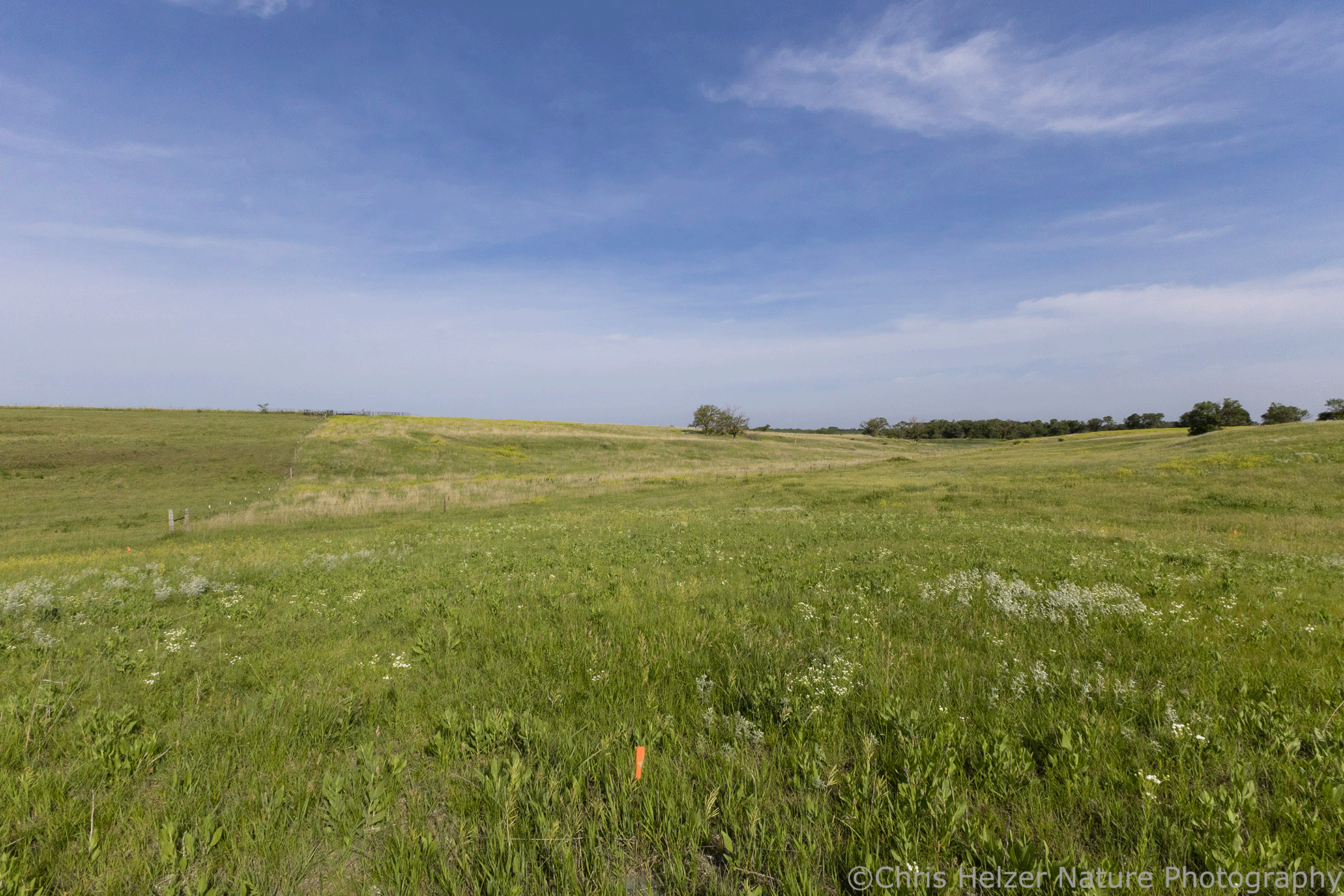
Here’s the 80×80 foot plot from the northeast corner, looking to the southwest. This look will change dramatically over the next few months.

Dandelions, annual sunflowers, and black medic are examples of the kinds of opportunistic plants that are taking advantage of both the bare soil and suppressed vigor of the normally-dominant grasses and other perennials in the prairie. Repeated grazing for many months hasn’t killed any of those perennials, but it has sapped them of a lot of their resources. They won’t grow very tall this year, and will be much less competitive, both above and belowground. By the end of next year (2026), however, they should be back to full strength.

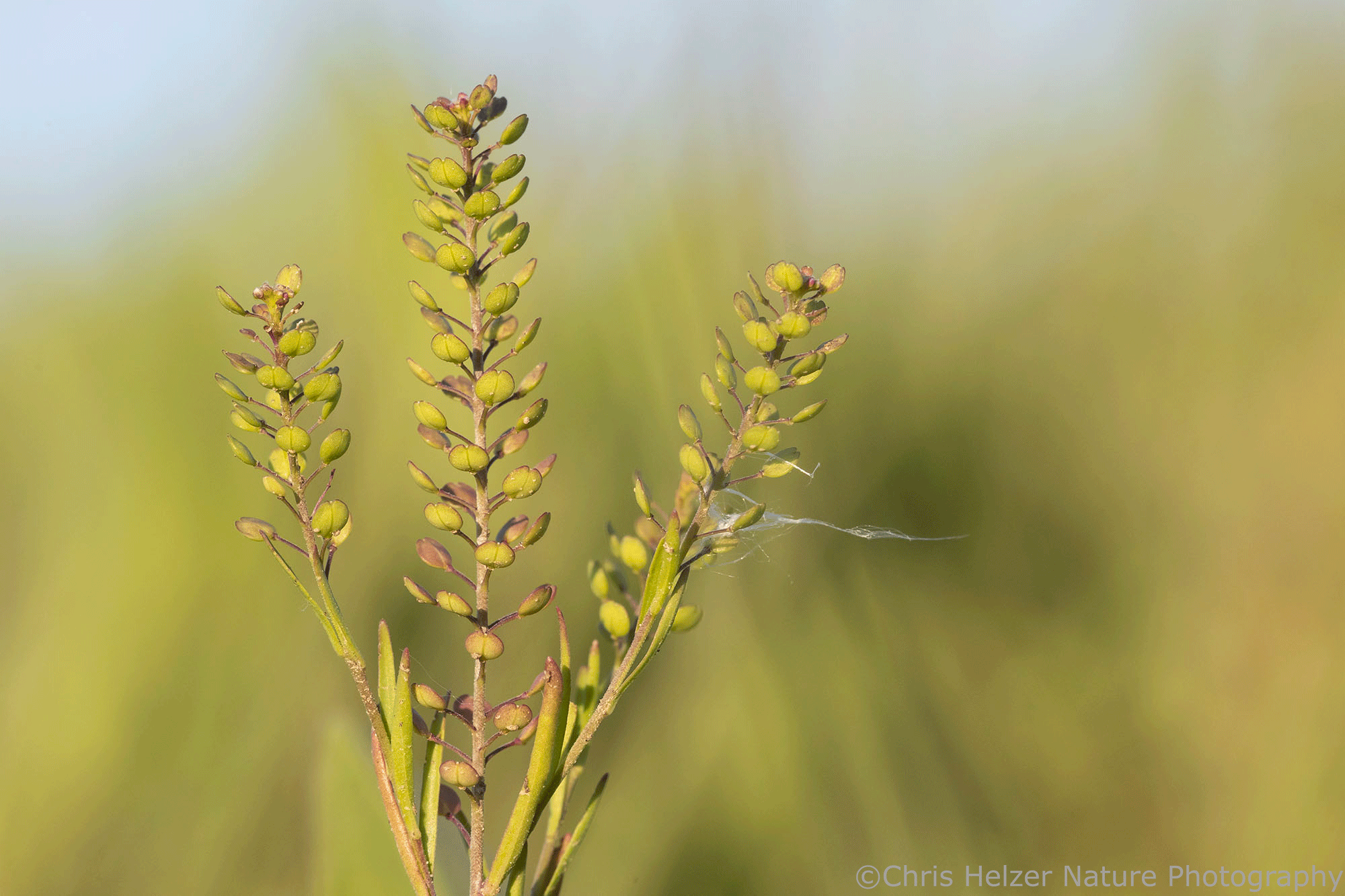
Annual mustards are often abundant in these kinds of post-grazing situations, and they’re peppered throughout my plot this year as well. I’ve included photos of three species below (I’m 85% confident in my species identification – mustards are tricky for me).

Shepherd’s purse (Capsella bursa-pastoris)
Field pennycress (Thlaspi arvense)
Tansy mustard (Descurainia pinnata)
Purslane speedwell (Veronica peregrina)

Opportunistic plants include both native and non-native species, but there are none at this site (or the other two I’m tracking this year) that are categorized as invasive. They’ll all fade into the background by next year, as the dominant plants. We’ll see very few of them until the grazing cycle comes back around again to open up space for them.

Not all of the opportunists are annuals, either. Some, like hoary vervain, yarrow, and black-eyed Susans are perennial plants that can be relatively short-lived and come and go quickly in a plant community, depending upon the degree of competition from other plants. Either that, or they often survive the tough years (when dominant grasses are strong) as small, non-flowering individuals – just hanging on to life until their next chance to flourish.

Prairie ragwort (Packera plattensis) is a native biennial that will bloom and make seed once before dying.
Pale poppy mallow (Callirhoe alcaeoides) is a long-lived perennial that seems to tolerate intensive grazing very well. It seems to thrive in the abundant sunshine provide by last year’s grazing.

It’s pretty easy for me to photograph the flowers in these post-grazing plots. I’ll do a lot of that this season and it’ll be fun to see the abundant color and texture they provide within the plant community, especially when we get into mid-summer when many of the bigger, showier species will start blooming.

However, the wildlife habitat values of the post-grazing party period are also important, so I’ll try to document those as well. Because the growth of most grasses will be limited this year, but opportunistic forbs will grow tall, the structure across these sites is likely to resemble a miniature savannah – with forbs instead of trees. Animals will be able to move easily through the short grass, but will have overhead cover for both shade and protection from predators. Insect abundance is typically very high under those conditions, too, including pollinators, herbivores, predators, etc.

Here are a few invertebrate photos I took a few days ago in the East Dahms plot.

Galls created by the spiny rose gall wasp (Diplolepis bicolor) on prairie wild rose (Rosa arkansana).
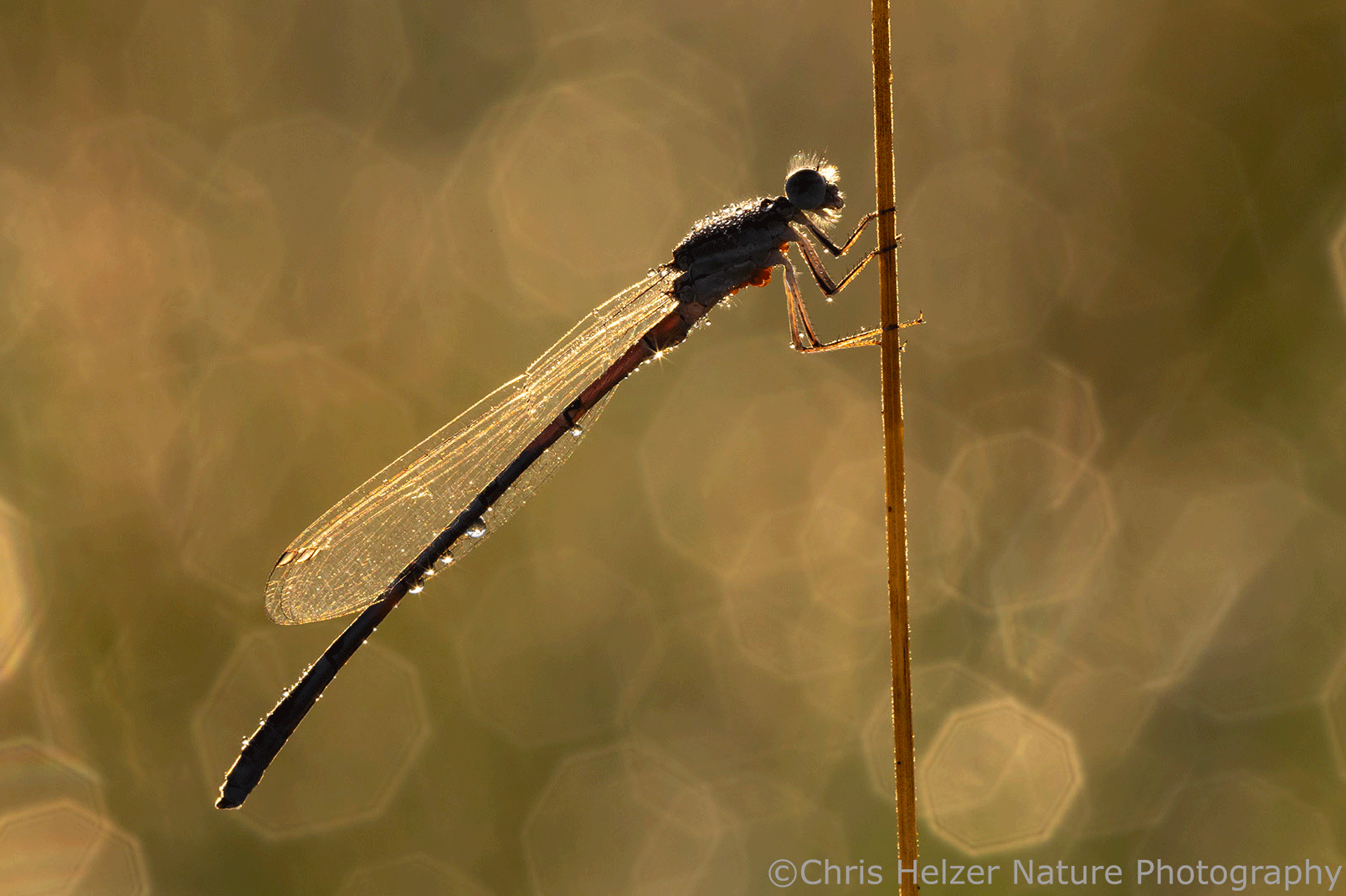
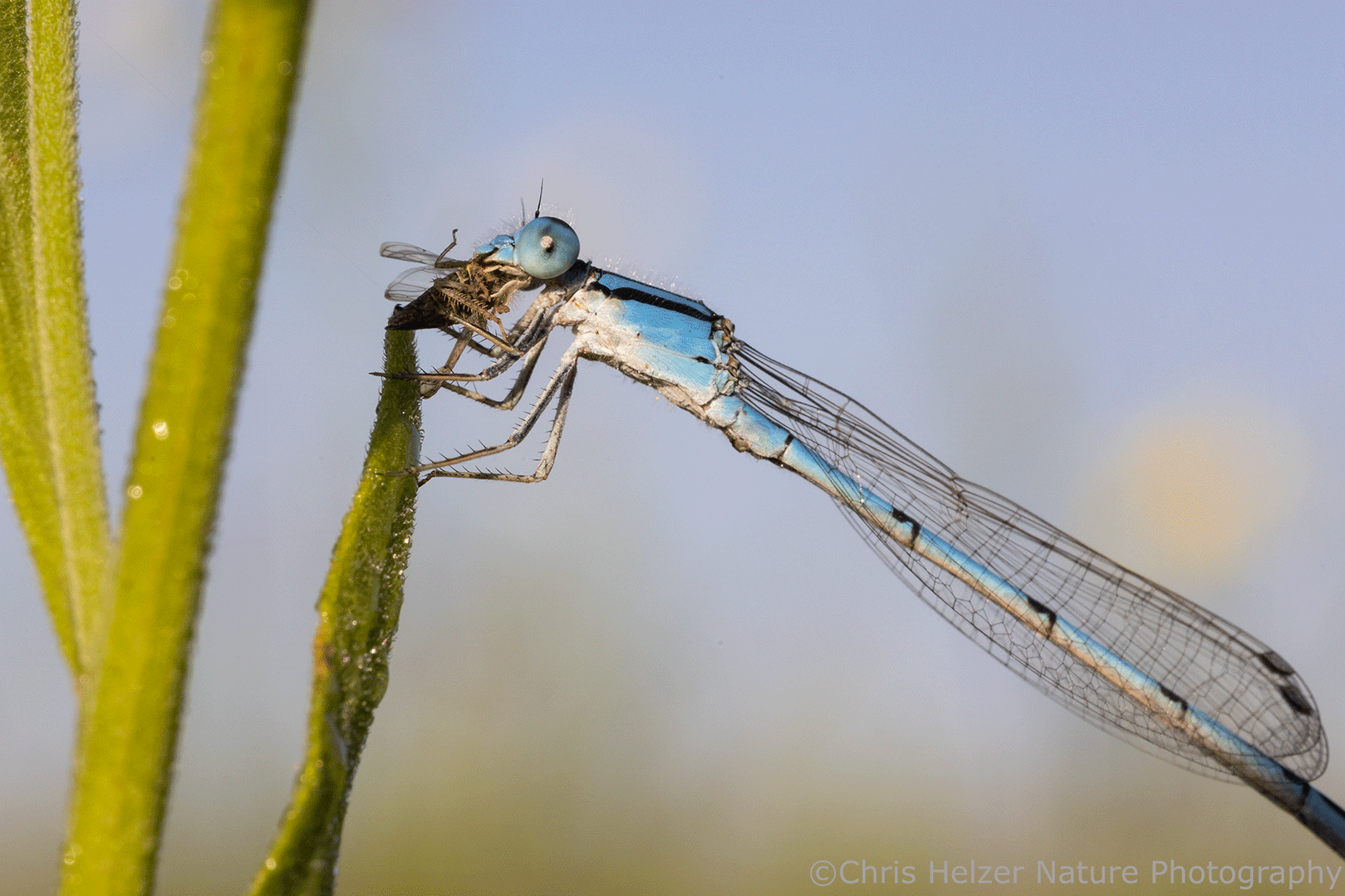
Damselfly perched on Kentucky bluegrass
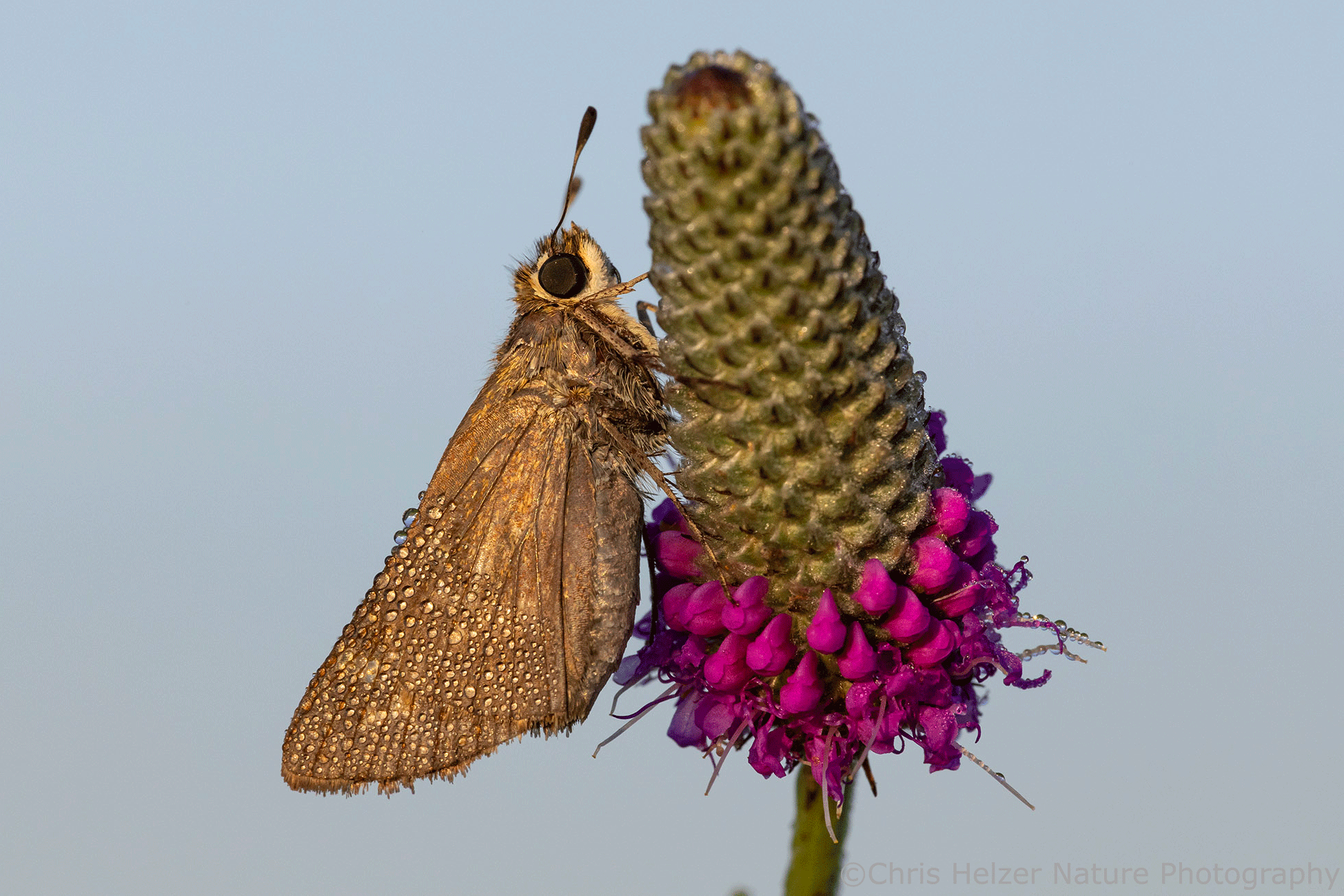
A tiny moth on Kentucky bluegrass
A very small long-jawed orbweaver spider with a captured insect (planthopper?). The spider was about 1/2 inch long.

Right now, these three plots might look pretty rough/ugly, depending upon your perspective. The vegetation is very short and there’s a lot of bare ground exposed. That runs counter to what most ranchers are taught about range management. It is also very difficult for many prairie folks to look at because it looks the same as many chronically overgrazed pastures they’ve seen.

The crucial difference is that these sites are being given plenty of opportunities to rest between grazing bouts, so we’re not losing perennial plant species – even those that cattle really like to eat (e.g., common milkweed, Canada milkvetch, entire-leaf rosinweed, prairie clovers, etc.). Our prairies look very different from year to year, but all the constituent plant species seem to handle the dynamic conditions just fine – while we also create a wide variety of habitats to support a diverse community of animals. At the East Dahms site, we’re also tracking what’s happening in the soil and I’ll share those results when I can (the news is good so far).

Anyway, stay tuned. It should be a fun year, even if our current drought conditions hang around and/or intensify. No matter what the weather brings, there will be a lot happening at the party.

Photos of the Week – May 8, 2025

This week, I’ve found two different brief opportunities to poke around some local prairies with my camera. Both prairies were nice remnant (unplowed) grasslands with a good diversity of early season wildflowers, native sedges, and other little treasures.

My first stop was at Gjerloff Prairie, a terrific loess hills prairie owned and managed by Prairie Plains Resource Institute. It’s only about 20 minutes north of my house here in Aurora, so it’s a site I know pretty well. I usually try to visit at least once or twice each spring because it has some wildflower species I don’t see often in other prairies near home.

Showy vetchling (Lathyrus polymorphus) at sunrise.
The same plant, photographed at a slightly different angle to get the sun behind it.
Big portions of Gjerloff Prairie were burned this spring, and recently enough that there weren’t yet any flowers blooming in those burned areas. That meant I had to walk further than usual to get to some unburned areas and open flowers.
Prairie ragwort (Packera plattensis) is a terrific little biennial.
I have a hard time not photographing showy vetchling when it’s blooming.
More from the same patch of showy vetchling.
False Solomon’s seal (Maianthemum stellatum) is a confusing plant to me (I still love it) because I first learned it as a woodland plant but it does well in the middle of some open prairies as well.

Later in the week, I took a break from other projects and wandered around one of our sedge meadow/prairie sites (Caveny Tract) at The Nature Conservancy’s Platte River Prairies. It’s a site with sandy alluvial (river deposited) soils, but still has a fair amount of overlap with Gjerloff Prairie in terms of plant species blooming right now. Prairie ragwort, pussytoes, and fringed puccoon are just a few examples. (For some reason a lot of the current wildflowers are yellow.) However, there are lots of different plants as well.

Prairie ragwort with a tiny moth at the Platte River Prairies.
Fringed puccoon (Lithospermum incisum)
Yellow stargrass (Hypoxis hirsuta) is a “locally common” wildflower along the Platte River. It’s not in all sites, but can be very abundant in some.

The Caveny Tract includes more than 350 acres of prairie that is adjacent to hundreds of acres more. There are lots of little sedge meadow habitats embedded in the prairie, mostly in old swales formed by the meandering Platte River hundreds or thousands of years ago. Those swales are now close enough to groundwater to host a mixture of wetland and mesic prairie plants. Those sedge meadows, not surprisingly, contain both an abundance and diversity of sedges. In many places, you can stand still and see half a dozen sedge species within a few yards of your feet.

That’s assuming you’ve spent enough time with a dichotomous plant key to learn to identify some of the different sedge species. If you’ve never used a dichotomous key to identify plants, you’re missing a terrific opportunity to be overwhelmed by botanical terminology. I know enough to recognize differences between most sedge species and can identify the more common ones on sight. Every once in a while, I’ll grab a sample of one and run it through the key to stay in practice (and try to confirm my identification guess). It can take a while, mostly because I have to keep referring to the glossary to remember what a lot of the words mean.

If I did it more often, of course, I’d be better at keying plants. On the other hand, there are other things I’d rather be good at, so it’s all a matter of perspective and prioritization. I’m an ecologist, not a botanist, entomologist, or ornithologist. I don’t have to know all the species within any particular taxonomic group. I just need to know enough of them that I can recognize interactions between them. Or, at least, this is what I tell myself when I don’t feel like keying out plants.

I’m pretty sure this is Carex tetanica, one of many sedge species in the wet meadows of the Caveny tract and surrounding areas.

Here’s an example of what I mean about the terminology needed to quickly run through a plant key. The sedge pictured above is probably Carex tetanica. I think that because its lower pistillate spikelets appear to be loosely flowered, as compared to those on Carex meadii. Both species have perigynia with 2 strong marginal ribs and are glaucous at maturity. Their pistillate scales are also usually purplish brown on each side of the midrib.

If you’re a botanist, all the words in that paragraph probably make perfect sense (though you may also tell me that the pictured plant is Carex meadii rather than C. tetanica and I won’t argue with you). If you’re an ecologist like me, you’re content to live with a little uncertainty and keep some brain space reserved for other words and ideas.

These buttercups were thriving in a particularly low/wet part of a slough where a tree clearing/thinning project recently took place along the south edge of the Caveny tract. What species of buttercups are they? I have no idea. They’re really pretty, though.

The photographic highlight of my Caveny Tract exploration was a big patch of pussytoes (Antennaria neglecta) going to seed. I spotted the pale patch of fuzzy plants from 50 yards away or so. Growing right in the middle of it was a lone prairie ragwort plant. I found the combination of the two species really attractive and spent a lot of time photographing the ragwort flowers surrounded by the pale fluff.

Prairie ragwort and pussytoes

These are just a few of the many photos I liked from the myriad composition options I played with. I used three different lenses to photograph the flowers, including a wide angle, a macro telephoto (180mm) and a longer telephoto (400mm). After I’d been shooting for a while, a little sweat bee arrived on the scene and kept me captivated for a few more minutes.

Prairie ragwort and pussytoes with a sweat bee for fun

Later in the season, both of these prairies will have much bigger, more abundant, and showier flowers. Right now, the short stature and scattered nature makes most of the blooms are hard to see from the road. From that perspective, it doesn’t look like much is happening in the grasslands. Once you start walking, though, wildflowers are dotted around throughout and each one is a joy to come across. That’s especially true if you’re just appreciating their beauty and not worrying about whether their achenes are tuberculate or not.