In this post, Ashley Oblander, one of our current Hubbard Fellows, reflects upon some of the more memorable moments in her conservation career so far. She’s going to have many more as she leaves us in January and goes on to whatever her next step is (anyone looking for an outstanding land steward?). Ashley and her fellow Fellow, Dat Ha, have both pushed through what has been a more complicated Fellowship year than any of us had anticipated. The pandemic has hindered our ability to provide all the experiences we were hoping, but they’re still having a great year and have provided us with much needed optimism and energy. If you or someone you know would be interested in being one of our 2021 Fellows, applications are being accepted through September 30, 2020. Read more here and share this opportunity widely!
A couple weeks ago, Chris, Dat and I went out to set up an experiment. We’ve done a few of those during our time here, it might not seem out of the ordinary, but this one was different. We went out to part of the preserve with a big group of cattle and started our search. What were we looking for? Their poop. Yep, you read that right. We were on a hunt for fresh cow poop. We were setting up an experiment to examine the effects of cow manure on plant and soil communities, and that would be hard to do without manure.
The fun didn’t stop at collection. Once we got the almost 30 samples that we thought would be sufficient, we took them back to the shop and mixed them together to standardize them. Then we went out to our test plots and constructed our own cow pies. After a day of this smelly task, I caught myself thinking “Who would’ve thought that I would spend a day of work doing this?”
Dat scooping out the correct amount of manure to make each patty the same size. (Photo by Ashley Oblander)
I started reminiscing about other times I thought “I can’t believe this is my job..” While there are a few unusual days, like collecting cow poop for science, most of the time this thought comes when I’m overcome by how lucky I am to do what I do. I think the best way to show this is to share some photos and the stories associated with them.
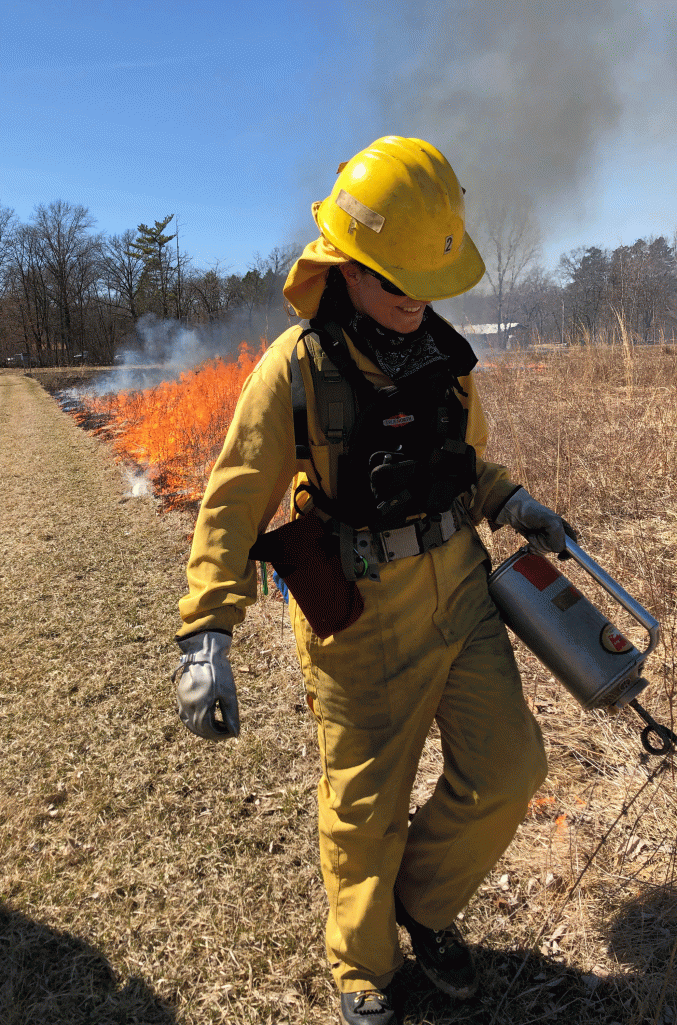
This photo is from one of my first burns with The Nature Conservancy in Iowa. Like every burn, I was excited to be there and even more so when Katie, the burn boss with our partner Louisa County Conservation, told me that I could light the head fire. She walked with me to ensure that I was feeling confident and going the right way, when all of a sudden she turned around and started taking pictures of me. The smile on my face is partially because of the work I’m doing, but I’m also laughing at the funny scene happening on the fireline. The patience and willingness of staff to put me in a position to learn is something that I will always be grateful for. Photo by Katie HammondThis is one of my favorite pictures from my time at Broken Kettle Grasslands. In an effort to train the bison and make roundup less stressful on us and the animals, we take out cattle cubes to give them a treat and entice them to follow a truck with a siren. Doing this is always amazing, being surrounded by all these beautiful animals, but this time was extra special. My parents were visiting and we had spent hours the day before searching for the bison with no luck. So the next day (this was also Father’s Day), Scott, the director of stewardship in Iowa, went out and helped us find the bison. My parents not only got to see them, but also got in the back of the pickup and experienced a once in a lifetime opportunity. Getting to share my work with the people I love is something I really enjoy, and I worked for someone that understood that and was willing to give up his weekend hours. I was so appreciative and felt fortunate to be where I was. Photo by Sandy OblanderThis photo is from the sandhill crane migration here at the Platte River Prairies. I can honestly say, I haven’t experienced anything like this in my life. Not only are there too many birds to even try to count on the river, but the noise that they create is insane! I felt moved sitting in a blind with my colleagues getting to enjoy this magical moment together. It’s really hard to put my feelings at that time into words. Photo by Ashley OblanderThis is a photo that Chris took of me on one of our trips to the Niobrara Valley Preserve. There aren’t many things that would get me out of bed at 5 AM, but watching the sun rise over the hills while surrounded by miles of prairie is one of them. It had me feeling energized for the rest of the day, and was one of the many times I felt in awe of my surroundings. This photo is from a few weeks ago when Dat and I joined Mike, a retired wildlife biologist, and Laura, a graduate student from UNO, on small mammal trapping. I had done some trapping for my thesis at Central College, but it had been years since I got to hold one of these cute critters and remember the little personalities that they all have. It’s invigorating to revisit the experiences that really kick started my love and passion for conservation. Photo by Dat Ha
I never thought that I would be surrounded by 200 bison, explore and take pictures of gorgeous landscapes, or watch a crane migration and call it work. This job definitely has it’s tough and sweaty days, but the good days consistently outshine the bad. Even through the bug bites and sunburns, when you know your hard work is part of a bigger picture and you’re doing what you love, you can end the day with a smile on your face. Thanks for reading my moments of wonderment, and I would love to hear your favorite stories in the comments below.
It’s that time of year again! We are now accepting applications for the 2021 Hubbard Conservation Fellowship Program with The Nature Conservancy in Nebraska. Detailed information can be found HERE and applications are due by September 30, 2020. Please forward this information to anyone who might be interested. The program is designed for recent graduates of conservation-related college degrees (undergraduate or graduate) who want to gain a year of broad experience before applying for permanent positions.
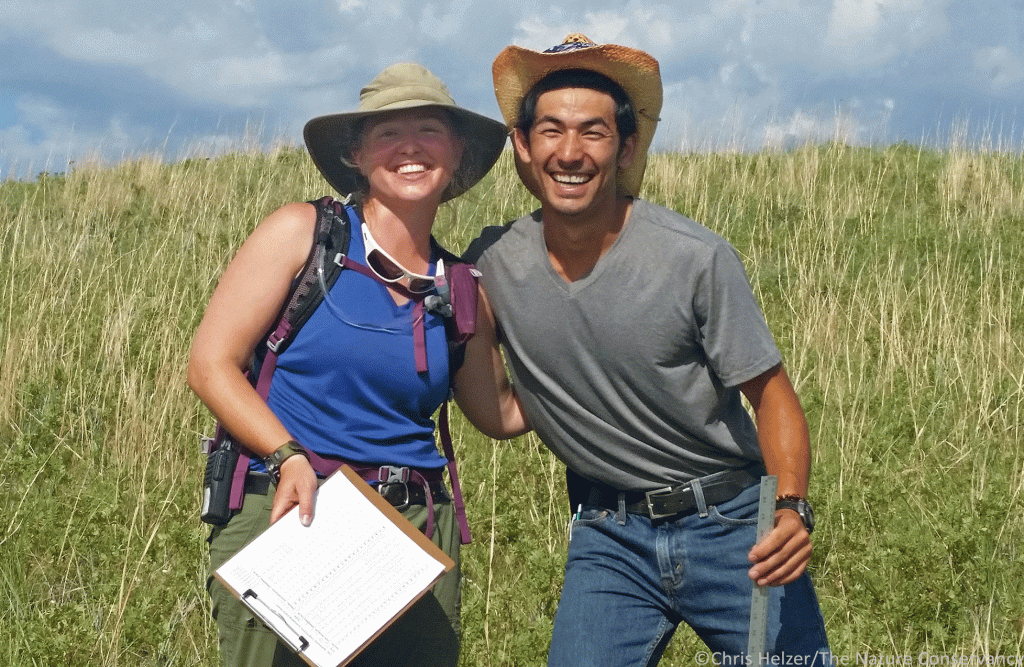
Former Fellows Katharine Hogan and Eric Chien pause for a photo while collecting data at the Niobrara Valley Preserve. (Remember when we could hug each other?)
Supervising the Hubbard Fellows is absolutely one of the highlights of my career. This next group will be the 8th pair of extraordinary humans to come spend a year working with us at the Platte River Prairies, Niobrara Valley Preserve, and our other locations across the state. Getting to spend time with youthful, energized, hopeful, brilliant future conservation leaders helps keep me motivated and optimistic about conservation myself. Seeing our work and world through their eyes also provides a much needed perspective, and often challenges me to consider whether our strategies are as effective as they should be.
Fellows spend a lot of time learning and helping with prairie management and restoration work, but also get to be part of strategic planning discussions, fundraising campaigns, staff and board meetings, and outreach/communication efforts. We also take them to as many conferences and other opportunities as we can, though that has become more difficult since March and will probably continue to be a challenge for a while.
One of the best aspects of the Fellowship is that each Fellow develops and carries out an independent project. There are only two criteria for projects: First, it has to help the Fellow develop a current interest or explore a new one. Second, it has to provide a tangible benefit to The Nature Conservancy. Many Fellows have chosen research projects, but others have helped build or improve on conservation programs or lead staff through a planning process or development of a new conservation strategy. We expect the independent projects to take up about 10% of a Fellow’s time during their year with us.
Here’s former Fellow Mary Parr with a Pawnee skipper butterfly she caught during some survey work.
I hope readers of this blog enjoy reading posts by our Fellows each year. Writing those is a great experience for them, but I also think it’s good for all of us to see the world through their eyes. As I said earlier, their perspective helps keep my spirits up and challenges me to continue looking for new and better ideas.
Thanks for helping spread the word about this opportunity. In particular, we’d like to make sure we’re reaching potential candidates in communities of people currently underrepresented in the conservation field. Anything you can do to help us will be much appreciated.





 The Prairie Ecologist