Seeking beauty is a good way to remember how much there is.
Those words popped into my head this morning as I simultaneously looked through photos for today’s post and watched the clouds outside my window erupted into pink fire. Despite anything and everything going on in the world, it’s always possible to find splendor at both small and large scales. Photography is a major vehicle for my efforts to find beauty in the world, but you don’t have to be a photographer to go on your own expedition
Good grief, I’m feeling sappy today.
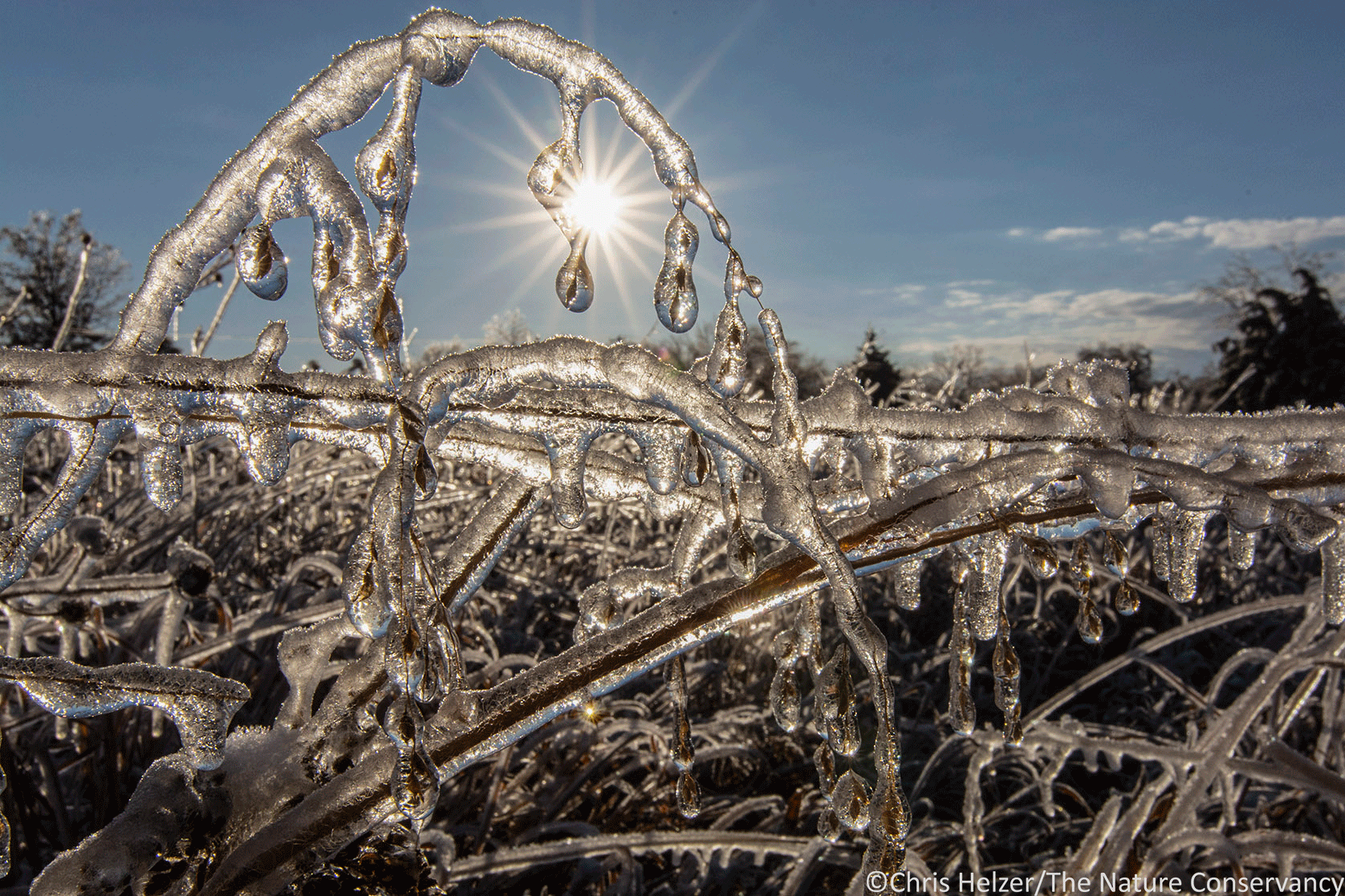
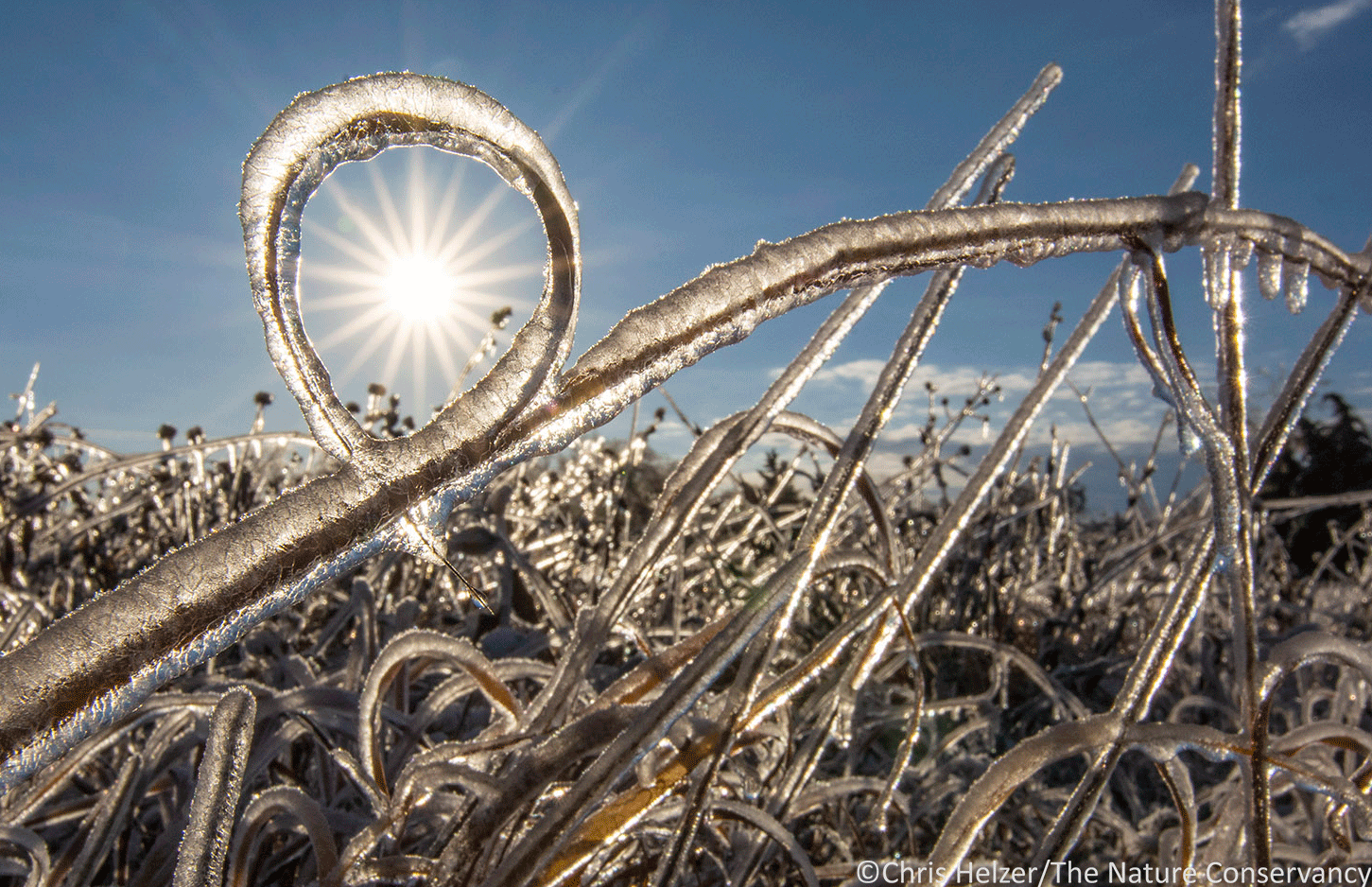
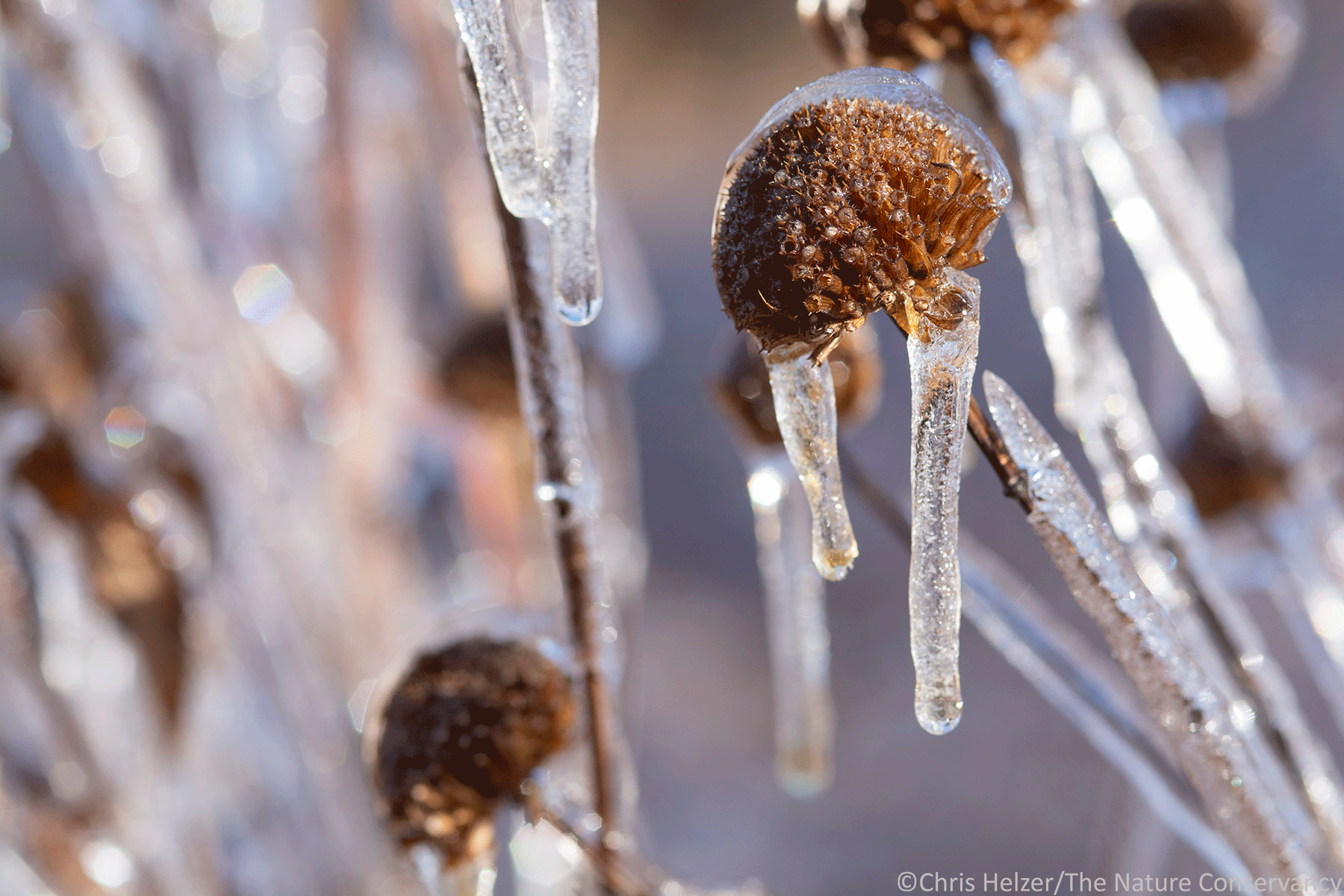
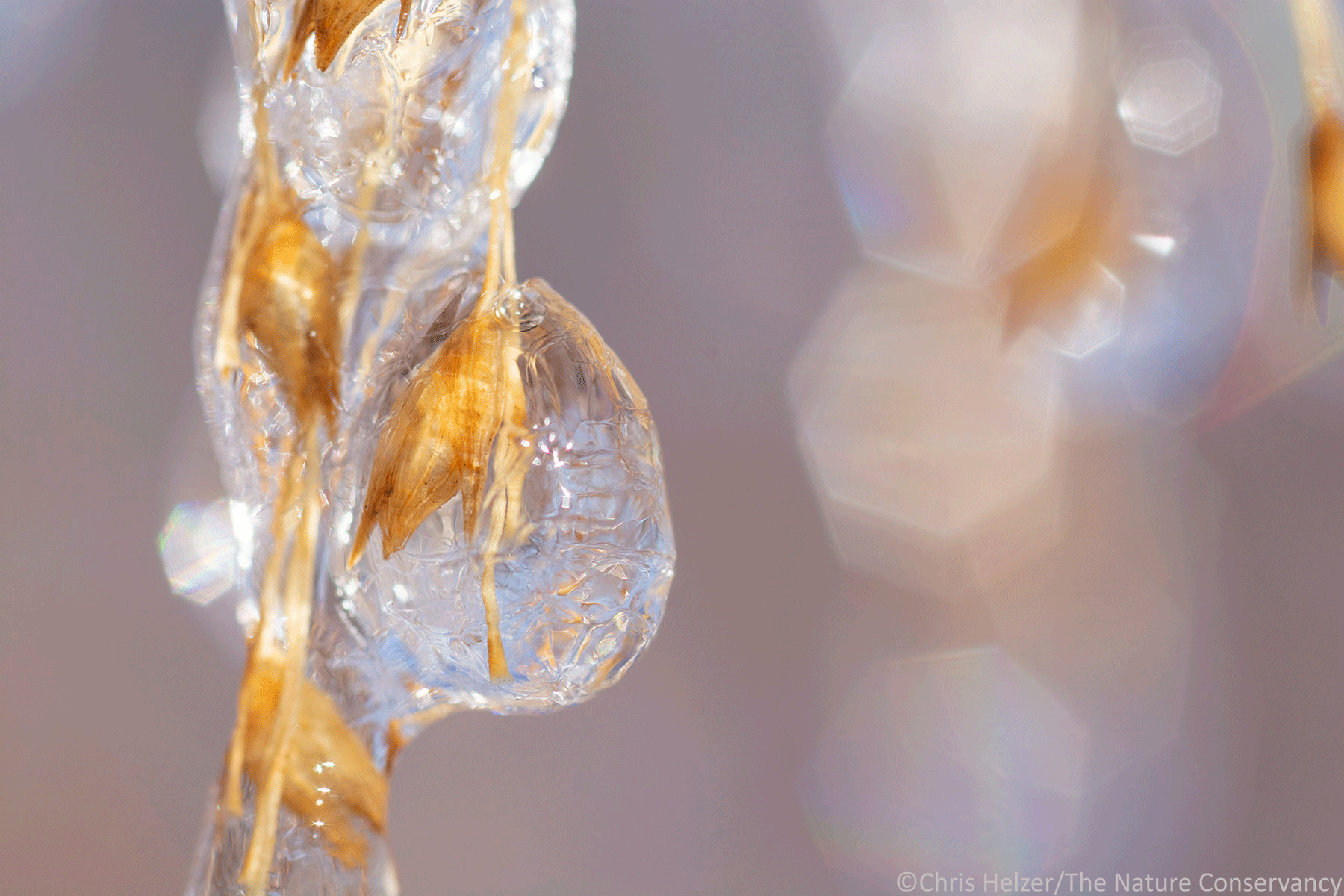
As promised last Thursday, here are photos from the second day of photographing the aftermath of an ice storm that came through our area last week. These were all taken at Lincoln Creek Prairie as the sun rose. The opportunity for a second day of photography felt like an incredible gift, since I had assumed much of the ice would melt the afternoon before. Instead, the brief moments of sun I’d taken advantage of the previous day had given way to clouds, and the temperature stayed low enough to preserve the ice overnight. Bonus ice day!
Switchgrass and ice. Lincoln Creek Prairie. Nikon 105mm macro lens, ISO 320, f/22 at 1/500 sec.Rosinweed and ice. Lincoln Creek Prairie. Nikon 105mm macro lens, ISO 320, f/9 at 1/500 sec.Stiff sunflower and ice. Lincoln Creek Prairie. Nikon 105mm macro lens, ISO 320, f/7 at 1/640 sec.Grass loop and ice. Lincoln Creek Prairie. Nikon 105mm macro lens, ISO 320, f/22 at 1/640 sec.Switchgrass and ice. Lincoln Creek Prairie. Nikon 105mm macro lens, ISO 320, f/13 at 1/500 sec.Switchgrass and ice. Lincoln Creek Prairie. Nikon 105mm macro lens, ISO 320, f/14 at 1/400 sec.Switchgrass and ice. Lincoln Creek Prairie. Nikon 105mm macro lens, ISO 320, f/22 at 1/250 sec.Prairie stalactites. Lincoln Creek Prairie. Nikon 105mm macro lens, ISO 320, f/14 at 1/320 sec.Big bluestem and ice. Lincoln Creek Prairie. Nikon 105mm macro lens, ISO 320, f/11 at 1/250 sec.Stiff sunflower. Lincoln Creek Prairie. Nikon 105mm macro lens, ISO 320, f/8 at 1/500 sec.Switchgrass and ice. Lincoln Creek Prairie. Nikon 105mm macro lens, ISO 320, f/11 at 1/500 sec.Canada wild rye and ice. Lincoln Creek Prairie. Nikon 105mm macro lens, ISO 320, f/22 at 1/250 sec.
By the time the sun finally got bright enough to make photography difficult, it also started to thaw the ice. As I walked back to my truck, most of the plants in direct sunlight were more wet than glazed. The ice kingdom was melting around me, but I was grateful for the time I’d been granted to explore it.
In a recent post, I tried to lay out some of the basic requirements and logistics of grazing a prairie, as well as some of the objectives that grazing might help achieve. In this sequel, I dive more deeply into examples of how various grazing approaches might actually reach those objectives. While there are numerous potential objectives you might have for the management of your prairie, I’m focusing on three examples here: Diversifying Habitat Structure, Reducing Dominant Grasses, and Suppressing Aggressive or Invasive Plants.
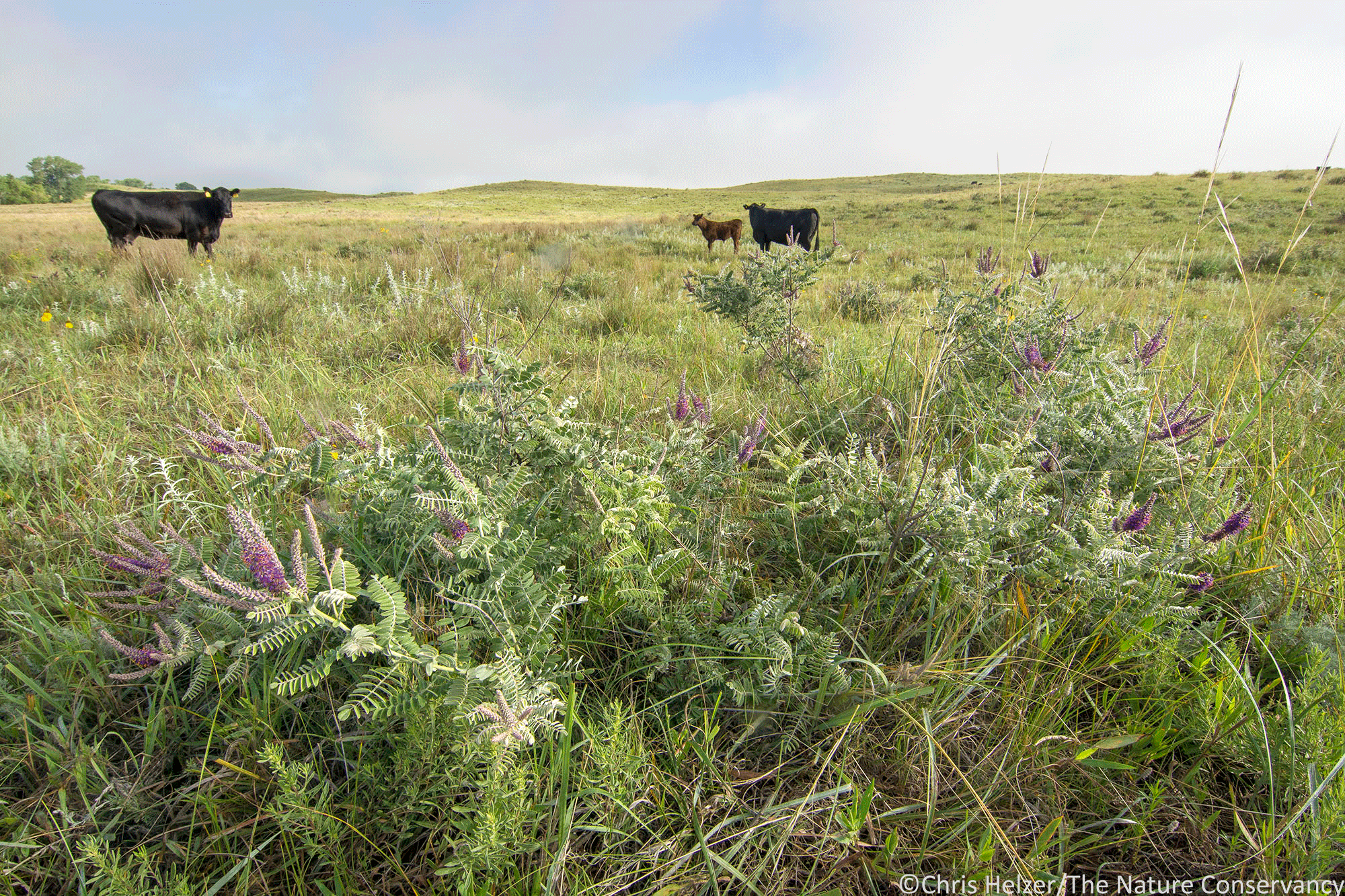
Cattle grazing can be good for plant diversity, while also creating a wide range of habitat conditions for wildlife and invertebrates. The Nature Conservancy’s Niobrara Valley Preserve.
Objective: Diversify Habitat Structure
Improving habitat heterogeneity might be the most important application of grazing in prairies, and the biggest reason you might want to implement grazing in the first place. To accommodate all the habitat needs of animals, from tiny invertebrates to large mammals, a prairie should always have habitat patches that represent a wide range of vegetation height and density. Some areas could be currently or recently intensively grazed, with short vegetation and areas of exposed bare ground. Others could be recovering from intensive grazing, with lots of wildflowers and other ‘opportunistic’ plants taking advantage of temporarily weakened grasses. Still other patches could be fully or nearly fully recovered, with tall and dense vegetation structure.
Plant species need favorable growing conditions periodically, but most or all species can also withstand a couple of years of less ideal conditions. As long as they get to flourish and reproduce every few years, most plants will persist – as they have for thousands of years of dynamic and unpredictable growing conditions caused by fire, drought, grazing, flooding, and/or other disturbances. If you provide the opposite of that dynamism by managing an entire prairie the same way each year, some plants may thrive every year, but others may never get the conditions they need, putting them at risk of dying out (the same can be true for animals).
Creating a shifting mosaic of habitat patches helps ensure that all potential grassland habitat types are always available somewhere in a prairie for the animals that need them. The basic approach is to split a prairie into management units (habitat patches) and then manage them so that each contributes toward a broad spectrum of vegetation structure types – very short in some patches, very tall/dense in others, and mixed height/density in the rest. Then, you can just change the location of each of those habitat types year to year. The approach also means that individual plant species will experience positive growing conditions at least once every several years, allowing them to persist – though maybe not at the same population levels you’d see if they got their favorite growing conditions each year.
Some grazing approaches are specifically designed to accomplish this, including patch-burn grazing and open gate rotational grazing, but those are just examples, and broad templates that can be adapted. Creative people will be able to come up with approaches that match their individual sites, logistical challenges, and needs for vegetation and/or livestock production. The key is to have patches spread across your prairie that are in various stages of grazing and recovery. In addition, it can be important to have patches that are grazed hard enough and long enough that they don’t recover too quickly.
Habitat heterogeneity created by open gate rotational grazing at our family prairie. Top left: the first pasture in the rotation, grazed all season. Top right: the second pasture provided to the cattle (in conjunction with the first), with short vegetation, but more cover than the first pasture. Bottom left: the pasture grazed hardest the previous year and rested for the current season. Lots of weakened, recovering grasses and opportunistic forbs. Bottom right: ungrazed the previous year and only grazed at the end of the current year (after the photo was taken), with lots of tall/dense vegetation. Click on the image to see a bigger version of it.
Many traditional rotational grazing strategies recommend only allowing cattle to remove half or less of the vegetation in a paddock before moving them into the next. This means the vegetation recovers quickly and can lead to a bunch of grazing paddocks that all have roughly the same height and density of vegetation – without the important short/sparse and tall/dense ends of the habitat spectrum. Those grazing systems were designed for maintaining grass dominance, not habitat or plant diversity.
Other grazing approaches advocate for rotational grazing with lots of paddocks and intensive but very short-duration grazing (followed by long rest periods) in each paddock. This reduces the amount of total area across the prairie that is in short structure at any one time because paddocks start recovering very shortly after grazing happens. The high density of animals can also cause trampling issues for wildlife and force cattle to eat low quality forage, leading to reduced livestock performance.
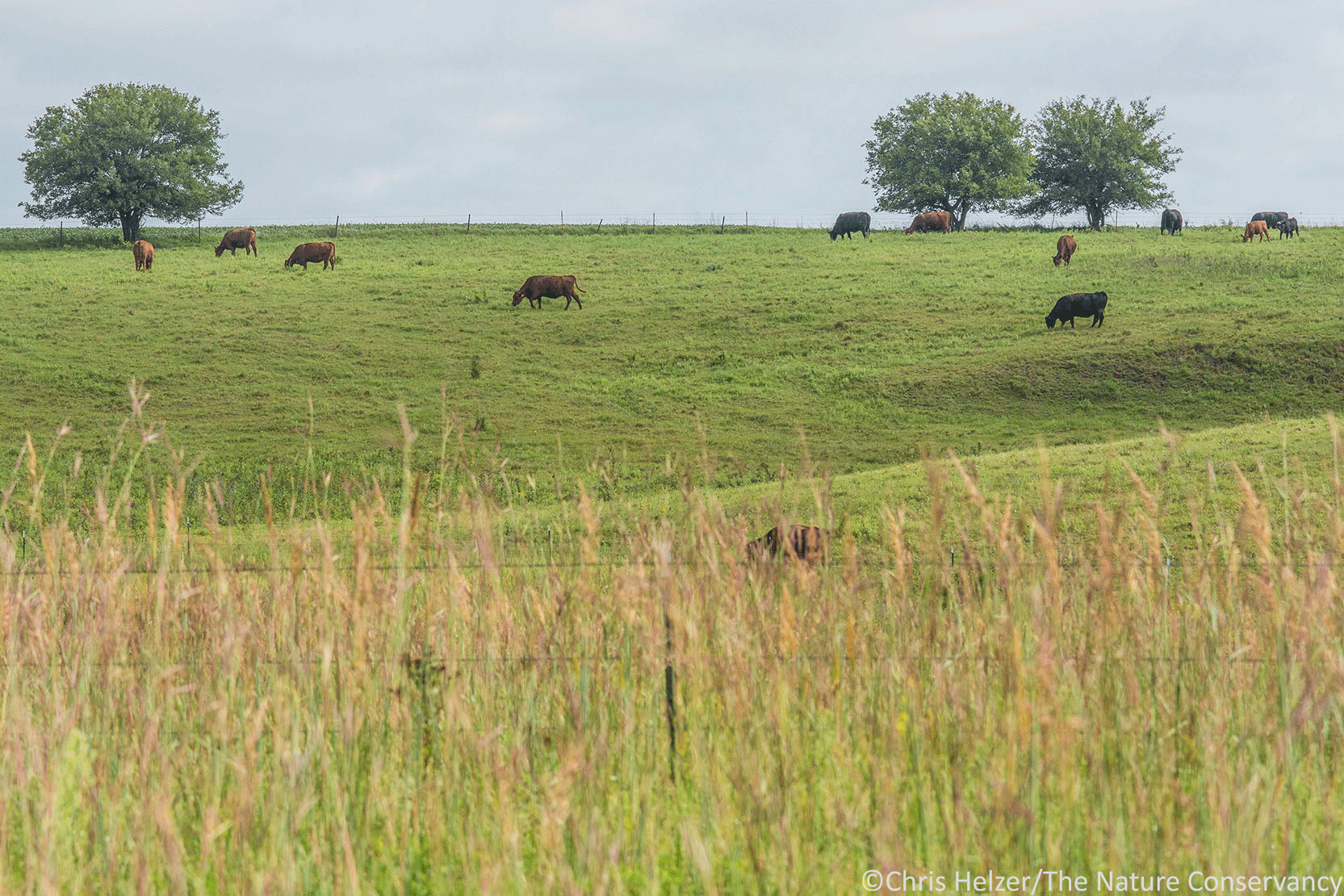
While it is often maligned as outdated and inefficient, season-long grazing, in which cattle are simply allowed to roam around one big pasture all season, can actually create a good range of habitat structure. Cattle tend to develop favorite grazing areas (aka grazing lawns), based on factors like the palatability of plants, topography, and proximity to water or shade. They spend more time grazing their favorite spots than others, creating a mix of short and tall vegetation. After multiple years, some favorite spots eventually become less productive or see less growth from tasty plants, and cattle will move away from them and find new favorites.
As a result, season-long grazed pastures create a kind of shifting mosaic, but in very slow motion. It’s not well-understood – as far as I know – exactly how this approach (with a reasonable stocking rate) affects plant diversity. It’s also unclear how wildlife and invertebrates respond to season-long grazing’s pattern of many small grazing lawns and rested areas compared to the fewer, larger habitat patches found in other shifting mosaic situations.
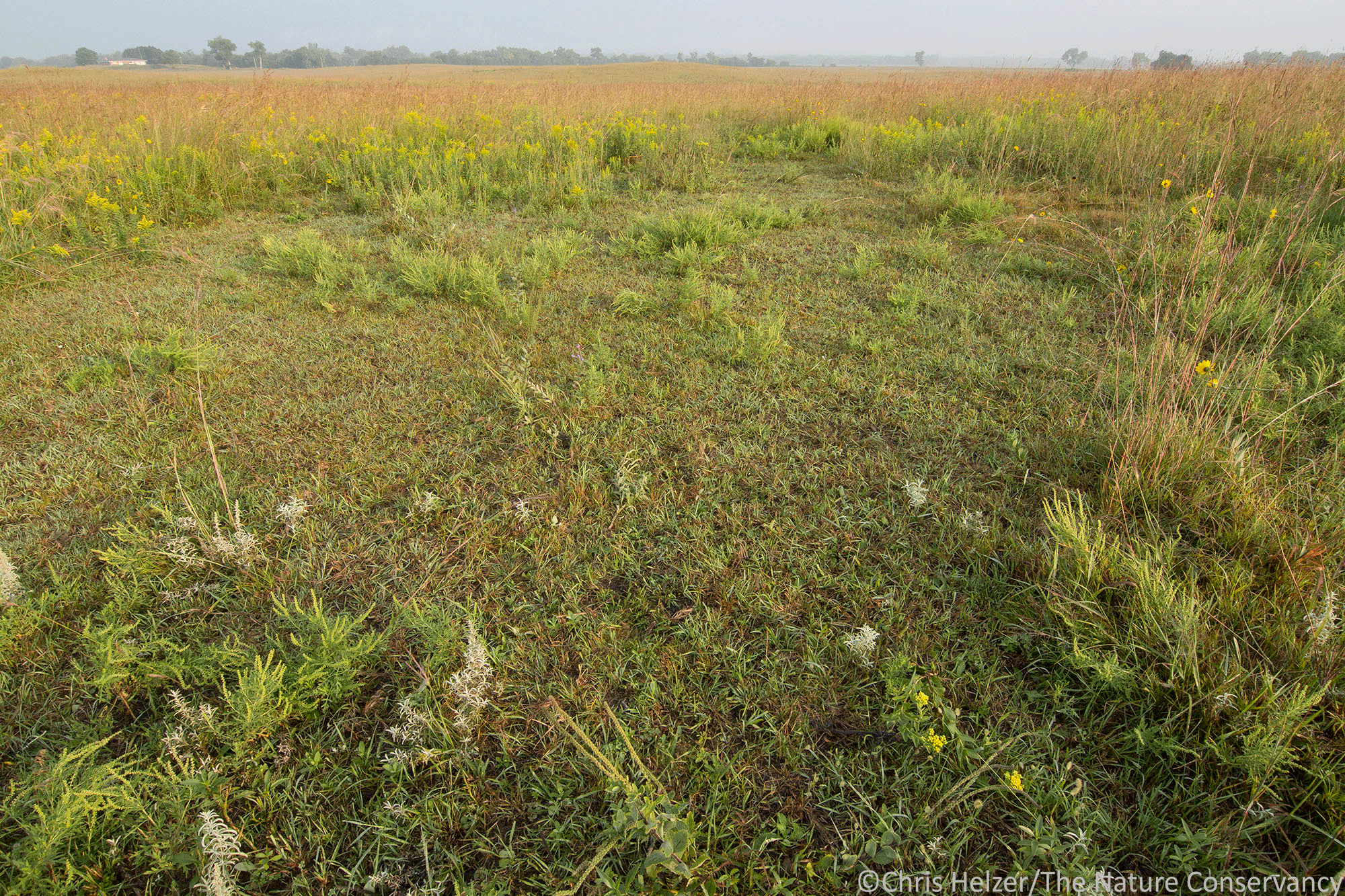
This grazing lawn was created by cattle because they had the option to graze anywhere they wanted and hit the big bluestem hard in this area. The contrast between grazing lawns and nearby ungrazed vegetation creates habitat heterogeneity, but at a different scale than systems like patch-burn or open gate grazing. Are these lawns big enough habitat patches to provide for the needs of birds and other animals who prefer that short habitat structure? The Nature Conservancy’s Platte River Prairies.
Objective: Reducing Grass Dominance
In some prairies, some grass species tend to become so dominant that they reduce the vigor, and eventually the diversity, of other plant species. Grazing, especially by cattle or other grass-selective animals, can help reduce the competitiveness of those grasses. A good shifting mosaic approach to grazing, as discussed above, is already designed to prevent grasses from reducing plant diversity, so adoption of that approach will probably solve the problem.
However, there are also ways to use very targeted grazing practices to reduce grass vigor. One option is to simply allow cattle access to the entire prairie once every few years. Because they prefer grasses over most other plants, they will spend most of their time eating those grasses and cropping many of them almost to the ground. That won’t kill the grasses, but those plants will need a couple years of recovery to get their dominance back. Cattle will eat other plants as well, but as long as the grazing doesn’t occur every year, those plants will also recover. See the last paragraph of the above section for the questions and potential pitfalls of this kind of season-long grazing.
If you want to target a particular aggressive grass species, see the next section.
Objective: Suppressing Aggressive or Invasive Plants
When targeting a particular plant species, the first step is to find out how cattle respond to the invasive plant. Do they like to eat it? If so, is there a particular time of year when they most like to eat it? What is its seasonal growth pattern?
If the invasive species is more palatable than many other species around it, using grazing can be pretty simple. Cattle may keep the invasive plants cropped down for as long as they have access to the area, which means that many of the shifting mosaic approaches discussed earlier might work well. You might simply tweak your general approach to better address the invasive plant as you watch and learn over a few years (see the example at the end of this post).
If the invasive plant is palatable, but not necessarily more than other plants, you might try putting cattle into the prairie only during the invasive plant’s period of peak growth and flowering. The timing may need to be tweaked based on what you see for responses, but a relatively short-term pulse of grazing might be effective. Don’t repeat this too many years in a row, however, or you’ll likely start negatively impacting other plants with a similar growth schedule. The goal of this kind of grazing is not to eradicate an invasive plant, just to suppress it enough that it doesn’t perennially dominate the plant community.
Cattle are not only objectively cute, they can also help with invasive species issues. These cattle had just been put into a pasture with an abundance of smooth brome (Bromus inermis), an invasive grass. They’ll graze it hard for a brief period of time and then be moved out to allow other plants to take over some of the territory released by the weakened brome plants.
Real World Example:
At my family prairie, we use cattle grazing for multiple purposes. Our overall approach is the open gate rotational system, which creates really nice habitat heterogeneity and plant diversity. However, I also tweak the open gate approach a little to particularly target smooth brome and sweet clover – two invasive plants. The adjustments vary each year, based on what I see, but here’s what I did this year.
When the cattle first came to the pasture in late April, rather than installing them in the first pasture of the open gate rotation, we instead had them spend about a week in each of the other three pastures first. That allowed the cattle to grub down both the smooth brome and sweet clover, which were among their favorite plants at that time of year. Once that quick rotation was done, we put them into the initial pasture of the open gate system. By the end of the year, the cattle had access to three out of the four pastures, so they were hitting the sweet clover hard there, and any smooth brome that started to green up as well (not much this year, given how dry the late summer and fall were).
In mid-October, when it was about time to pull the cattle out, I noticed that the fourth pasture (ungrazed except for the brief period in the spring) had a lot of big first-year sweet clover plants. In order to knock back the vigor of those plants, and because I knew the cattle would see those big leafy legumes as a treat, I asked the lessee to put the cattle in that pasture for the last week of the season before pulling them out. During that week, they hit the sweet clover hard, and nipped the tops off some other late-season plants. However, the cattle were in for a short-enough period of time that they didn’t stomp down the tall vegetation structure, which will be good winter cover for wildlife.
Sweet clover doesn’t seem to be a major invasive threat in this part of the state, but smooth brome certainly is. In most years, their growth period and attractiveness to cattle are similar enough that I can lump them together when thinking about strategies. Over the years, using cattle to particularly target those two species, while also focusing on the broader shifting habitat mosaic seems to make a winning combination.
At our family prairie, cattle help us create a wide range of habitat structure types, but also help suppress invasive plants. Oh, and by the way, the income from the grazing lease helps pay off the mortgage and cover property taxes.
Design and Adapt Your Own Strategy:
Every prairie has its own unique challenges. Grazing isn’t appropriate for every prairie, and if it is used, the approach needs to be specifically tailored to your site and objectives, and then adapted frequently as you watch and learn. While there are lessons you can learn by talking to others, the way individual cattle respond to a particular plants at an individual site is hard to completely predict – and it tends to change year to year. After all, you’re dealing with a bunch of sentient creatures that make their own decisions about what they want to eat, where they want to eat it, and where they want to poop, rest, and stomp around.
Because of the variability and somewhat unpredictability of grazing, it’s critically important not to be overly rigid in your expectations. Remember that you can – and should – always adjust the next year’s grazing or other management based on what happened the previous year. If you felt like the prairie was grazed harder than you wanted it to be, reduce the stocking rate the following year, or otherwise find ways to allow the site to recover. Prairies are incredibly resilient and there is almost no way to completely screw up a prairie with a single year’s worth of grazing. Be experimental, observant, and adaptable, and you’ll be just fine.